
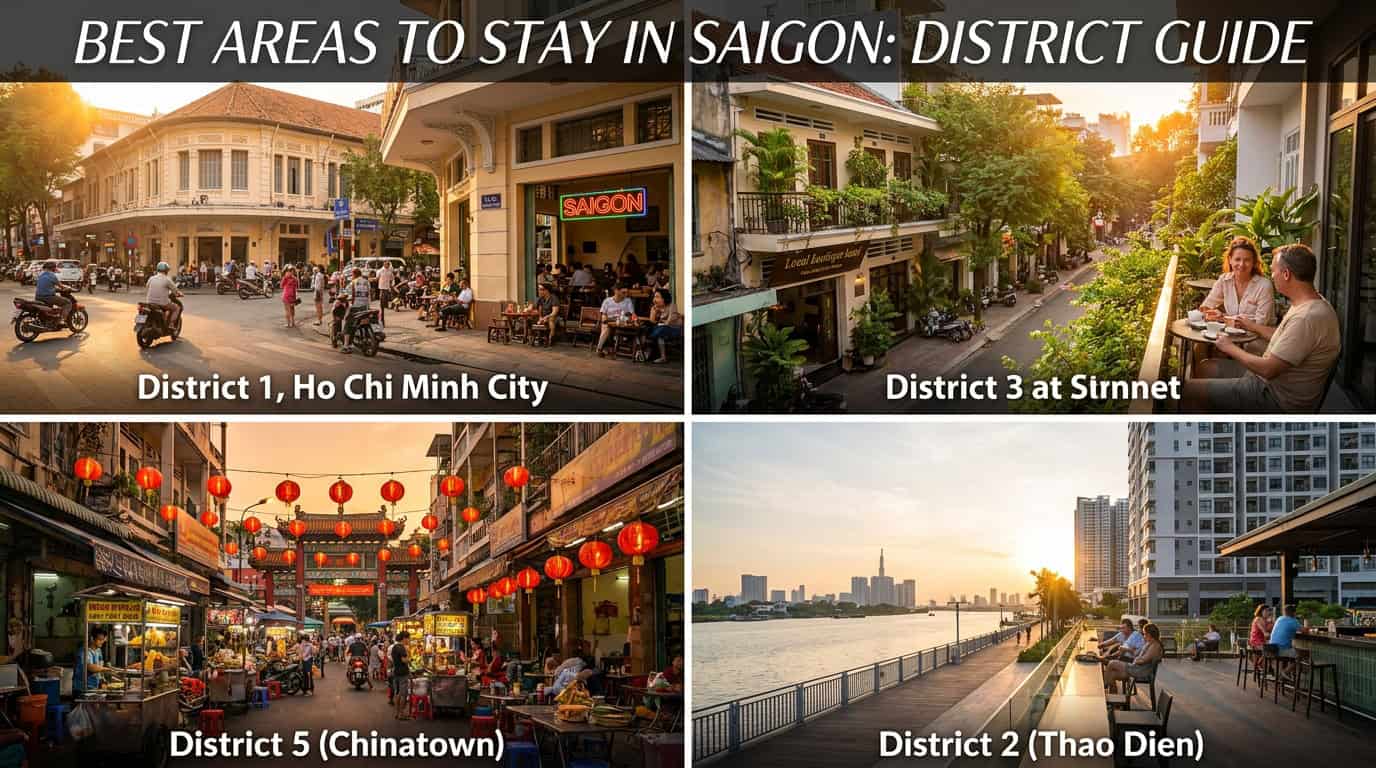
Knowing the best areas to stay in saigon is the single most important decision a first-time visitor to Ho Chi Minh City will make. It determines how much you walk, how much you pay, and whether you wake up to French colonial cafés or 24-hour backpacker bars. This district-by-district guide helps you match your travel style to the right neighborhood before you book.
Ho Chi Minh City (still called “Saigon” by locals and most expats) is split into 24 administrative districts, but only six are realistic options for tourists. This guide cuts the noise and ranks them by price, safety, walkability, and access to the sights you actually came to see.
Key Takeaways
- District 1 is the default first-timer choice — 70% of major sights are within a 20-minute walk, and a mid-range saigon hotel here averages 1,200,000 VND (~$48 USD) per night in 2026.
- District 3 offers identical metro access at 25–30% lower rates, ideal for travelers staying 5+ nights.
- Pham Ngu Lao (in District 1) is Saigon’s backpacker hub — dorm beds from 180,000 VND (~$7 USD), but expect noise until 2 AM.
- District 2 (Thao Dien) suits long-stay expats and families — quiet, leafy, but a 25-minute taxi to downtown.
- The new Metro Line 1 (opened December 2024) connects District 1 to Thu Duc/District 2 in 18 minutes, changing the calculus for outer districts.
- Avoid Districts 4, 8, and Tan Binh unless you have a specific reason — limited English signage and few tourist-grade hotels.
Why the Best Areas to Stay in Saigon Matter More Than the Hotel Brand
Saigon is enormous. The metropolitan area covers 2,095 km² and houses approximately 9.4 million people, according to the General Statistics Office of Vietnam. That means a hotel “in Ho Chi Minh City” could be anywhere from a five-minute walk to the Notre-Dame Cathedral to a 90-minute Grab ride away in industrial Cu Chi.
Unlike Hanoi, where the Old Quarter is the obvious base, Saigon’s attractions sprawl across multiple zones. The War Remnants Museum sits in District 3. The Reunification Palace and Ben Thanh Market are in District 1. The trendy expat cafés are in District 2. The Chinatown experience is in District 5. A poorly chosen saigon hotel can add two hours of daily commuting to your trip.
The 20-minute rule: Aim to be within a 20-minute walk (or one short Grab ride under 60,000 VND / $2.50 USD) of at least three attractions on your wishlist. If your hotel fails this test, you’re paying for a location that doesn’t serve you.
District 1: The Best Saigon Hotel Area for First-Time Visitors
If this is your first trip and you’re staying three to five nights, stop reading and book District 1. Specifically, the Dong Khoi / Nguyen Hue corridor between the Saigon Opera House and the river.
This is where French colonial Saigon meets modern skyscraper Saigon. Within a 15-minute walk you can hit:
- Notre-Dame Cathedral Basilica
- Central Post Office (Gustave Eiffel-designed)
- Reunification Palace
- Ben Thanh Market
- Bitexco Financial Tower Sky Deck
- Nguyen Hue Walking Street
Price range for a saigon hotel in District 1 (2026):
| Category | Nightly rate (VND) | Nightly rate (USD) | Example properties |
|---|---|---|---|
| Budget homestay | 450,000–800,000 | $18–$32 | Family-run guesthouses on Ly Tu Trong |
| Mid-range (3-star) | 900,000–1,500,000 | $36–$60 | Boutique hotels near Dong Khoi |
| Upscale (4-star) | 1,800,000–3,200,000 | $72–$128 | Renovated colonial buildings |
| Luxury (5-star) | 4,500,000–12,000,000+ | $180–$480+ | Park Hyatt, Reverie, Caravelle |
For most travelers, the sweet spot is a 900,000–1,400,000 VND ($36–$56) boutique stay — modern enough for reliable Wi-Fi and air conditioning, local enough that you wake up to street vendors selling banh mi at the door.
For deeper district context, see our complete Saigon itinerary which maps where each major sight sits relative to common hotel clusters.
District 3: The Quieter Saigon Hotel Alternative Locals Recommend
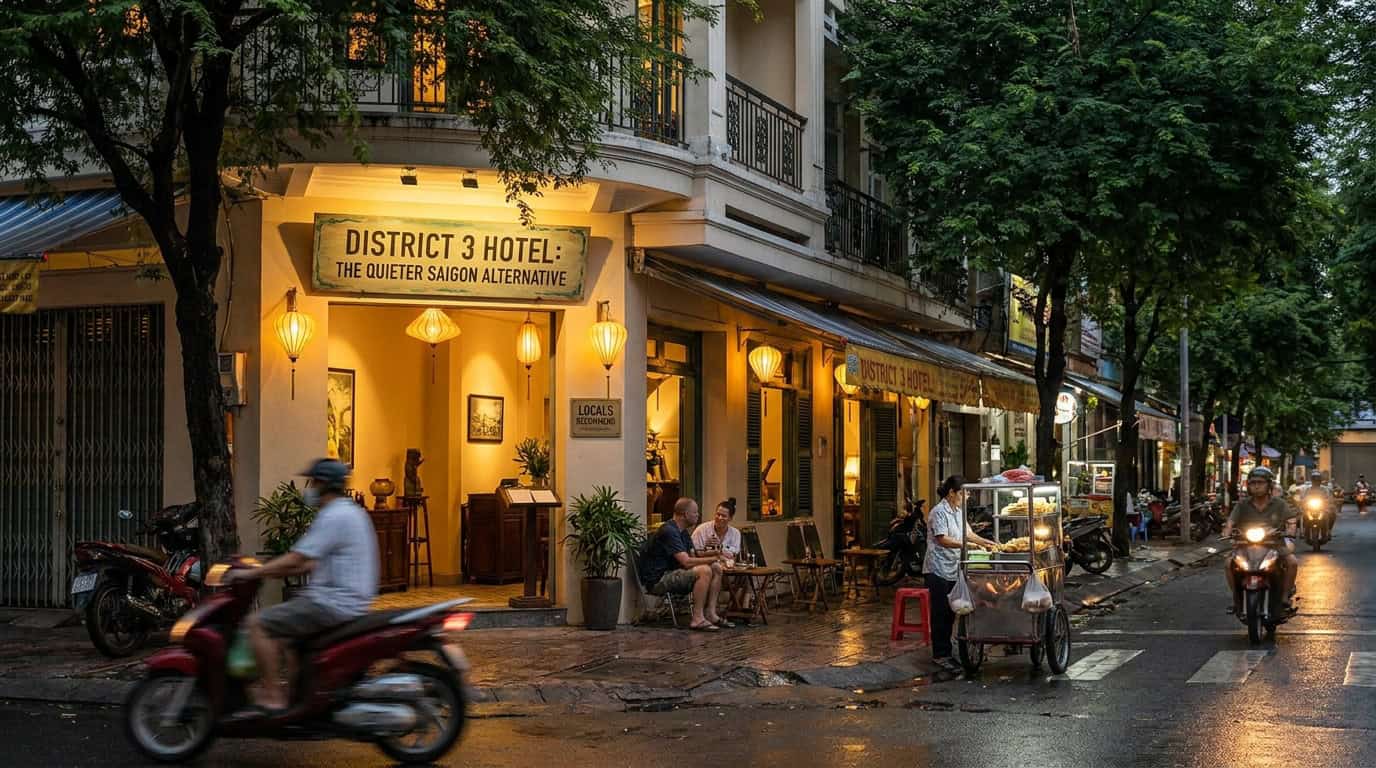
District 3 borders District 1 on the northwest and offers genuinely better value once you stay more than four nights. The vibe is residential — tree-lined streets, mid-century apartment blocks, neighborhood pho stalls — but you’re still 10–15 minutes by Grab from every District 1 attraction.
Why we recommend District 3 for return visitors and slow travelers:
- Average saigon hotel rate is 25–30% lower than equivalent District 1 properties
- Home to the War Remnants Museum (the city’s most-visited museum)
- Tan Dinh Pink Church — a viral Instagram landmark since 2019
- Better authentic Vietnamese food (less tourist-priced)
- Walking distance to District 1 via Vo Thi Sau or Nguyen Thi Minh Khai
The trade-off: fewer English-speaking staff, fewer 24-hour mini-marts, and less nightlife. If you want to walk home from a rooftop bar at 1 AM, stay in District 1.
Pham Ngu Lao & Bui Vien: Saigon Hotel Options for Backpackers
Technically inside District 1, Pham Ngu Lao Ward (with Bui Vien Walking Street at its heart) deserves its own section because the experience is completely different from Dong Khoi.
This is Saigon’s Khao San Road — a 1.4 km strip of hostels, street-side bar stools, neon LED signs, hookah lounges, and live cover bands playing until 2 AM. According to a VnExpress International report covering tourism trends, Bui Vien hosts more than 20,000 foreign visitors on a typical Saturday night.
Who Bui Vien is for:
- Solo backpackers under 30
- Travelers who want to meet other travelers in five minutes
- Anyone prioritizing nightlife over sleep
Who Bui Vien is NOT for:
- Light sleepers (the noise floor doesn’t drop until 2:30 AM)
- Families with young children
- Anyone arriving on a 6 AM tour bus
- Couples on a romance trip
Dorm beds start at 180,000 VND ($7 USD); private rooms at decent backpacker hotels run 500,000–750,000 VND ($20–$30 USD). If you want the Bui Vien energy but better sleep, book on De Tham or Bui Thi Xuan — two blocks back, half the noise.
District 2 (Thao Dien): The Expat Enclave
Thao Dien is the Brooklyn of Saigon — leafy, low-rise, full of specialty coffee shops, organic grocers, French bakeries, and international schools. About 70% of long-term Western expats with families live here, which has shaped the hospitality scene around serviced apartments rather than traditional hotels.
When Thao Dien makes sense:
- Stays of two weeks or longer
- Families with kids (playgrounds, swimming pools, Western groceries)
- Digital nomads who need quiet co-working spaces
- Travelers visiting friends already living there
The catch: Thao Dien is in District 2 (now part of Thu Duc City after the 2021 municipal merger), separated from District 1 by the Saigon River. Before December 2024, that meant a 25–40 minute taxi over the Saigon Bridge. The new Metro Line 1 — Vietnam’s first urban rail line — now connects Thao Dien Station to Ben Thanh in 18 minutes for 12,000 VND ($0.48 USD).
The metro changed the math. If your travel dates are after late 2024, Thao Dien is suddenly viable for shorter stays. Browse our Thao Dien neighborhood guide for café and restaurant picks.
District 5 (Cholon): For Cultural Travelers Only
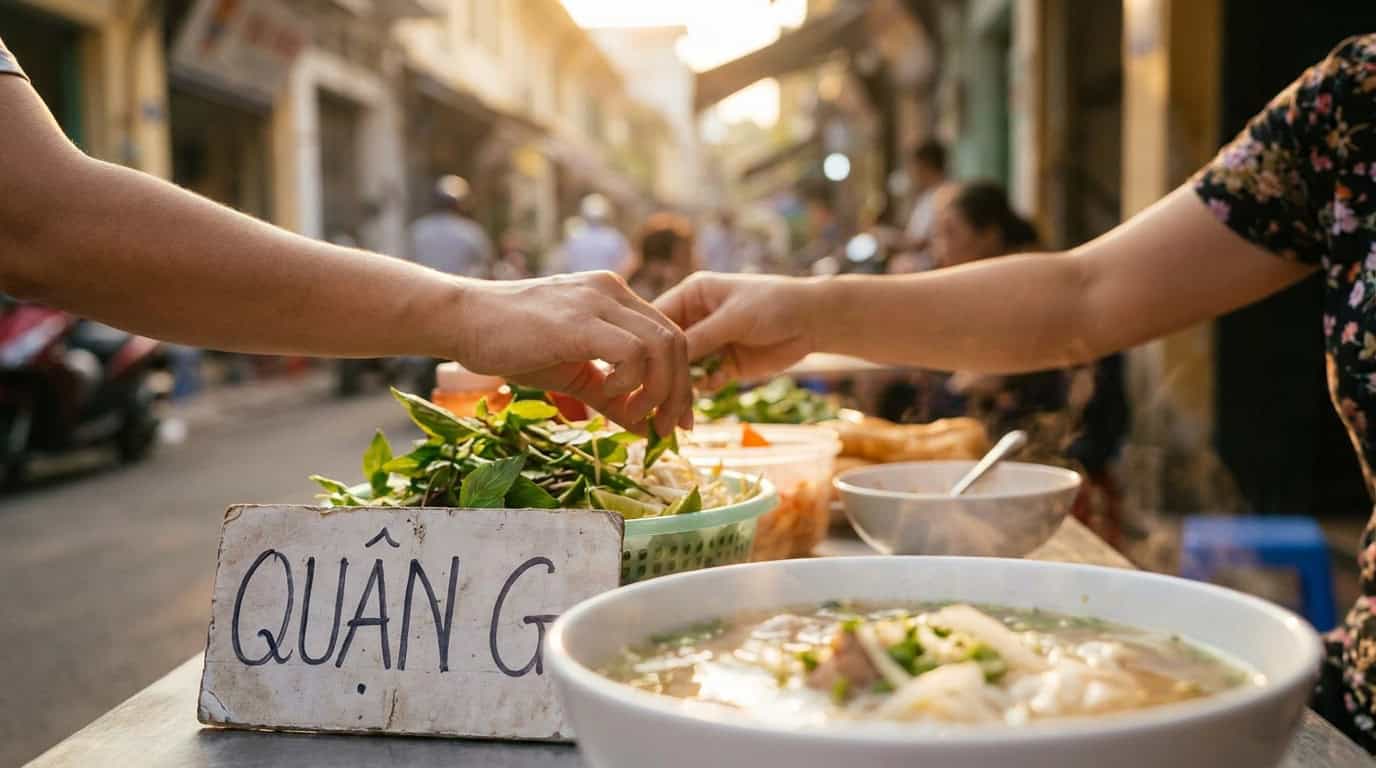
District 5 is Saigon’s historic Chinatown — Thien Hau Pagoda, Binh Tay Market, herbal medicine streets, and Cantonese-Vietnamese fusion food unavailable anywhere else in the city.
Hotel inventory is thin. Most properties are 2-star Chinese business hotels priced at 600,000–900,000 VND ($24–$36 USD). English is limited. Tourist infrastructure is basic.
Stay here only if:
- You speak Mandarin or Cantonese
- You’re a return visitor who has already done District 1
- You’re researching Chinese-Vietnamese diaspora history
- You’re on a serious food-focused trip
For everyone else, do District 5 as a half-day excursion from a District 1 base.
Saigon Hotel Price Comparison: Average Nightly Rates by District (2026)
Based on aggregated data from booking platforms in Q1 2026, here is what you can expect to pay for a comparable 3-star mid-range saigon hotel across each district:
| District | Avg. nightly (VND) | Avg. nightly (USD) | Walk to Ben Thanh |
|---|---|---|---|
| District 1 (Dong Khoi) | 1,400,000 | $56 | 5–10 min |
| District 1 (Pham Ngu Lao) | 900,000 | $36 | 12 min |
| District 3 | 1,000,000 | $40 | 20 min |
| District 2 (Thao Dien) | 1,650,000 | $66 | Metro 18 min |
| District 4 | 750,000 | $30 | 15 min |
| District 5 | 700,000 | $28 | 25 min |
| District 7 (Phu My Hung) | 1,300,000 | $52 | 35 min taxi |
Rates assume a Tuesday–Thursday booking in the May–October low season. Add 30–50% during Tet (late January/early February 2026) and the December–January peak.
Getting Around: Metro, Grab, and Motorbike Taxis
Saigon’s transit revolution finally arrived. Here’s what every first-timer needs to know:
Metro Line 1 — Opened December 22, 2024. Runs 14 stations from Ben Thanh to Suoi Tien (Thu Duc City). Fare 7,000–20,000 VND per ride. Operates 5:00 AM to 10:00 PM.
Grab — The dominant ride-hailing app (Uber sold its Southeast Asia operations to Grab in 2018). Use GrabCar for comfort, GrabBike for speed. Typical District 1 fares are 30,000–80,000 VND ($1.20–$3.20 USD).
Bus — Cheap (5,000 VND / $0.20 USD) but slow and confusing. Skip on a short trip.
Walking — Sidewalks are often blocked by parked motorbikes. Cross the street by walking slowly and predictably — never run. The traffic flows around you. The U.S. State Department Vietnam travel page notes that road traffic injuries are the leading cause of accidental death for foreign visitors, so this matters.
Read our breakdown of getting from Tan Son Nhat Airport to your hotel to avoid the most common arrival-night scams.
Safety & Practical Tips for Your First Saigon Hotel Stay
Saigon is generally safe for foreign visitors — violent crime against tourists is rare. The real risks are theft and traffic.
Petty theft to watch for:
- Drive-by phone snatching — Hold your phone with both hands, away from the curb. Most incidents happen on quiet streets at night.
- Bag slashing — Use a crossbody bag with the strap on the side away from the street.
- Taxi meter tampering — Use Grab instead of street taxis. If you must use a taxi, choose Vinasun (white) or Mai Linh (green).
Hotel-specific tips:
- Confirm the booking includes breakfast and airport transfer in writing — some listings hide these as extras
- Ask for a room above the second floor to escape street noise
- Bring a universal adapter; Vietnam uses Type A, C, and F plugs at 220V
- Tipping is appreciated but not expected — round up or leave 20,000–50,000 VND
Frequently Asked Questions
Which district is best for a 3-night first-time saigon hotel stay?
District 1’s Dong Khoi area is best for first-time visitors staying three nights. You’ll be within walking distance of Notre-Dame Cathedral, the Reunification Palace, Ben Thanh Market, and Nguyen Hue Walking Street — covering roughly 70% of the must-see attractions without needing a single Grab ride during the day.
Is it safe to walk around Saigon at night as a foreign tourist?
Yes, the main tourist areas of District 1, District 3, and Thao Dien are safe to walk at night, including for solo women. Stick to well-lit streets, keep your phone in your bag (not your hand), and avoid empty alleys after midnight. Bui Vien Walking Street is heavily policed and busy until 2 AM.
How much should I budget per night for a decent saigon hotel in 2026?
Budget 900,000–1,500,000 VND ($36–$60 USD) per night for a comfortable mid-range 3-star saigon hotel in District 1. Backpackers can find clean dorm beds from 180,000 VND ($7 USD), while luxury 5-star properties start around 4,500,000 VND ($180 USD) and climb above 12 million VND ($480 USD) for top suites.
Is District 2 (Thao Dien) too far for a short trip?
Before December 2024, yes — the 25-minute taxi made Thao Dien impractical for stays under a week. With Metro Line 1 now running, Thao Dien Station to Ben Thanh takes 18 minutes for under $1. For trips of four nights or more, the leafy expat vibe is worth it. For 1–3 night stays, stick to District 1.
Do I need to know Vietnamese to stay in a Saigon hotel?
No. Staff at any 3-star or above saigon hotel in District 1, District 3, or Thao Dien speak functional English. Google Translate works offline if you download the Vietnamese pack. Bui Vien street vendors typically speak enough English to take orders. Outside these zones (Districts 4, 5, 8), English drops significantly — Grab and translate apps become essential.
Should I book a hotel or a homestay?
Homestays offer better value and more authentic experiences for stays of three or more nights. Hotels are easier for one-night stopovers because of 24-hour reception and standardized check-in. Vietnamese homestays are not the same as Western-style B&Bs — most are small family-run apartments with private rooms, kitchens, and concierge-style help from the host.
Ready to Book? Stay in the Heart of District 1
📌 Đọc thêm: Jade Emperor Pagoda Saigon: Complete Visitor Guide · Cu Chi Tunnels: How to Get There, What to Expect · Landmark 81 Saigon: Observation Deck, SkyBar & Complete Visitor Guide
Now that you know District 1 is the right choice for your first Saigon trip, the next question is which part of it fits your style. Central District 1 sits within an 8-minute walk of Ben Thanh Market, the Saigon Opera House, and Nguyen Hue Walking Street. Next, compare District 1 hotels to find the right fit.
See available central District 1 homestays →
You can also browse our curated 3-day Saigon itinerary or our list of the top things to do in Ho Chi Minh City to start building your trip before you book. Whatever you decide — see you in Saigon.
For fares and which option makes sense at which time of day, see getting around Saigon.
Check current prices
Some links below are affiliate links. If you book through one we may earn a commission at no extra cost to you. It never changes what we recommend or the order anything appears in.
Compare availability and live prices in District 1 — rates move a lot between the dry and wet seasons, so check your own dates.