
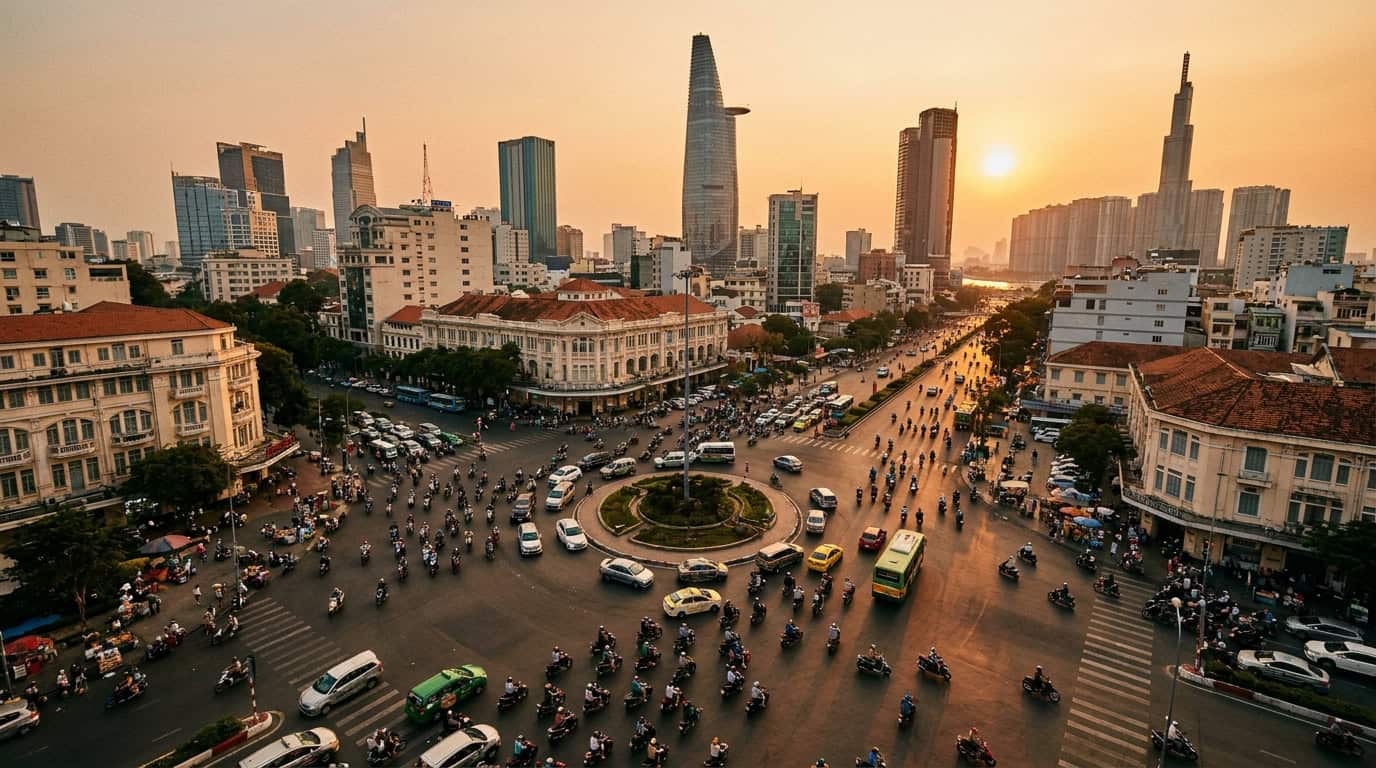
Getting around Saigon in 2026 is genuinely straightforward once you know which option fits which situation. The city now has a functioning metro, 169 electric buses on 25 new routes, app-based ride-hailing at every price point, and a river waterbus that skips the traffic entirely. This guide covers every mode of transport with current prices in both VND and USD so you can plan your budget before you arrive.
Key Takeaways
– Metro Line 1 opened December 22, 2024, covering 19.7 km for 7,000-20,000 VND per trip
– GrabBike starts at 15,000-30,000 VND for 2-4 km; airport to District 1 runs 110,000-160,000 VND by GrabCar
– 25 new electric bus routes launched March 1, 2026 (VinBus + Futa), with bus fares at just 5,000-7,000 VND
– Motorbike rental costs 100,000-200,000 VND/day but requires a 1968 Vienna Convention IDP with motorcycle endorsement
– Rush hours (7:00-9:00 AM and 5:00-7:00 PM weekdays) can double travel times across central districts
[ORIGINAL DATA] By end of 2025, Metro Line 1 had carried approximately 20 million passengers – averaging around 52,000 riders per day – well ahead of initial ridership projections for its first operating year (hochiminhcitymetro.com, en.sggp.org.vn, 2025).
Why Getting Around Saigon Is Easier Than It Looks
Getting around Saigon is easier than most first-time visitors expect. The city’s transport network expanded significantly in 2024-2026, with Metro Line 1 now operational and 25 new electric bus routes launching as recently as March 1, 2026 (vietnamnet.vn). Ride-hailing apps handle every short trip, and fares are cheap by any international standard.
The key is matching the right tool to the right trip. A cross-city journey from Ben Thanh to Thu Duc is fastest on the metro. A 3 km hop to a restaurant fits a GrabBike perfectly. The waterbus makes the commute along the Saigon River genuinely enjoyable. And at rush hour, sometimes the most honest answer is: sit somewhere nice, have a coffee, and leave at 9:30 AM.
District 1 is compact enough that many attractions are within a 15-20 minute walk of each other. Pair that with app-based bikes and you’ll rarely need to plan transport more than five minutes in advance.
Grab, Be & Xanh SM: Ride-Hailing Apps Explained
Ride-hailing is the default transport option for most visitors in Saigon. Three main platforms compete in 2026, and their pricing and availability differ in ways that matter. Xanh SM overtook Grab to capture 44.68% of the ride-hailing market in Q2 2025, compared to Grab’s 36.08%, according to market tracking data.
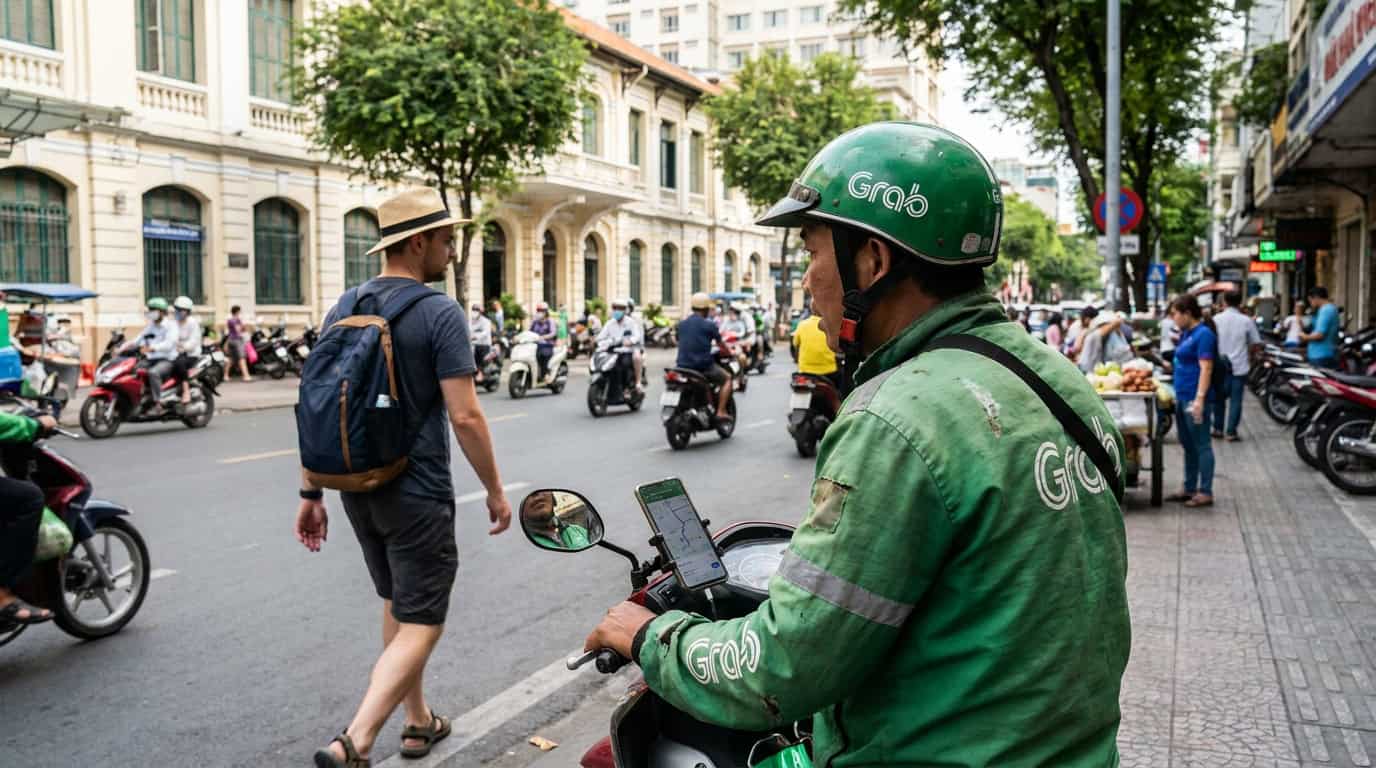
Grab is the most tourist-friendly platform. It works with any foreign phone number, supports international payment cards, and serves the airport. GrabBike (motorbike) starts at 15,000-30,000 VND for trips of 2-4 km (roughly $0.60-1.20). GrabCar starts at 35,000-60,000 VND for the same distance ($1.40-2.40). An airport run from Tan Son Nhat to District 1 typically costs 110,000-160,000 VND ($4.40-6.40) depending on traffic and time of day.
Xanh SM runs a fully electric fleet and tends to offer competitive fares. It has one important limitation for tourists: the app requires a Vietnamese phone number to register, which makes it impractical for short-stay visitors without a local SIM. Xanh SM also does not accept airport pickups.
Be is a smaller local platform. It works with Vietnamese numbers and is popular among residents but rarely worth setting up for a one-week trip when Grab covers the same routes.
[UNIQUE INSIGHT] The practical conclusion for tourists: download Grab before you land, link a credit card in advance, and use it as your default. If you’re staying more than two weeks and pick up a local SIM, adding Xanh SM gives you a second option during peak hours when Grab surge pricing kicks in.
Traditional Taxis: Vinasun & Mai Linh (and How to Avoid Scams)
The two safe, metered taxi companies in Saigon are Vinasun and Mai Linh. Both run calibrated meters, employ trained drivers, and have clear complaint channels. Starting fares are generally comparable to GrabCar. The direct phone lines – Vinasun at 38272727 and Mai Linh at 38383838 – are worth saving in your contacts.
The scam risk is real but avoidable. Fraudulent operators use near-identical names: “Vinataxi”, “Mailinh Taxi” (one word), and similar variations. They target tourist areas around Ben Thanh Market, Bui Vien Walking Street, and the airport arrivals hall. The vehicles look similar enough to cause confusion at night.
Three rules eliminate the risk entirely. First, book Vinasun or Mai Linh through their official apps or by calling directly. Second, confirm the taxi has a sealed, tamper-proof meter before you get in. Third, take a photo of the license plate. Street hails in tourist areas carry more risk than app-booked rides.
For most trips inside District 1, GrabCar and GrabBike are simply faster to book and equally safe. Traditional taxis make more sense when paying by cash and when picking up at locations where the app has poor driver availability.
Metro Line 1: Saigon’s Brand-New Underground (2026)
Metro Line 1 opened on December 22, 2024, and it changed how Saigon moves. The line runs 19.7 km across 14 stations from Ben Thanh in District 1 to Suoi Tien in Thu Duc City (hochiminhcitymetro.com). By the end of 2025 it had carried approximately 20 million passengers, averaging around 52,000 riders per day.
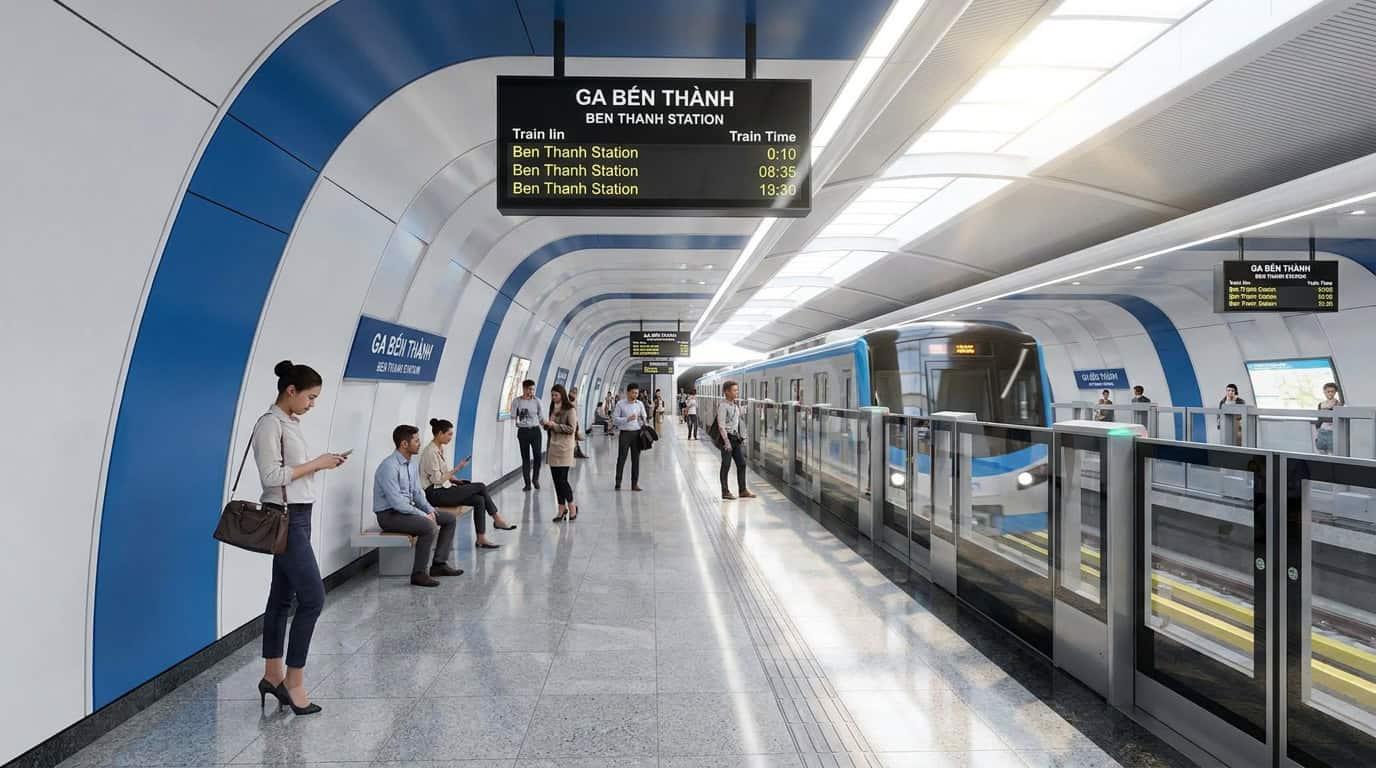
Single-trip fares range from 7,000 to 20,000 VND ($0.28-0.80) depending on distance. A day pass costs 40,000 VND ($1.60). A monthly pass is 300,000 VND ($12), making it one of the cheapest commuter options in any major Asian city. Operating hours run from 05:00 to 22:00, with trains every 8 minutes during peak times.
The metro is most useful for the Ben Thanh to Thu Duc corridor, which by road can take 45-75 minutes during rush hour. By metro it takes about 30 minutes regardless of traffic. Key stops include Ben Thanh (District 1 center), Van Thanh (District Binh Thanh, access to the waterbus terminal), Binh Thai, and the Suoi Tien terminus near the water park.
Metro Line 2 broke ground on January 15, 2026, running from Ben Thanh westward to Tham Luong. That line won’t open for several years, but its groundbreaking confirms the city’s long-term commitment to rail transit.
Ticket purchase: Single-trip tokens and day passes are sold at station kiosks. Monthly passes require registration at a service counter with a valid ID. Contactless payment card readers are being rolled out but aren’t yet at every station as of mid-2026.
Electric Buses (VinBus & Futa): The Green Public Transit Option
Ho Chi Minh City launched 25 new electric bus routes on March 1, 2026, adding 169 electric buses to the network – 9 VinBus routes and 16 Futa routes (vietnamnet.vn, electrive.com). This represents the most significant expansion of Saigon’s bus network in over a decade.
Standard bus fares remain at 5,000-7,000 VND ($0.20-0.28) per trip, unchanged from the previous diesel fleet. Air-conditioning is standard on electric models, which matters significantly in Saigon’s heat.
The single best tool for navigating the bus network is BusMap (free on iOS and Android). It shows real-time GPS positions for all buses, calculates multi-route journeys, and displays wait times at stops. Without BusMap, the bus system feels chaotic. With it, it becomes a genuinely functional option for budget-conscious travelers willing to allow extra time.
VinBus also operates an airport route connecting Terminals 1, 2, and 3 at Tan Son Nhat International Airport, launched April 19, 2025. This route links directly to the city bus network and provides one of the cheapest airport transfer options available.
Buses are best suited to travelers with flexible time and a clear end destination. They’re not ideal during the 7:00-9:00 AM and 5:00-7:00 PM rush windows, when vehicles are packed and delays compound.
Saigon Waterbus: The Scenic Route Along the River
The Saigon Waterbus runs 11 km along the Saigon River with a flat fare of 15,000 VND ($0.60) per trip, connecting 6 stops from Bach Dang Pier in District 1 to Linh Dong in Thu Duc (saigonwaterbus.com). The full journey takes 35-45 minutes. Services run daily from 07:40 to 23:30.
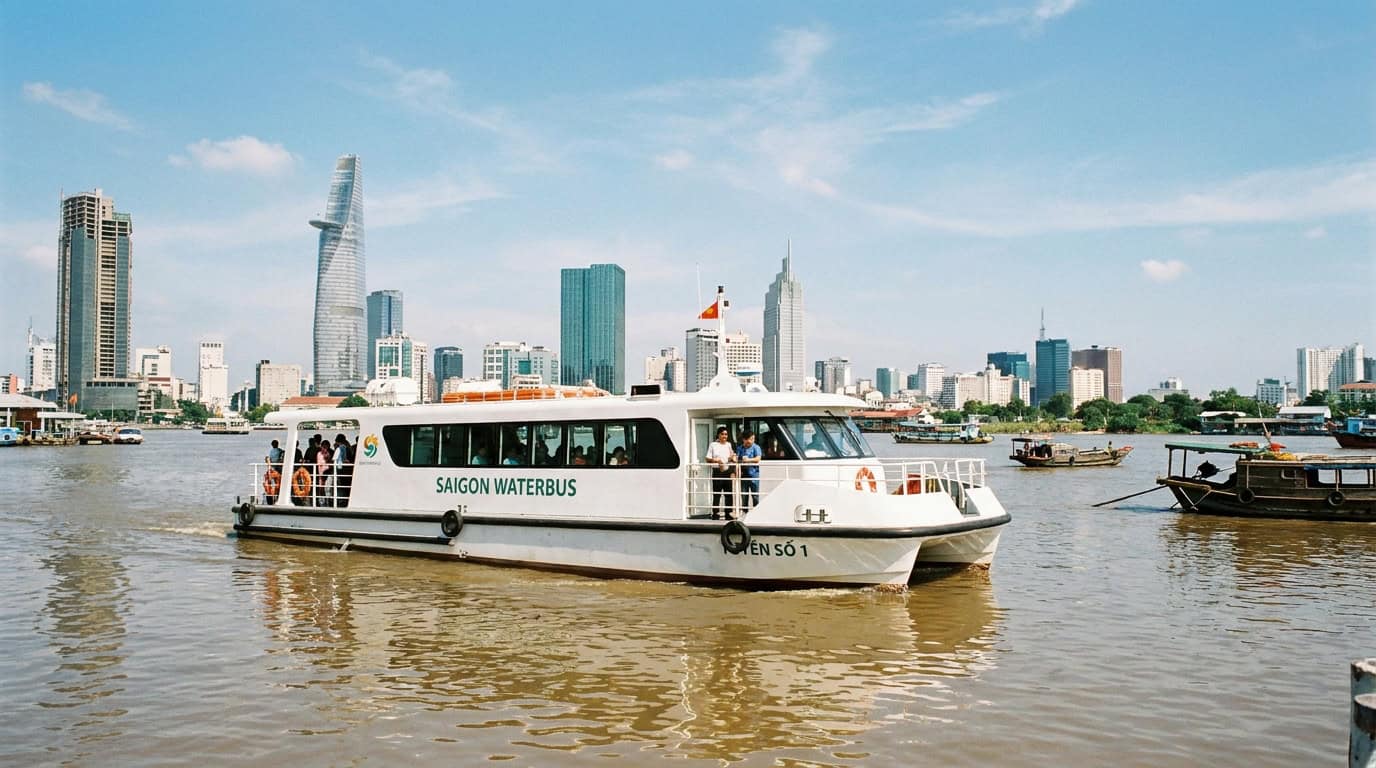
The six stops in order: Bach Dang (District 1), Thu Thiem (District 2 / Thu Duc), Binh An, Thanh Da Island, Hiep Binh Chanh, and Linh Dong. For visitors staying near the river in District 1, Bach Dang pier is walkable from the city center.
The waterbus is genuinely useful, not just scenic. Anyone commuting to or from Thu Duc during peak hours will find it far faster than road transport. The evening service after 18:00 is particularly pleasant – the Saigon River at dusk, a breeze off the water, and none of the road congestion.
Practical note: the waterbus runs on a fixed timetable, not on-demand like Grab. Check the schedule at saigonwaterbus.com before planning a trip around it. Services occasionally suspend for maintenance or weather, usually with advance notice on their Facebook page.
Xe Om (Motorbike Taxis): Old-School Saigon on Two Wheels
Xe om – the traditional street-corner motorbike taxi – still operates in Saigon, though app-based rides have replaced them for most journeys. Xe om drivers wait at fixed spots near markets, temples, and bus stops. Fares are negotiated in advance, typically 20,000-50,000 VND for short trips, but there’s no meter and no app record if something goes wrong.
The honest assessment: for tourists, GrabBike is almost always a better choice. The price is similar, the fare is locked before you ride, and the driver’s details are recorded in the app. Xe om can be quicker if there’s literally a driver right in front of you and your destination is 1 km away.
One context where xe om still makes sense is in narrow alleys (hem) where cars can’t enter. Some local drivers know these routes instinctively and will get you through congested neighborhoods faster than any app can calculate.
Renting a Motorbike in Saigon: Freedom, Costs & Legal Must-Knows
Renting a motorbike in Saigon costs 100,000-200,000 VND per day ($4-8) for a basic automatic scooter. The rental market is concentrated around backpacker areas in District 1 and Pham Ngu Lao. Shops typically require a passport copy or deposit, and rates drop significantly for weekly or monthly rentals.
The legal requirement is where many visitors get caught out. To ride legally in Vietnam, you need an International Driving Permit (IDP) issued under the 1968 Vienna Convention (not the older 1949 convention), with a motorcycle category A1 or A2 endorsement. The U.S. Embassy in Hanoi confirms this requirement explicitly (vn.usembassy.gov). Your home country’s driving licence alone is not valid.
[UNIQUE INSIGHT] In practice, police checkpoints in central Saigon rarely stop foreign tourists on scooters. But this creates a false sense of security. If you’re involved in any accident – even a minor one – an invalid licence voids your travel insurance, puts you liable under Vietnamese law, and turns what could be a simple incident into a serious legal situation. The IDP is worth getting before you leave home.
Beyond the licence, consider whether Saigon traffic matches your riding experience. The flow of motorbikes operates on unwritten rules that take a few days of observation to understand. Confident riders who’ve handled busy city traffic before generally adapt within a day. First-time riders or those used only to suburban roads will find it overwhelming initially.
Helmets are legally mandatory and always provided by rental shops. Wearing one is non-negotiable.
Walking in District 1: When Two Feet Are All You Need
District 1 is the most walkable district in Saigon, with most major landmarks concentrated within a 2 km radius of Ben Thanh Market. The walk from Ben Thanh to the Reunification Palace takes about 15 minutes. Notre-Dame Cathedral, the Central Post Office, and the Fine Arts Museum are all within comfortable walking distance of each other.
Pedestrian conditions vary by street. Nguyen Hue Walking Street (fully pedestrianized) and the riverside promenade along Ton Duc Thang are genuinely pleasant. Side streets in the backpacker area can be narrow with motorbikes parked on both footpaths, which means walking in the road occasionally.
Heat is the main limiting factor. Between 11:00 AM and 3:00 PM from March through October, walking more than 20-30 minutes becomes uncomfortable without hydration. The practical strategy: plan walking for morning (before 10:00 AM) or late afternoon (after 4:00 PM), and use Grab for anything in between.
Peak Hours, Traffic & When to Stay Off the Road
Saigon’s traffic peaks sharply between 7:00-9:00 AM and 5:00-7:00 PM on weekdays, when school runs, office hours, and market deliveries all converge. During these windows, a 5 km ride that normally takes 12 minutes can stretch to 30-40 minutes. Grab’s surge pricing also activates during these periods.
The congestion is worst on the main arterials connecting districts: Dien Bien Phu, Vo Thi Sau, Nguyen Thi Minh Khai, and the approaches to Tan Son Nhat airport. The airport route (from the city on Truong Son and Hoang Minh Giam) is particularly affected during evening peak.
Practical strategies for avoiding the worst of it:
- Schedule airport departures to avoid peak-hour travel. A 7:00 PM flight means leaving at 4:30 PM, not 5:30 PM.
- The metro bypasses road congestion entirely for the District 1 to Thu Duc corridor.
- The waterbus is unaffected by road traffic and runs on a fixed schedule.
- Midday (10:00 AM to 3:00 PM on weekdays) and weekend mornings offer the clearest roads.
Rain is a secondary factor. Saigon’s wet season runs May through November, with daily afternoon downpours usually between 2:00-5:00 PM. Roads flood quickly in heavy rain, and motorbike visibility drops sharply. Having a rain poncho (available everywhere for 20,000-30,000 VND) keeps a GrabBike or xe om ride functional. GrabCar becomes significantly more popular – and more expensive – during heavy rain.
Airport to City Center: All Your Options from Tan Son Nhat
Tan Son Nhat International Airport sits approximately 7-8 km north of District 1, and the journey to the city center typically takes 20-40 minutes depending on traffic and time of day.
| Mode | Typical Cost (VND) | USD equiv. | Best For | App Needed? |
|---|---|---|---|---|
| GrabCar | 110,000-160,000 | $4.40-6.40 | Most travelers; fixed price, A/C | Yes – Grab |
| GrabBike | 50,000-80,000 | $2.00-3.20 | Solo + light bag; budget | Yes – Grab |
| Metered Taxi (Vinasun/Mai Linh) | 120,000-180,000 | $4.80-7.20 | No smartphone; cash preferred | No (call/queue) |
| VinBus Electric Airport Route | 10,000-20,000 | $0.40-0.80 | Budget; flexible on time | BusMap helpful |
| Metro (future) | n/a | n/a | Not yet connected to airport | – |
GrabCar is the default recommendation for most arrivals. Book inside the terminal before exiting to the street – the Grab pickup zone is signposted at both terminals. This avoids the informal taxi queue outside arrivals where unlicensed operators target new arrivals.
If you’re arriving with heavy luggage late at night and the Grab wait time shows 15+ minutes, Vinasun or Mai Linh queuing at the official taxi rank is equally safe and usually similar in price.
The VinBus airport route (connecting T1, T2, and T3 to the city bus network, launched April 19, 2025) is functional for budget travelers. Allow 60-90 minutes total travel time and bring a BusMap app to navigate transfers.
A full transport comparison for getting around Saigon:
| Mode | Typical Cost (VND) | USD equiv. | Best For | App Needed? |
|---|---|---|---|---|
| Public Bus | 5,000-7,000 | $0.20-0.28 | Budget; flexible schedule | BusMap |
| GrabBike | 15,000-30,000 | $0.60-1.20 | Short hops; solo traveler | Grab |
| Xe Om | 20,000-50,000 | $0.80-2.00 | Narrow alleys; no app | None |
| GrabCar | 35,000-60,000 | $1.40-2.40 | Comfort; rain; luggage | Grab |
| Waterbus | 15,000 flat | $0.60 | River route; scenic commute | None |
| Metro Line 1 | 7,000-20,000 | $0.28-0.80 | D1 to Thu Duc; peak hours | HCMC Metro app |
| Metered Taxi | 35,000-70,000+ | $1.40-2.80+ | No smartphone; cash | None |
| Motorbike Rental | 100,000-200,000/day | $4-8/day | Multi-day exploring; IDP required | None |
Frequently Asked Questions
What is the cheapest way to get around Ho Chi Minh City?
The cheapest way to get around Ho Chi Minh City is by public bus, with fares between 5,000 and 7,000 VND (around $0.20-0.28) per trip. For short distances of 2-4 km, a GrabBike starts at 15,000-30,000 VND ($0.60-1.20). The BusMap app (iOS/Android) shows real-time GPS for all bus routes and is free to download and use.
Is Grab safe to use in Saigon?
Grab is safe to use in Saigon. The app shows the driver’s name, photo, and license plate before you accept the ride, along with real-time GPS tracking throughout the trip. Fares are fixed upfront, so there’s no negotiation or meter risk. GrabCar is especially recommended at night or when traveling with luggage, as it adds an extra layer of accountability compared to street hails.
Do I need a licence to rent a motorbike in Vietnam?
Legally, you need an International Driving Permit (IDP) issued under the 1968 Vienna Convention (not the 1949 convention) with a motorcycle category A1 or A2 endorsement. Your home country licence alone is not valid in Vietnam. The U.S. Embassy in Hanoi confirms this requirement (vn.usembassy.gov). Riding without the correct IDP voids most travel insurance policies in the event of an accident.
Is Ho Chi Minh City metro open yet?
Yes, Metro Line 1 opened on December 22, 2024. The line runs 19.7 km across 14 stations from Ben Thanh in District 1 to Suoi Tien in Thu Duc. Single-trip fares range from 7,000 to 20,000 VND ($0.28-0.80). The metro carried approximately 20 million passengers in its first year of operation, averaging around 52,000 riders per day (hochiminhcitymetro.com, 2025).
What apps do I need for getting around Saigon?
Three apps cover almost every situation. Download Grab for ride-hailing bikes and cars, BusMap for real-time public bus GPS tracking, and Google Maps for walking and general navigation. If you plan to use the metro regularly, the HCMC Metro app provides station maps, schedules, and fare information. All four are free on iOS and Android.
The Bottom Line
Getting around Saigon in 2026 doesn’t require careful advance planning. The tools are cheap, widely available, and increasingly reliable. Grab handles 80% of daily transport needs for most visitors. The metro is now a genuine option for the east-west corridor. The waterbus turns a commute into something worth doing for its own sake.
A few things to sort out before you land: download Grab and link a payment card, download BusMap, and save the Vinasun (38272727) and Mai Linh (38383838) numbers. If you plan to rent a motorbike, organize your IDP at home – it’s a bureaucratic process that takes several days in most countries and can’t be rushed once you’re already here.
The city rewards people who engage with it at street level. Most of it is reachable on a GrabBike for less than a dollar. Start there.
Sources
- Ho Chi Minh City Metro – Tickets & Fares
- HCMC Metro Line 1 Guide to Fares, Tickets & Travel – SGGP
- Saigon Waterbus – Official Site
- Driving in Vietnam – U.S. Embassy Hanoi
- Ho Chi Minh City to Launch 25 Electric Bus Routes from March 1 – Vietnamnet
Staying in Saigon?
We host furnished apartments in District 1 — studios up to two-bedroom
lofts, for stays from three nights to six months.
See the apartments or
check availability and book direct with us.
Related Guides
- Cost of Living in Saigon: Monthly Budget Breakdown
- Is Saigon Safe? Honest Safety Guide for Tourists (2026)
- Saigon Airport to District 1: All Options & Prices (2026)
- Vietnam Visa on Arrival vs E-Visa: Which Is Better?
- Rent Motorbike Vietnam: Everything You Need to Know (2026)
- Vietnam Public Holidays 2026: Complete Calendar