

Hoa Lu Ninh Binh is one of Southeast Asia’s most underrated historical
sites — a 1,058-year-old imperial capital that shaped the identity of modern
Vietnam and still stands, remarkably intact, inside a ring of jagged limestone
mountains. Founded in 968 AD by Emperor Dinh Tien Hoang after he unified the
country’s warring feudal lords, this walled citadel served as Vietnam’s seat
of power for 42 years across two dynasties before the court relocated north
to Thang Long (today’s Hanoi) in 1010 AD. Two beautifully preserved royal
temples, stone-carved dragon gates, and sweeping karst scenery make it one of
the most rewarding half-day stops on any northern Vietnam itinerary.
This 2026 guide covers everything foreign visitors need: the history, the
temples, entrance fees, how to get there from Hanoi or Ho Chi Minh City, the
best time to go, and the smartest way to combine Hoa Lu with nearby
world-class attractions like Trang An and Tam Coc.
Key Takeaways
– Hoa Lu served as Vietnam’s first unified capital from 968–1010 AD — 42 years spanning the Dinh and Early Le dynasties.
– Two royal temples survive inside the ancient citadel: Dinh Tien Hoang Temple and Le Dai Hanh Temple. Entrance is just 20,000 VND (~$0.80).
– The site is 90 km south of Hanoi — reachable by road in under 2 hours.
– UNESCO-listed Trang An Landscape Complex sits 4 km away, making a natural same-day pairing.
– October through April is the best time to visit: dry, cool, and the limestone karst looks its sharpest.
Quick-Reference Summary
| Detail | Info |
|---|---|
| Location | Truong Yen Commune, Hoa Lu District, Ninh Binh Province |
| Distance from Hanoi | ~90 km south (~2 hours by road) |
| Distance from Ninh Binh City | ~12 km northwest |
| Opening Hours | 7:00 AM – 6:00 PM daily |
| Entrance Fee | 20,000 VND (~$0.80) per adult |
| Time Needed | 1.5–3 hours |
| Best Season | October – April (cool, dry season) |
| Nearest Airport | Noi Bai International Airport, Hanoi (~100 km) |
What Is Hoa Lu Ninh Binh?
Hoa Lu Ninh Binh is the archaeological site of Vietnam’s first imperial
capital — a fortified city built in 968 AD when Emperor Dinh Bo Linh, known
posthumously as Dinh Tien Hoang, finally united the country after decades of
civil war. The walled complex covered roughly 300 hectares, using the natural
limestone cliffs as three of its four defensive walls and supplementing the
fourth side with earthen ramparts and a moat fed by the Sao Khe River. It
was a mountain fortress cleverly disguised as a city.
Unlike Hue or Hoi An, Hoa Lu was never a trading settlement. It was a
military capital chosen for defensibility above everything else. Two dynasties
held it:
- Dinh Dynasty (968–979 AD): Founded by Dinh Tien Hoang after unifying
the country’s 12 warring lords. Ended abruptly with the assassination of
the emperor and his crown prince. - Early Le Dynasty (980–1009 AD): General Le Hoan seized control, ruled
as Le Dai Hanh, and successfully repelled a major Song Chinese invasion in
981 AD — one of the most decisive military victories in Vietnamese history.
In 1010 AD, the newly enthroned King Ly Thai To moved the capital north to the
Red River plain, establishing Thang Long — the city that became Hanoi. The
royal palaces gradually crumbled. What survives today are two temples, ancient
citadel gates, and a topography almost entirely unchanged from the 10th century.

The outer gate of the Hoa Lu citadel, with karst peaks rising directly behind it.
A Brief History: Vietnam’s Forgotten First Capital
Vietnam’s national story tends to begin in Hanoi or Hue, but the foundation
of modern Vietnam was laid right here in a river valley carved out of
limestone. Understanding why Hoa Lu existed — and why it was abandoned —
explains a great deal about Vietnamese history.
In the mid-10th century, the Tang Dynasty’s collapse left northern Vietnam
fractured among 12 warlords in what historians call the “Twelve Lords’
Rebellion” (Loạn Thập Nhị Sứ Quân). Dinh Bo Linh, born near this very
valley, spent decades outmaneuvering and defeating each faction in turn. By
968 AD he was emperor, and he made two decisive choices: he named the new
kingdom Dai Co Viet (the first time Vietnam was declared a fully independent
state), and he chose Hoa Lu — his home terrain — as its capital.
The location was strategically brilliant. Any invading Chinese army would
have to march through narrow mountain passes, fighting at every step. Local
troops, knowing the terrain, could hold the citadel almost indefinitely. That
calculation proved correct: when the Song Dynasty invaded in 981 AD, Le Dai
Hanh’s forces repelled them decisively, cementing Vietnamese independence.
When Ly Thai To abandoned Hoa Lu for Thang Long in 1010 AD, it wasn’t
failure — it was success. The kingdom had stabilised enough to govern from an
open city. Hoa Lu’s very defensiveness had become a liability. It’s a rare
example of a capital made obsolete by the peace it helped create.
The Two Temples at the Heart of the Ancient Citadel

The temples are the main reason foreign visitors come here — and they don’t
disappoint. Both were substantially rebuilt during the 17th century by later
Vietnamese kings honouring the founding dynasties, but they stand on the
original 10th-century palace foundations and house statues, ceremonial
objects, and stonework that dates to the Dinh and Le eras.
Dinh Tien Hoang Temple (Đền Vua Đinh)
This is the larger and more elaborately decorated of the two. A long paved
approach flanked by stone animals and incense burners leads to a triple-gated
entrance embellished with carved dragons. Inside the main hall, a gilded
bronze statue of Emperor Dinh Tien Hoang sits on the central altar, attended
by figures of his three sons.
The stone dragon pillars at the outer gate are the temple’s most celebrated
feature. Vietnamese art historians consider them the finest surviving examples
of Dinh-era stonework in the country. Notice how the tail of each dragon curls
in perfect mirror symmetry, and how the carving grows finer the closer you
look. To the right of the main hall, a smaller shrine marks the spot where
the emperor’s royal tiger was traditionally kept.
Allow 30–45 minutes here. Arrive before 9:00 AM and you’ll often have the
courtyard nearly to yourself.
Le Dai Hanh Temple (Đền Vua Lê)
About 500 metres west along a shaded forest path, this quieter shrine
honours Emperor Le Dai Hanh and his consort, Queen Duong Van Nga. The
architecture is slightly simpler — fewer carved surfaces, a more intimate
courtyard — which gives it a contemplative, unhurried atmosphere.
Queen Duong Van Nga is a genuinely complex historical figure. Originally
empress to Dinh Tien Hoang, she supported Le Hoan’s rise to power after
the emperor’s assassination, then became his consort. Her statue shares the
altar with Le Dai Hanh’s, and her role — heroic peacemaker or pragmatic
survivor — is still debated by Vietnamese historians.
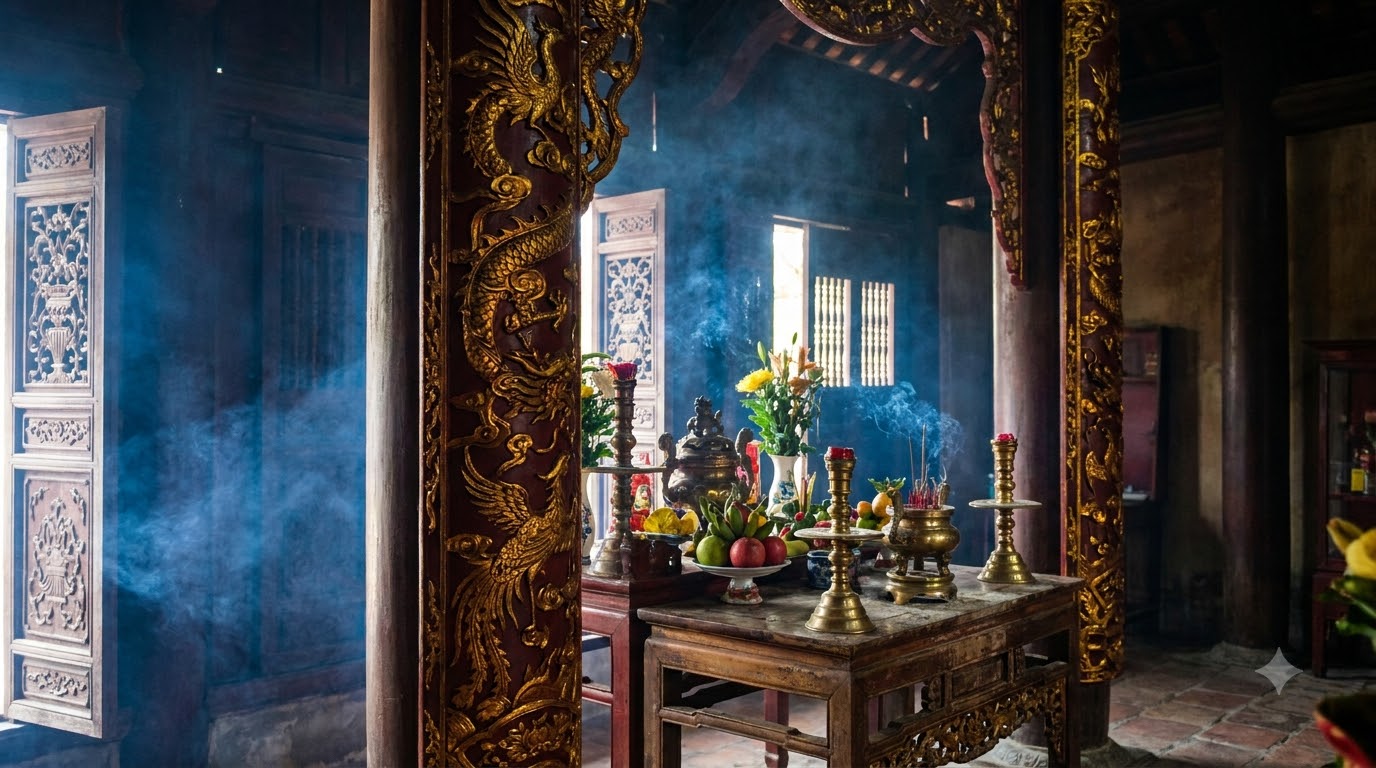
The central altar inside Dinh Tien Hoang Temple. Incense smoke rises throughout the day as pilgrims pay respects.
Dynasty Timeline: Who Ruled from Hoa Lu?

How to Get to Hoa Lu from Hanoi and Beyond
Getting to Hoa Lu is straightforward from Hanoi — and fully manageable from
Ho Chi Minh City with a short flight connection.
From Hanoi (~90 km south)
Organised day tour (most popular for foreign visitors): Dozens of Hanoi
operators offer Hoa Lu + Trang An day trips for 350,000–650,000 VND
($14–$26) per person, including minibus transport, a local guide, and
entrance fees. Tours depart 7:00–8:00 AM and return by 6:00–7:00 PM. Most
reputable budget guesthouses in the Old Quarter can book these.
Private car or minivan: Arrange a car with driver through your hotel for
1,200,000–1,800,000 VND ($48–$72) for the full day — flexible, comfortable,
and cost-effective for groups of three or four splitting the bill.
Public bus + local taxi: Buses run from Hanoi’s My Dinh or Giap Bat
station to Ninh Binh City (80,000–120,000 VND / $3.20–$4.80; around 2
hours). From Ninh Binh, a GrabBike or local taxi covers the 12 km to Hoa Lu
for 40,000–120,000 VND ($1.60–$4.80). Budget option, but it involves more
transfers.
Reunification Express train: Trains from Hanoi’s Ga Ha Noi to Ninh Binh
station take approximately 2 hours from 45,000 VND ($1.80) in hard seat.
Add a taxi from the station to the site.
From Ho Chi Minh City (~1,400 km)
There’s no practical overland route from Saigon. Fly to Hanoi (1h 50m, from
600,000 VND / $24 on budget carriers like VietJet or Bamboo Airways), then
follow the Hanoi options above. If you’re building a south-to-north Vietnam
loop, our Saigon to northern Vietnam itinerary covers
the best sequence for fitting Ninh Binh into a 10- or 14-day trip from
Ho Chi Minh City.
Entrance Fees, Opening Hours & What to Bring
The entrance fee to the Hoa Lu ancient capital complex is a flat 20,000
VND (~$0.80) per adult — one of the most affordable historical sites in
all of Vietnam. One ticket covers both temples and the surrounding citadel
grounds. Children under 15 typically enter free or at a reduced rate; confirm
at the gate.
Opening hours: 7:00 AM – 6:00 PM daily, including Vietnamese public
holidays. The Hoa Lu Festival (Lễ hội Cố đô Hoa Lư), held on the
8th–10th day of the 3rd lunar month (usually March or early April), draws
large pilgrimage crowds — remarkable to witness if you plan around it.
What to pack:
- Cash in VND — no card readers at the ticket booth.
- Modest clothing — covered shoulders and knees are required inside the
inner temple sanctuaries. Sarongs available at the entrance for a small
deposit. - Water and snacks — vendors at the gate sell drinks; prices inside the
grounds are higher. - Comfortable walking shoes — paths between the temples are paved but
uneven in places. - Hat and sunscreen — main courtyards are open-air with limited shade
from mid-morning onwards.
Parking is available at the main gate: 5,000 VND for motorbikes,
10,000–20,000 VND for cars. Clean public toilets sit near the ticket booth.
Best Time to Visit Hoa Lu Ninh Binh
The best time to visit Hoa Lu Ninh Binh is October through April, when
northern Vietnam’s dry season brings clear skies, temperatures between
18–28°C, and low humidity. The karst peaks look their sharpest in clean
winter air, and the rice paddies surrounding the citadel walls turn gold
during the October–November harvest — producing some of the most-photographed
rural landscapes in the country.
Season-by-season breakdown:
| Season | Months | Avg. Temp | Conditions |
|---|---|---|---|
| Peak | Oct–Nov | 22–28°C | Harvest gold, clear skies, ideal photography |
| Good | Dec–Feb | 15–22°C | Quieter crowds; occasional light drizzle |
| Acceptable | Mar–Apr | 20–28°C | Dry; Hoa Lu Festival falls in this window |
| Hot & Wet | May–Sep | 28–35°C | Heavy rain, high humidity, reduced visibility |
May through September is manageable but genuinely uncomfortable. The
combination of 33–35°C heat and high humidity makes wandering open temple
courtyards draining, and heavy rains can make the Sao Khe River pathways
slippery and unpleasant.
Practical note: Visit on a weekday if you can. Weekend crowds at Hoa Lu
and adjacent Trang An can be heavy, particularly during Vietnamese school
holidays in June–August and during the Tết holiday period in late January
to early February.
Day Trip or Overnight Stay?
Most foreign visitors do the ancient capital as a day trip from Hanoi, and
for a single attraction that’s absolutely sufficient. The temple complex takes
1.5–2 hours; pair it with Trang An (3–4 hours by rowboat) and you have a
full, satisfying day within a 12-hour Hanoi return.
That said, staying overnight in Tam Coc or Ninh Binh City unlocks a
genuinely different experience:
- Sunrise at Mua Cave viewpoint before day-trip crowds arrive (~500 steps,
25-minute climb, the best panorama in the province). - Trang An in the early morning — far quieter and more atmospheric than
the midday rush. - Country road cycling between Tam Coc, Hoa Lu, and Bich Dong Pagoda
(flat, scenic, about 3 km each way). - Cuc Phuong National Park (45 km away) — Vietnam’s oldest national park,
excellent for hiking and visiting the primate rescue centre.
Recommendation for most visitors: 2 nights. Day 1: Hoa Lu + Trang An.
Day 2: Tam Coc, Mua Cave, Bich Dong Pagoda. Budget guesthouses in Tam Coc
run 250,000–500,000 VND ($10–$20) per night; mid-range hotels charge
700,000–1,400,000 VND ($28–$56).
If you’re approaching Vietnam from the south and need help structuring the
bigger journey, our guide on things to do in Ho Chi Minh City
covers how to build a south-to-north itinerary that slots Ninh Binh in
naturally after Saigon.
Nearby Attractions to Pair with Your Hoa Lu Ninh Binh Visit
The area immediately surrounding the ancient capital packs in more UNESCO-grade
scenery per square kilometre than almost anywhere else in Vietnam. These four
sites all sit within 12 km and each adds something genuinely distinct to the
day.
Trang An Landscape Complex (4 km from Hoa Lu)
A UNESCO World Heritage Site inscribed in 2014,
Trang An is a network of grottoes, lagoons, and towering limestone islands
navigated by wooden rowboat. Rowers guide you through narrow cave passages and
open water while egrets fish in the shallows. Each circuit runs 2.5–3 hours.
Tickets cost 250,000 VND ($10) per person, including the boat and rower.
Book at the main wharf on National Route 38B and aim to arrive by 8:30 AM to
beat the midday tour-bus wave.
Tam Coc (9 km from Hoa Lu)
Often called “Ha Long Bay on land,” Tam Coc offers rowboat trips through three
natural caves carved into limestone mountains, with flooded rice paddies
stretching to the horizon on both sides. Boat tickets cost 150,000 VND ($6)
per adult. The cycling route from Tam Coc village out to Bich Dong Pagoda
is excellent: flat, quiet country road, roughly 3 km each way.
Bich Dong Pagoda (10 km from Hoa Lu)
Three temple levels are built directly into the face of a limestone cliff,
linked by steep stone staircases between cave chambers. Entry is free.
Allow 45–60 minutes. It’s consistently less crowded than Trang An or Tam Coc,
making it a good late-afternoon addition once the day-tripper coaches have
departed.
Mua Cave & Viewpoint (11 km from Hoa Lu)
The 500-step climb to the dragon-topped summit delivers the most-photographed
panoramic view in Ninh Binh — a sweeping vista of the Tam Coc rice valley
framed by limestone peaks. Entrance: 100,000 VND ($4). The climb takes
25–35 minutes at a steady pace. Sunrise and the hour before sunset produce
the best light and the fewest tourists.
For a province-wide overview, the Vietnam National Administration of Tourism’s
Ninh Binh page
lists all major attractions with current hours and transport details.

Trang An, 4 km from the ancient capital — book the first morning slot for the best experience.
Practical Tips for Foreign Visitors at Hoa Lu Ninh Binh
First-time visitors to Hoa Lu Ninh Binh run into the same handful of
surprises. Here’s how to sidestep them.
Hire a guide at the entrance. Almost nothing inside the temple complex
is labeled in English. A licensed local guide costs 150,000–200,000 VND
($6–$8) for a 90-minute tour and transforms the experience from “pretty
temples” to a gripping narrative about Vietnam’s founding. Guides are
available at the ticket booth — no advance booking needed.
Arrive before 9:00 AM. Tour buses from Hanoi typically pull in between
9:30 and 10:30 AM. Getting there early means quiet courtyards, no queue for
tickets, and far better photography conditions in the soft morning light.
Don’t skip the citadel walls. Most visitors walk directly between the
two temples and miss the partially restored rampart walls on the northern
perimeter. The views of the karst peaks from the wall path are the best in the
complex — and virtually no tour groups go there.
Respect temple etiquette. Remove footwear before entering inner
sanctuaries. Move quietly. Avoid turning your back to the central altar while
backing out. Photography is generally welcome in the outer courtyards; follow
local cues inside the halls.
Budget for a full day. A comfortable self-guided day from Ninh Binh City
covering Hoa Lu, Trang An, and Bich Dong costs approximately:
| Item | VND | USD |
|---|---|---|
| Local transport (return) | 200,000 | ~$8 |
| Hoa Lu entrance | 20,000 | ~$0.80 |
| Trang An boat | 250,000 | ~$10 |
| Local guide (optional) | 150,000 | ~$6 |
| Lunch at a local restaurant | 80,000–120,000 | ~$3–$5 |
| Bich Dong Pagoda | Free | Free |
| Total | ~700,000–740,000 | ~$28–$30 |
For broader northern Vietnam logistics, check our Hanoi day trips guide
and Ninh Binh travel guide for more detail on
transport, accommodation, and how to link the region with Hanoi and Ha Long Bay.
Frequently Asked Questions
How long does it take to visit Hoa Lu?
Plan on 1.5 to 2 hours inside the Hoa Lu Ninh Binh complex to visit both
temples, walk the citadel perimeter path, and browse the small historical
display near the main gate. With a licensed guide, budget 2.5 hours. Most
visitors combine Hoa Lu with Trang An on the same day, making the total outing
7–9 hours from central Hanoi.
Is Hoa Lu worth visiting if I’ve already been to Trang An?
Yes — they tell completely different stories. Trang An is a natural landscape
experience. Hoa Lu is a cultural and historical immersion spanning 1,000+ years
of imperial history. The 10th-century stone dragon carvings, twin royal
temples, and the narrative of Vietnam’s first unified capital make Hoa Lu
compelling on its own terms. At 20,000 VND (~$0.80) entrance, the cost is
essentially no barrier to adding it.
Can I visit Hoa Lu independently without a tour?
Easily. The site is clearly signed from Ninh Binh City, tickets are sold in
cash at the main gate, and the grounds are self-navigable. That said, hiring
a guide at the ticket booth (150,000–200,000 VND / $6–$8) dramatically
increases the depth of the visit — almost nothing inside the complex is labeled
in English, and the history is rich enough to reward explanation.
What is the Hoa Lu Festival and when does it happen?
The Hoa Lu Festival (Lễ hội Cố đô Hoa Lư) falls on the 8th–10th day of the
3rd lunar month, typically in March or early April. It’s one of Ninh Binh
Province’s largest cultural events, featuring dragon boat races on the Sao
Khe River, ceremonial incense processions, traditional music, and thousands of
pilgrims honouring Emperors Dinh Tien Hoang and Le Dai Hanh. Expect bigger
crowds but a spectacular atmosphere.
How do I get from Ninh Binh City to the ancient capital?
Hoa Lu ancient capital is 12 km northwest of Ninh Binh City. Options: a
GrabBike (40,000–60,000 VND / $1.60–$2.40), a local taxi (120,000–150,000
VND / $4.80–$6.00), or a rented bicycle (30,000–50,000 VND / $1.20–$2.00
per day). The cycling route along Route 477 passes through rice paddies and
karst scenery — flat, scenic, and about 40 minutes each way. It’s one of the
nicest rides in the province.
Start Your Vietnam Journey Right: Stay in District 1, Saigon
📌 Đọc thêm: Ninh Binh Where to Stay: Best Hotels & Homestays · Van Long Nature Reserve: Ninh Binh’s Best Kept Secret · Bich Dong Pagoda Ninh Binh: Hidden Gem Guide
Planning a Vietnam trip that takes in both Ho Chi Minh City and the north?
Start your journey in the right place.
Saigon Homestay in District 1 puts you walking distance from Ben
Thanh Market, the city’s best street food lanes, and the airline and bus
terminals you’ll need for your onward journey to Ninh Binh and Hoa Lu. Clean
air-conditioned rooms, free breakfast, 24-hour reception, and staff who speak
English and can help you plan every leg — including the best day-trip options
once you reach Hanoi.
Read our complete Saigon itinerary guide to plan the
ideal south-to-north Vietnam loop that includes Hoa Lu, Trang An, and Ha Long
Bay — then book your central District 1 room and start packing.
Sources: Đại Việt sử ký toàn thư (Complete Annals of Đại Việt); Ninh Binh
Provincial Tourism Authority; UNESCO World Heritage List, entry 1438 — Trang An
Landscape Complex; Vietnam National Administration of Tourism. Prices and
opening hours verified June 2026. Always confirm current fees at the site
before your visit.
Prices here are in Vietnamese dong. Our Vietnam currency and money exchange guide covers live rates, ATM fees and where to change money.
Related Guides
- Mua Cave Ninh Binh: Hike, Views & Complete Guide
- Trang An Ninh Binh: Boat Tour Guide & Visitor Tips
- Ninh Binh Vietnam: Complete Travel Guide (2026)
- Hanoi to Ninh Binh: Day Trip vs Overnight Guide
- Hoa Lo Prison Hanoi (Hanoi Hilton): What to Know Before Visiting
- Ha Long Bay Luxury Cruise: Best High-End Options (2026)