
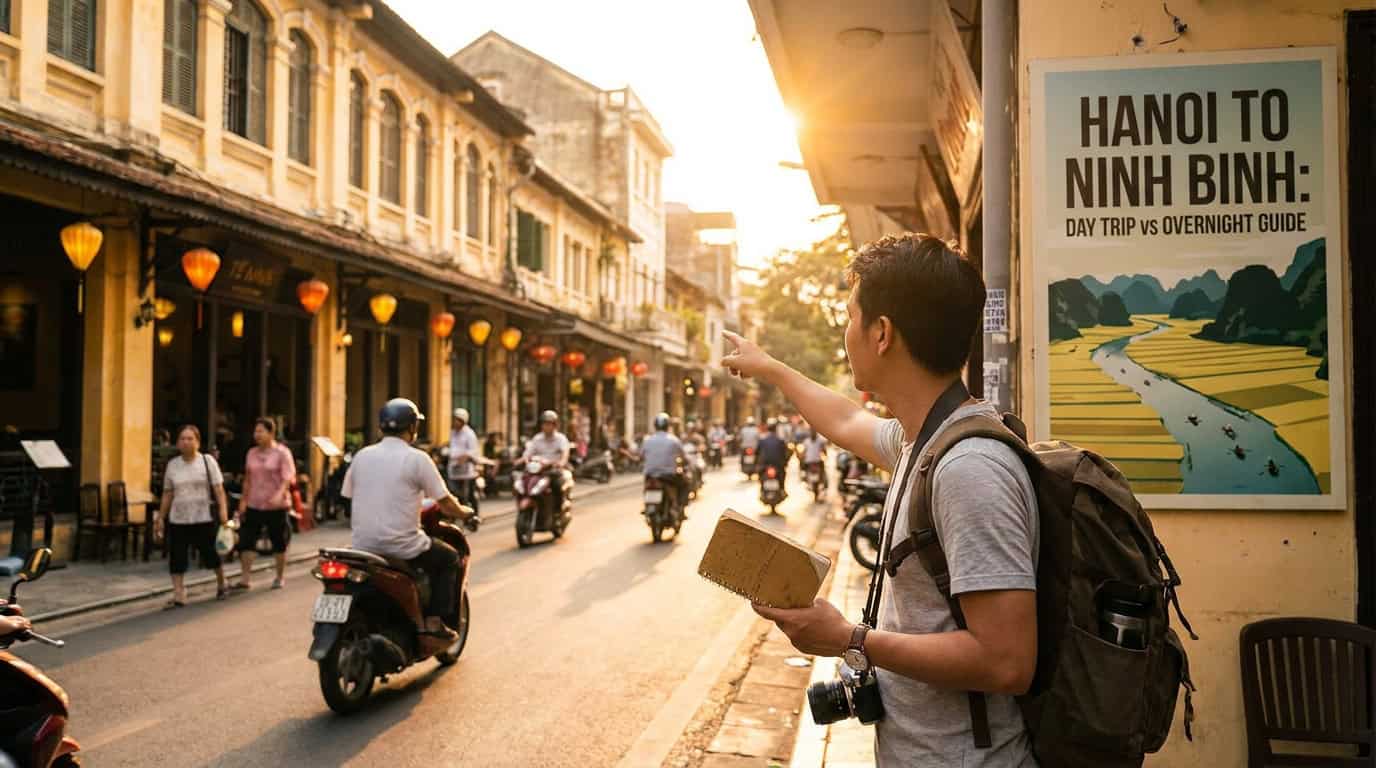
The hanoi to ninh binh route is one of Southeast Asia’s most rewarding short trips, placing you inside a dramatic karst landscape just two hours south of the capital. Ninh Binh feels like a different world entirely: flooded rice paddies mirroring limestone peaks, ancient temples half-swallowed by jungle, and river routes that wind through natural caves. Yet it’s close enough to do in a day and rich enough to deserve two. This guide breaks down every transport option, every major sight, and the honest case for overnight versus day trip — so you can make the right call for your schedule and budget.
Key Takeaways
– Ninh Binh sits 93 km (58 miles) south of Hanoi — a 2-hour journey by train from 100,000 VND ($4).
– Trang An is the only UNESCO Mixed World Heritage Site in Southeast Asia, inscribed in 2014.
– A day trip is doable, but an overnight stay unlocks sunrise at Mua Cave and countryside cycling.
– Four transport options range from 80,000 VND ($3) by bus to 1,200,000 VND ($48) for a private car.
– Start early — tour buses arrive at 9–10 am; sights open at 7–8 am.
– Ninh Binh Province welcomed 7.8 million visitors in 2023 (Ninh Binh Department of Tourism).
Why Ninh Binh Belongs on Every Vietnam Itinerary
Ninh Binh Province welcomed approximately 7.8 million visitors in 2023, according to the Ninh Binh Department of Tourism — a number that has climbed steadily since Trang An’s international recognition. The province packs an unusual density of world-class sights into a compact area you can cover by bicycle. That combination of accessibility and beauty makes it hard to justify skipping.
For anyone planning the hanoi to ninh binh journey, the key selling point is variety. Within a 15 km radius you can boat through limestone caves, climb to a panoramic viewpoint, walk around a 1,000-year-old royal capital, and visit a pagoda built into a cliff face. That’s not typical even by Vietnamese standards.
According to the Vietnam National Tourism Administration, Ninh Binh Province welcomed approximately 7.8 million visitors in 2023, driven largely by Trang An’s UNESCO status. The Trang An Landscape Complex — inscribed in 2014 as the only UNESCO Mixed World Heritage Site in Southeast Asia — remains the province’s primary international draw.
The landscape itself is the story. The karst formations here are the same ancient limestone that defines Ha Long Bay, except here they rise directly from rice paddies and river channels instead of the sea. It’s a quieter, more grounded version of that spectacle — and many travelers prefer it.
How to Get from Hanoi to Ninh Binh: 4 Transport Options

The hanoi to ninh binh journey covers 93 km (58 miles) and takes two to two-and-a-half hours depending on your chosen method. Four main options exist, ranging from a budget bus seat under 100,000 VND to a private car that picks you up from your hotel door. Here’s how they compare.
| Method | Duration | Cost (VND) | Cost (USD) | Best For |
|---|---|---|---|---|
| Train | ~2 hrs | 100,000–200,000 | $4–$8 | Solo travelers, budget |
| Bus / Limousine | ~2.5 hrs | 80,000–150,000 | $3–$6 | Budget-first |
| Private Car | ~2 hrs | 800,000–1,200,000 | $32–$48 | Families, groups of 3–4 |
| Guided Day Tour | ~12 hrs total | 400,000–600,000 | $16–$24 | First-timers |
Train (Recommended for Most Travelers)
Vietnam Railways (DSVN) operates multiple daily services between Hanoi’s Ga Ha Noi station and Ninh Binh station. The journey takes about two hours in a clean, air-conditioned carriage. Tickets run 100,000–200,000 VND ($4–$8) per person each way, booked at dsvn.vn with international Visa and Mastercard accepted. Book 3–5 days ahead — seats in the cheaper hard-seat class sell out fast on weekends and holidays.
The SE3 service departs Hanoi at approximately 6:00 am and arrives around 8:00 am. That two-hour head start over the tour-bus crowds means you’ll reach Mua Cave in morning light, before the stone steps get congested and before the heat builds. It’s the single scheduling move that separates a great day from a stressful one.
Bus and Limousine Van
Buses from Giap Bat or My Dinh bus stations take roughly 2.5 hours and cost 80,000–150,000 VND ($3–$6). Limousine vans — 9-seat minibuses with assigned seats — are faster and more comfortable than standard buses, typically priced at 120,000–150,000 VND ($5–$6). The downside: drop-off points can be a few kilometres from the main sights, so you’ll likely need a motorbike taxi to the attractions.
Private Car
A private transfer costs 800,000–1,200,000 VND ($32–$48) for the vehicle, not per person. Split across three or four travelers, that’s competitive with the train. You get door-to-door pickup, a flexible schedule, and a driver who can wait while you explore. This option works particularly well for families with young children or groups carrying heavy bags.
Guided Day Tour
Organized tours from Hanoi typically cost 400,000–600,000 VND ($16–$24) per person and bundle transport, a guide, boat tickets, and sometimes lunch. The trade-off is fixed timing and group pace — you’ll arrive at peak hours alongside dozens of other tour buses. For first-time visitors who want zero logistics stress, tours deliver real value. For everyone else, independent travel gives far more flexibility.
Top Things to Do in Ninh Binh
Ninh Binh’s sights cluster within a compact corridor you can cover by bicycle, motorbike, or a combination of both. Plan your day roughly north to south: start with Trang An or Tam Coc on the water, move to Hoa Lu in the afternoon, and finish at Mua Cave for late-afternoon light.

Bamboo rowboats at Tam Coc thread through three natural limestone caves — arrive before 9 am for the calmest experience.
Tam Coc
Tam Coc translates as “three caves” — three natural tunnels carved through limestone hills that your boat passes through on a flat river. The ride takes about 90 minutes round-trip. Entrance is 200,000 VND ($8), and boat rowers are often elderly local women who row with their feet on the return stretch. Go before 9 am to beat the tourist flotillas that form later in the morning. The light is softer, the water is calmer, and the photographs are better.
Trang An
Trang An is the flagship attraction and the reason international visitor numbers keep rising. The three-hour boat circuit winds through 48 caves and past several ancient temples and shrines set inside the karst formations. Entrance is 200,000 VND ($8) and includes the boat. It was designated a UNESCO Mixed World Heritage Site in 2014 — the only site in Southeast Asia recognized for both natural and cultural values (UNESCO World Heritage List, Site #1438). Allow at least half a day and bring a light jacket for the cave passages.
Hoa Lu Ancient Capital
Hoa Lu served as Vietnam’s capital from 968 to 1009 CE under the Dinh and early Le dynasties, before the court moved north to Hanoi. Two restored royal temples mark the site today: Dinh Tien Hoang Temple and Le Dai Hanh Temple. Entrance is just 20,000 VND ($1) — genuinely one of the best-value heritage sites in the country. Budget 45–60 minutes. The history is more interesting than the temples suggest on the surface, so a short guide or audio tour adds real context.
Hang Mua (Mua Cave Viewpoint)
Hang Mua isn’t actually a cave — it’s a 500-step stone staircase that climbs through dragon sculptures and frangipani trees to a summit with a 360-degree panorama over the Tam Coc valley. Entrance is 100,000 VND ($4). Sunrise and late afternoon are the golden windows: the rice paddies turn vivid green in low-angle light, and the crowds are thinner. Midday brings brutal heat and washed-out photographs. There’s no shade on the climb, so bring water and a hat.
Bich Dong Pagoda
Bich Dong is a three-level pagoda built directly into a cliff face, dating to the 15th century. Entrance is free or by small donation. It’s a 10-minute cycle from Tam Coc and takes about 30–40 minutes to explore. Most day-trippers skip it in favor of the larger sights, which means you’ll likely have it nearly to yourself. The upper cave chamber is the highlight — cool, dim, and draped with altar decorations against a backdrop of natural rock.
Hanoi to Ninh Binh Day Trip vs Overnight: Which Is Right for You?
The hanoi to ninh binh debate between day trip and overnight stay comes down to one question: how many free days do you actually have? Both options work, but they deliver very different experiences.
| Day Trip | 1–2 Night Stay | |
|---|---|---|
| Typical cost | 400,000–700,000 VND ($16–$28) | 1,000,000–2,000,000 VND ($40–$80) |
| Sights covered | Tam Coc OR Trang An + Hoa Lu | All sights at a relaxed pace |
| Sunrise / sunset | Missed | Sunrise at Mua Cave |
| Countryside cycling | Unlikely | Full-day cycling |
| Pace | Rushed | Relaxed |
| Best for | Travelers with <1 free day | Anyone with 2+ free days |
Making the Most of a Day Trip
A hanoi to ninh binh day trip is tight but absolutely doable with the right timing. Catch the 6 am train to arrive by 8 am. Head straight to Tam Coc or Trang An while the water is calm and the light is soft. Then move to Hoa Lu for a quick heritage stop before the midday heat kicks in. Finish at Mua Cave in the late afternoon when the light drops behind the karst peaks — then catch the 5–6 pm train back and you’re in Hanoi by 8 pm.
What you genuinely miss: sunrise from the Mua Cave summit, any serious cycling through countryside villages, the strange quiet of Trang An at 7 am before other boats appear, and a dinner of mountain goat with no particular schedule to keep.
We’ve found consistently that the overnight option wins on pure value. The extra 200,000–400,000 VND ($8–$16) for a guesthouse room buys a categorically different experience. The morning light on the rice paddies, cycling with nowhere to be, a slow breakfast of cơm cháy — these aren’t small bonuses. They’re the whole point of a place like Ninh Binh.
Why Overnight Changes Everything
Budget guesthouses in the Ninh Hai commune near Tam Coc run 200,000–400,000 VND ($8–$16) per night, usually including breakfast and free bicycle rental. A second morning unlocks Trang An before the tour boats arrive, a full cycling loop through villages and rice fields, and sunrise at Mua Cave. That’s the photograph every visitor wishes they’d taken.
Best Time to Visit Ninh Binh
October through April is the dry season and the most popular window, with temperatures ranging from 18–28°C and reliable blue skies that make landscape photography easy. November and December offer the clearest light and the most comfortable walking temperatures. April brings the rice paddies to their most vivid green stage just before harvest — genuinely beautiful.
May and June warm up noticeably but remain manageable. Humidity climbs, but crowds thin compared to peak season. July through September is monsoon season: hot, heavy rain, and dramatically high water levels. The karst reflections sharpen when water rises. Sights are emptier and cheaper. It’s a legitimate option if you don’t mind afternoon downpours and prefer fewer tourists.
Two periods to avoid if possible: Tết (Vietnamese Lunar New Year, typically late January or February) brings massive domestic travel surges and many local restaurants closing. The April 30–May 3 holiday weekend is similarly crowded. If your dates overlap with either window, book transport well in advance.
What to Eat in Ninh Binh
Ninh Binh has a regional food identity that’s genuinely distinct from Hanoi — and missing it is one of the easiest ways to under-rate the trip. The two dishes worth prioritizing are cơm cháy and dê núi. You’ll find both within five minutes of the main sights.
Cơm cháy is scorched rice pressed into thick cakes and served with braised pork and a savory sauce. It costs 50,000–80,000 VND ($2–$3) per portion and originated here in Ninh Binh. You can find versions of it in Hanoi, but they’re pale imitations.
Cơm cháy is one of those dishes you genuinely can’t replicate elsewhere. Versions sold in Hanoi and Saigon use the name but miss the texture: the authentic Ninh Binh version is thick, almost biscuit-like, with a deep caramel char that doesn’t soften under the sauce. Order it here, or you’ve essentially not had it.
Dê núi (mountain goat) is grilled or steamed, then served with rice paper, fresh herbs, and a dipping sauce. Restaurants along the road between Hoa Lu and Tam Coc specialize in it. It’s heavier than most Vietnamese food and works well as a lunch or early dinner.
For a light breakfast before your morning boat ride, find a local market stall selling nem cuốn or bánh cuốn for under 30,000 VND ($1.20). Carry cash for all of this — most small restaurants and stalls near the sights don’t accept cards, and ATMs in the area are limited.
Practical Tips Before You Go
A few small decisions will make a significant difference to your day. The biggest is timing. Tour buses from Hanoi start arriving at Tam Coc and Trang An between 9 and 10 am. Most sights open at 7 or 8 am. That two-hour gap is your window.
Book your train at least 3–5 days ahead at dsvn.vn, which accepts international Visa and Mastercard. The SE3 departure at approximately 6:00 am from Hanoi is the one to aim for. Soft-seat class costs slightly more than hard seat but is worth the extra comfort on a 2-hour journey.
Rent a bicycle locally for 50,000–70,000 VND ($2–$3) per day — almost every guesthouse near Tam Coc offers them. The roads between sights are flat, light on traffic, and genuinely pleasant. A motorbike is faster, but you’ll miss the detail at cycling pace.
Bring sunscreen and a hat with a brim. The Mua Cave staircase has zero shade and takes 20–30 minutes to climb. Small bills also matter: temple donations and boat rower tips of 20,000–50,000 VND are customary and appreciated.
Planning other day trips from Hanoi? A Hue day trip from Hanoi is a popular extension if your northern Vietnam itinerary has room for another classic stop.
Where to Stay Near Tam Coc
The best base for a Ninh Binh overnight stay is the Ninh Hai commune area — roughly 7 km from Ninh Binh town and within cycling distance of all the main sights. Budget guesthouses here run 200,000–400,000 VND ($8–$16) per night and almost always include breakfast and free bicycle rental. That effectively makes the bicycle free.
Mid-range boutique hotels line the Tam Coc waterway, priced at 600,000–1,000,000 VND ($24–$40) per night. Many have private pools, mountain-view terraces, or garden restaurants. The price jump from budget to mid-range is significant, but the quality difference is real.
Wherever you stay, book direct or through a reputable platform and confirm bicycle availability when you reserve. If your accommodation doesn’t include a bike, rental shops near the Tam Coc boat ticket office open early.

Guesthouses near Tam Coc sit right in the middle of the rice paddies — wake up to karst views from your window.
For accommodation advice further south, or if you’re basing yourself in Hanoi for the whole northern leg, check our guide to the best homestays in Hanoi for options across every price point.
Frequently Asked Questions
📌 Đọc thêm: Ninh Binh Where to Stay: Best Hotels & Homestays · Van Long Nature Reserve: Ninh Binh’s Best Kept Secret · Bich Dong Pagoda Ninh Binh: Hidden Gem Guide
How to Get from Hanoi to Ninh Binh?
The fastest way to make the hanoi to ninh binh trip is by train — the journey takes approximately two hours from Hanoi’s main station, with tickets starting from 100,000 VND ($4), bookable at dsvn.vn. Buses from Giap Bat or My Dinh terminals take ~2.5 hours and cost 80,000–150,000 VND ($3–$6). A private car covers the same 93 km in ~2 hours for 800,000–1,200,000 VND ($32–$48) per vehicle.
Is Ninh Binh Worth a Day Trip from Hanoi?
Yes — absolutely worth it even for one day. With a 6 am departure you can cover Tam Coc or Trang An, Hoa Lu, and Mua Cave before catching an evening train home. It’s tight, but the quality of sights is high enough that even a single day leaves a strong impression. An overnight stay adds significantly more value — sunrise views, countryside cycling, and a much more relaxed pace — but the day trip stands on its own.
Can You Visit Ninh Binh from Hanoi?
Yes, and it’s one of the easiest excursions from the capital. Ninh Binh sits just 93 km (58 miles) south of Hanoi, connected by direct trains, buses, and private transfers. Most travelers can make the round trip for under 200,000 VND ($8) by train. UNESCO-listed Trang An alone makes it worthwhile. There’s no complex logistics involved — just book a train ticket and go.
Is There a Train Between Hanoi and Ninh Binh?
Yes. Vietnam Railways (DSVN) runs multiple daily trains between Hanoi and Ninh Binh station, with the journey taking approximately two hours. Tickets cost 100,000–200,000 VND ($4–$8) per person one-way. The earliest useful departure is around 6 am, giving day-trippers maximum time on the ground. Book at dsvn.vn — the site accepts international cards and issues tickets by email immediately.
You’ve done the north. Now the south is waiting. Before you wrap up your hanoi to ninh binh research and pack your bags, keep Ho Chi Minh City on the radar — it’s a completely different side of Vietnam and worth at least three or four days. Saigon Homestay is based in the heart of District 1, walking distance from Ben Thanh Market, the best street food streets, and every major attraction. Browse our guide to things to do in Ho Chi Minh City or start planning with a full Saigon itinerary before you arrive.
Not sure what those dong figures are worth? The Vietnam currency and money exchange guide converts them and lists the ATMs with the lowest fees.