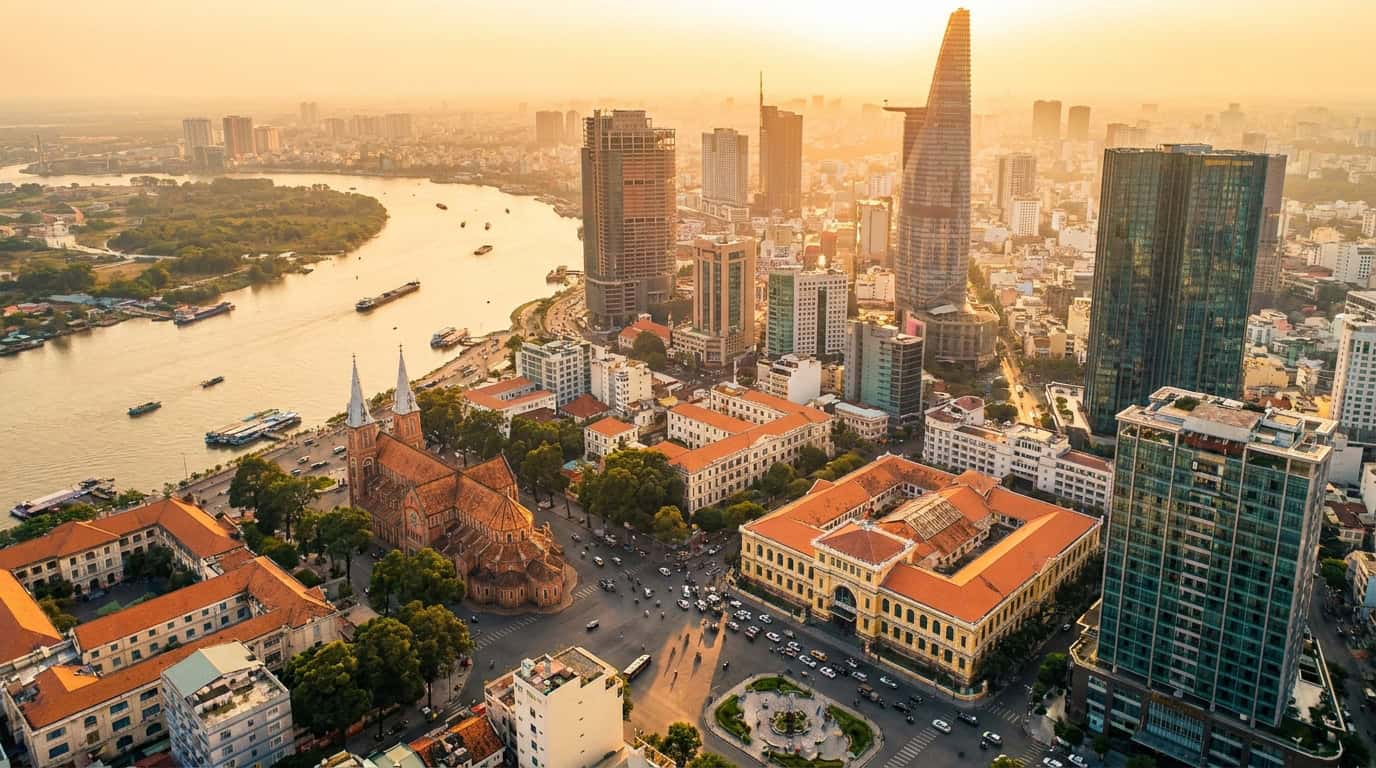
Vietnam recorded 21.2 million international arrivals in 2025, an all-time record and a 20.4% jump on the previous year (VnExpress). A significant share of those visitors touched down in Ho Chi Minh City. The city is dense, fast, and fascinating. French colonial architecture sits beside glass skyscrapers, street-food carts crowd the footpaths below rooftop bars, and a brand-new metro line now cuts through it all.
This guide covers the 30 best things to do in Ho Chi Minh City, from iconic landmarks and street-food lanes to day trips and the practical details that make a first trip run smoothly. Whether you have three days or a full week, you will find enough here to fill every hour. For more on the city, browse our Saigon travel guides.
The framework below is built for travellers with limited time, and is cross-referenced with the city’s latest 2025 tourism data. The most common planning question is: “We only have three days, what should we prioritise?” December and January are peak months, so securing accommodation 4–6 weeks in advance is worth the effort during peak season.
Key Takeaways
– Ho Chi Minh City drew 6 million international tourists in 2024, roughly 30% of all visitors to Vietnam.
– A new metro line (opened December 2024) connects central District 1 to the eastern suburbs for as little as 7,000 VND.
– Three to four days covers the city comfortably; add one day each for Cu Chi Tunnels and the Mekong Delta.
– Daily budgets run from ~$40 (budget) to ~$88 (mid-range), making HCMC good value by Southeast Asian standards.
At a Glance: Top 10 Attractions in Ho Chi Minh City
| # | Attraction | District | Approx. Cost | Time Needed |
|---|---|---|---|---|
| 1 | War Remnants Museum | 3 | 40,000 VND | 1.5–2 hrs |
| 2 | Reunification Palace | 1 | 40,000 VND | 1–1.5 hrs |
| 3 | Ben Thanh Market | 1 | Free entry | 1–2 hrs |
| 4 | Cu Chi Tunnels | ~70 km | ~$15 tour | Half day |
| 5 | Notre-Dame Cathedral | 1 | Free (exterior) | 30 min |
| 6 | Saigon Central Post Office | 1 | Free | 20 min |
| 7 | Landmark 81 Skydeck | Binh Thanh | 400,000 VND | 1 hr |
| 8 | Cholon / Binh Tay Market | 5 | Free entry | 1.5 hrs |
| 9 | Mekong Delta day trip | ~170 km | ~$25–40 tour | Full day |
| 10 | AO Show (bamboo circus) | 1 | From 600,000 VND | 1 hr |
1. Iconic Landmarks & Colonial Architecture in Ho Chi Minh City
The best place to start in Ho Chi Minh City is the colonial cluster in District 1, where Reunification Palace, Notre-Dame Cathedral, the Central Post Office, and City Hall all sit within a 15-minute walk of each other. Start early, as heat and crowds build by mid-morning. Staying nearby puts you within walking distance of every landmark in this section.
Reunification Palace
The Reunification Palace (also called Independence Palace) is where the Vietnam War effectively ended on 30 April 1975, when a North Vietnamese tank crashed through its gates. The building itself is a 1960s modernist time capsule: original furniture, war rooms, and a rooftop helipad are all intact. Entry costs 40,000 VND (roughly $1.60). Allow 60–90 minutes to explore the underground bunkers and upper-floor reception rooms.
Notre-Dame Cathedral
The Cathedral Basilica of Saigon Notre-Dame was built between 1863 and 1880 using bricks shipped from Marseille. Restoration scaffolding has covered the twin bell towers since 2017, and work was still ongoing as of early 2026. The exterior and surrounding plaza remain worth visiting for the colonial streetscape. Check local news for the latest progress on re-opening the interior.
Saigon Central Post Office
Designed by Gustave Eiffel and completed in 1891, the Central Post Office is an active working post office inside a vaulted hall that feels more like a grand railway station than a government building. It is free to enter. The large hand-painted map of early Saigon on the interior wall is a highlight. Postcard writers will find it a useful stop.
Ho Chi Minh City Hall
The People’s Committee Building (City Hall) faces Nguyen Hue Walking Street and is closed to the public, but the illuminated facade at dusk is one of the most photographed scenes in the city. Combine it with an evening walk along Nguyen Hue, where locals gather after dark for food carts and street performances.
2. What Are the Best Museums in Ho Chi Minh City?
The best museums in Ho Chi Minh City span Vietnamese warfare, fine art, and 2,000 years of traditional medicine — with the War Remnants Museum drawing the largest crowds and several smaller venues rewarding visitors willing to look beyond the obvious. Admission at most venues is under 50,000 VND.
HCMC Museum Comparison
| Museum | Entry Fee | Est. Annual Visitors | Highlight |
|---|---|---|---|
| War Remnants Museum | 40,000 VND | ~500,000 | 23M+ cumulative since 1975; photography exhibitions |
| History Museum of HCMC | 30,000 VND | ~250,000 est. | Bronze Age to modern; inside zoo complex |
| Museum of Fine Arts | 30,000 VND | ~150,000 est. | Colonial villa building; lacquerwork collection |
| FITO Museum (Traditional Medicine) | 120,000 VND | ~50,000 est. | 9 floors; 3,000+ artefacts; quiet crowds |
War Remnants Museum
The War Remnants Museum has welcomed more than 23 million visitors since it opened in 1975, including over 11 million international guests (Wikipedia). The collection documents the American War from the Vietnamese perspective, with preserved military hardware in the courtyard and deeply affecting photography exhibitions inside. It is not an easy visit, but it is an important one. Allow at least 90 minutes.
The War Remnants Museum in Ho Chi Minh City has recorded more than 23 million cumulative visitors since 1975, of whom over 11 million were international tourists, making it the most visited paid attraction in southern Vietnam (Wikipedia).
History Museum of Ho Chi Minh City
The History Museum sits inside the Saigon Zoo complex and covers Vietnamese civilisation from the Dong Son Bronze Age culture through the Cham and Khmer kingdoms to modern times. The building is a 1929 Franco-Vietnamese blend of colonial and pagoda architecture. Entry is cheap and crowds are light on weekday mornings.
Museum of Fine Arts
The Museum of Fine Arts occupies a 1929 colonial villa near Ben Thanh Market. Three floors cover Vietnamese painting, sculpture, and lacquerwork from the early 20th century to the present day. The building itself — yellow ochre facade, ornate balconies, mosaic-tiled floors — is as interesting as the collection. Entry is 30,000 VND.
Museum of Traditional Vietnamese Medicine
The Museum of Traditional Vietnamese Medicine (FITO Museum) is a nine-floor walk-through 2,000 years of Vietnamese herbal medicine history. It holds more than 3,000 artefacts including ancient prescriptions, apothecary equipment, and medicinal plants. Few tourists find it, which keeps the experience quiet and unhurried.
3. Markets & Shopping in Ho Chi Minh City
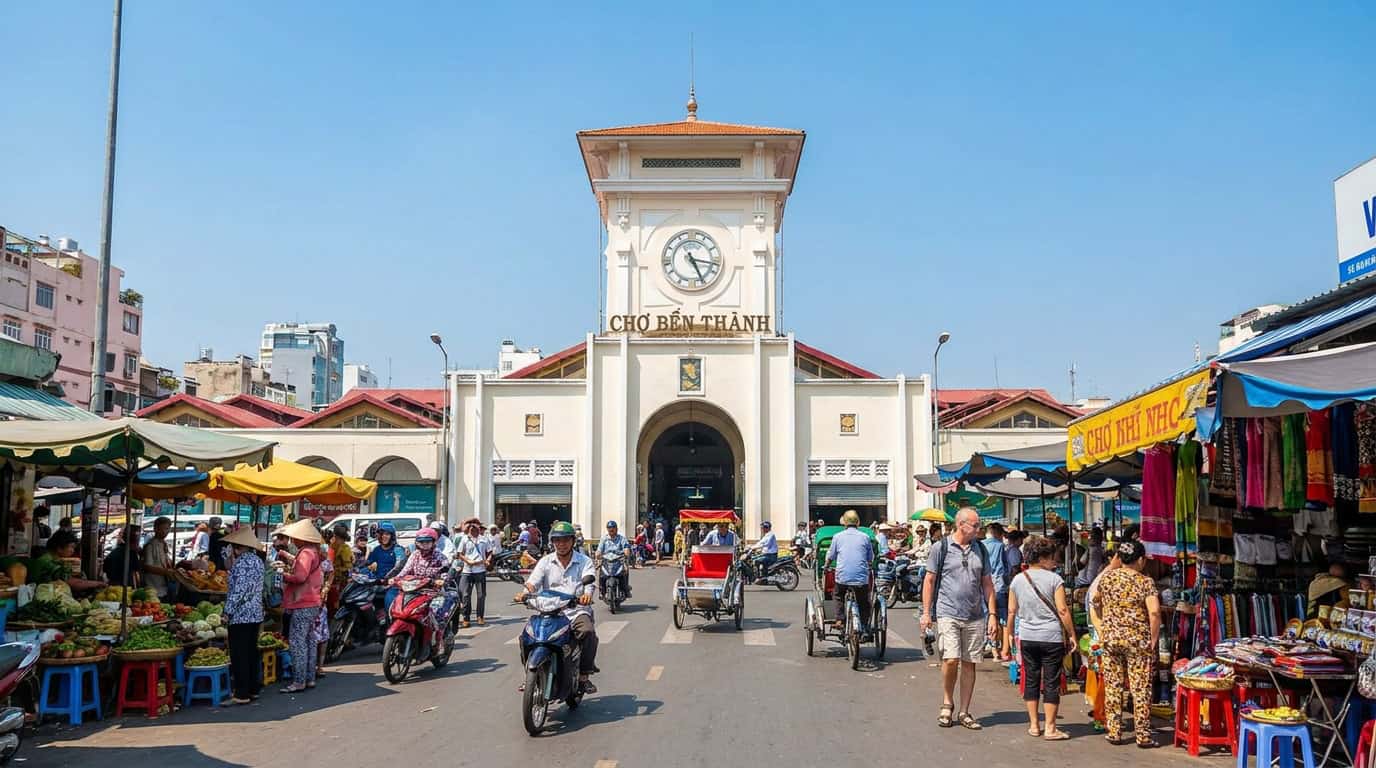
Saigon’s markets range from a 3,000-vendor covered hall to a quiet pedestrian street dedicated entirely to books. Shopping here is not just about buying things. The markets are social spaces and distinct neighbourhoods in their own right. Bargaining is expected at most traditional markets. Staying in District 1 puts you within a short walk of Ben Thanh Market, Book Street, and Nguyen Hue.
Ben Thanh Market
Ben Thanh Market is the city’s most recognised shopping destination, housing more than 3,000 vendors across clothing, souvenirs, dry goods, and a busy food hall. Arrive before 9 am to beat the crowds and browse at a reasonable pace. Prices at the stalls start high for tourists, but firm and polite negotiation typically brings them down by 30–50%. The night market on the surrounding streets opens after the main hall closes at approximately 6 pm.
Cholon and Binh Tay Market
Cholon, in District 5, is the largest Chinatown in Vietnam and a working commercial district rather than a tourist zone. Binh Tay Market at its heart is a wholesale hub selling spices, preserved goods, household items, and fabric by the roll. The architecture of the 1928 market building — a courtyard surrounded by colonnaded halls with a clock tower at its centre — is worth the trip independently. Few organised tours visit here, which keeps the atmosphere authentic.
Nguyen Hue Walking Street
Nguyen Hue Walking Street runs 700 metres from City Hall toward the river. During the day it is a pleasant pedestrian boulevard; after 5 pm it becomes the social hub of central District 1. Street food carts, performers, and families out for an evening stroll fill the space. The boulevard also hosts major public events at Vietnamese New Year (Tet).
Book Street (Duong Sach)
Book Street (Duong Sach) on Dinh Le Street is a single block of bookshops, stationery stores, and café-bookshops that most itineraries skip. It opened in 2016 as a government initiative to promote reading culture and now draws local students and curious travellers alike. Vietnamese titles dominate, but English-language books on Vietnamese history and culture are available. It makes for a calm contrast to the market activity a short walk away.
4. Street Food & Vietnamese Coffee Culture
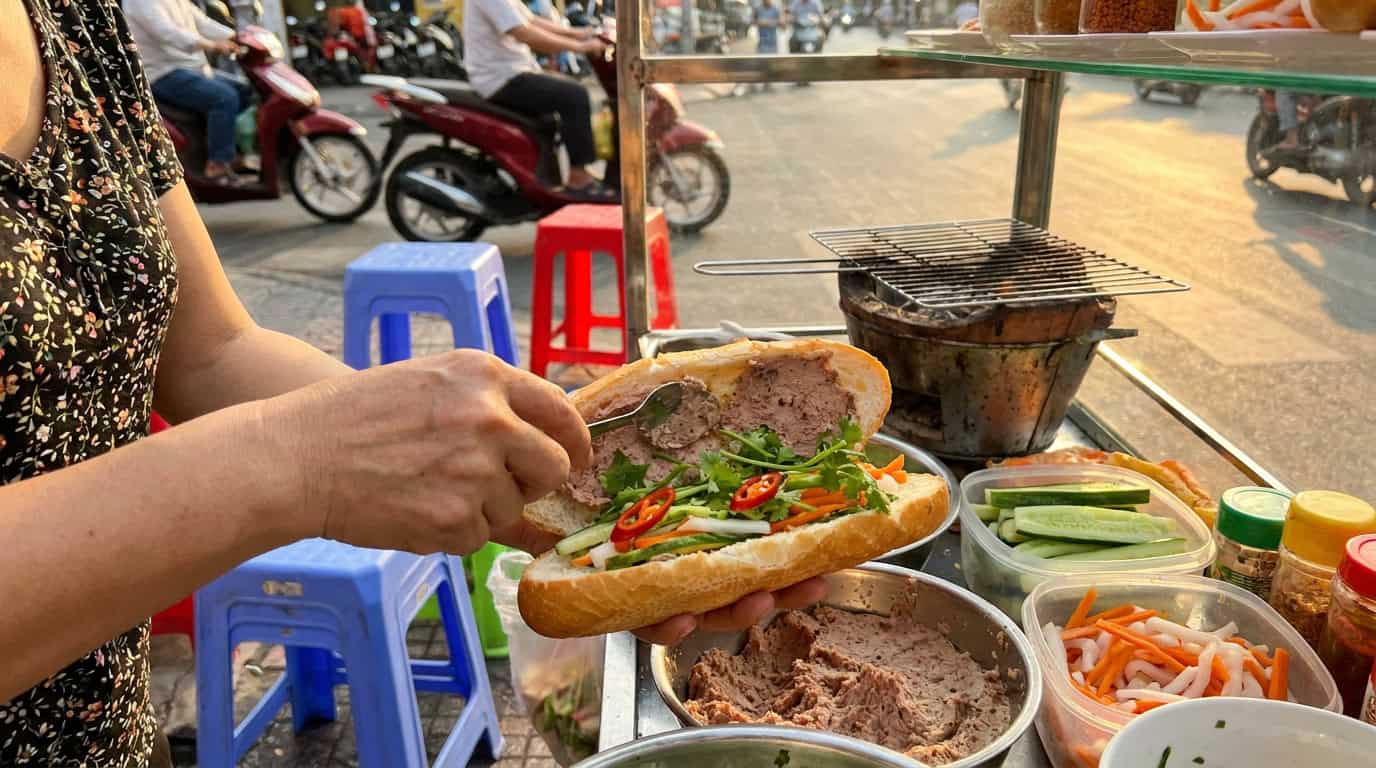
Ho Chi Minh City’s street food is among the most varied and affordable in Southeast Asia, with a full meal available for under 50,000 VND ($2) at most pavement kitchens. The southern Vietnamese palate leans sweeter and fresher than northern cooking, with more herbs, bean sprouts, and dipping sauces. Eating well here requires almost no budget.
The dishes below are the ones worth seeking out specifically for first-time visitors, rather than eating whatever happens to be nearby.
The Core Dishes to Try
Banh mi, the Vietnamese baguette sandwich filled with pork belly, pate, pickled daikon, coriander, and chilli, is arguably Saigon’s most convenient meal. A good one costs 25,000–40,000 VND from a street cart. Pho is the national broth-and-noodle dish; HCMC’s version is sweeter and served with more fresh herbs than Hanoi’s. Bun bo Hue is a spicier, lemongrass-scented noodle soup from central Vietnam that is widely available here and often overlooked by first-timers. Com tam (broken rice with grilled pork) is the quintessential Saigon working-lunch dish, served from early morning until mid-afternoon.
Coffee Culture
Vietnamese coffee is thick, strong, and traditionally drunk slow. Ca phe sua da (iced coffee dripped through a metal phin filter over sweetened condensed milk) is the everyday version, available on almost every street corner from roughly 15,000 VND a glass. Egg coffee (ca phe trung), a Hanoi invention now popular across the south, uses a whipped egg-yolk foam as a creamy topper. Several specialty cafes in District 1 and District 3 serve both styles.
Food Tours
A guided street-food tour is a sensible way to navigate the city’s eating culture on the first night. Most operators run evening tours on motorbike or on foot through the backstreets of Districts 1, 3, and 4, visiting 6–10 stops for approximately $25–40 per person. Quality varies; book through operators with recent, verified reviews on Google or TripAdvisor.
5. Rooftop Bars & Nightlife in Saigon
Ho Chi Minh City’s best rooftop bars and nightlife options range from a 200,000 VND cocktail above the colonial skyline to free street energy on Bui Vien — and all are within walking distance of central District 1. The city stays active until at least midnight on weekends; most rooftop venues open from approximately 5 pm.
Bui Vien Walking Street
Bui Vien Walking Street in the Pham Ngu Lao backpacker area is the loudest and most concentrated nightlife strip in the city. Neon-lit bars, live music, and a dense crowd of travellers and locals fill a 300-metre pedestrian street from about 7 pm until the early hours. It is not subtle, but it is authentic HCMC street energy. Budget travellers find the area particularly useful for cheap food and drink alongside accommodation.
Rooftop Bars
Chill Skybar on the 26th floor of the AB Tower offers views over the colonial district for the price of a cocktail (from roughly 200,000 VND). Saigon Skydeck at the Bitexco Financial Tower takes visitors up to the 49th floor for a dedicated observation deck. Both draw crowds at sunset; arrive 20–30 minutes before to secure a window position.
AO Show
The AO Show by Lune Production is a bamboo-circus performance that tells the story of Vietnamese village and city life through acrobatics, bamboo pole acts, and live traditional music. It runs at the Opera House most evenings and lasts approximately 60 minutes. Tickets start at 600,000 VND ($24). This is one of the most original evening options in the city and a strong contrast to the rooftop bar experience.
Most travel itineraries for HCMC omit the AO Show entirely in favour of bar listings. In practice, it is one of the few evening experiences that works equally well for solo travellers, couples, and families. It also provides cultural context that enriches the rest of the trip.
6. Neighbourhoods Worth Exploring
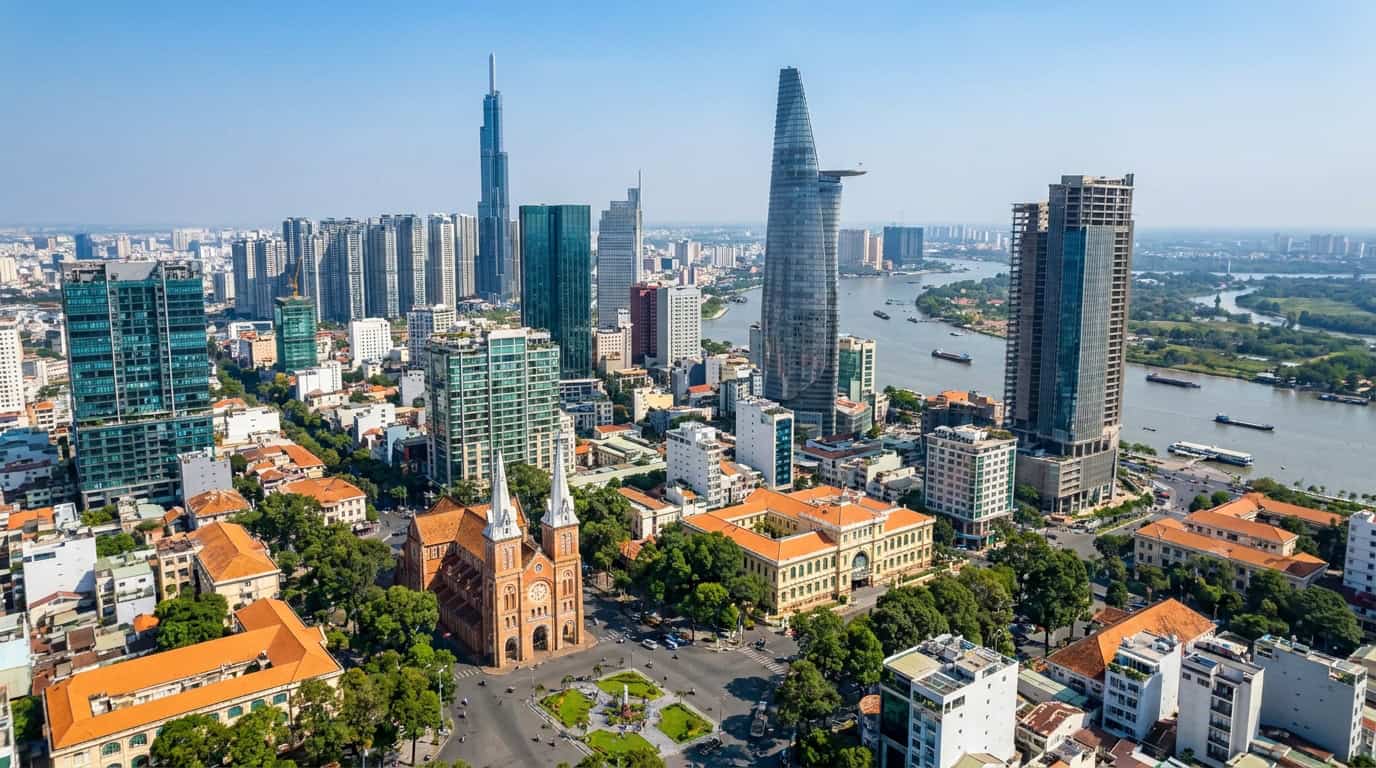
Ho Chi Minh City is a collection of 19 urban districts, and first-time visitors rarely have time to cover more than three or four areas. District 1 is the most efficient base, but two or three hours in a neighbouring district adds a dimension that the tourist core cannot provide. Understanding where each district sits on the map makes daily logistics significantly easier.
District 1: The Colonial Core
District 1 contains the highest concentration of landmarks, restaurants, and transport connections in the city. The riverside promenade, Nguyen Hue Walking Street, and the museum cluster are all within a 15-minute walk of each other. Staying here gives walking access to every major landmark in this guide, which makes it the most efficient base for a first visit.
Cholon / District 5: Vietnam’s Largest Chinatown
District 5’s Chinatown is not a tourist precinct. It is a functioning commercial district where the Chinese-Vietnamese community has traded for more than 300 years. Beyond Binh Tay Market, the area holds ornate assembly halls (hoi quan), Buddhist temples, and herbalist shops. The Thien Hau Temple on Nguyen Trai Street is a working place of worship open to respectful visitors. An early morning walk here before the heat builds is one of the more rewarding ways to spend two hours in the city.
Cafe Apartments on Nguyen Hue
The Saigon Cafe Apartments building at 42 Nguyen Hue is a nine-storey apartment block converted into a vertical collection of independent cafes, vintage shops, and small galleries. Each floor has a different aesthetic. It is more interesting than a standard shopping mall and a good place to understand Saigon’s younger creative culture. Most cafes open from roughly 8 am; the building fills on weekend afternoons.
7. Day Trips from Ho Chi Minh City
Ho Chi Minh City’s location in southern Vietnam puts several significant sites within half-day or full-day reach. The two most popular — Cu Chi Tunnels and the Mekong Delta — are complementary in what they show about Vietnam’s landscape and history, and both can be combined into a single long day if needed, though this makes for a tiring schedule.
Cu Chi Tunnels
The Cu Chi Tunnels are a 200-kilometre underground network built by Viet Cong fighters during the Vietnam War, of which 120 kilometres have been preserved across three underground levels (History.com). The site sits about 70 km northwest of central Ho Chi Minh City and takes roughly 90 minutes by road. Organised half-day tours run from approximately $15 per person and typically include transport and an English-speaking guide. Visitors can crawl through a preserved section of tunnel, inspect trapdoors and booby-trap replicas, and test-fire period weapons at an optional shooting range (extra cost). The experience is physically demanding — tunnels are narrow and low — but remains the most direct way to understand guerrilla warfare tactics and Vietnamese wartime resilience.
The Cu Chi tunnel network spans 200 kilometres in total, with 120 kilometres preserved across three underground levels. The site, located approximately 70 km from Ho Chi Minh City, can be reached on a half-day tour from roughly $15 per person (History.com).
Mekong Delta
The Mekong Delta begins roughly 60 km southwest of the city and covers a flat, river-threaded landscape of rice paddies, floating markets, and fruit orchards that contrasts sharply with urban Saigon. Most day trips head to My Tho or Ben Tre for boat rides through narrow canals, visits to coconut candy workshops, and lunch at riverside restaurants. Full-day tours to Can Tho, which has the region’s most active floating market at Cai Rang, require an early start or an overnight stay. Budget from $25 for a basic group tour to $40+ for a smaller-group experience with more time on the water.
Can Gio Mangrove Biosphere Reserve
Can Gio is a UNESCO-recognised mangrove biosphere reserve about 50 km south of the city centre, accessible by road via ferry. The forest covers over 75,000 hectares and supports a large population of long-tailed macaques at Monkey Island. It is less frequently visited than Cu Chi or the Mekong Delta, which means quieter conditions and excellent birdwatching in the early morning. Motorbike hire or a private car are the most efficient ways to reach it independently.
8. Modern HCMC: Skyscrapers & New Attractions
Ho Chi Minh City’s contemporary skyline is an active part of the visitor experience, not just a backdrop. At 461 metres, Landmark 81 is the tallest building in Vietnam and one of the tallest in Southeast Asia. Several new attractions have opened since 2020 that reward visitors willing to cross the river into Binh Thanh and Thu Thiem districts.
HCMC Landmark Heights
| Building | Height | Observation Deck | Ticket Price |
|---|---|---|---|
| Landmark 81 | 461 m | Yes (upper floors) | ~400,000 VND |
| Bitexco Financial Tower | 262 m | Yes (49th floor) | ~250,000 VND |
| Saigon Trade Center | 163 m | No | — |
Landmark 81
Landmark 81 in the Vinhomes Central Park development rises 461 metres over the Saigon River in Binh Thanh District. The observation deck on the upper floors (ticketed at roughly 400,000 VND) provides a 360-degree view of the city on clear days. The base of the building contains a large shopping mall and food court. It is about 20 minutes from District 1 by Grab car or a pleasant 30-minute walk along the river.
Bitexco Financial Tower Skydeck
The Bitexco Financial Tower’s Saigon Skydeck on the 49th floor offers a lower but more central vantage point than Landmark 81. At 262 metres, the deck sits inside the well-known lotus helipad overhang visible from the street below. It is often combined with a visit to Chill Skybar one floor below. Tickets cost approximately 200,000–250,000 VND.
Metro Line 1: A New Way to Move
Ho Chi Minh City’s first metro line opened on 22 December 2024, connecting Ben Thanh station in central District 1 to Suoi Tien terminal station 19.7 km to the northeast across 14 stations (Bloomberg). Fares run from 7,000 to 20,000 VND depending on distance. For tourists, the line provides an air-conditioned route between the city centre and the eastern suburbs, including connections toward the airport and Long Binh bus terminals. It runs from approximately 5:30 am to 10:30 pm. Most travel guides written before 2025 do not mention it at all, making it a new option for visitors arriving in 2026.
Ho Chi Minh City’s Metro Line 1 opened on 22 December 2024 after years of construction delays. The 19.7-km line covers 14 stations between Ben Thanh (District 1) and Suoi Tien, with fares from 7,000 to 20,000 VND (Bloomberg, 2024).
Vinhomes Central Park
Vinhomes Central Park is a large mixed-use riverside development in Binh Thanh District containing residential towers, a park with a full-size athletics track, and a waterpark (VinWonders). The park itself is free to enter and popular with joggers and families on weekend evenings. It is the most accessible place near the city centre for outdoor exercise or a riverside walk.
9. Practical Travel Tips for Ho Chi Minh City
Ho Chi Minh City received 6 million international tourists in 2024, a 20% increase on the previous year, representing approximately 30% of all international visitors to Vietnam (Tuoi Tre News, 2024). That growth means infrastructure is under real pressure during peak months. The tips below reflect current conditions as of mid-2026.
Best Time to Visit
The dry season from November to April is the most comfortable time to visit HCMC. Temperatures sit between 25–33°C with low humidity and minimal rainfall. December to February is the peak tourist period, coinciding with the Christmas-New Year holidays and Vietnamese Tet (lunar new year, usually late January or February). Accommodation prices rise sharply in peak weeks. The wet season (May–October) brings heavy afternoon downpours — usually clearing within an hour — and noticeably fewer tourists. Shoulder months like October and November offer a useful balance.
Getting Around
Grab (Southeast Asia’s ride-hailing app) is the most reliable way to get around the city. Fares are fixed upfront in the app, which removes the need to negotiate with drivers. Standard Grab car trips across District 1 cost roughly 40,000–80,000 VND. Metro Line 1 is now the fastest route between Ben Thanh and the northeastern districts. Motorbike taxis (Grab Bike or traditional xe om) move faster through traffic but are less comfortable with luggage. Renting a motorbike independently is possible but requires confidence in dense urban traffic. The city is not walkable beyond District 1 without solid heat tolerance.
How Many Days Do You Need?
Three to four days covers the core of Ho Chi Minh City without rushing: one day for landmarks and museums, one day for markets and neighbourhoods, one evening for a show or rooftop bar, and a half-day for Cu Chi Tunnels. Add a full day for the Mekong Delta. Travellers combining HCMC with other Vietnam destinations (Hoi An, Hanoi, Phu Quoc) typically allocate 3 days here. A week is comfortable and allows a more relaxed pace through the outer neighbourhoods.
Safety Tips
Ho Chi Minh City is generally safe for tourists. The most common issue is bag-snatching from motorbikes: keep bags on the side away from the street, carry copies of documents rather than originals, and avoid looking at a phone while walking near the road edge. Street scams near tourist landmarks exist but are not aggressive. Politely declining and walking away resolves most situations.
Daily Budget
Budget travellers eating street food, using public transport, and staying in hostels can manage on approximately $40–50 per day. Mid-range travellers in serviced apartments, eating at sit-down restaurants and taking occasional taxis will spend closer to $88 per day. Premium hotels and fine dining push the figure considerably higher. HCMC remains good value compared with other Southeast Asian capitals.
10. FAQ: Things To Do in Ho Chi Minh City
The questions below are the most frequently asked by first-time visitors planning a trip to Ho Chi Minh City. Each answer is written to stand alone.
Is Ho Chi Minh City safe for tourists?
Ho Chi Minh City is broadly safe for tourists, with violent crime against visitors being rare. The primary concern is opportunistic theft, particularly bag-snatching from motorbikes in busy areas. Keep bags on the inside of the pavement when walking near traffic, avoid displaying expensive jewellery or cameras openly on the street, and use hotel safes for passports and spare cash. Standard urban precautions apply, and most visitors complete their trip without incident.
What is the best time to visit Ho Chi Minh City?
The best time to visit Ho Chi Minh City is the dry season between November and April, when temperatures range from 25–33°C and rainfall is minimal. December through February is the most popular period, which means higher accommodation prices and larger crowds at major attractions. October and November offer similar weather conditions with fewer tourists and lower rates. The wet season (May–October) brings short but heavy afternoon rains and a noticeably quieter city.
How many days do you need in Ho Chi Minh City?
Most first-time visitors to Ho Chi Minh City need at least three to four days to cover the main attractions without feeling rushed. Three days allows for the colonial landmark circuit, the War Remnants Museum, Ben Thanh Market, and one evening on Bui Vien or at the AO Show. A fourth day works well for the Cu Chi Tunnels day trip. Travellers wanting to include the Mekong Delta should plan for five to six days total.
Is Saigon the same as Ho Chi Minh City?
Saigon and Ho Chi Minh City refer to the same city. The city was officially renamed Ho Chi Minh City in 1976 following reunification, but “Saigon” remains in widespread everyday use, particularly among local residents, the Vietnamese diaspora, and most international visitors. In practice, “Saigon” typically refers to the urban core — especially District 1 — while “Ho Chi Minh City” is the formal administrative name for the entire metropolitan area. Both names are correct and understood.
What is the difference between District 1 and other districts?
District 1 is the historical, commercial, and tourist centre of Ho Chi Minh City. It contains the highest concentration of colonial landmarks, international restaurants, hotels, and transport links, and is the district most first-time visitors base themselves in. Other districts serve different functions: District 3 is a leafy residential and café area popular with expats; District 5 (Cholon) is the city’s Chinatown commercial hub; Binh Thanh District is where the Landmark 81 skyscraper complex and Vinhomes riverside development are located. Each has a distinct character worth exploring beyond the central core.
How much does it cost per day in Ho Chi Minh City?
Daily costs in Ho Chi Minh City depend heavily on accommodation and eating habits. Budget travellers staying in hostels and eating street food typically spend $40–50 per day including transport and entry fees. Mid-range travellers in a serviced apartment or three-star hotel, eating at sit-down restaurants and using Grab taxis, average roughly $88 per day. High-end travellers in five-star hotels with fine dining and private tours can easily spend $200–300+ daily.
Can you do Cu Chi Tunnels as a day trip from Saigon?
Yes, Cu Chi Tunnels is a practical half-day trip from Ho Chi Minh City. The site is approximately 70 km from central District 1, and organised tours depart most mornings, returning by early afternoon. Tour costs start at roughly $15 per person for a group tour including transport and a guide. The tunnels themselves take 1.5–2 hours to explore, making a combined morning departure and afternoon return achievable without an overnight stay. Private tours allow more flexibility with timing.
Plan Your Visit to Ho Chi Minh City
Ho Chi Minh City rewards visitors who give it time. The colonial landmarks and war history form a logical first day, but it is the street food, the working markets, the Chinatown backstreets, and the new metro line threading it all together that make the city worth more than a stopover. Three days covers the core. Four days opens up Cu Chi or the Mekong Delta. A full week turns a decent trip into a thorough one.
Vietnam’s tourism numbers are at an all-time high, and HCMC is carrying a significant share of that growth. Booking accommodation in advance, especially for travel during December to February, is sensible rather than optional. A base among District 1 hotels gives walking access to every major landmark mentioned in this guide.
Sources
Doc them: The Apartment Café Ho Chi Minh City: Rooftop Guide
📌 Đọc thêm: Jade Emperor Pagoda Saigon: Complete Visitor Guide · Cu Chi Tunnels: How to Get There, What to Expect · Landmark 81 Saigon: Observation Deck, SkyBar & Complete Visitor Guide
- VnExpress — Vietnam wraps up 2025 with 21.2 million foreign arrivals, an all-time high
- Tuoi Tre News — Ho Chi Minh City eyes 8.5M international tourist arrivals in 2025
- Vietnam Insiders — Nearly 2.7 million international visitors to Ho Chi Minh City in H1 2024
- History.com — Cu Chi Tunnels
- Wikipedia — War Remnants Museum
- Bloomberg — Ho Chi Minh City Opens First Metro Line After Years of Delays
Work out transport before you go: getting around Saigon covers Grab, the metro, buses and the waterbus, with real prices.
When This List Is the Wrong Plan
This list assumes you have at least two full days. With a single day between flights, pick three stops within District 1 and ignore the rest, or you will spend the day in traffic. Ho Chi Minh City is also the wrong choice if you came to Vietnam for beaches or mountains: there is no swimmable coast within two hours, and the nearest hill country is an overnight trip. Travelling with small children in the April-May heat is genuinely hard here, and most of the museums on this list are not designed for them.
Related Guides
- Ho Chi Minh City Opera House: Shows, Tours & Visitor Info
- Ho Chi Minh Mausoleum & Statue: Visitor Guide
- Cooking Classes in Ho Chi Minh City: Best Options (2026)
- Best Pho in Ho Chi Minh City: Where Locals Actually Eat
- Best Places to Visit in Vietnam: Complete 2026 Guide
- Things to Do in Hanoi: 35 Best Experiences (2026)