
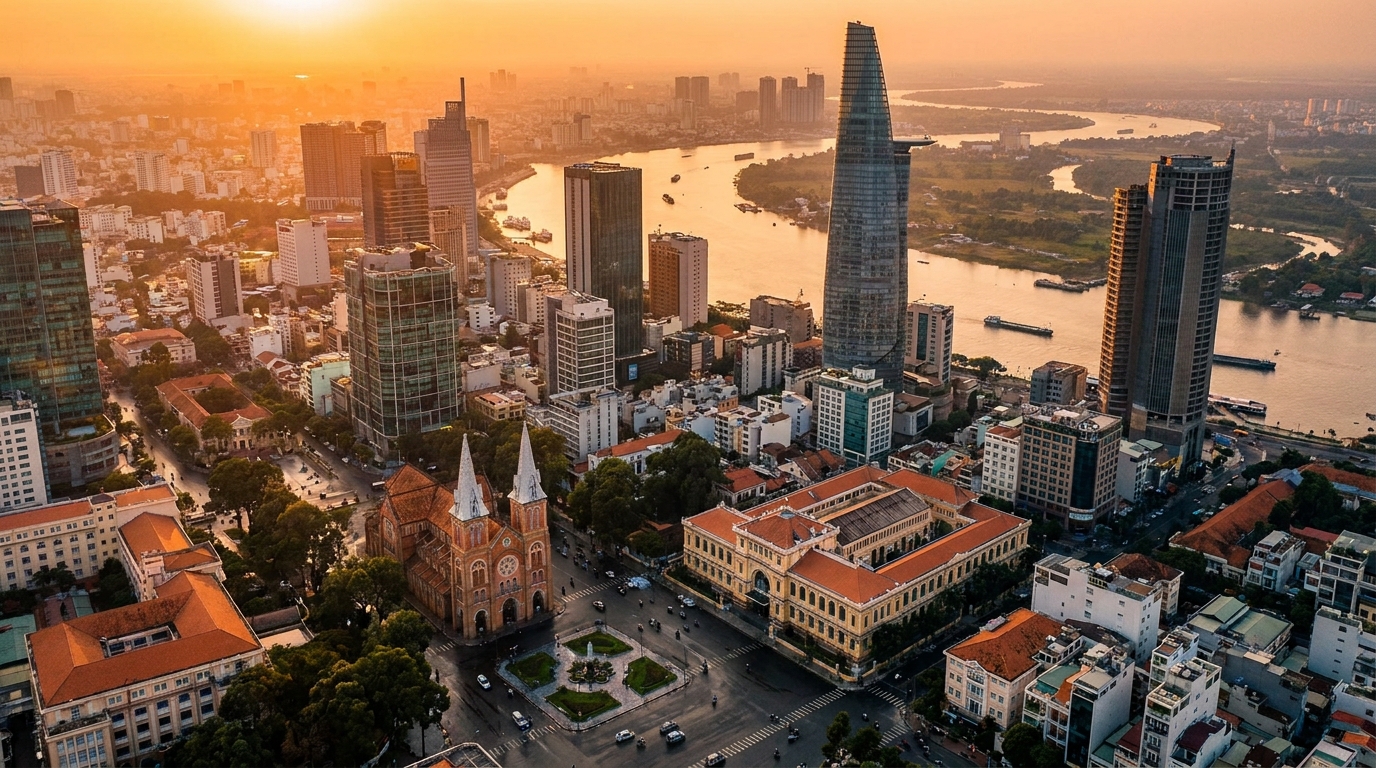
Ho Chi Minh City welcomed 8.5 million international visitors in 2025, a 39% increase from 2024 (Vietnam.vn). That number tells you something: this city earns repeat visits. A solid saigon itinerary covering 3 full days gives you the colonial landmarks, the war history, the street-food circuit, and at least one serious day trip — all without feeling rushed. This guide lays out exactly how to spend those 72 hours, with real entrance fees, transport costs, and the practical details that first-time visitors usually only learn after they arrive.
Key Takeaways
– 3 days covers Saigon’s core: colonial landmarks, war history, markets, and one half-day or full-day trip outside the city.
– Budget runs from roughly $107 total (3 days, budget level) to $65-88 per day at mid-range.
– Day 3 is a fork in the road: Cu Chi Tunnels (history, closer) or Mekong Delta (scenery, farther) — both are worth it for different reasons.
– HCMC welcomed 8.5 million international visitors in 2025, a 39% jump, so book accommodation 3-4 weeks ahead in peak season (December-January).
Why Saigon Deserves 3 Full Days (Not Just a Stopover)
Three full days in Saigon is the minimum needed to move past the surface and actually understand the city. Many travellers try to squeeze it into 36 hours between flights. They usually leave wishing they had stayed longer.
The city holds more layers than most first-timers expect. District 1 alone packs French colonial architecture, Buddhist pagodas, a covered market, a riverside promenade, and some of the best street food in Southeast Asia into a walkable 4 km radius. That is one day’s worth of ground.
Day 2 shifts the tone entirely. The War Remnants Museum and Reunification Palace place the 20th century in uncomfortable but necessary focus. Cholon, the city’s Chinatown, adds a third cultural register: temple incense, wholesale market chaos, and dim sum at 7 AM.
Day 3 takes you out of the city. The Cu Chi Tunnels and the Mekong Delta are both under 90 minutes by road. Both are genuinely different from anything inside the city limits. Skipping them is one of the most common regrets among visitors who only had 48 hours.
Quick-Start: How to Use This Saigon Itinerary
This saigon itinerary is designed to be followed in order, but each section stands alone if your schedule differs. Read the section that matches your day, note the opening hours, and plan your transport before you leave accommodation.
A few rules that make the itinerary work:
Start early. Saigon heats up fast. Most landmarks and markets are best before 10 AM. Plan to be out by 8 AM on each day.
Use Grab for everything. The ride-hailing app covers bikes, cars, and tuk-tuks. It shows a fixed price before you confirm. No haggling, no guesswork. Download it before you land.
Carry small cash. Street food vendors, pagodas, and markets prefer exact change in Vietnamese Dong. ATMs are plentiful in District 1. Withdraw 1-2 million VND at a time to keep wallet management simple.
Build in rest. The heat is real. Every afternoon between 1 PM and 3 PM, activity levels drop city-wide. Use that window for a sit-down lunch or a short return to your accommodation.
Where to Stay in Saigon: Best Neighborhoods by Budget
The best neighbourhood to stay in Saigon for first-time visitors is District 1, specifically the area between Ben Thanh Market and the Saigon River. It puts you within walking distance of most Day 1 and Day 2 landmarks, and Grab rides to outlying areas are short and cheap.
District 1 — Best for First-Timers
District 1 is the logical base for anyone visiting Saigon on a 3-day schedule. The War Remnants Museum, Reunification Palace, Notre-Dame Cathedral, and Ben Thanh Market are all within 2 km. Accommodation ranges from $15/night hostels on Bui Vien Street to $120/night boutique hotels near Dong Khoi. Mid-range serviced apartments in this district typically run $45-75/night and offer better space and kitchen access than comparably priced hotels.
District 3 — Quieter, Still Central
District 3 borders District 1 to the northwest and is noticeably calmer without being inconvenient. The War Remnants Museum is actually in District 3. Accommodation here runs 10-20% cheaper than District 1 for similar quality. It works well for travellers who want easy access to the museum cluster without Bui Vien Street noise.
Binh Thanh — For Landmark 81 and the North
Binh Thanh sits north of District 1 across the Thu Thiem Bridge. It is where Landmark 81 and Vincom Mega Mall are located. Transport links into District 1 are good, but budget 15-20 minutes each way. Worth considering for mid-stay or longer trips; less ideal for a tight 3-day schedule.
Day 1: Colonial Heart of District 1 — Landmarks, Markets & Street Food
Day 1 of any Saigon itinerary should start at the colonial cluster in District 1, move through Ben Thanh Market by mid-morning, and finish with street food on Bui Vien or a riverside walk. This loop covers roughly 5-6 km and can be done entirely on foot if the heat allows.
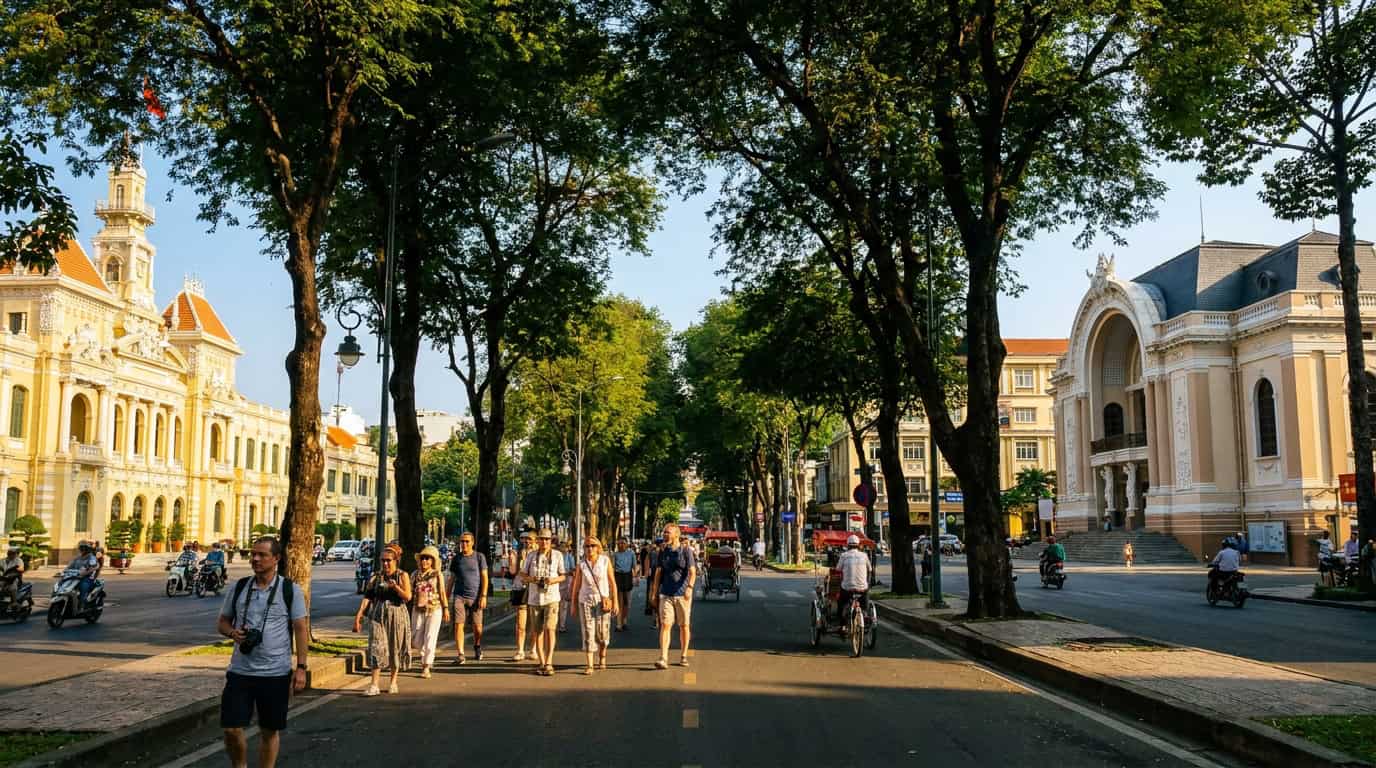
Morning: The Colonial Quarter (8 AM – 11 AM)
Start at the Reunification Palace when it opens at 8:00 AM. Admission is 40,000 VND per adult (~$1.60). Last ticket is sold at 3:30 PM, but morning is the right time: light is better, crowds are smaller, and the underground war rooms feel properly atmospheric before tour groups fill the corridors. Allow 60-90 minutes. The building is a 1960s modernist time capsule, still furnished exactly as it was on 30 April 1975.
From there, walk 10 minutes to Notre-Dame Cathedral and the Saigon Central Post Office. The cathedral exterior and the plaza are free. The Post Office, designed by Gustave Eiffel and completed in 1891, is an active working post office inside a vaulted hall that feels more like a grand railway station. It is free to enter. Give it 20 minutes.
Finish the colonial loop at City Hall (People’s Committee Building) on Nguyen Hue Walking Street. The building is not open to the public, but the neoclassical facade and the boulevard leading to the Saigon River are worth the short walk.
Mid-Morning: Ben Thanh Market (10:30 AM – 12 PM)
Ben Thanh Market is Saigon’s most central covered market and the most accessible introduction to Vietnamese street-food culture for first-timers. Entry is free. The inner food hall has dozens of stalls selling pho (~35,000-40,000 VND, about $1.50-1.60), banh mi (~30,000 VND, about $1.20), and fresh juices. Prices are slightly higher than street stalls but still cheap by any standard.
Go prepared to compare and not necessarily buy at the first stall. Vendors inside the textile and souvenir sections will open negotiations high. It is fine to walk away and return — they expect it.
Afternoon: Jade Emperor Pagoda & Coffee (1 PM – 4 PM)
Take a Grab Bike (roughly $0.94-1.50 for the short ride) to Jade Emperor Pagoda in District 3. Entry is free. Opening hours are 7:00 AM to 6:00 PM. This is an actively worshipped Taoist-Buddhist temple, not a heritage museum. Incense burns continuously. The courtyard carp pond and the vivid deity figurines inside the main hall make it one of the most visually distinctive religious sites in the city.
After the pagoda, find a local cafe for iced coffee. Vietnamese iced coffee (ca phe sua da) runs about 25,000-35,000 VND (~$1.00-1.40) at a local shop. This is not optional — the drink is genuinely excellent and the 1-3 PM rest window is the right time for it.
Evening: Street Food on Bui Vien (6 PM onwards)
Bui Vien Walking Street is pedestrianised from 6 PM. It is Saigon’s backpacker strip: loud, colourful, and crowded with plastic-stool restaurants and street bars. A meal of grilled skewers, fresh spring rolls, and a Tiger beer costs $5-8. It is not the most authentic street-food experience in the city, but for a first evening it works as an orientation to the scale of Saigon’s after-dark scene.
For something quieter, the Nguyen Hue Night Market (weekend evenings) or the food stalls around Thi Sach Street are good alternatives.
Day 2: History Deep-Dive — War Museum, Reunification Palace & Cholon
Day 2 of this saigon itinerary is the history day, and it is deliberately placed second rather than first. The War Remnants Museum is one of the most powerful museum experiences in Southeast Asia, and it lands differently once you have spent a day absorbing the city’s present-day energy.
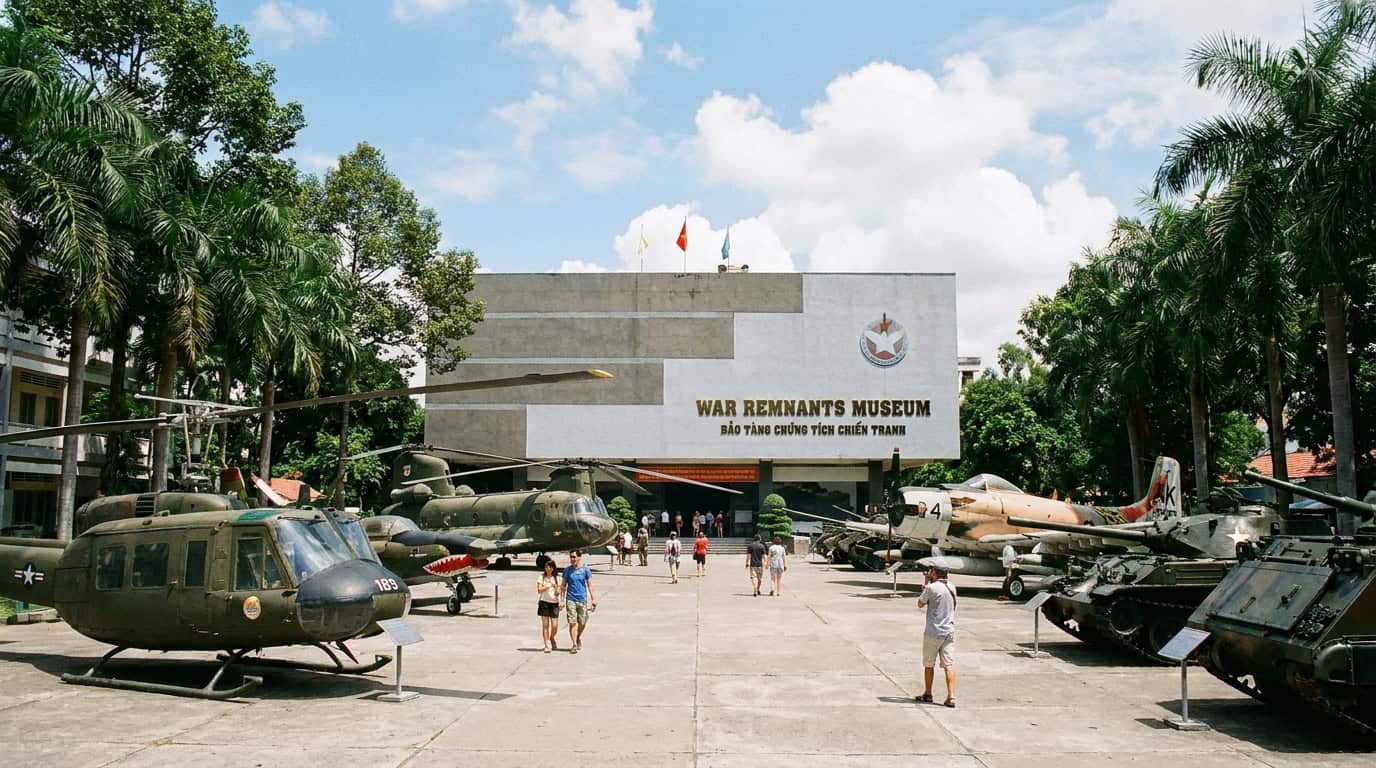
Morning: War Remnants Museum (8 AM – 11 AM)
The War Remnants Museum opens at 7:30 AM. Admission is 40,000 VND (~$1.60). Last ticket is sold at 5:00 PM, closing time is 5:30 PM. Allow 1.5-2 hours minimum. The museum documents the American War (the Vietnam War in Western terminology) through photographs, military hardware, and international press coverage. The photography collections — particularly the rooms covering Agent Orange and the work of combat photographers — are the most affecting sections. The outdoor courtyard displays US military aircraft and armoured vehicles.
Go early, go with water, and do not rush. This is the right way to approach it. Official site for current hours and entry information: War Remnants Museum.
Mid-Morning: Revisit Reunification Palace or Explore District 3 (11 AM – 12:30 PM)
If you did not visit the Reunification Palace on Day 1, this is the slot for it. Admission is 40,000 VND for adults, and the last ticket is sold at 3:30 PM with closing at 4:30 PM. The proximity to the War Remnants Museum makes this an efficient pairing: both sites cover interconnected chapters of 20th-century Vietnamese history, and visiting them back-to-back gives the narrative a coherence that neither delivers alone.
Alternatively, the streets around the museum in District 3 have some of Saigon’s better mid-range lunch options — banh mi shops, pho restaurants, and com tam (broken rice) stalls that cater to the local office lunch crowd rather than tourists.
Afternoon: Cholon and Binh Tay Market (1:30 PM – 5 PM)
Cholon is Saigon’s Chinatown, spanning most of District 5. It is louder, denser, and more lived-in than the tourist precincts of District 1. Take a Grab Car (10-15 minutes from the museum, roughly $2-3) rather than navigating by bike through the narrow lanes until you know the area.
Binh Tay Market is Cholon’s wholesale covered market and is larger and less tourist-focused than Ben Thanh. Entry is free. The ground floor is primarily a wholesale food market: dried goods, spices, preserved vegetables, and snacks in quantities that suggest you are buying for a restaurant. The upper level has clothing and goods at genuinely lower prices than District 1. Give it 45-60 minutes.
From Binh Tay, Grab to Thien Hau Temple (5 minutes away), a Cantonese temple dating to the early 19th century. Entry is free. The interior coil incense and the carved wooden altars are among the most elaborate of any Saigon temple. It is an active place of worship, so dress modestly and step around ceremonies rather than through them.
Evening: Rooftop Bar and Dinner (6 PM – 9 PM)
Return to District 1 for the evening. The Saigon Skydeck and several rooftop bars cluster along the Ton Duc Thang riverside strip. A cocktail at a rooftop bar runs $8-15. The city looks entirely different from 30 floors up, and the Saigon River traffic at dusk adds to the effect. For dinner, the riverside restaurants on Ton Duc Thang serve seafood and Vietnamese standards at $10-20 per person for a proper sit-down meal.
Day 3: Choose Your Adventure — Cu Chi Tunnels or Mekong Delta
Day 3 of this saigon itinerary presents a clear fork: Cu Chi Tunnels (closer, historical, intense) or Mekong Delta (farther, scenic, relaxed). Both work as full or half-day trips from the city. The table below compares the two options directly.
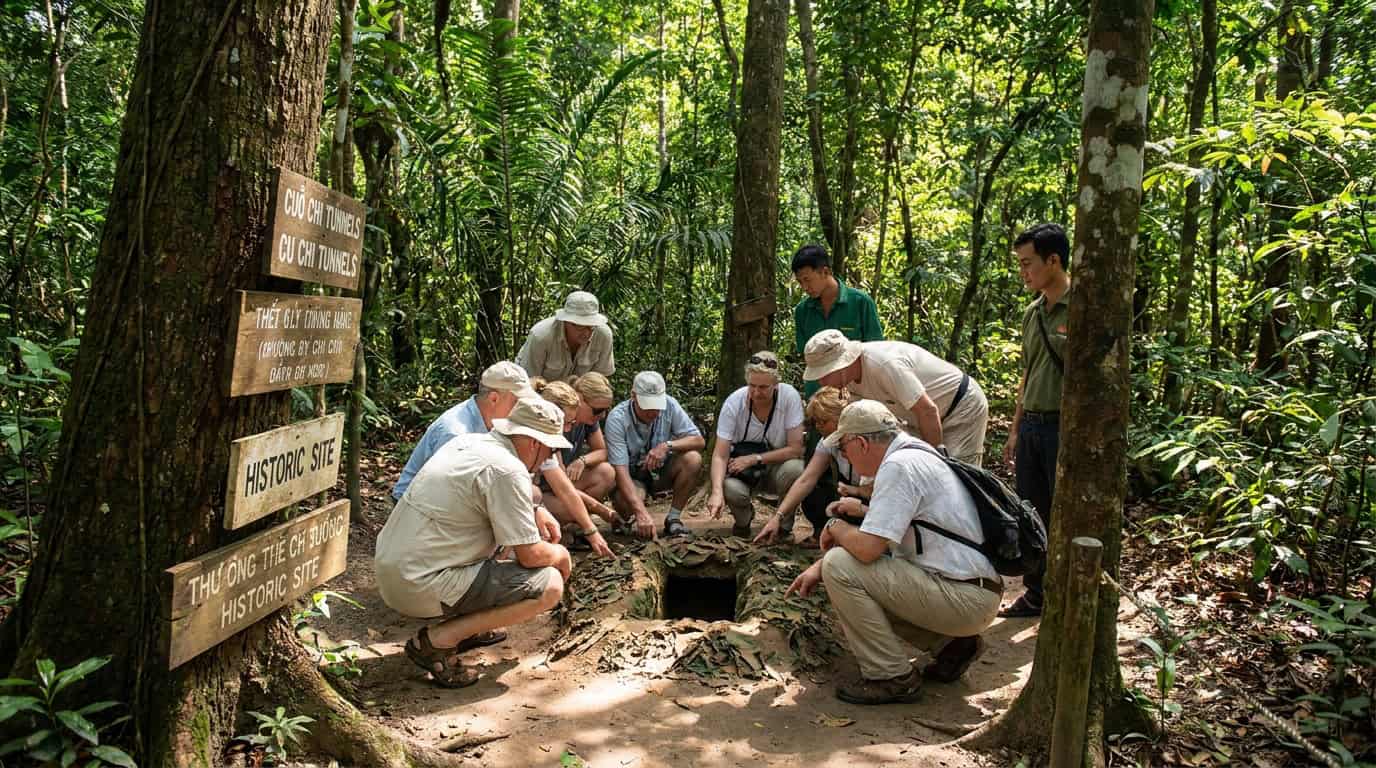
Cu Chi Tunnels vs. Mekong Delta: Which Should You Choose?
| Cu Chi Tunnels | Mekong Delta | |
|---|---|---|
| Distance from HCMC | ~60 km | ~67 km |
| Travel time (one way) | ~1h 15m by road | ~1h 25m by road |
| Entry / tour cost | 125,000 VND (~$5) entry + $15-25 guided tour | $32-59 USD all-inclusive day tour |
| Crowd level | High (busy site, popular with groups) | Moderate (spread across river network) |
| Best for | History focus, active explorers, shorter half-day option | Scenery, slower pace, food culture, longer full-day |
| Physical demand | Moderate (crawling through tunnels optional but popular) | Low (boat rides, walking on flat paths) |
| What you see | Underground tunnel network, bomb craters, wartime exhibits | Rice paddies, floating markets, river villages, coconut farms |
Cu Chi Tunnels is the right pick if your trip has a strong history focus and you want to pair it with Days 1 and 2 thematically. The site is 60 km from the city centre. Entry for foreigners costs 125,000 VND (~$5). Opening hours are 8:00 AM to 5:00 PM. Most visitors take a half-day guided tour ($15-25 from District 1, including transport) and are back in the city by early afternoon. The tunnels are real, cramped, and require crawling. That optional section takes about 10-15 minutes and gives the site its lasting impact.
Mekong Delta is the better fit if you want a visual contrast to the city. The delta’s closest entry point is roughly 67 km from central Saigon, about 1 hour 25 minutes by road. Day tours typically run $32-59 USD and cover boat rides through canals, a coconut candy workshop, lunch at a riverside restaurant, and visits to floating markets. The scenery, wide flat horizons dotted with palms and stilted houses, is completely unlike anything inside HCMC. Book through a reputable tour operator the night before; same-day availability is usually fine outside peak season.
Saigon After Dark: Rooftop Bars, Night Markets & Nightlife
Saigon’s after-dark scene is one of the most diverse in Southeast Asia, running from 40-cent bia hoi (draft beer) on plastic stools to $20 cocktails on glass-walled rooftops. The city does not wind down early.
Rooftop Bars Worth the Price
Chill Skybar on AB Tower (District 1) is the most consistently recommended rooftop venue for first-timers. The view covers the river, the colonial district, and the towers of District 2. A cocktail runs 180,000-250,000 VND ($7-10). Dress code is smart casual; flip-flops will get you turned away. The View Rooftop Bar and Saigon Saigon Bar at the Caravelle Hotel are similarly positioned and priced.
Night Markets
The Ben Thanh Night Market operates in the streets surrounding the market building from roughly 6 PM to midnight. Vendors sell clothing, accessories, street food, and drinks. It is more casual than the indoor market and better for an evening browse than a serious shopping trip. Prices are negotiable but start higher than daytime.
The Nguyen Hue Walking Street (pedestrianised each evening) draws a mix of local families, office workers finishing late, and tourists. Street performers, food carts, and the illuminated City Hall facade make it one of the better free evening experiences in the city.
Bui Vien vs. Quieter Alternatives
Bui Vien (the main backpacker strip) is worth one evening for the spectacle, but it is intentionally chaotic. DJ music, flashing lights, and persistent drink promoters are the baseline. If that is not the atmosphere you want, the cocktail bars and wine bars in the Dong Khoi area offer an entirely different register: quieter, more local, similar drink prices without the noise.
Getting Around Saigon: Grab, Metro, Scooters & Water Bus
Getting around Saigon as a first-timer is straightforward if you default to Grab for most trips. A Grab Bike for a short District 1 journey costs roughly 24,000-38,000 VND ($0.94-$1.50). Grab Car base fare is 29,000 VND for the first 2 km, which makes it competitive with taxis for trips under 5 km.
Grab: The Default Option
Download Grab before you land and register your card. The app covers bikes (cheapest), cars, and premium cars. Surge pricing applies during rain and rush hour (7-9 AM, 5-7 PM). For airport transfers from Tan Son Nhat to District 1, a Grab Car runs roughly $6-9 depending on traffic and time of day.
Metro Line 1
Metro Line 1 opened in December 2024. It connects Ben Thanh Station in central District 1 to the eastern suburbs (Thu Duc), running through 14 stations on a 19.7 km route. Base fare starts at 7,000 VND. For this 3-day saigon itinerary, the metro is most useful for reaching the eastern side of the city (Vincom Mega Mall, Landmark 81 area) without dealing with road traffic. It is not essential for the core Day 1-2 route, which is walkable.
Scooter Rental
Renting a scooter in Saigon costs $6-12/day. It is the fastest way to move around the city and how most locals travel. It is not recommended for first-timers unfamiliar with Saigon traffic. The city’s driving patterns (wide intersections with no lane discipline, right-turn-on-red everywhere, and frequent contra-flow motorbikes) are manageable after a few days of observation, but jarring to navigate cold on day one.
Water Bus (Ferry)
The Saigon Water Bus runs between Bach Dang Pier (District 1) and Thu Duc along the Saigon River. A single ticket costs 15,000 VND (~$0.60). It is one of the more pleasant ways to see the riverfront and is a genuine working commuter service rather than a tourist boat. Route 1 (Bach Dang to Linh Dong) takes about 55 minutes each way.
Saigon 3-Day Budget Breakdown
A 3-day Saigon trip at budget level costs roughly $107 USD in total, covering basic accommodation, street food, local transport, and entrance fees. Mid-range travellers spending on comfort meals and nicer accommodation will land between $65-88 per day.
The table below breaks it down by category and tier.
3-Day Budget Summary Table
| Category | Budget/Day | Mid-Range/Day | Comfort/Day |
|---|---|---|---|
| Accommodation | $12-18 (hostel dorm or guesthouse) | $35-60 (serviced apt / 3-star hotel) | $80-150 (boutique hotel) |
| Food | $8-12 (street food, local restaurants) | $18-30 (mix of street + sit-down) | $35-60 (restaurants, 1-2 nice dinners) |
| Transport | $3-5 (Grab Bike mostly) | $8-12 (Grab Car, metro, water bus) | $15-25 (private driver, premium Grab) |
| Activities | $4-8 (entry fees, local tips) | $12-20 (museums + day trip entry) | $25-50 (tours, skydeck, show tickets) |
| Total per day | ~$27-43 | ~$73-122 | ~$155-285 |
| 3-day total | ~$81-129 | ~$219-366 | ~$465-855 |
Key cost reference points for this itinerary:
– Pho: ~62,000 VND (~$2.50)
– Banh mi: ~30,000 VND (~$1.20)
– Iced coffee: ~32,000 VND (~$1.30)
– War Remnants Museum: 40,000 VND (~$1.60)
– Reunification Palace: 40,000 VND (~$1.60)
– Cu Chi Tunnels entry: 125,000 VND (~$5) plus tour transport
– Mekong Delta day tour: $32-59 USD all-inclusive
– Grab Bike short trip: 24,000-38,000 VND ($0.94-$1.50)
– Grab Car base: 29,000 VND for first 2 km
The biggest variable is accommodation. Staying in a District 1 serviced apartment at the $45-60/night level cuts transport costs because most Day 1-2 attractions are walkable. A budget hostel further out adds $3-5/day in Grab fares.
Best Time to Visit Saigon: Dry Season vs. Wet Season
The best time to visit Saigon is November to April, when rainfall is minimal and temperatures are marginally cooler. Saigon operates on two seasons — dry and wet — with no meaningful cold period at any point in the year.
Dry Season: November to April
November through January is peak season. Temperatures average 27-32°C with low humidity and near-zero rain. This is when the city is at its most comfortable for walking. It is also when accommodation prices peak: expect 20-40% higher rates in December and January versus the shoulder months of March-April. Book accommodation 3-4 weeks ahead for December and the Tet holiday period (late January/early February).
February offers a distinct experience: Tet (Lunar New Year) transforms Saigon. Streets close, fireworks run, and the city empties as residents return to home provinces. Many restaurants and shops close for 3-7 days. That is a meaningful disruption to a 3-day itinerary. February visitors should check exact Tet dates for their year and plan around closures.
March and April are the dry season’s sleeper months. Temperatures are slightly higher (32-36°C by April), but crowds are thinner than December-January and prices have settled. Good value, manageable conditions.
Wet Season: May to October
Wet season does not mean continuous rain. Saigon’s wet season follows a pattern of clear mornings and intense afternoon downpours, typically lasting 1-2 hours between 2-5 PM. Mornings are often completely dry. An itinerary that starts early and schedules indoor activities for mid-afternoon handles wet season without serious disruption.
Benefits of wet season: fewer crowds at popular sites, lower accommodation prices (10-20% cheaper on average), and lush green landscaping on the Mekong Delta trips. Bui Vien and the Night Market thin out. The downside is genuine: heavy downpours can make Grab pickups chaotic, some streets flood briefly, and humidity is higher throughout the day.
Pre-Trip Checklist: Visa, SIM Card, Currency & Safety
Preparation for Saigon takes about 30 minutes online and saves significant time at the border. The four items below cover the non-negotiables.
Vietnam E-Visa
Citizens of most Western countries require a visa for Vietnam. The Vietnam e-visa costs $25 USD, is valid for 90 days (single or multiple entry), and requires approximately 3 working days to process. Apply through the official portal only: Vietnam E-Visa Portal. Third-party sites charge $40-80 for the same document and add no value. Apply at least 5-7 days before travel to allow for any processing delays.
Visa-exempt countries include most Southeast Asian nations plus a rotating list of European countries. Check the official portal for the current exemption list — it updates periodically and the information on third-party travel sites is often out of date.
SIM Card
A local SIM card is the single most useful purchase at Tan Son Nhat Airport on arrival. Viettel and Vietnamobile booths are in the arrivals hall before customs. A data SIM with 3-5 GB and 30 days validity costs 70,000-120,000 VND ($3-5). This activates Grab, Google Maps, and translation apps immediately. Do not wait to find a convenience store in the city; the airport price is fair.
Currency: Vietnamese Dong
ATMs in District 1 are plentiful and most accept international cards. Vietcombank and BIDV have low foreign transaction limits; Citibank and HSBC ATMs have higher daily limits and often lower fees. Bring enough USD (or your home currency in large bills) for the e-visa payment and a small reserve. Dong is the working currency for everything inside Vietnam. Card acceptance has improved significantly in mid-range restaurants and hotels, but street food and markets remain cash-only.
Safety
Saigon is generally safe for tourists. Phone snatching from motorbikes is the most consistent reported risk, particularly around the tourist streets of District 1. Keep your phone in your bag or pocket while standing at roadside, especially in the evening. Bag snatching from open cafe tables and tuk-tuks has been reported but is not common if you keep valuables out of plain sight. Solo female travellers report Saigon as more comfortable than most major Southeast Asian capitals during daylight hours.
Extending Your Stay: Day 4 and Beyond
If 3 days leaves you wanting more Saigon, the city gives you roughly two more days of material before you start repeating yourself. After that, the logical next step is regional travel.
Day 4 Ideas: Within the City
Landmark 81 is Southeast Asia’s tallest building and has a Skydeck on floors 79-81. Entry costs 400,000 VND (~$16). The view differs meaningfully from rooftop bar panoramas because of the height. The elevator takes 45 seconds. Give it 90 minutes including the ride to Binh Thanh and back.
Fine Arts Museum (District 1) is one of the more overlooked museums in the city. Entry is 30,000 VND. The three floors of a colonial villa hold Vietnamese lacquerware, oil paintings, and ceramics dating from the pre-colonial period to the present day. It is quiet, air-conditioned, and genuinely interesting for an hour.
Tan Dinh Market and the Pink Church are in northern District 1 and see a fraction of the tourist traffic of Ben Thanh. The Church of the Sacred Heart (painted a vivid magenta) is a 10-minute walk from the market. Both are worth a morning if you have already done the Day 1 route.
Regional Extensions from Saigon
Da Lat (mountain hill station) is 7 hours by sleeper bus or 45 minutes by plane. Temperatures are 15-20°C cooler than Saigon. Known for French colonial villas, flower farms, and Vietnamese street food with a different regional character.
Phu Quoc Island is 1 hour by plane or 5 hours by ferry from Ha Tien. The island has good beaches and snorkelling at a price point significantly below Thailand’s comparable islands.
Da Nang and Hoi An are 1 hour 15 minutes by plane. Hoi An’s old town and tailors, plus Da Nang’s beaches, make this a common extension for travellers who have a week or more.
Frequently Asked Questions
Is 3 days enough time in Saigon?
Three days in Saigon is enough time to cover the essential landmarks, experience the street food, and complete one meaningful day trip outside the city. Most first-time visitors find 3 days well-paced rather than rushed, particularly if they stay in District 1 and start each day early. A fourth day adds room for Cholon and Landmark 81 without doubling back on anything from the core itinerary.
What should I not miss on a first visit to Saigon?
First-time visitors to Saigon should prioritise the War Remnants Museum, the Reunification Palace, and at least one morning at a local market (Binh Tay in Cholon is better than Ben Thanh for atmosphere). The Jade Emperor Pagoda, free to enter and open 7:00 AM to 6:00 PM, is the most distinctive religious site in the city and takes only 45 minutes. Add a rooftop bar evening and either the Cu Chi Tunnels or Mekong Delta for a complete first visit.
Should I do Cu Chi Tunnels or Mekong Delta?
For most first-timers on a 3-day saigon itinerary, Cu Chi Tunnels fits better as a half-day option (60 km away, entry 125,000 VND, back by early afternoon) while Mekong Delta ($32-59 USD for a full-day tour, 67 km away) is the pick for travellers whose priority is scenery over history. If Days 1 and 2 are already heavy on history content, the Mekong Delta provides a useful contrast. Both are worth doing if you have 4 or more days.
How much does a 3-day trip to Saigon cost?
A 3-day trip to Saigon costs roughly $107 USD at budget level, assuming hostel accommodation at $12-18/night, street food at $8-12/day, and Grab Bike transport. Mid-range travellers spending on serviced apartments and a mix of sit-down meals average $65-88 per day, or roughly $195-264 for 3 days excluding the flight. The biggest cost variables are accommodation and whether you book a guided day tour to Cu Chi or the Mekong Delta.
Do I need a visa to visit Vietnam?
Most visitors to Vietnam need a visa. The Vietnam e-visa costs $25 USD and takes approximately 3 working days to process. It is valid for 90 days and available through the official government portal at evisa.gov.vn. Citizens of certain countries are visa-exempt for stays under 30-45 days — check the official portal for the current list, as exemptions are updated periodically. Apply at least 5-7 days before travel to account for any delays.
Sources
- War Remnants Museum — Official Visitor Information
- Vietnam E-Visa Official Portal
- HCMC Tourism 2025: From Breakthrough to 2026 Growth Target
When Not to Follow This Itinerary
This plan needs three full days, not three calendar days with flights at each end. Arriving late on day one and leaving in the morning on day three leaves you roughly one usable day, so cut straight to District 1 and drop day three. From May to October, move outdoor stops to the morning: afternoon downpours are heavy and reliable, and the day three options both involve open-air travel. If your main reason for coming is the Mekong Delta or the coast, spend those nights there instead of commuting back to the city.
Related Guides
- Vietnam North to South Itinerary: 3–4 Week Route (2026)
- Vietnam 2 Weeks Itinerary: North to South Route (2026)
- How Many Days in Saigon Is Enough? (Honest 2026 Guide)
- Best Time to Visit Saigon: Weather, Seasons & Honest Tips (2026)
- Getting Around Saigon: Grab, Metro, Bus & Waterbus Guide (2026)
- Vietnam Cycling Tour: Routes, Tips & Best Operators (2026)