
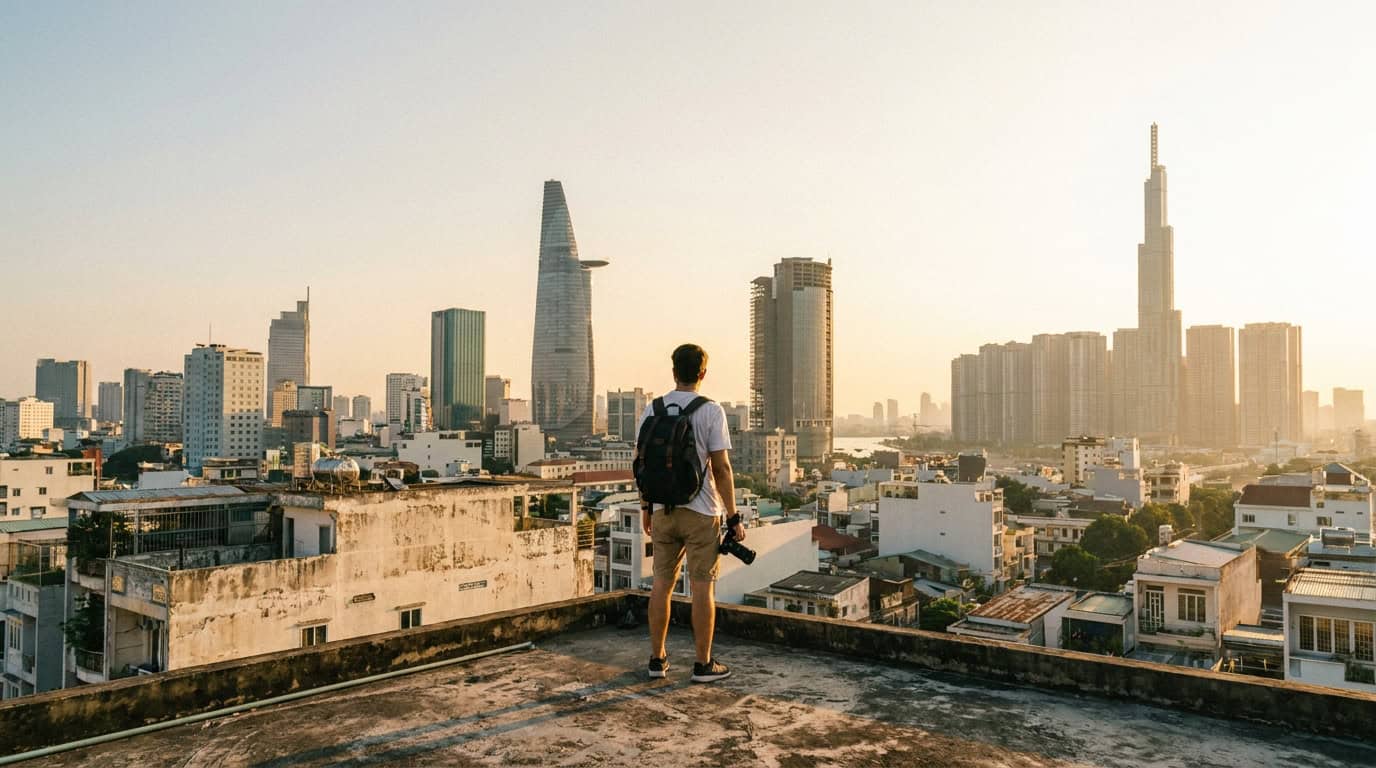
Ho Chi Minh City welcomed over 6.58 million international visitors in the first 10 months of 2025 alone (SGGP). Most of them land with the same question: how many days in Saigon is actually enough? The honest answer is 3 days for a first-timer. That gets you through the main landmarks, a solid cross-section of the food scene, and enough time to absorb the city’s rhythm without rushing. This guide breaks down exactly what you can do in 1, 2, 3, 4, and up to 7 days, so you can plan to your own pace and travel style.
Key Takeaways
– Three days is the most widely cited sweet spot for first-timers — enough for 9+ major attractions at a comfortable pace.
– Vietnam hit 21.17 million international arrivals in 2025, a 20.4% jump and the first time the country crossed 21 million (VietnamPlus).
– Four days unlocks a full day trip to Cu Chi Tunnels or the Mekong Delta without sacrificing city time.
– The average international tourist in Vietnam stays 7.2 nights — so if your itinerary allows it, lean toward more time rather than less.
The Short Answer: How Many Days Do You Actually Need in Saigon?
Three days is the right baseline for most first-time visitors to Saigon. That figure comes up consistently across travel guides and visitor accounts, and it reflects something real: Saigon’s core attractions are geographically dense, mostly in Districts 1, 3, and 4, which means you can cover a lot without burning hours in transit. Two days leaves gaps. Four days adds breathing room or a day trip. The table below maps it out clearly.
| Duration | Key Experiences Covered | Day Trip? | Pace |
|---|---|---|---|
| 1 day | 3-4 highlights (walking route D1) | No | Rush |
| 2 days | ~7 top sites | No | Moderate |
| 3 days | ~9+ main attractions | Optional half-day | Comfortable |
| 4 days | All city sites + 1 full day trip | Yes (1) | Relaxed |
| 5-7 days | All + 2 day trips + hidden districts | Yes (2) | Slow travel |
The average international tourist in Vietnam spends 7.2 nights in the country (WorldMetrics), so if you’re building a Vietnam itinerary rather than a single-city trip, allocating 3-4 nights in Saigon is a sensible starting point. It leaves time for Hoi An, Hanoi, or the coast without shortchanging the south.
1 Day in Saigon: What You Can Realistically Do
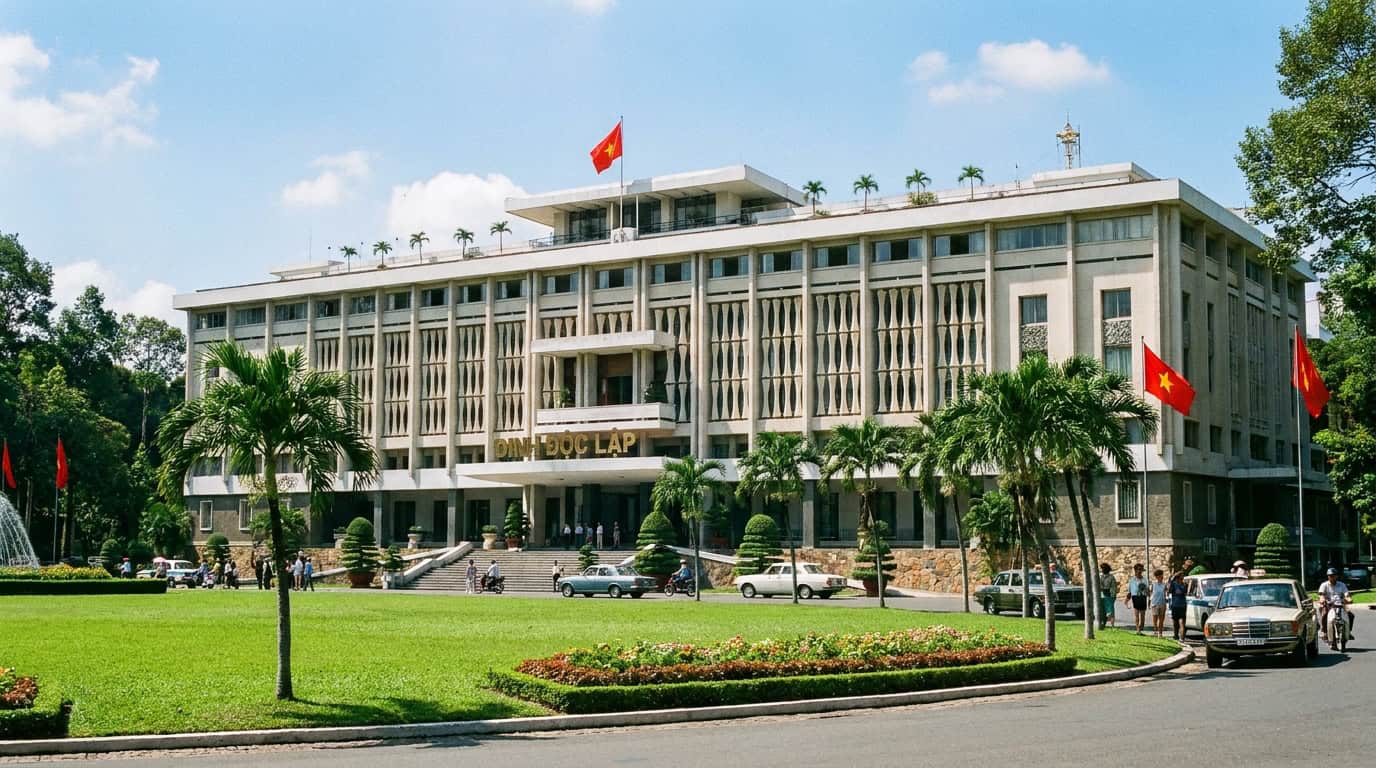
One day in Saigon is enough for 3-4 landmarks if you stay within District 1 and start early. Heat and crowds build by 9am, so an 8am start makes a real difference. Stick to the colonial cluster: Reunification Palace, the Central Post Office, Notre-Dame Cathedral exterior, and Ben Thanh Market. Add a bowl of pho for breakfast and a banh mi for lunch and you’ll have touched the city’s main notes. Don’t expect to feel like you’ve understood Saigon. You won’t. But you’ll have seen it.
A one-day route that works: Reunification Palace (open from 7:30am, entry 40,000 VND) – Notre-Dame Cathedral plaza – Central Post Office interior (free, designed by Gustave Eiffel, completed 1891) – Ben Thanh Market – lunch at a nearby com tam stall – Nguyen Hue Walking Street in the evening. That’s roughly 6 km walkable in a long day with breaks.
The War Remnants Museum is often the one addition visitors regret skipping on a one-day itinerary. It holds 9 permanent exhibitions and more than 20,000 artifacts, and it takes a full 90 minutes to do it justice. If history is your main reason for being here, replace Ben Thanh Market with the War Remnants Museum and save the market for another time.
2 Days in Saigon: The City Essentials
Two days in Saigon lets you cover roughly 7 key sites at a moderate pace, without feeling like a walking tour. Day 1 handles the colonial District 1 cluster described above. Day 2 opens up the War Remnants Museum, Cholon (District 5’s Chinatown), and an evening at Bui Vien Walking Street or a rooftop bar. You start to get a sense of the city’s contrasts: the French past, the Chinese merchant history, the chaotic present.
Day 2 logistics worth knowing: Cholon is about 5 km from District 1. A Grab ride costs around 40,000-60,000 VND. Binh Tay Market in Cholon is the more authentic wholesale market compared to Ben Thanh. Thien Hau Temple nearby is one of the oldest Chinese temples in the city, free to enter.
Two days is better than one but still leaves gaps. You won’t make it to Landmark 81 (Vietnam’s tallest building at 461 m, with an observation deck on floor 79) or the Museum of Vietnamese History in District 3 unless you move fast. It’s also not long enough to consider a day trip. Most travellers who come for just 2 days leave wishing they’d had one more.
2 Days in Saigon: Citation Capsule
Ho Chi Minh City hotel occupancy reached 65.7% by mid-2025, with an average daily rate of USD 121. This signals strong demand, making early booking advisable for stays of any length. The city received over 6.58 million international visitors in just the first 10 months of 2025, according to the Saigon Giai Phong newspaper (SGGP, 2025).
3 Days in Saigon: The Sweet Spot for First-Timers
Three days in Saigon is the most widely recommended duration for first-timers, and the consensus across travel guides holds up. Three days lets you cover 9 or more main attractions at a comfortable pace, with time for proper meals, getting lost in a local market, and an optional half-day Cu Chi Tunnels excursion on day 3. You don’t feel rushed. You don’t feel bored. That’s the balance.
Here’s how 3 days typically breaks down:
Day 1 – Colonial core: Reunification Palace, Notre-Dame Cathedral, Central Post Office, Ben Thanh Market, Nguyen Hue Walking Street.
Day 2 – History and culture: War Remnants Museum (9 permanent exhibitions, plan 2 hours), Cholon and Binh Tay Market, Thien Hau Temple, evening at a Bui Vien street bar.
Day 3 – Scale and neighborhoods: Landmark 81 Skydeck (461 m tall, 14th tallest building in the world at the time of completion, observation deck on floor 79), Museum of Vietnamese History or FITO Museum, District 4 street food in the evening.
The half-day Cu Chi Tunnels option fits on Day 3 if you book a morning tour (departures typically at 8am from D1, back by 1pm), then do Landmark 81 in the afternoon. Cu Chi is 70 km from the city center, so the tour covers the logistics for you.
Three days also gives you one slow morning, which matters more than people expect. Saigon works better when you sit at a sidewalk cafe, order ca phe trung (egg coffee), and watch the motorbike traffic for 45 minutes. That experience doesn’t fit on a 1-day itinerary.
4 Days in Saigon: Add a Day Trip
Four days in Saigon is the minimum needed to see all the main city sites and include one full day trip. With four days, you’re not compromising. Day 1-2 cover the core. Day 3 handles Cholon, Landmark 81, and the secondary museums. Day 4 is the day trip: Cu Chi Tunnels (half-day) or the Mekong Delta (full day). No skipping, no rushing.
Cu Chi Tunnels are the more popular single-day choice. The tunnel system runs 250 km underground, built during the Vietnam War, and the preserved section near Ben Dinh lets you crawl through a short segment. Most tours run 8am-1pm from District 1. Cost: around $15-20 for a group tour, $50-60 for a private tour.
The Mekong Delta needs a full day to feel worthwhile. Ben Tre province is the closest accessible delta region, around 80-90 km from Saigon. A full-day group tour typically includes a boat ride, coconut candy workshop, and lunch, returning by 6pm. It’s a different experience from the city: flat delta terrain, river canals, slower pace.
Four days is also the right choice for families with children. The extra day means you’re not pushing kids through museum after museum on back-to-back mornings. Cu Chi Tunnels is genuinely engaging for older children who have some context on the history.
5-7 Days in Saigon: Slow Travel and Hidden Districts
Five to seven days in Saigon is for slow travellers, return visitors, and anyone who wants more than the highlights. By day 4, you’ve covered the obvious. Days 5-7 are for the quieter, more interesting parts of the city: District 3’s cafe streets, Binh Thanh District’s warehouse galleries, the Ba Chieu market neighborhood, and the riverside walk in District 2 (Thu Duc City).
Return visitors specifically benefit from more time. If you’ve already done Reunification Palace and the War Remnants Museum, you can spend half a day at the FITO Museum (a private collection of traditional Vietnamese medicine, often overlooked), an evening at the AO Show bamboo circus at HCMC Opera House, or a cooking class in a home kitchen in District 3.
With 6-7 days, two day trips become realistic. Cu Chi on day 5, Mekong Delta on day 6, and a recovery day in the city before departure. That’s the right pacing. Doing both back-to-back is possible but tiring, especially in the heat of March-May.
Seven days is also the threshold where you start to find your Saigon rhythm rather than just visiting. You’ll have a regular cafe, a preferred pho place, and at least one neighborhood you keep returning to.
Day Trips That Change Your Calculation
Day trips out of Saigon are the single biggest factor that extends most itineraries, and they should be planned before you book flights. Both Cu Chi Tunnels and the Mekong Delta require half a day minimum, and the Mekong needs a full day to be worth the travel. If either is on your list, add at least one extra night to your Saigon stay.

Cu Chi Tunnels: 70 km from the city center, takes 30-45 minutes by organized tour van. Half-day (4-5 hours on site). Best combined with a morning departure to beat the midday heat. The tunnel system runs 250 km in total. Admission for the Ben Dinh site is 90,000 VND.
Mekong Delta: Ben Tre and My Tho are the most accessible entry points. Full-day tours run 8am-6pm. The delta landscape is completely different from city Saigon: flat, river-cut, full of coconut palms. Worth the trip if you have a full 4+ day itinerary.
Vung Tau: A coastal town 2 hours from Saigon by ferry or bus. Popular with expat and local weekenders. Not a beach destination by international standards, but a manageable overnight trip if you need sea air.
How to Choose the Right Duration for Your Travel Style
The right number of days in Saigon depends more on your travel style than on a universal checklist. The destinations are the same for everyone. How you move through them is different. A budget backpacker and a family of four will have completely different experiences of the same 3-day itinerary.
Here’s a practical breakdown by travel type:
Budget backpacker – 3 days minimum. Three days covers the essential free and low-cost sites (Notre-Dame exterior, Central Post Office, Ben Thanh Market), leaves budget for street food over sit-down restaurants, and doesn’t pad the itinerary with expensive day tours. The War Remnants Museum (40,000 VND entry) is the one paid attraction worth every dong.
Family with kids – 4 days. A slower pace matters with children. Four days means you’re not dragging tired kids through a 5th museum. Cu Chi Tunnels is recommended for families with older kids (10+) who have some Vietnam War context. The interactive elements (crawling through tunnels, viewing demonstrations) hold attention well.
History and culture focus – 4-5 days. If you’re here specifically for the museums and sites, you need more time at each stop. The War Remnants Museum alone warrants 2-3 hours. Add the Museum of Vietnamese History, FITO Museum, Reunification Palace, and Cholon temples, and you’re at 4 full days without rushing. A fifth day for Hoa Lo Prison context (Hanoi) would require a separate trip.
Food traveller – 3-4 days. The street food circuit in Saigon takes time because the best spots are spread across multiple districts. District 1 for banh mi and pho, District 4 for seafood, District 3 for com tam (broken rice), Cholon for Chinese-Vietnamese crossover dishes. Three days scratches the surface; four lets you revisit favourites.
Return visitor – 3+ days focused on new neighborhoods. If you’ve already done the standard itinerary, concentrate on District 3, District 5, Binh Thanh, and Ben Thanh Market after dark. The night market behind Ben Thanh runs until midnight and draws a local crowd more than a tourist one.
Where to Stay in Saigon: District Guide by Visit Length
District 1 is the right base for stays of 3 days or fewer, because it puts you within walking distance of the highest density of attractions in the city. Hotel occupancy in HCMC reached 65.7% by mid-2025, with an average daily rate of USD 121 across the city. Booking 4-6 weeks ahead is practical for peak months (December, January, March).
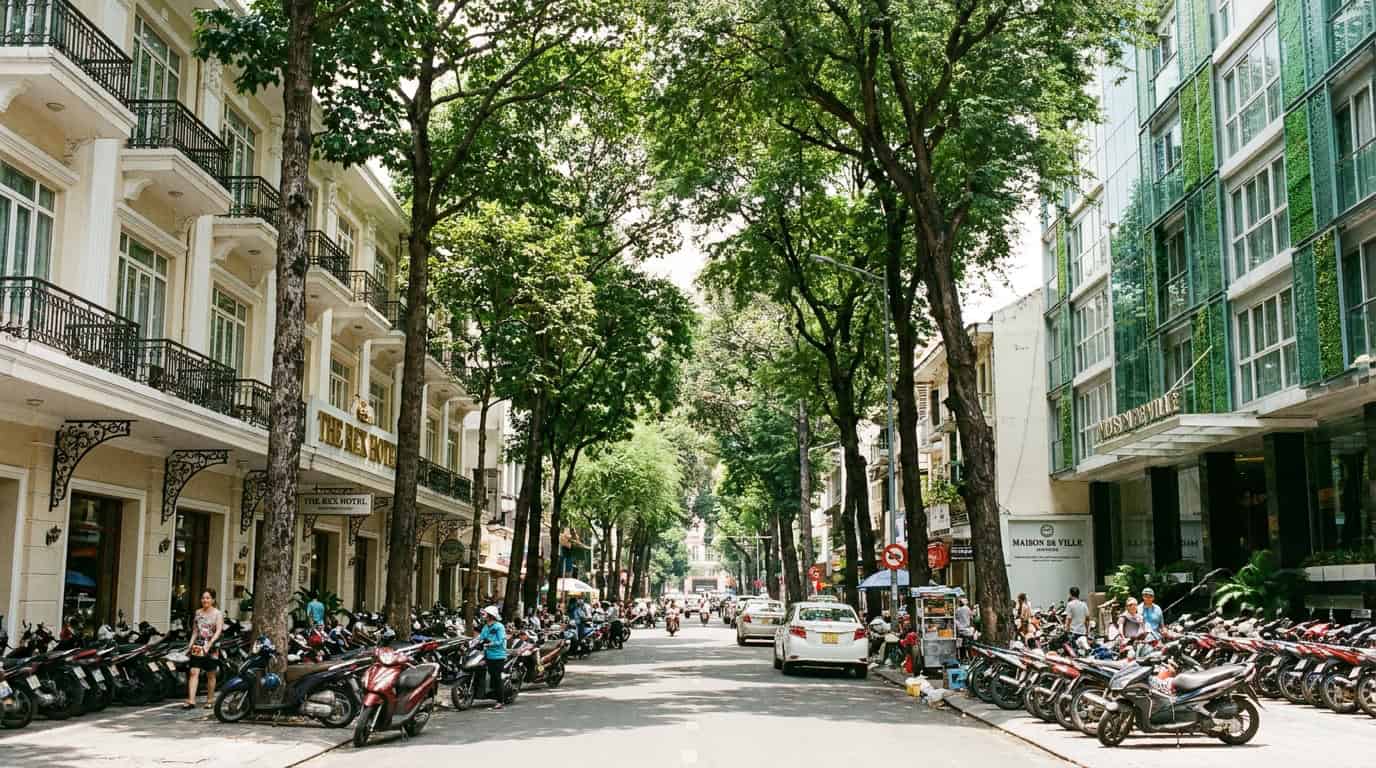
1-2 nights: Stay in District 1. You’ll need the walking access. Bui Vien Street area suits budget travellers; Dong Khoi / Nguyen Hue area suits mid-range to upscale stays.
3-4 nights: District 1 still makes sense as a base. Alternatively, District 3 offers quieter streets, more local cafes, and slightly lower prices, with a 10-minute Grab ride to the main D1 attractions.
5-7 nights: Consider splitting your stay. Two or three nights in District 1 for orientation, then moving to Binh Thanh or District 3 for the remaining time. This gives you a different daily experience of the city without constantly returning to the tourist center.
Serviced apartments in District 1 often work out cheaper than hotels for stays of 5+ nights, and they include kitchen access – useful if you want to do a cooking class and cook your market finds. They also give you a base that feels less transient than a hotel, which matters on a longer stay.
Practical Tips: Pacing, Costs & Getting Around
Pacing in Saigon matters more than in most cities because heat, traffic, and sensory overload are genuine factors that slow you down. Plan no more than 4-5 sightseeing stops per day, and build in a 1-2 hour break between noon and 2pm. The heat during March-May regularly exceeds 35°C, and outdoor sites become genuinely uncomfortable by 11am.
Getting around: Grab (the regional Uber equivalent) is the standard for short hops. Fares within District 1 run 20,000-40,000 VND. Cross-district rides to Cholon or Binh Thanh cost 50,000-80,000 VND. The HCMC Metro Line 1 (opened December 2024) connects Ben Thanh station to the eastern suburbs for as little as 7,000 VND, but it doesn’t yet reach most tourist sites directly.
Daily budget benchmarks:
- Budget traveller: ~$30-45/day (hostel, street food, public transport, paid museum entries)
- Mid-range traveller: ~$70-100/day (guesthouse or serviced apartment, mix of street and sit-down restaurants, occasional Grab)
- Comfort traveller: ~$120-180/day (3-4 star hotel, restaurant meals, private tours)
Booking day trips: Book Cu Chi Tunnels or Mekong Delta tours at least 2-3 days ahead, especially December through March. Tour capacity fills quickly during peak season, and last-minute bookings sometimes mean worse vehicles or rushed schedules.
Visa note: Most nationalities can enter Vietnam visa-free for 45 days as of 2025. Check your specific passport situation before booking, as exemptions vary.
Frequently Asked Questions
Is 2 days enough for Ho Chi Minh City?
Two days in Ho Chi Minh City covers the main District 1 colonial sites and gives you one more full day for the War Remnants Museum, Cholon, and an evening at Bui Vien Street. It’s workable but leaves real gaps. You won’t have time for Landmark 81, a day trip, or any of the quieter neighborhoods that make Saigon interesting beyond the highlights. If your schedule allows it, push to 3 days.
Is 3 days enough for Saigon?
Three days is enough to see 9 or more major attractions across Districts 1, 3, and 5 at a comfortable pace, with time for good meals and an optional half-day Cu Chi Tunnels excursion. Most travel guides and seasoned visitors cite 3 days as the sweet spot for first-timers. It’s not enough to know the city deeply, but it’s enough to leave with a real impression of it.
Can you do Cu Chi Tunnels and Mekong Delta in the same day?
Doing both Cu Chi Tunnels and the Mekong Delta in a single day is not realistic. Cu Chi is 70 km from the city center and takes half a day; the Mekong Delta (Ben Tre or My Tho) is another 70-90 km in a different direction and needs a full day to be worthwhile. Trying to combine them means rushing both, spending most of your time in a van, and arriving back exhausted. Give each at least its own day, which means allocating 4+ days total in Saigon.
How many days should I give Hanoi vs. Saigon?
Most travellers allocate 3-4 days to each city, which works well. Hanoi is more compact and cooler in temperament; Saigon is faster-paced and sprawling. If you have to choose, Saigon offers more accessible day trips (Cu Chi, Mekong Delta) while Hanoi is the gateway to Ha Long Bay. A Vietnam trip that includes both cities typically runs 10-14 days to do both justice alongside other stops.
Is Saigon safe for tourists?
Saigon is generally safe for tourists. The main risks are bag snatching by motorbike riders (keep bags on the building side of the footpath, not the road side) and traffic accidents when crossing streets. Violent crime against tourists is rare. The city recorded over 6.58 million international arrivals in the first 10 months of 2025 (SGGP), and the vast majority have trouble-free visits. Standard urban caution applies, especially after dark on Bui Vien Street.
Sources
- HCMC welcomes over 6.58 million international visitors in 10 months – Saigon Giai Phong (SGGP), 2025
- International arrivals to Vietnam hit new record in 2025, up over 20% – VietnamPlus, 2025
- Vietnam Tourism Statistics – WorldMetrics, 2023-2025
Staying in Saigon?
We host furnished apartments in District 1 — studios up to two-bedroom
lofts, for stays from three nights to six months.
See the apartments or
check availability and book direct with us.
Related Guides
- Saigon 3-Day Itinerary: The Perfect First-Timer Plan (2026)
- Best Areas to Stay in Saigon: District Guide for First-Timers
- 2 Weeks in Vietnam: The Complete North-to-South Itinerary (2026)
- Best Time to Visit Saigon: Weather, Seasons & Honest Tips (2026)
- Getting Around Saigon: Grab, Metro, Bus & Waterbus Guide (2026)
- Vietnam North to South Itinerary: 3–4 Week Route (2026)