
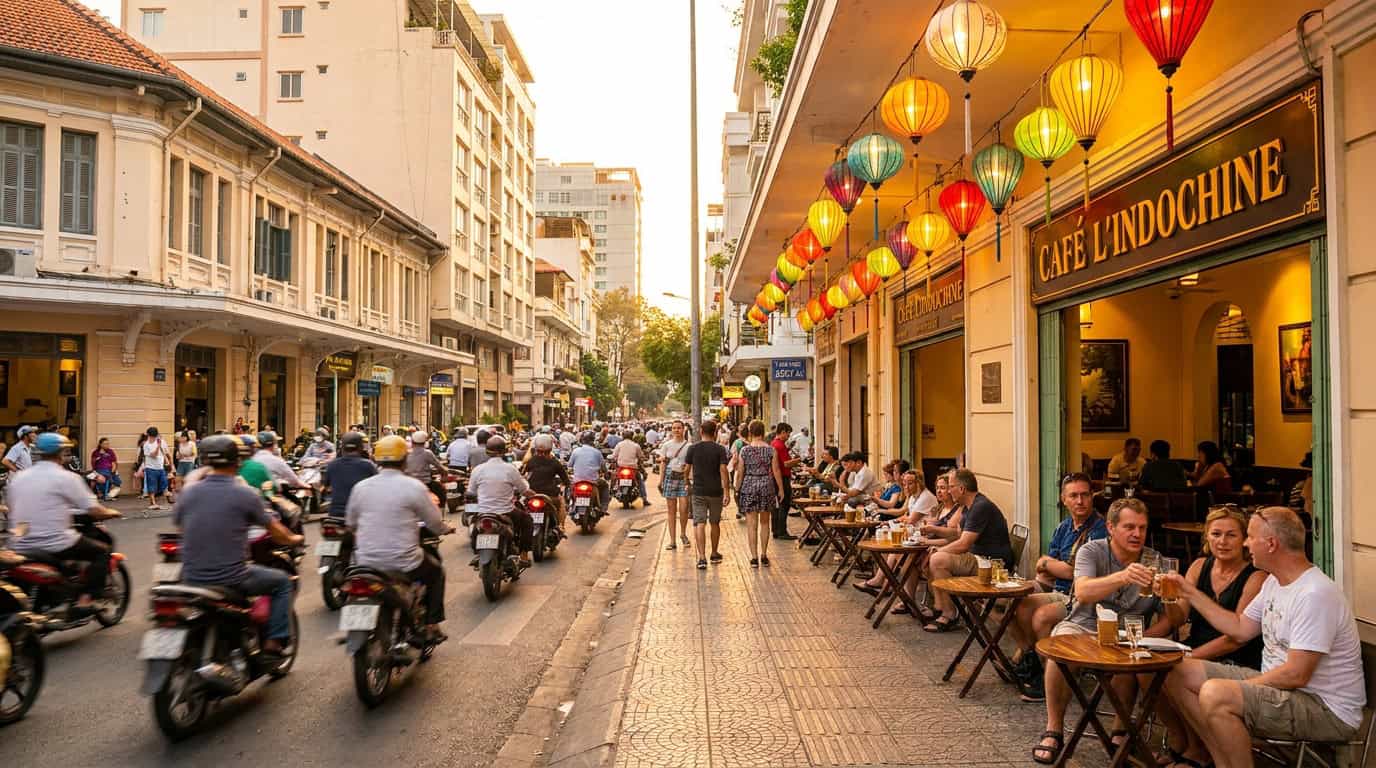
Is Saigon safe? The direct answer: yes, for the vast majority of tourists, Ho Chi Minh City is a safe and manageable destination. That said, it carries real risks that are worth knowing before you arrive. Vietnam ranked 4th safest in Southeast Asia on the 2025 Numbeo Safety Index, and the US State Department issues a Level 1 advisory, the lowest risk tier, meaning “Exercise Normal Precautions.” Those numbers tell a reassuring story, but they don’t cover motorbike bag snatchers, methanol-laced cocktails, or chaotic traffic. This guide does.
Planning a visit? Our things to do in Ho Chi Minh City guide covers the best landmarks, food, and day trips once you arrive.
Key Takeaways
– Vietnam ranks 4th safest in Southeast Asia (2025 Numbeo Safety Index); the US, UK, and Australia all issue Level 1 advisories for Vietnam.
– The biggest day-to-day risk for tourists is motorbike bag snatching. A crossbody bag worn against the chest eliminates most of the exposure.
– Nighttime walking safety scores 41.80/100 on Numbeo (April 2026) vs. 67.13 daytime. Use Grab at night rather than walking long distances alone.
– Fake and methanol-laced alcohol is a confirmed risk nationwide; two tourists died in Hoi An in December 2024.
Is Saigon Safe? The Short Answer
Saigon is safe for tourists, with caveats. The US State Department’s Level 1 advisory (reissued December 2024) places Vietnam in the same low-risk category as France, Japan, and Canada (US State Department). Vietnam ranked 4th safest in Southeast Asia on the 2025 Numbeo Safety Index. The risks that do exist, bag snatching, scams, traffic, and fake alcohol, are predictable and avoidable once you know what to watch for.
Millions of tourists visit Ho Chi Minh City every year without incident. The city has strong government investment in tourist safety: HCMC certified 31 “friendly and safe” tourist destinations in 2025, with venues required to score 80/100 on a safety audit to qualify (Vietnam.vn, December 2025). That context matters. This isn’t a city where danger lurks around every corner. It’s a city that rewards basic situational awareness.
Based on April 2026 Numbeo data drawn from 308 contributors living in or recently visiting Ho Chi Minh City, the city’s overall Safety Index sits at 50.07 out of 100. Daytime walking safety scores 67.13, while nighttime safety drops to 41.80. The highest crime category is corruption and bribery at 79.48/100, a figure that reflects general bureaucratic frustration rather than tourist-facing crime. (Numbeo HCMC Crime Index, April 2026)
What the Data Says: Crime Rates and Safety Scores
Ho Chi Minh City’s Numbeo Crime Index is 49.93 out of 100 (Safety Index 50.07), based on 308 contributors as of April 2026 (Numbeo). That places it roughly mid-range globally, not among the world’s safest cities, but nowhere near the most dangerous either. The scores break down in ways that are directly useful for planning a trip.
Daytime safety (67.13/100) is solid. Nighttime safety (41.80/100) is moderate, meaning extra caution after dark is warranted but the city isn’t off-limits. The corruption score (79.48/100) is the single highest crime category, but this is a background risk that affects residents more than short-stay tourists. Mugging, robbery, and assault all score significantly lower, in the 35-45 range, which aligns with the generally non-violent nature of crime in the city.
Citation Capsule: Vietnam ranked 4th safest in Southeast Asia on the 2025 Numbeo Safety Index, according to VOV English reporting on Numbeo data. HCMC’s own Safety Index of 50.07 (April 2026, 308 contributors) reflects a city where daytime movement is comfortable (67.13/100) but nighttime walking carries elevated risk (41.80/100). (Numbeo HCMC Crime Index, April 2026)
Three major English-language government advisories all reach the same conclusion. The UK FCDO says “exercise normal precautions” but adds specific warnings about motorbike accidents and methanol poisoning at licensed bars (UK FCDO Vietnam Safety). Australia’s Smartraveller echoes Level 1 guidance and flags bag slashing and snatch-and-grab in tourist areas as common (Smartraveller Vietnam). The US State Department’s Level 1, the same rating given to dozens of European countries, is your baseline.
TravelSafe-Abroad’s composite 2026 score for HCMC is 70/100, rating women traveler risk, mugging, and terrorism as LOW, pickpockets, scams, and transport as MEDIUM, and tap water as HIGH. That hierarchy is a useful mental map for the risks that actually need your attention.
The Biggest Risk: Motorbike Bag Snatching
Motorbike bag snatching is the most common crime affecting tourists in Ho Chi Minh City. Australia’s Smartraveller (2025) specifically calls out “bag slashing and snatch-and-grab” as common in tourist areas. The mechanics are simple: a rider slows alongside a pedestrian, grabs the bag strap or phone, and accelerates. It happens in seconds and often results in the victim being dragged or knocked down.
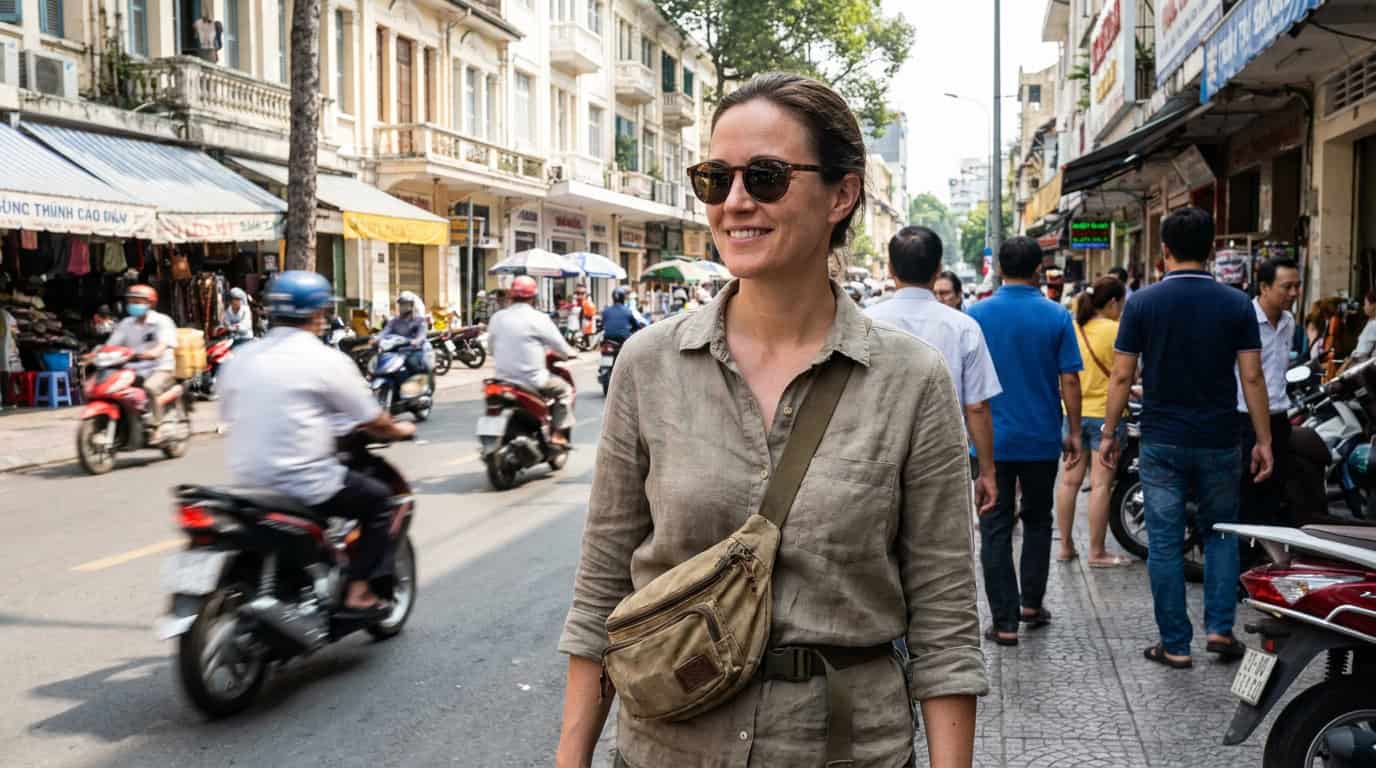
The defence is equally simple. Wear your bag across your body with the strap across your chest, not hanging off one shoulder. Keep your phone in a front trouser pocket when walking near roads, not in your hand. Cameras should be on a neck strap or stowed in a bag, not dangled at arm’s length. These three habits eliminate roughly 90% of the opportunity. Bui Vien, Ben Thanh Market, and District 1 riverfront areas near Ton Duc Thang street are where snatching incidents concentrate.
Don’t fight back if it happens. The trauma of being dragged down the road by a motorbike is far worse than the cost of replacing a phone. Hand it over, note the direction of travel, then call your hotel.
Common Tourist Scams in Ho Chi Minh City: How to Avoid Them
Ho Chi Minh City has a well-documented scam ecosystem targeting tourists, but every common scam has a straightforward counter. TravelSafe-Abroad rates scam risk as MEDIUM for HCMC in 2026. Most scams cluster around transport, restaurants near the tourist strip, and unsolicited services. Knowing the playbook in advance is the best protection.
Transport scams are the most varied. Unofficial taxis, including vehicles with fake Vinasun or Mai Linh logos, overcharge by running rigged meters or quoting inflated flat rates. Fake Grab drivers operate inside airport arrivals halls, showing phony booking screens on their phones. The counter: book all rides through the Grab app (open it before you leave the arrivals hall), walk past anyone approaching you inside, and only meet your verified driver in the designated outdoor pick-up zone. Our Saigon airport to District 1 guide covers the pickup process step by step.
Restaurant scams near Bui Vien and Pham Ngu Lao are straightforward: tourist-targeted menus with prices 3-5x the standard, sometimes swapped out after you’re seated. Check the menu is visible and prices are listed in VND before you sit. If there’s no visible pricing, walk away.
Here’s a quick-reference list of the other common scams:
- Cyclo and xe om price ambush: Always agree on a price before boarding. Show the number on your phone screen in VND to avoid misunderstanding.
- Shoe-shine scam: An unsolicited cleaner approaches, applies polish before you can stop them, then demands 200,000-500,000 VND. Decline the service firmly and keep walking.
- Fake police: Rare but reported. Real police in uniform don’t stop tourists in plain clothes without showing ID. If you’re uncertain, call your hotel or the tourist police line (+84 28 3829 4394).
- Seasonal pickpocketing: Crowds during Tet (late January/early February) and peak tourist season (December-January) elevate pickpocket risk. Keep valuables in front pockets in dense crowds.
The shoe-shine and cyclo price scams operate almost exclusively within 300 metres of the Ben Thanh Market roundabout and the Bui Vien strip. Move two blocks off the main tourist drag and the scam density drops sharply. Locals know this intuitively; tourists often don’t.
Is Saigon Safe at Night?
Saigon is safe at night in well-lit tourist districts, but nighttime walking safety scores only 41.80/100 on Numbeo (April 2026), a meaningful drop from the 67.13 daytime score. District 1, District 3, and the Bui Vien area are active, lit, and policed after dark. The risks shift rather than disappear: bag snatching from motorbikes is harder to see coming when streets are darker and less crowded.
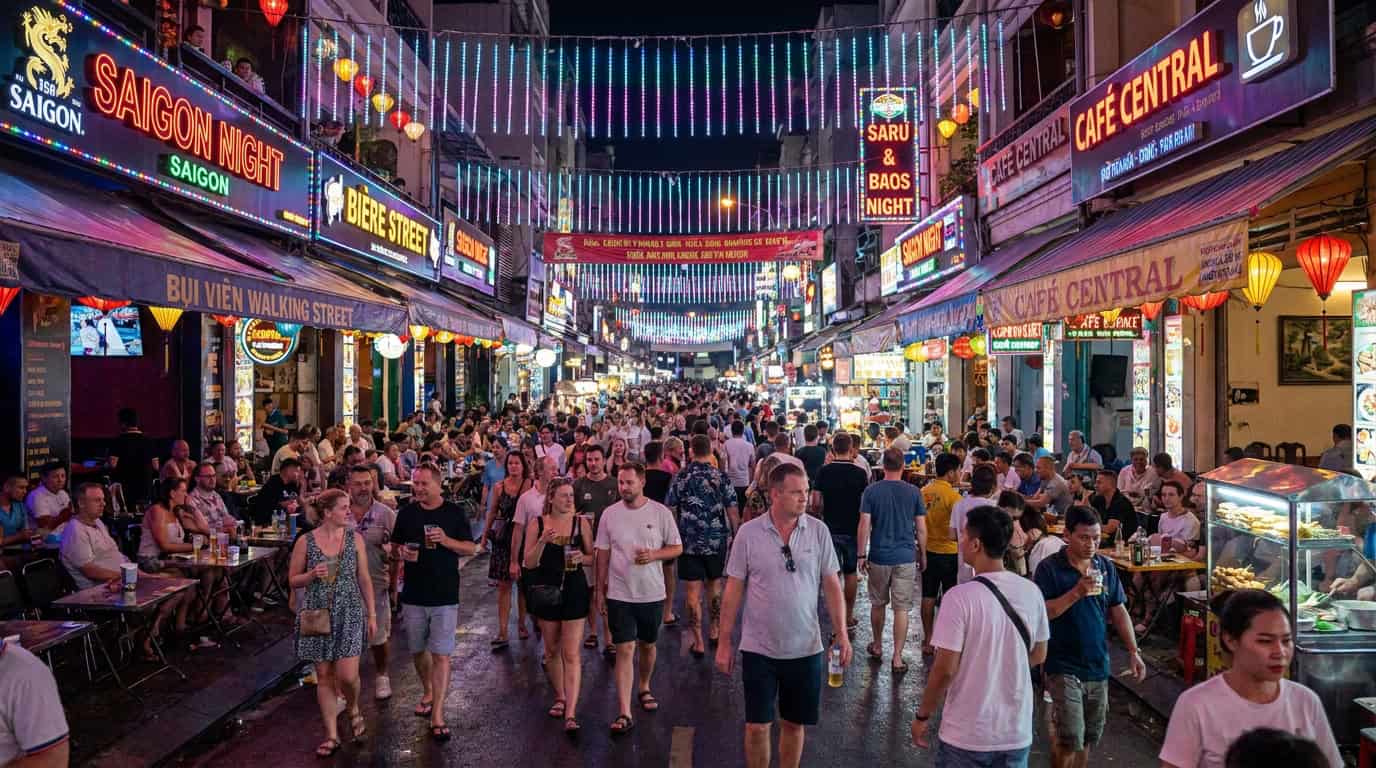
The practical rule: use Grab for any solo night trip of more than a few blocks. It’s cheap: a 15-minute ride rarely exceeds 50,000-80,000 VND, and it removes the most common risk vectors (snatching, taxi overcharging, getting lost). Walking is fine along Nguyen Hue Walking Street, in the restaurant alleys around District 3, or anywhere you can see steady foot traffic and lit storefronts.
Avoid quiet, poorly lit streets alone after midnight, especially in District 4, the outer districts (8, 12), and any area where you’re the only pedestrian. This isn’t unique to Saigon. It’s reasonable practice in any city.
Bui Vien Walking Street is worth a mention on its own. It’s HCMC’s main backpacker nightlife strip, loud and dense every evening. It’s safe in the sense that it’s well-populated, but it has elevated tout, scam, and unwanted-attention activity. Walk through it confidently, decline offers firmly, and you’ll be fine.
Safest and Most Dangerous Areas for Tourists
The safest areas for tourists in Ho Chi Minh City are Districts 1 and 3, Binh Thanh, and the main expat neighbourhoods, all offering good lighting, police presence, and proximity to services. HCMC certified 31 tourist-friendly destinations in 2025 under an 80/100 threshold safety audit. The outer districts are a different story: limited tourist infrastructure, darker streets, and fewer English speakers mean that problems take longer to resolve.
District Safety Guide
| Area | Safety Level | Notes |
|---|---|---|
| District 1 (CBD) | Safe for tourists | Well-lit, police presence, touristy; higher scam concentration |
| District 3 | Safe | Quieter residential, good restaurants, low street crime |
| Binh Thanh | Safe | Expat-popular; Vinhomes area well-lit and walkable |
| District 4 | Caution at night | Improving rapidly but darker streets; avoid late-night solo walks |
| District 5 (Chinatown) | Safe daytime | Busy market area; watch for pickpockets in crowded markets |
| Bui Vien / Pham Ngu Lao | Safe but alert | Peak tourist/nightlife zone; scams and bag snatchers active |
| Outer districts (8, 12, etc.) | Caution | Far from tourist services; avoid without local knowledge |
The Bui Vien area deserves specific framing: it’s not dangerous, but it has a higher concentration of opportunistic crime than anywhere else in the tourist orbit. District 1’s riverfront blocks near Ton Duc Thang are another bag-snatching hotspot after dark. Stay aware in those two zones specifically.
Is Saigon Safe for Solo Female Travelers?
Ho Chi Minh City is generally safe for solo female travelers. TravelLadies rates it 3.6/5 based on real trip reports from 13 women, with a crime index of just 1.6/5 (TravelLadies, 2025). TravelSafe-Abroad’s 2026 composite rates women traveler risk as LOW. That doesn’t mean risks are zero, but it means HCMC compares favourably to many popular travel destinations.
The most consistent precautions from women who’ve traveled here solo: use Grab at night rather than hailing a motorbike taxi on the street. Avoid walking alone on quiet streets after midnight. Ignore persistent touts and hawkers on Bui Vien. They’re annoying, not dangerous, but firmness is required. Cover shoulders and knees near temples and pagodas, which is both culturally respectful and reduces unwanted attention.
Street harassment in the Western sense is rare. You’re far more likely to face overly persistent vendors trying to sell you something than any threatening behaviour. Vietnam’s culture is generally welcoming to solo female visitors, and the country’s tourist infrastructure has improved significantly in the 2020s.
Road Safety: The Risk Nobody Talks About
Vietnam’s roads are genuinely dangerous: 9,954 people died in traffic accidents in 2024, a fatality rate of 17.7 per 100,000, above the Asia-Pacific average of 15.2 per 100,000 (Saigon Times, Asian Transport Observatory 2025). For tourists, road safety is arguably the most underrated risk in the city. Experienced emergency doctors in HCMC consistently report that tourist motorbike accidents account for a significant share of foreign visitor ER admissions.
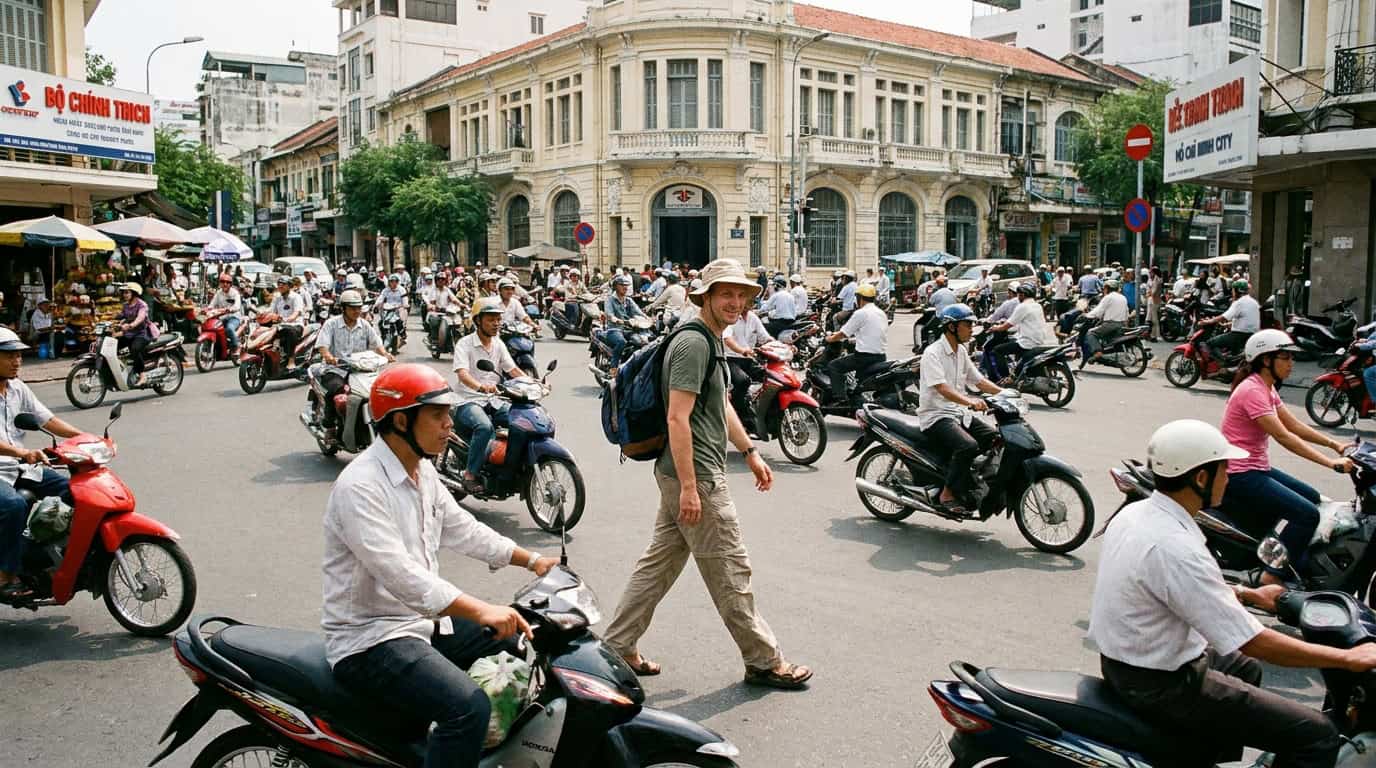
HCMC traffic is dense and chaotic by any global standard. Motorbikes outnumber cars, traffic lights are treated as advisory, and pedestrian right-of-way is not a cultural norm. This is manageable once you understand the system: traffic flows rather than stops and starts, so the safest way to cross a road is to step out slowly and steadily, maintain a constant pace, and let motorbikes flow around you. Hesitating or stopping mid-crossing is what causes accidents.
For motorbikes: Don’t rent one unless you have genuine experience riding in dense Asian traffic. The financial saving is not worth the medical risk. Grab bikes (GrabBike) are fine for short trips. You’re a passenger, not the rider. Grab cars are the safest option for longer distances or at night.
Citation Capsule: Vietnam recorded 9,954 traffic fatalities in 2024, equating to a fatality rate of 17.7 per 100,000 people, higher than the Asia-Pacific regional average of 15.2. Tourist motorbike rentals contribute significantly to foreign visitor ER visits in HCMC. (Saigon Times, 2025)
Hidden Dangers: Fake Alcohol, Air Pollution, and Tap Water
Three risks in Ho Chi Minh City fly below the radar of most standard safety guides: methanol in fake alcohol, seasonal air pollution, and tap water contamination. TravelSafe-Abroad rates tap water risk as HIGH, the only HIGH-rated risk in their 2026 HCMC composite. The other two are newer concerns that have escalated in recent years.
Fake and Methanol-Laced Alcohol
This is not a theoretical risk. In December 2024, two foreign tourists died after consuming methanol-laced cocktails at a licensed bar in Hoi An (VietnamNet, December 2024). A bartender was arrested in February 2025. Separately, Vietnamese authorities seized 50,000 bottles of fake alcohol in Hanoi in 2025. The UK FCDO explicitly flags methanol poisoning in its current Vietnam travel advisory.
The risk is nationwide, not confined to HCMC. Cheap cocktails at roadside bars, particularly spirits mixed with unknown brands, carry the highest exposure. Safer choices: stick to beer (Bia Saigon, Tiger, Huda), wine from sealed bottles from reputable venues, or spirits from internationally recognised brands poured from sealed bottles you can watch being opened. If you feel dizzy, develop visual disturbances, or feel unusually unwell after drinking, get to a hospital immediately. Methanol poisoning is treatable but time-sensitive.
Air Pollution
HCMC’s air quality reached an AQI of 166 (Unhealthy) on January 11, 2026, ranking it in the global top 10 most polluted cities that day, with PM2.5 levels at three times the WHO annual guideline (IQAir, January 2026). The worst months are November through February, when the dry season combines with temperature inversions to trap pollution near ground level.
Check the IQAir app before outdoor activities. When AQI exceeds 100, wear an N95 mask. A cloth or surgical mask doesn’t filter PM2.5 effectively. Schedule outdoor sightseeing in the early morning, when AQI is typically at its daily low. This matters most for children, older adults, and anyone with respiratory conditions.
Tap Water
Don’t drink tap water in HCMC. Full stop. Bottled water is available at every 7-Eleven, FamilyMart, and Circle K convenience store for around 5,000-10,000 VND (under $0.50). Restaurants serve bottled water as standard. This risk is easy to manage once you know about it.
What to Do If Something Goes Wrong
If something goes wrong in Ho Chi Minh City, your first calls should be to your hotel and, if needed, the emergency services or tourist police. Vietnamese emergency numbers are: Police 113, Fire 114, Ambulance 115. English-speaking tourist police in District 1 can be reached at +84 28 3829 4394.
If you’re robbed: Don’t resist physically. Hand over the item and note which direction the person went. Report to the nearest police station for an official crime report; your travel insurer will require this document. Your hotel concierge can help navigate this process and translate if needed.
Lost or stolen passport: Contact your country’s embassy or consulate immediately. HCMC hosts consulates for most major nations; your embassy’s emergency line is the right first call, not the police.
Medical emergencies: Two hospitals in HCMC are consistently recommended for English-speaking foreign tourists. FV Hospital (Viet-Phap Friendship Hospital) at +84 28 5411 3333 is a French-Vietnamese facility with international standards and multilingual staff. Family Medical Practice at +84 28 3822 7848 is a Western-run clinic widely used by expats and business travellers. Both operate 24-hour emergency services.
Travel insurance that covers medical evacuation is strongly recommended for Vietnam. Adequate emergency care is available in HCMC, but a serious accident in an outer district can involve a challenging transfer.
How Saigon Compares to Other Southeast Asian Cities
Saigon sits mid-range in the Southeast Asian safety picture: significantly safer than Manila or Jakarta, roughly comparable to Kuala Lumpur and Hanoi, but below Singapore. Vietnam’s 4th-place Numbeo ranking for Southeast Asia (2025) reflects a country that has made significant progress on public safety over the past decade. The comparison table below puts the numbers in context.
Southeast Asia City Safety Comparison (Numbeo Safety Index, 2025-2026)
| City | Safety Index | Crime Index | Notes |
|---|---|---|---|
| Singapore | ~82 | ~18 | Consistently Southeast Asia’s safest major city |
| Chiang Mai, Thailand | ~67 | ~33 | Low street crime; popular with long-term travelers |
| Kuala Lumpur, Malaysia | ~52 | ~48 | Similar profile to HCMC; bag snatching is common |
| Ho Chi Minh City | 50.07 | 49.93 | Mid-range; predictable risks, manageable with awareness |
| Bangkok, Thailand | ~46 | ~54 | Scams and traffic are the main tourist risks |
| Jakarta, Indonesia | ~43 | ~57 | More petty crime; less tourist infrastructure |
| Manila, Philippines | ~28 | ~72 | Significantly higher crime; avoid at night |
For most tourists comparing Saigon against Bangkok or Bali as a Southeast Asia trip base, the safety profiles are broadly similar. Bangkok’s Numbeo Crime Index is actually higher than HCMC’s. Bali has very low violent crime but significant theft. The honest comparison: none of these cities are Singapore, but all are manageable destinations for prepared travelers.
The perception that Saigon is significantly more dangerous than Bangkok or Bali is not supported by the data. It likely persists because HCMC’s traffic is more viscerally confronting for first-time visitors, and the Bui Vien scam strip gets disproportionate attention in backpacker forums. The underlying crime statistics tell a more balanced story.
Frequently Asked Questions
Is it safe to walk around Ho Chi Minh City at night?
Walking in District 1, District 3, and well-lit tourist areas at night is generally safe. The main risk is bag snatching from motorbikes: keep bags against your body and phones in a front pocket. Nighttime walking safety scores 41.80/100 on Numbeo (April 2026), lower than daytime (67.13), so stay in lit areas and use Grab rather than walking long distances alone after midnight. For neighbourhood-by-neighbourhood details, see our best areas to stay in Saigon guide.
What are the most common scams in Ho Chi Minh City for tourists?
The most common tourist scams in Ho Chi Minh City are motorbike bag snatching, fake taxi or Grab drivers, inflated menu prices near Bui Vien, unsolicited shoe-shine demands, and cyclo price ambushes. Using the Grab app eliminates most transport scams, and always checking menu prices before sitting protects against restaurant scams. Agree on a price before any cyclo or street xe om ride.
Is Ho Chi Minh City safe for solo female travelers?
Ho Chi Minh City is generally safe for solo female travelers. TravelLadies rates it 3.6/5 based on real trip reports, and TravelSafe-Abroad rates women traveler risk as LOW in their 2026 composite. The main precautions are the same as in any city: use Grab instead of hailing random motorbike taxis at night, stay in well-lit areas after midnight, and ignore persistent hawkers near Bui Vien.
Which areas should tourists avoid in Saigon?
Most tourist-frequented areas in Saigon, including Districts 1 and 3, and Binh Thanh, are safe for day and evening visits. Exercise more caution in District 4 at night and in outer districts (8, 12) that lack tourist infrastructure. Bui Vien Walking Street is safe but has higher scam and tout activity than other areas, so stay alert there even during daylight hours.
How does Saigon compare to other Southeast Asian cities for safety?
Saigon’s Numbeo Safety Index of 50.07 (April 2026) places it mid-range for Southeast Asia: safer than Manila and Jakarta, roughly comparable to Kuala Lumpur, and below Singapore (82+) and Chiang Mai. Vietnam ranks 4th safest overall in Southeast Asia on the 2025 Numbeo rankings. Bangkok’s Crime Index is actually higher than HCMC’s, which surprises many first-time visitors.
What should I do if I get robbed in Ho Chi Minh City?
If robbed, do not physically resist. Hand over the item. Then report to the nearest police station (call 113) and contact your hotel for help navigating the process. You’ll need a police report for any insurance claim. For a lost passport, contact your embassy immediately. English-speaking tourist police in District 1 can be reached at +84 28 3829 4394. For medical help, FV Hospital (+84 28 5411 3333) has English-speaking staff around the clock.
The Bottom Line
Is Saigon safe? Yes, for informed tourists who understand the real risk landscape. The US, UK, and Australian governments all issue their lowest advisory levels for Vietnam. The most common problems, bag snatching, transport scams, and restaurant price padding, are predictable and preventable. The hidden risks (fake alcohol, air pollution, dangerous traffic) are the ones worth learning about before you arrive, because they’re the ones that catch people off-guard.
Take a Grab instead of a random xe om at night. Wear your bag against your chest. Stick to beer and sealed bottles in bars. Check the IQAir app during dry season. Know the tourist police number. With those basics in place, Ho Chi Minh City is a city that rewards curiosity far more than it punishes it.
For practical pre-trip planning, the things to do in Ho Chi Minh City guide covers the best neighbourhoods, day trips, and transport logistics. The airport to District 1 guide walks you through the safest arrival options, including how to use Grab correctly from the airport. That’s the first safety decision every visitor makes.
Sources
- Numbeo HCMC Crime Index (April 2026)
- US State Department Vietnam Travel Advisory (December 2024)
- UK FCDO Vietnam Safety and Security (2025)
- Australia Smartraveller Vietnam (2025)
- Saigon Times: Nearly 10,000 Fatalities in Vietnam Traffic Accidents in 2024
- VietnamNet: Two Tourists Die After Drinking Methanol-Laced Cocktail in Hoi An (December 2024)
- IQAir: Ho Chi Minh City Among Top 10 Most Polluted Cities, January 11 2026
Staying in Saigon?
We host furnished apartments in District 1 — studios up to two-bedroom
lofts, for stays from three nights to six months.
See the apartments or
check availability and book direct with us.
Related Guides
- Getting Around Saigon: Grab, Metro, Bus & Waterbus Guide (2026)
- Cost of Living in Saigon: Monthly Budget Breakdown
- Saigon Airport to District 1: All Options & Prices (2026)
- Vietnam Visa on Arrival vs E-Visa: Which Is Better?
- Rent Motorbike Vietnam: Everything You Need to Know (2026)
- Vietnam Public Holidays 2026: Complete Calendar