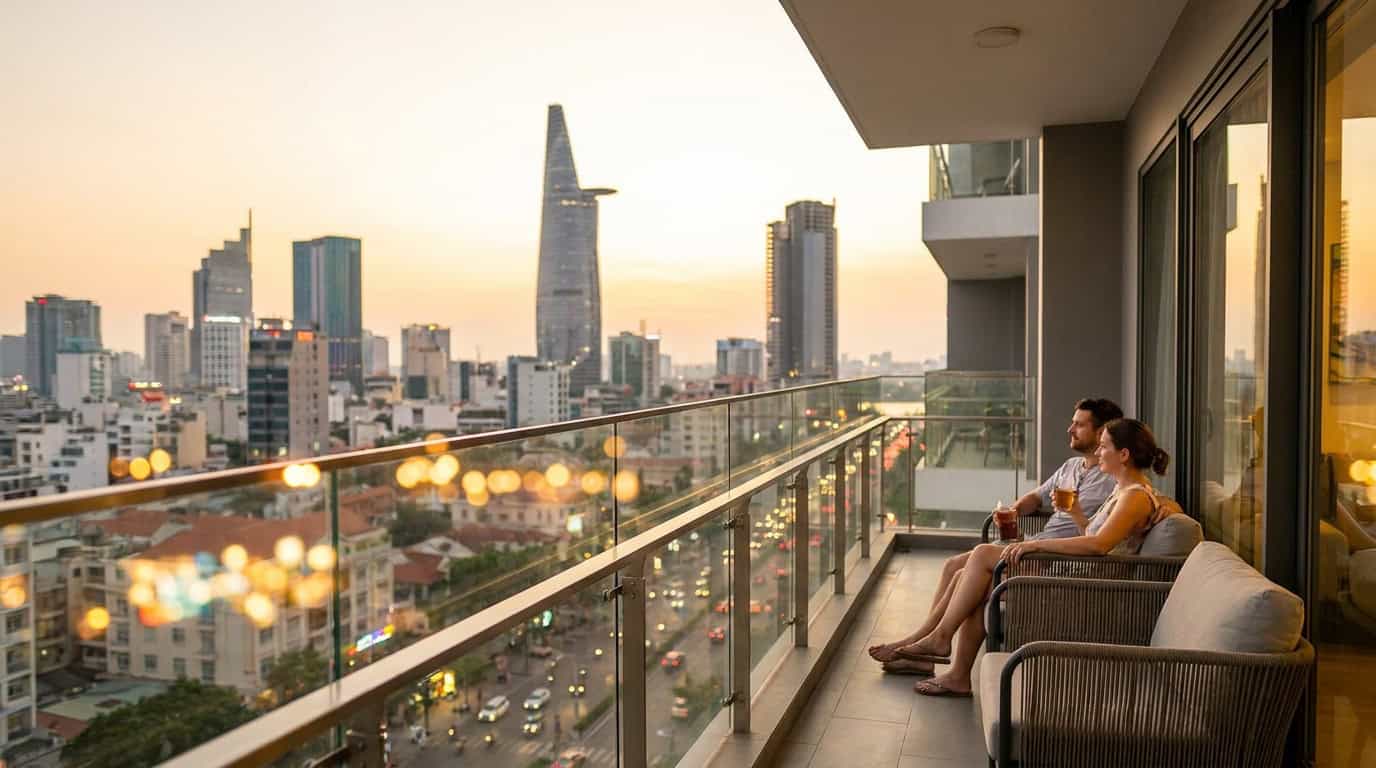
Booking an airbnb in Saigon in 2026 is still possible, but the experience has changed dramatically since Vietnam’s 2024 short-term rental crackdown — and travelers who haven’t read the new rules often arrive to find their reservation cancelled at the door. Some buildings have banned short-term guests entirely, prices in District 1 have climbed nearly 40% year-over-year, and a growing share of listings are now technically operating in a legal gray zone. This guide walks you through exactly what’s legal, what’s not, where to stay, what you’ll actually pay, and how to spot the red flags before you hit “Reserve.”
Key Takeaways
- Airbnb in Saigon is legal, but many apartment buildings now ban short-term rentals under a 2020 housing law that was actively enforced starting 2024 — always confirm with your host that the building permits guests.
- Average nightly rate sits around 850,000 VND (~$35 USD) for a one-bedroom in District 1, up roughly 38% from 2023 per AirDNA market data.
- District 1, Thao Dien (District 2), and Binh Thanh are the three safest, most foreigner-friendly neighborhoods for first-time visitors.
- Hotels often win for stays under 4 nights because of receptionists, laundry, and instant problem-solving; Airbnb wins for stays of a week or more.
- Luxstay and Go2Joy are the Vietnamese equivalents of Airbnb, with stronger local inventory and often lower fees.
- Avoid Districts 4, 8, and parts of Binh Tan after dark if you’re new to the city.
Is Airbnb Legal in Saigon in 2026?
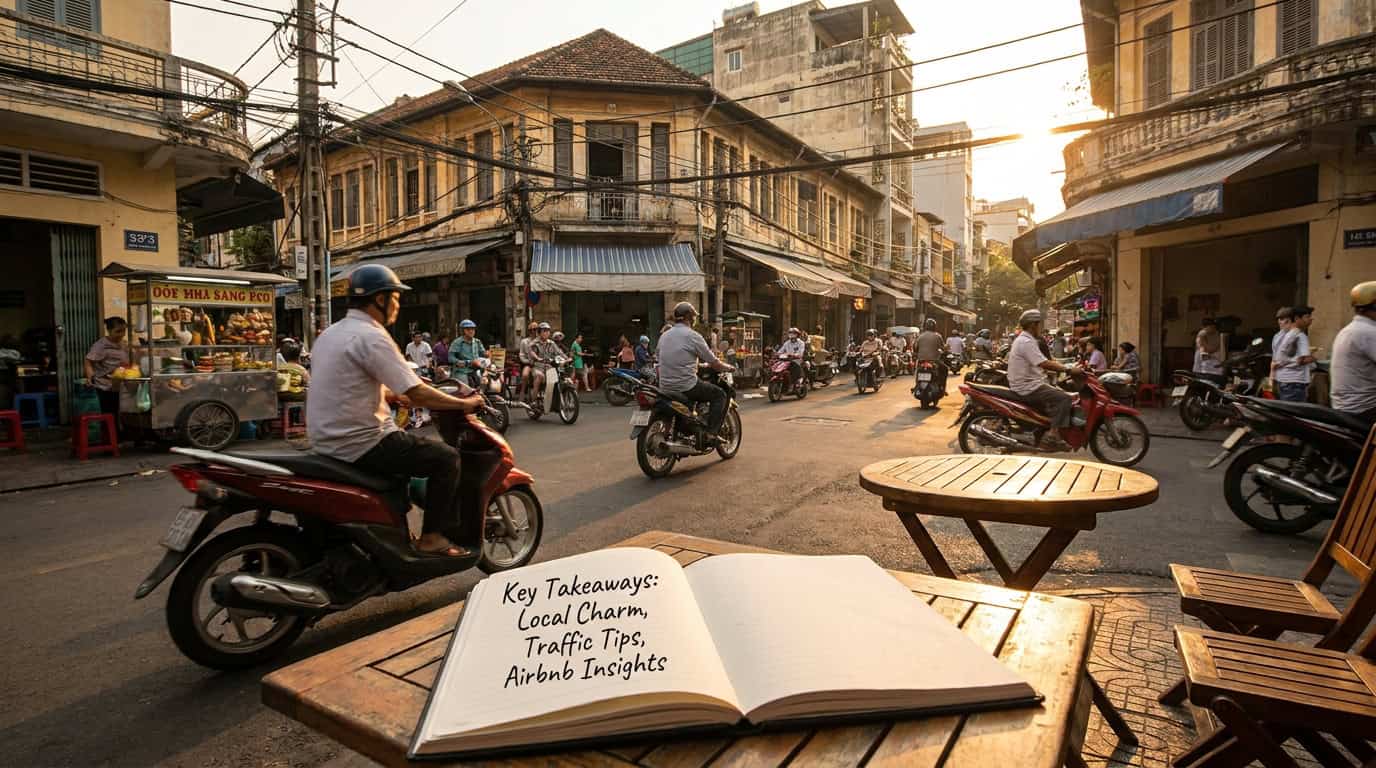
Yes — but with serious caveats most foreign travelers don’t know about. Airbnb itself operates legally in Vietnam and pays local taxes, but individual hosts often run into trouble with two layers of regulation: Vietnam’s 2020 Law on Housing (Article 3, Clause 11) bans the use of apartments in residential buildings for any purpose other than long-term residential living, and a 2024 directive from Ho Chi Minh City’s Department of Construction empowered building management boards to enforce this. The result, reported widely by VnExpress International and other Vietnamese outlets, was thousands of cancelled listings in 2024–2025, particularly in well-known buildings like Vinhomes Central Park, Masteri Thao Dien, and The Sun Avenue.
What this means for you as a guest:
- Houses, villas, and licensed serviced apartments are fully legal to rent short-term.
- Apartments in condo towers are a gray area — the host may be operating legally, illegally, or in a building that turns a blind eye.
- You can be turned away at the lobby if security recognizes a short-term guest, even with a confirmed booking.
A 2025 Reddit r/VietNam thread on this topic includes dozens of first-hand reports of travelers being denied entry, and the issue remains active in 2026. The practical defense: before you book, message the host and ask directly, “Does the building management allow short-term guests? Will I be able to register at reception with my passport?” A confident, specific answer is a good sign. A vague reply is a red flag.
What You’ll Pay: Airbnb in Saigon Price Breakdown for 2026
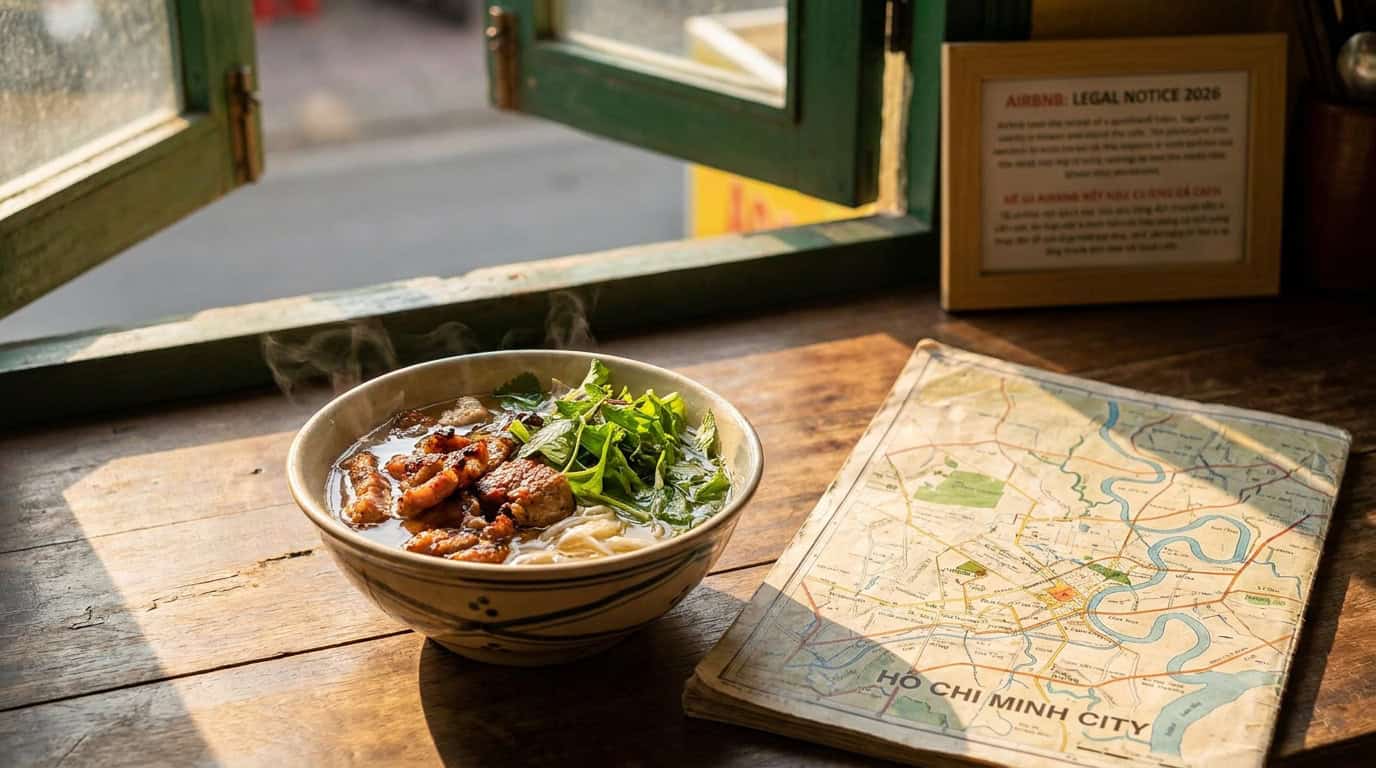
Pricing has shifted meaningfully since the post-pandemic recovery. Based on AirDNA’s Ho Chi Minh City market data and our own monitoring of central listings, here’s the current landscape:
| Listing Type | Nightly Rate (VND) | Nightly Rate (USD) | Notes |
|---|---|---|---|
| Private room in shared apt | 380,000–600,000 | $15–24 | Cheapest, often District 3 or Phu Nhuan |
| 1BR apartment, District 1 | 800,000–1,300,000 | $32–52 | Central, walkable to Ben Thanh |
| 1BR apartment, Thao Dien | 700,000–1,100,000 | $28–44 | Expat-friendly, quieter |
| 2BR apartment, Binh Thanh | 1,200,000–2,000,000 | $48–80 | Best for families, near Landmark 81 |
| Luxury penthouse, District 1 | 3,500,000+ | $140+ | Skyline views, full hotel-grade |
Add Airbnb’s service fee (typically 14–16%), a cleaning fee of 250,000–500,000 VND ($10–20 USD), and Vietnam’s 8% VAT. A listing advertised at 900,000 VND/night will usually invoice closer to 1,150,000 VND/night for a 4-night stay.
The cheapest legitimate stays are in District 3, District 10, and Phu Nhuan, which are perfectly safe, fully Vietnamese in feel, and a 10-minute Grab ride from the tourist core. If you’re trying to extend your trip on a budget, see our budget travel Saigon guide for tactics that can cut accommodation costs by 30–50%.
Best Districts: Where to Book an Airbnb in Saigon
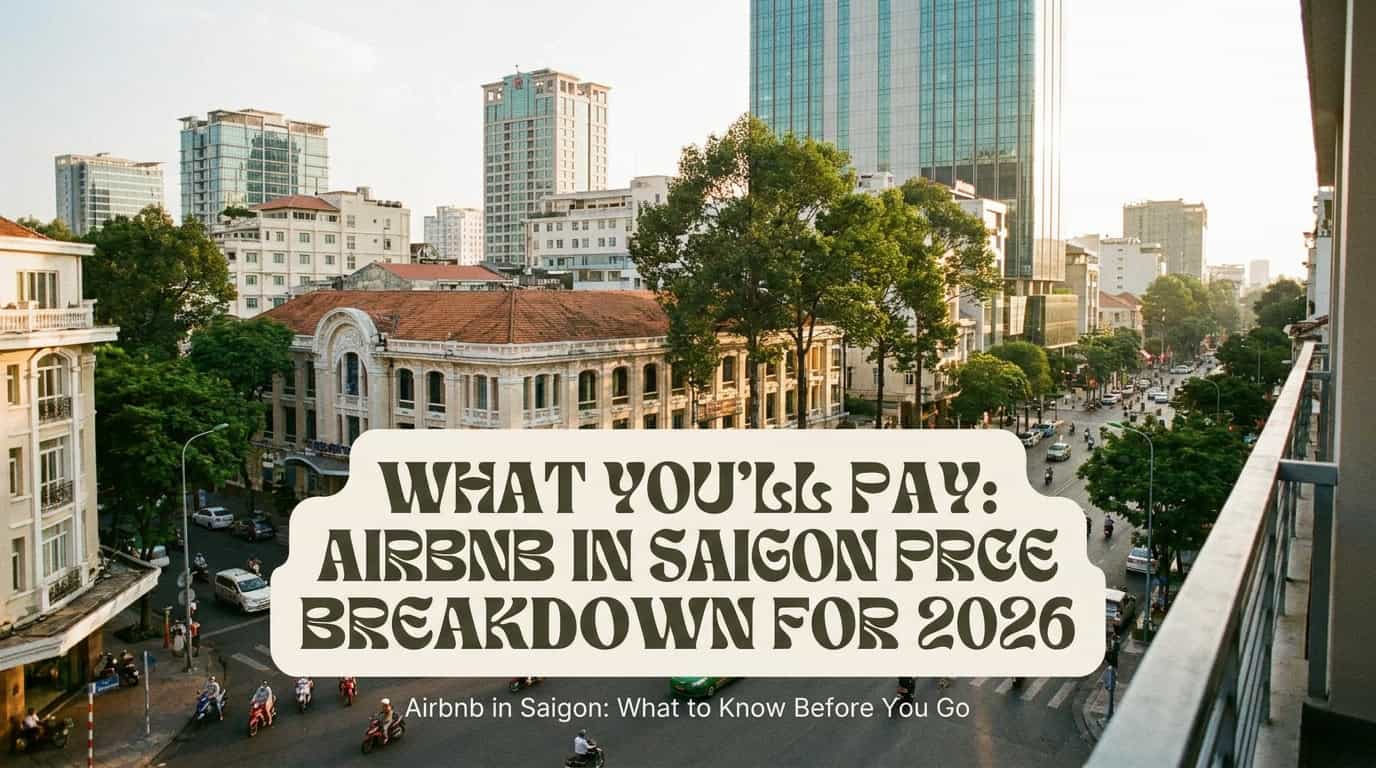
Picking the right neighborhood matters more than picking the right apartment. Saigon is bigger than most travelers expect — 2,061 km², roughly the size of Greater London — and traffic can turn a “10-minute” Grab into 40 minutes during rush hour.
District 1 — The Default for First-Timers
District 1 is the central business and tourism district, home to Ben Thanh Market, the Notre-Dame Cathedral, Bui Vien Walking Street, and most rooftop bars. You’ll pay a premium, but you’ll walk to almost everything. Best sub-areas: around Le Thanh Ton (Japanese restaurants and quiet streets), Ben Nghe Ward (near the Opera House), and Pham Ngu Lao if you genuinely want backpacker nightlife. For a deeper tour of the area, our things to do in Ho Chi Minh City hub maps every major attraction to its nearest district.
Thao Dien (District 2) — The Expat Bubble
Thao Dien is leafy, low-rise, and full of Western cafes, international schools, craft breweries, and yoga studios. About 30% of residents are foreign nationals. It’s a 20-minute drive from the city center, which is a deal-breaker if you only have 3 days but a blessing if you’re staying a month. Excellent for digital nomads.
Binh Thanh — The Best Value-to-Convenience Ratio
Binh Thanh borders both District 1 and District 2 and houses Landmark 81 (Vietnam’s tallest building) and Vinhomes Central Park. You get newer apartments, lower prices than District 1, and a 5–10 minute Grab to the center. This is where many seasoned repeat visitors quietly book.
District 3, 5, and 10 — Authentic and Affordable
These districts feel genuinely Vietnamese: pho carts on every corner, fewer English speakers, lower prices. District 5 is Cholon, the historic Chinatown — fascinating, but a longer commute. Great choice for return visitors who already know the city.
Where to Avoid in Ho Chi Minh City
No part of Saigon is dangerous by Western big-city standards, but a few areas are best skipped for tourist accommodation:
- District 4 — historically gritty with a reputation for petty crime. It’s gentrifying fast, but if you’re a first-timer with luggage, choose elsewhere.
- District 8 and parts of Binh Tan — far from attractions, poor pedestrian infrastructure, limited English signage, and long Grab rides into the center.
- Pham Ngu Lao after midnight — central but loud, with the city’s highest concentration of bag-snatching incidents per the U.S. Embassy’s Vietnam safety updates.
- Anywhere advertised as “near airport” unless you have a 6 a.m. flight. Tan Son Nhat Airport is in Tan Binh District, far from anything you came to see.
For broader safety guidance, the U.S. Department of State Vietnam travel advisory is updated regularly and worth a read before any first visit.
Is It Better to Stay in a Hotel or Airbnb in Vietnam?
For trips of 1–4 nights, hotels usually win in Vietnam. You get 24-hour reception (critical when your taxi arrives at 2 a.m.), instant laundry, daily housekeeping, and someone to translate when something breaks. Mid-range hotels in District 1 start around 1,000,000 VND ($40 USD) — often cheaper than Airbnb once fees are added.
Airbnb wins for stays of a week or longer, for families needing multiple bedrooms, and for travelers who want a kitchen, a washing machine, and to feel like a local. A homestay — Vietnam’s preferred middle path — gives you the personal touch of Airbnb with the on-site help of a hotel. Read our full breakdown in the homestay vs hotel Saigon comparison.
What Is the Vietnamese Version of Airbnb?
Vietnam has two homegrown platforms worth knowing:
Luxstay is the closest equivalent — founded in 2017, backed by Mark Cuban’s Shark Tank Vietnam appearance, and focused on curated mid-to-upscale apartments and villas. Inventory in Saigon is smaller than Airbnb’s but listings are vetted more carefully, and the platform’s customer service operates in Vietnamese with real-time response.
Go2Joy is a Korean-Vietnamese platform that started as a short-stay hourly booking app and has expanded into nightly rentals. It’s especially strong for last-minute, same-day bookings and often beats Airbnb on price for stays under 3 nights.
Both accept international credit cards, but Luxstay’s English interface is more polished. Vietnamese users also book heavily through Facebook groups and Zalo (Vietnam’s dominant messaging app) — a fragmented market, but one with no platform fees.
7 Things to Check Before You Book an Airbnb in Saigon
Based on common complaints in 2024–2026 reviews, the issues that derail bookings are almost always preventable:
- Confirm the building allows short-term guests. Ask in the chat before you pay.
- Look for at least 30 reviews from the last 12 months. Older reviews don’t reflect the post-2024 regulatory environment.
- Check the precise location pin — some hosts mark District 1 when the actual unit is in Phu Nhuan.
- Verify air conditioning in every bedroom. Saigon humidity averages 78% year-round; a single split AC unit won’t cover a 2BR apartment.
- Look for “self check-in” or “lockbox” if you’re arriving late. Doorman-only check-in after 10 p.m. is a common scheduling nightmare.
- Confirm the address comes with apartment number and tower letter. “Vinhomes Central Park” alone is useless — there are over 10,000 units.
- Ask about elevator access fees. Some buildings charge guests 50,000–100,000 VND to use service elevators for luggage.
What Is the Best Area to Stay in Ho Chi Minh City?
For 80% of first-time visitors, the answer is Ben Nghe or Ben Thanh ward in District 1, within walking distance of the Opera House and Ben Thanh Market. You’ll spend slightly more, but you’ll save hours of transit time over a typical 4–5 day trip and you’ll always be a 10-minute walk from food, coffee, and an ATM.
For repeat visitors, families, or anyone staying longer than a week, Binh Thanh near Landmark 81 offers the best balance of newer buildings, lower prices, and proximity to both District 1 and Thao Dien. For atmosphere over convenience, District 3 delivers tree-lined boulevards, the War Remnants Museum, and some of the city’s best non-touristy pho. Plan your route with our Saigon itinerary hub before locking in your district.
Common Scams and Red Flags With Airbnb in Saigon
Most Saigon hosts are honest, but four scams recur often enough to flag:
- The bait-and-switch unit. You book Apartment 1801, you arrive, you’re moved to Apartment 405 “because of maintenance.” Always insist on the unit you booked.
- The hidden cleaning fee at checkout. Vietnamese hosts occasionally request cash cleaning fees in person, separate from the platform invoice. This violates Airbnb’s terms — refuse and report.
- The fake “luxury” listing. Photos show a 2024 high-rise; the actual unit is a 2010 apartment with peeling paint. Cross-reference photos with Google Maps Street View and check whether reviews mention the building name.
- The “deposit by bank transfer” host. Anyone asking you to pay outside the platform is a scammer or someone evading taxes — either way, walk away.
If something does go wrong, Airbnb’s resolution center is reachable 24/7 in English, and Vietnam’s tourist police hotline (069-3187-247) responds in basic English for in-person disputes.
Transportation From Your Airbnb
Grab (Vietnam’s Uber equivalent) is the default — install it before you arrive. A typical ride within District 1 is 25,000–50,000 VND ($1–2 USD), and to the airport runs 180,000–280,000 VND ($7–11 USD). Motorbike taxis (GrabBike) are roughly half the price but not recommended with luggage or in the rain.
If your Airbnb is near a Metro Line 1 station (the line finally opened to the public in late 2024), you have a fast, air-conditioned option to Suoi Tien and back. Stations include Ben Thanh, Opera House, Ba Son, Van Thanh, Tan Cang (Landmark 81), Thao Dien, and An Phu — note how those map directly to the best Airbnb neighborhoods. For more, see our getting around Saigon transport guide.
Best Time to Book Your Airbnb in Saigon
Saigon has two seasons — dry (December to April) and wet (May to November). Peak Airbnb demand and pricing run late December through Tet (Lunar New Year, typically late January or early February) and again in July–August for the Asian summer holiday window. The cheapest months are September and October, when daily rain showers deter casual travelers but rarely affect a half-day of sightseeing. Book 4–8 weeks ahead for peak periods, 1–2 weeks ahead off-season.
FAQ: Airbnb in Saigon
Is it better to stay in a hotel or Airbnb in Vietnam?
For stays under 4 nights, hotels usually beat Airbnb in Vietnam — they include 24-hour reception, instant problem-solving, daily housekeeping, and English-speaking staff at similar price points. Airbnb wins for stays of a week or more, families needing kitchens, and travelers who want to live like a local. Homestays often deliver the best of both worlds.
Where to avoid in Ho Chi Minh City?
Skip District 4 (historically gritty, though gentrifying), District 8 and outer Binh Tan (far from attractions with poor pedestrian access), and Pham Ngu Lao after midnight (highest pickpocketing rates per U.S. Embassy reports). Areas advertised as “near airport” are also a poor choice unless you have a very early flight — Tan Son Nhat is far from tourist sites.
What is the Vietnamese version of Airbnb?
Luxstay is the closest Vietnamese equivalent, founded in 2017 and focused on curated mid-to-upscale apartments and villas with vetted listings and Vietnamese-language customer support. Go2Joy is the second option, originally a short-stay app expanded to nightly rentals — often cheaper than Airbnb for under-3-night bookings. Both accept international credit cards.
What is the best area to stay in Ho Chi Minh City?
District 1, specifically Ben Nghe or Ben Thanh ward, is the best area for 80% of first-time visitors thanks to walkable access to the Opera House, Ben Thanh Market, and most major attractions. Repeat visitors and longer stays often prefer Binh Thanh near Landmark 81 for newer buildings and lower prices, while District 3 offers a more local feel.
How far in advance should I book an Airbnb in Saigon?
Book 4–8 weeks ahead for peak periods (late December through Tet Lunar New Year, and July–August Asian summer). For off-season travel in September and October, 1–2 weeks of lead time is usually plenty. Last-minute bookings within 48 hours can sometimes score 20–30% discounts on otherwise-vacant listings, especially on Go2Joy.
Do I need to register with police when I stay at an Airbnb in Saigon?
Yes — all foreign visitors in Vietnam must be registered with local police within 12 hours of arrival, a process the accommodation provider is legally required to complete. Hotels handle this automatically. With Airbnb, the host should photograph your passport and visa and submit the registration; confirm they will do this before you arrive.
Plan Your Stay With a Trusted Local Alternative
The Airbnb landscape in Saigon is workable — but it requires more homework than it did three years ago. If you’d rather skip the building-policy guessing game, the at-the-door uncertainty, and the surprise cleaning fees, consider booking a licensed central District 1 homestay where short-term guests are explicitly welcomed, police registration is handled for you, and someone fluent in English is on-site if anything goes wrong. Browse our verified District 1 homestays and lock in a stay that’s already past every red flag in this article.
Check current prices
Some links below are affiliate links. If you book through one we may earn a commission at no extra cost to you. It never changes what we recommend or the order anything appears in.
Compare availability and live prices in District 1 — rates move a lot between the dry and wet seasons, so check your own dates.
Related Guides
- Best Areas to Stay in Saigon: District Guide for First-Timers
- Luxury Hotels in Saigon: Top Picks & Prices (2026)
- Best Hotels in District 1 Saigon (2026)
- Best Hostels in Saigon: Honest Reviews (2026)
- Getting Around Saigon: Grab, Metro, Bus & Waterbus Guide (2026)
- Serviced Apartments vs Hotels in Saigon: Which Is Better?