
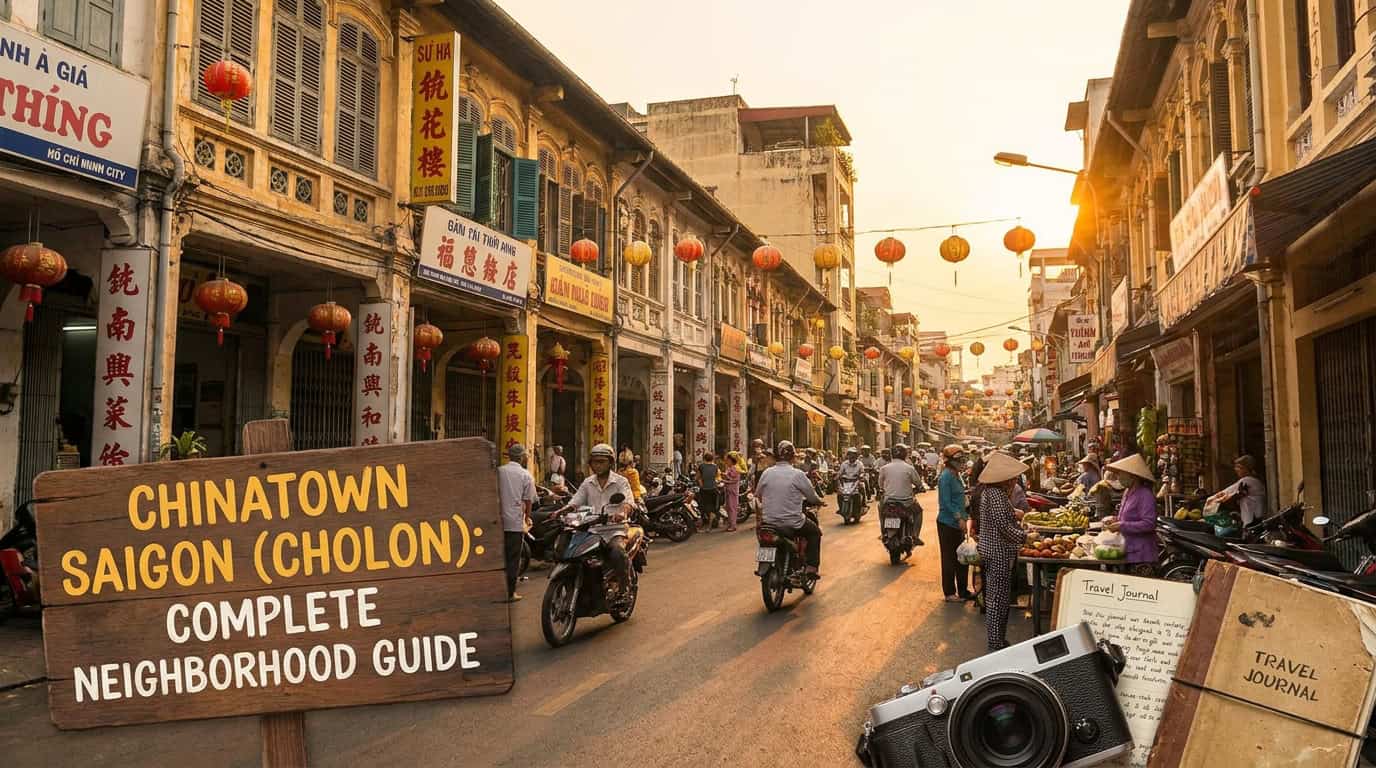
Chinatown Saigon — known locally as Chợ Lớn, literally ‘big market’ in Vietnamese — is one of Southeast Asia’s most alive and most underestimated neighbourhoods, anchoring District 5 as the commercial and cultural heart of the Vietnamese-Chinese community for over 250 years. Incense drifts from temple doorways before sunrise. Cantonese dialects mix with Vietnamese over steaming bamboo baskets of dim sum. Entire streets exist solely to sell ceremonial paper offerings or hand-compounded herbal medicine.
Most visitors spend their Ho Chi Minh City trip inside the polished radius of District 1. That’s a shame, because Cholon — just 15 minutes southwest by Grab — runs on a completely different rhythm. This guide covers everything: the pagodas, the wholesale markets, the food alleys that don’t appear on any app, the festivals worth planning a trip around, and the practical details that make the difference between a frustrating visit and an unforgettable one.
Key Takeaways
– Chinatown Ho Chi Minh (Cholon) is home to an estimated 400,000–500,000 ethnic Chinese (Hoa) residents — the largest concentration in Vietnam (Wikipedia, Hoa People, 2019 census data).
– Entry to all pagodas and markets is free; a full half-day costs just VND 50,000–200,000 in food and transport.
– The best window is 6–10 AM daily — coolest temperatures, active temple worship, and fully stocked market stalls.
– Tết (Lunar New Year, Jan/Feb) is the single most spectacular time to visit, with dragon dances and lantern displays throughout the neighbourhood.
Quick Reference: Chinatown Ho Chi Minh at a Glance
| Detail | Information |
|---|---|
| Location | District 5, Ho Chi Minh City (historic area extends into Districts 6 & 11) |
| Key streets | Nguyễn Trãi, Châu Văn Liêm, Triệu Quang Phục, Lương Nhữ Học |
| Opening hours | Neighbourhood: 24/7 · Temples: 6 AM–6 PM · Binh Tay Market: 6 AM–7 PM |
| Entry price | Free (pagodas: free or small donation, approx. VND 10,000–20,000) |
| Best visiting time | 6–10 AM daily; November–April (dry season); Tết for festivals |
| Distance from District 1 | ~4 km · 15–25 min by Grab/taxi (VND 40,000–80,000) |
| Getting there | Grab, taxi, public bus lines 1 or 68, xe ôm (motorbike taxi) |
| Half-day budget | VND 100,000–300,000 per person (food, snacks, transport) |
What Is Chinatown Ho Chi Minh? History and Origins
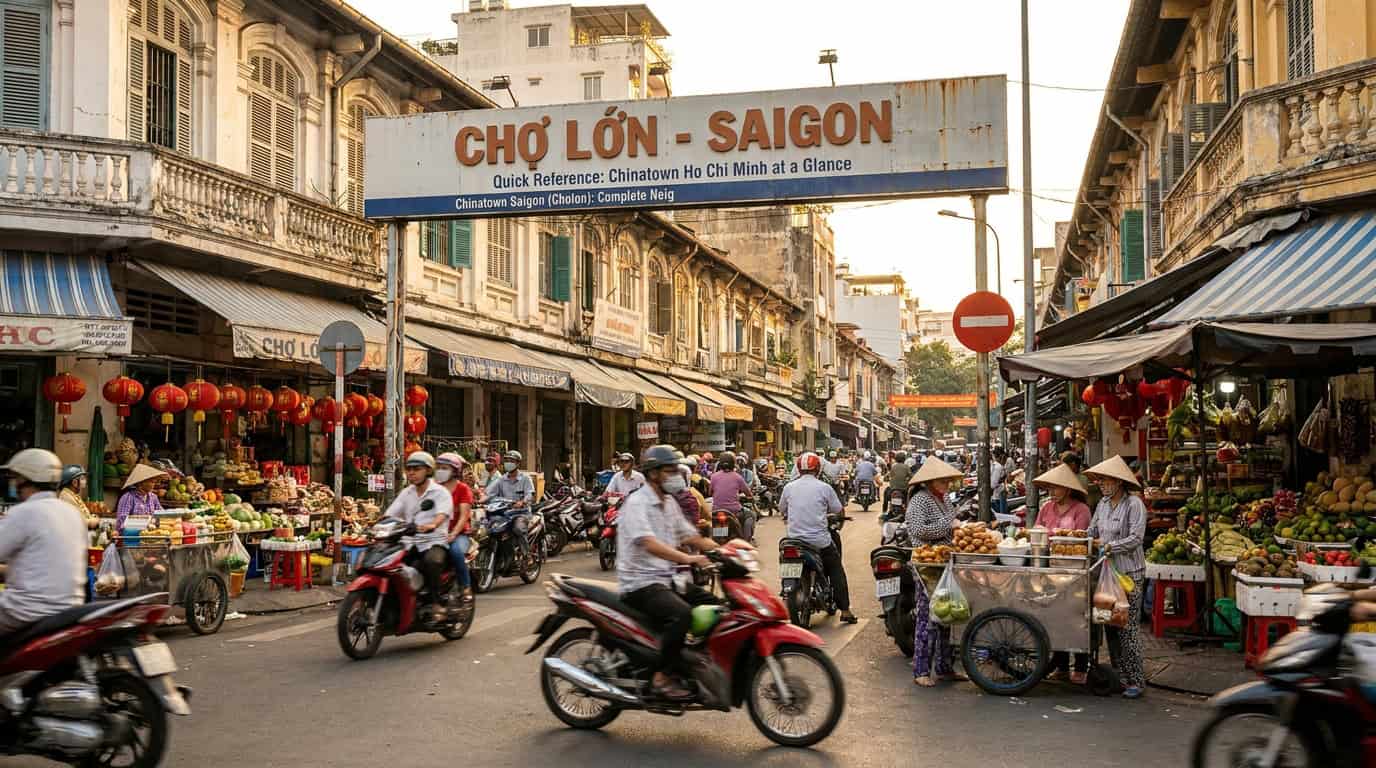
Cholon’s story begins in the 1770s, when waves of Chinese immigrants — predominantly from Fujian and Guangdong provinces — fled instability in southern China and settled on the banks of the Tẻ Canal, southwest of Saigon. They built clan houses, temples, and trade networks so powerful that Cholon operated as a distinct city from Saigon for over 150 years, finally merging with it under French colonial administration in 1932 (Wikipedia, Cholon).
The name itself explains the neighbourhood’s identity: Chợ means market, Lớn means big. Commerce was always the point. By the mid-20th century, Cholon controlled much of southern Vietnam’s wholesale trade in rice, rubber, and manufactured goods. Today that commercial intensity survives — but it’s layered with temple incense, clan-house rituals, and food traditions that stretch back generations.
According to Vietnam’s 2019 General Statistics Office census, the Hoa (ethnic Chinese) population nationwide was approximately 749,000 (Wikipedia, Hoa People, 2019). An estimated 400,000 to 500,000 of those residents live in the greater Ho Chi Minh City area, the vast majority in and around Cholon — making this the largest ethnic Chinese urban community in Vietnam, and one of the most significant in all of Southeast Asia.
How to Get to Chinatown Saigon from District 1
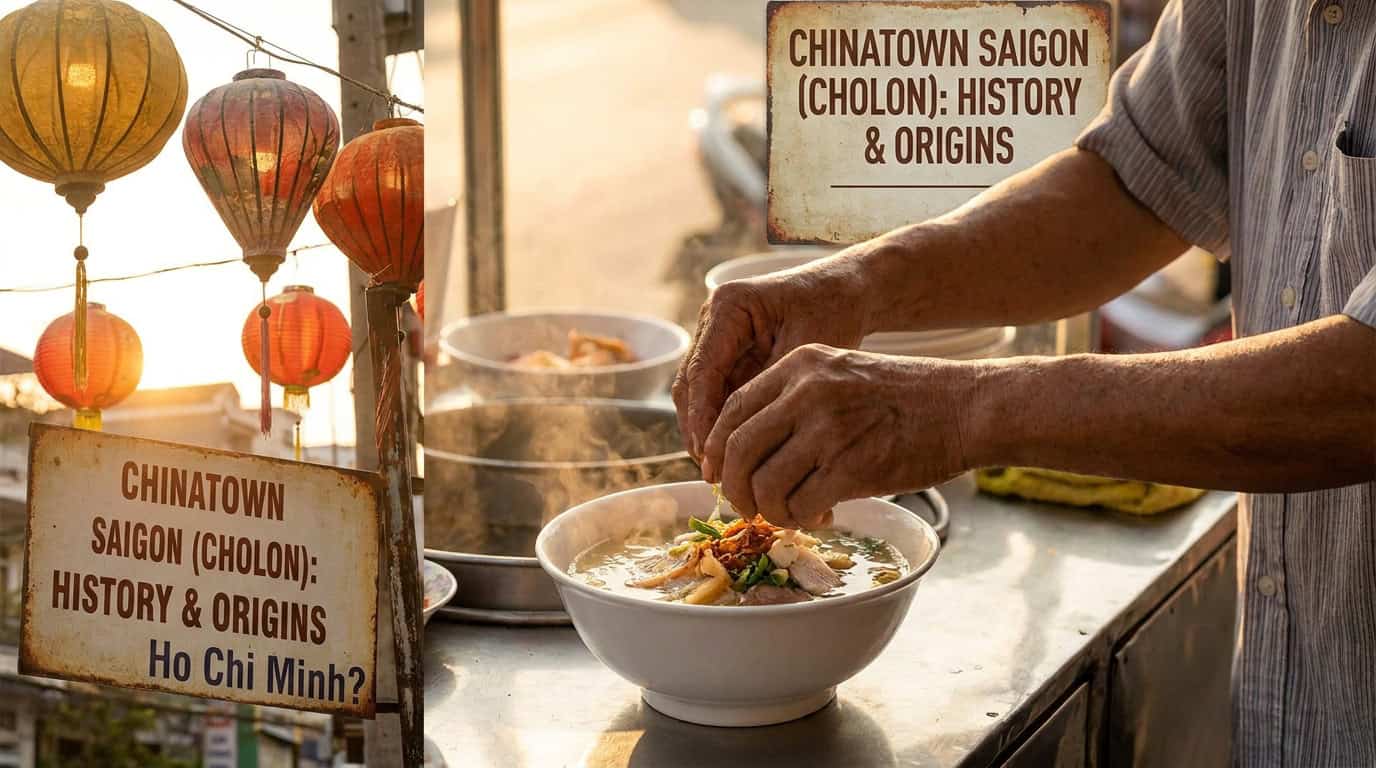
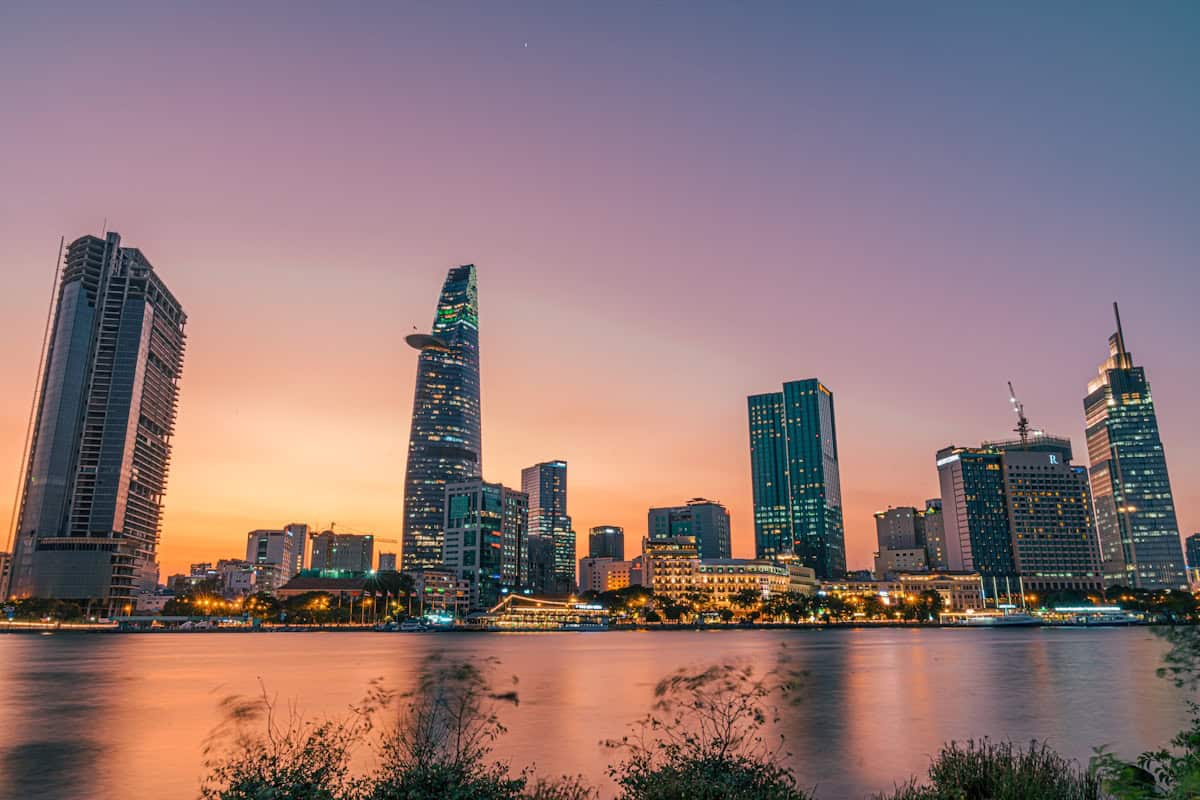
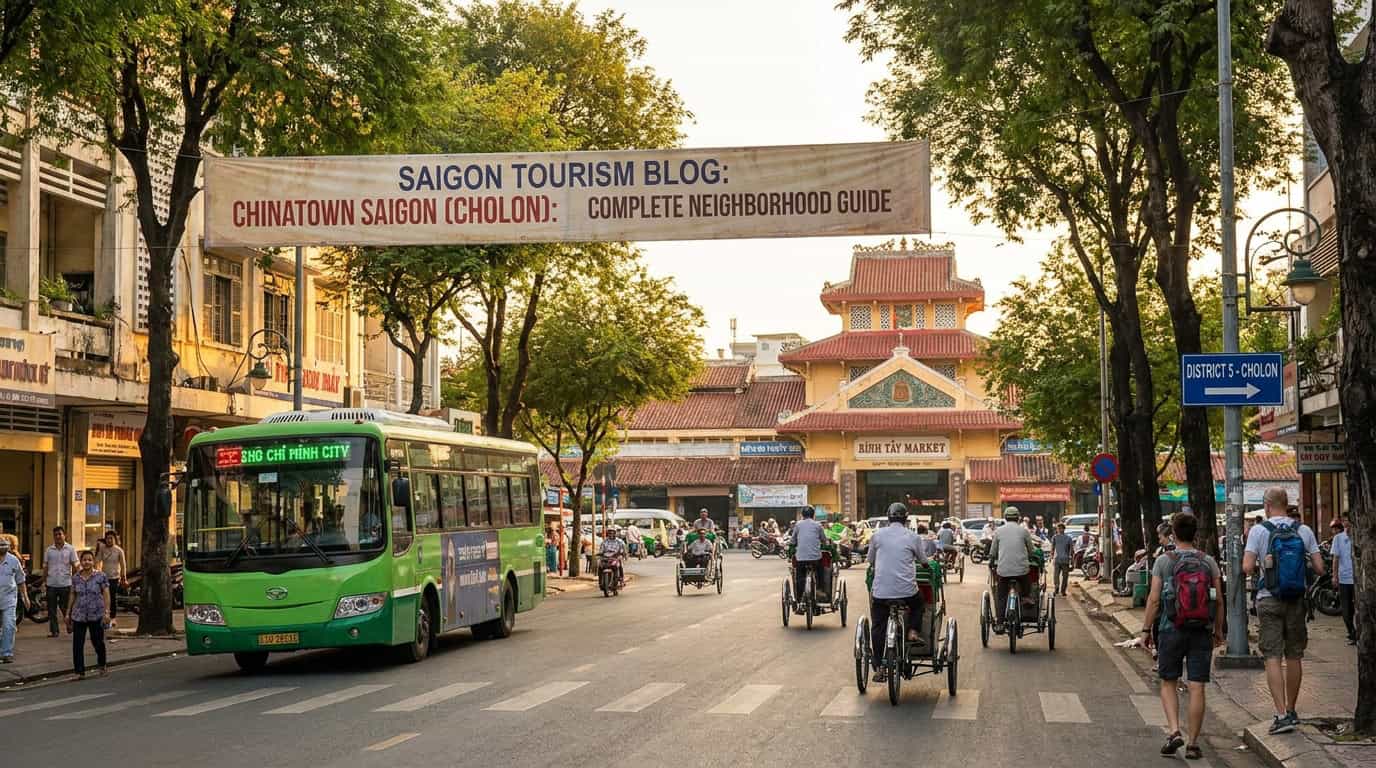
Cholon sits approximately 4 kilometres southwest of the Bến Thành Market roundabout — closer than most first-time visitors expect.
Grab or taxi is the fastest and most straightforward option. A ride from central District 1 costs VND 40,000–80,000 and takes 15–25 minutes depending on traffic. Give the driver “Chợ Bình Tây” (Binh Tay Market) as your landmark — it’s universally known and puts you right at the neighbourhood’s commercial heart.
Public bus is slow but cheap at VND 6,000–7,000 per ride. Bus line 1 (Bến Thành → Chợ Lớn) and line 68 both connect central District 1 to District 5. Journey time is 35–50 minutes but gives you a ground-level view of how the city changes as you move southwest.
Rented scooter or xe ôm (motorbike taxi) suits confident riders. Nguyễn Trãi Street is the main artery — it’s wide and well-signed. Park near Binh Tay Market and walk from there; the backstreets inside Cholon are narrow and difficult to navigate by motorbike.
Not yet oriented in District 1? Our guide to Saigon’s central neighbourhoods covers the main transport hubs, orientation tips, and how to get your bearings before heading further afield.
Must-Visit Temples and Pagodas in Cholon
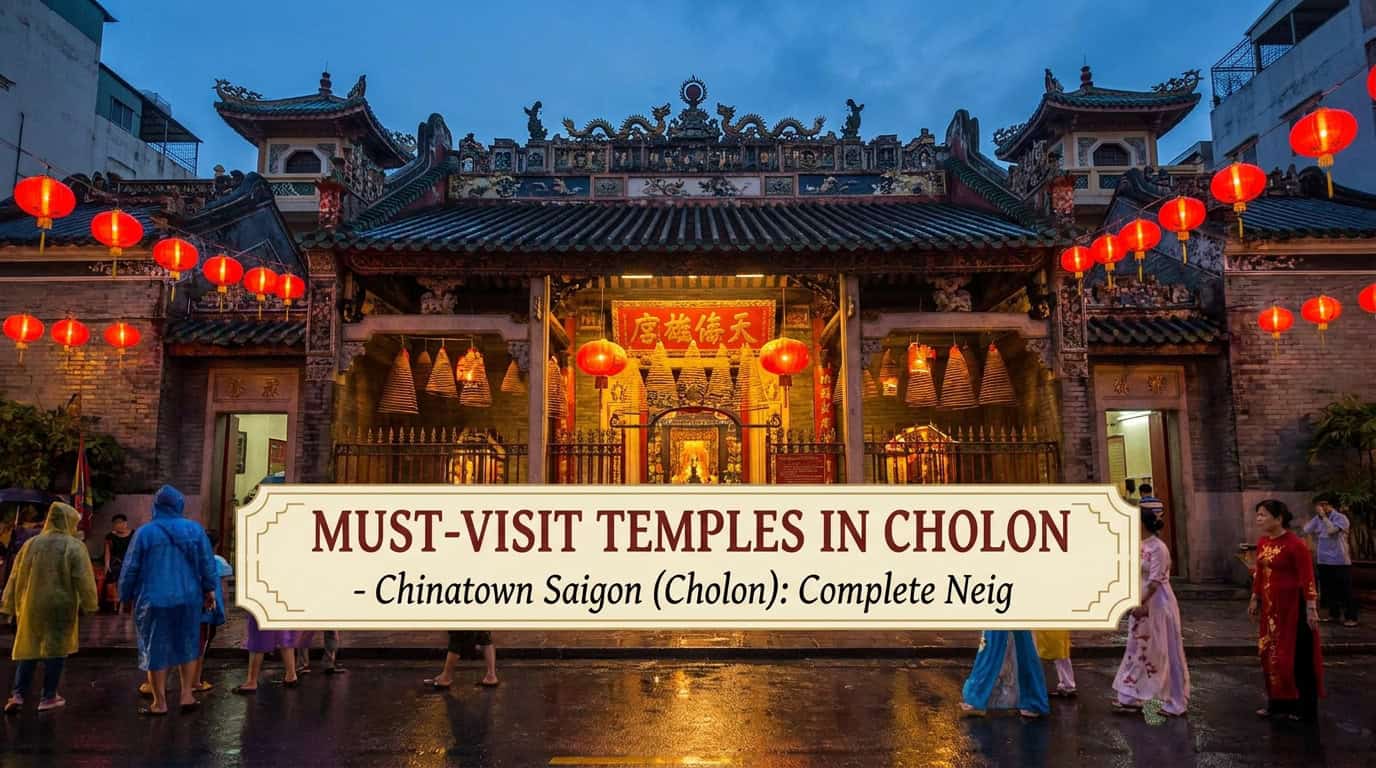
No visit to Chinatown Ho Chi Minh is complete without stepping inside at least two or three of Cholon’s active places of worship. These aren’t museum reconstructions — worshippers arrive before 7 AM to make offerings and pray, and the atmosphere on a weekday morning is genuinely contemplative.
Thien Hau Pagoda (Chùa Bà Thiên Hậu) at 710 Nguyễn Trãi Street is the most visited pagoda in Cholon. Built in the early 19th century by Cantonese immigrants, it’s dedicated to Thiên Hậu (Mazu), the sea goddess who protects sailors and travellers. Giant coils of incense hang from the ceiling, slowly burning and filling the interior with a haze that blurs the gold-leafed altars into something almost dreamlike. Arrive before 9 AM to see morning prayers at their most active.
Nghia An Hoi Quan Pagoda at 678 Nguyễn Trãi Street is the most photogenic exterior in Cholon — a carved roof crowded with dragons, fish, and operatic figures in vivid ceramic. This Teochew congregation hall is older and quieter than Thien Hau, and the craftsmanship on the facade rivals anything in the city.
Quan Am Pagoda (Chùa Quan Âm) at 12 Lão Tử Street is dedicated to the Goddess of Mercy. It’s less crowded than the Nguyễn Trãi pagodas, which means you can actually stand still and absorb it. The three-altar interior and the courtyard garden are worth lingering in.
Phuoc An Hoi Quan Pagoda at 184 Hồng Bàng Street was built by the Fujian Chinese community in 1902. Its scale is impressive and its visitor numbers are low — a combination that’s increasingly rare in urban Vietnam.
Temple etiquette: Dress modestly (shoulders and knees covered), remove shoes at the entrance, move quietly, and don’t photograph worshippers without a nod of permission. A small donation of VND 10,000–20,000 is appreciated but never required.
According to travel authorities including Lonely Planet’s Ho Chi Minh City guide, Cholon contains at least 24 Chinese congregation assembly halls (Hội Quán), each built by a specific dialect community — Cantonese, Teochew, Hokkien, Hakka, and Hainan. Most tourists see two or three; the rest are yours to discover.
The Best Street Food in Chinatown Ho Chi Minh
Cholon’s food scene is what separates it from every other neighbourhood in the city. The cooking here is a two-century-old fusion of Cantonese, Teochew, and Vietnamese culinary traditions — and a lot of it happens on the street, from portable carts and sliding windows, before 9 AM.
Dim sum (điểm tâm) is the obvious starting point. Restaurants like Bát Đẹp (265 Triệu Quang Phục) serve Cantonese-style har gow, siu mai, and rice rolls from roughly 6 AM. Expect VND 15,000–40,000 per steamer basket — a fraction of what the same dish costs in a District 1 hotel restaurant.
Hủ tiếu Nam Vang (Phnom Penh-style noodle soup) traces its roots to the Chinese-Cambodian community and is deeply embedded in Cholon’s food identity. The broth is lighter and more aromatic than phở, topped with pork, shrimp, and crispy fried shallots. You’ll find it at carts around Binh Tay Market from 6:30 AM.
Bánh cuốn (steamed rice rolls) — look for stalls near the corner of Châu Văn Liêm and Nguyễn Trãi. The rolls are gossamer-thin and served with a clear dipping broth, filled with minced pork and wood ear mushroom. VND 20,000–35,000 for a plate.
Chè ba màu (three-colour sweet bean soup) is the afternoon version of the neighbourhood’s generosity. A glass costs VND 10,000–20,000 and keeps you going through the afternoon heat.
For a wider cross-neighbourhood guide to eating in Ho Chi Minh City, our Saigon street food guide has district-by-district picks including Cholon, District 1, and the less-visited food streets of Districts 3 and 4.
Markets and Shopping: What to Buy in Cholon
Cholon built its reputation on trade long before tourism existed, and the markets remain the commercial infrastructure of the neighbourhood — not a tourist attraction layered over it.
Binh Tay Market (Chợ Bình Tây) is the centrepiece. The current structure was built in 1928, funded and donated to the city by Cantonese-Teochew merchant Quách Đàm, whose statue stands inside (Lonely Planet, Binh Tay Market). With over 2,300 stalls spread across two floors, it operates as a wholesale hub supplying goods across southern Vietnam — dried foods, spices, plastics, textiles, hardware, and Chinese ceremonial items. Retail buyers are welcome; prices run lower than Bến Thành and the central tourist markets.
Lương Nhữ Học Street is Cholon’s “Paper Street” — an entire block of shops selling ceremonial paper offerings, gold leaf items, incense, lanterns, and Lunar New Year decorations. In the weeks before Tết, the street runs around the clock. Even if you’re not buying, it’s one of the most visually arresting blocks in Ho Chi Minh City.
An Dong Plaza (An Đông Market) at 18 An Dương Vương is a multi-storey indoor market popular for fabric, áo dài tailoring, and Vietnamese traditional clothing. It’s air-conditioned, clean, and useful if you’re shopping for formal or ceremonial wear.
Hải Thượng Lãn Ông Street (Herb Street) deserves its own mention. The entire street is lined with traditional Chinese medicine shops where four generations of the same family still compound dried herbs, roots, and mushrooms by hand. The smell — dried citrus, star anise, liquorice, and dozens of unidentifiable roots — is extraordinary. Shop owners are generally happy to explain what things are for, especially if you ask with genuine curiosity.
Hidden Corners Only Locals Visit
The Clan Houses (Hội Quán) beyond the tourist circuit: Cholon’s six major congregation halls serve distinct dialect groups. Most visitors see the Cantonese-affiliated pagodas on Nguyễn Trãi; fewer seek out the Hải Nam Hội Quán on Trần Phú (Hainanese community) or the Nghĩa An Hội Quán in its quieter setting. These buildings are architecturally rich and almost entirely unvisited by outsiders.
The old canal district south of Binh Tay Market, toward the historic Tẻ Canal waterway, feels like a different city. The shophouses here are older and more faded; residents play chess outside in the late afternoon; the occasional small boat still moves through the canal. It’s the closest thing to “pre-1975 Cholon” that has survived decades of development pressure.
Quach Dam’s tomb inside Binh Tay Market is almost always overlooked. The merchant who funded the market’s construction left a condition: a statue and tomb would be placed inside. You can pay your respects to him in the central courtyard — a quietly moving moment inside one of Asia’s busiest wholesale markets.
When Is the Best Time to Visit Chinatown Ho Chi Minh?
Two factors define your experience: weather and the lunar calendar. Both are worth planning around.
Weather: Southern Vietnam’s dry season runs from November to April, with lower humidity and temperatures between 28–33°C — the most comfortable window for walking Cholon’s outdoor streets and markets (Vietnam National Administration of Tourism). The wet season (May–October) brings predictable afternoon downpours, usually between 2–5 PM. Start early and you’ll be fine; carry a light rain layer just in case.
Festival calendar: The lunar calendar transforms Cholon more than any weather pattern:
- Tết Nguyên Đán (Lunar New Year) — January or February — is Cholon’s peak moment by a wide margin. Dragon dances wind through the streets, every pagoda blazes with offerings, and Lương Nhữ Học Street runs around the clock in the two weeks before the new year. The crowds are enormous but the atmosphere is electric.
- Vu Lan Festival (Ghost Festival) — usually August — involves the burning of massive paper offerings outside temples. Solemn, deeply atmospheric, and rarely seen by tourists.
- Tết Trung Thu (Mid-Autumn Festival) — September or October — fills the streets around Lương Nhữ Học and Triệu Quang Phục with mooncake stalls and children’s lantern parades.
- Thien Hau Pagoda Anniversary — 23rd day of the third lunar month — draws worshippers from across the city for processions and ceremonies that last most of the day.
A Cholon Festival Calendar: Plan Your Timing
If you have any flexibility in your trip dates, matching your Cholon visit to one of these events adds a layer to the experience that no amount of guidebook reading replicates.
| Festival | Lunar Date | Approx. Gregorian | Best Spot |
|---|---|---|---|
| Tết Nguyên Đán (Lunar New Year) | 1st day, 1st lunar month | Jan–Feb | All of Cholon; Lương Nhữ Học St |
| Thien Hau Pagoda Anniversary | 23rd day, 3rd lunar month | Apr–May | 710 Nguyễn Trãi St |
| Vu Lan (Ghost Festival) | 15th day, 7th lunar month | Aug | All major pagodas |
| Tết Trung Thu (Mid-Autumn) | 15th day, 8th lunar month | Sep–Oct | Triệu Quang Phục, Lương Nhữ Học |
Practical Tips for Visiting Chinatown Ho Chi Minh
A few things that separate a smooth visit from a sweaty, frustrating one:
Start before 9 AM. The best light, the coolest air, and the most active temple worship all happen in the first two hours after sunrise. Markets are fully stocked; the pagodas are genuinely alive with morning prayer. By 11 AM in summer, the heat becomes a real factor.
Carry small cash. Street carts and small market vendors don’t take cards. VND 200,000–300,000 (around USD 8–12) is enough for a full morning of food and browsing. Larger ATMs are available near An Dong Plaza.
Dress for temples. You’ll be ducking into pagodas regularly. Lightweight trousers and a linen shirt that covers your shoulders are the right call — comfortable in the heat and respectful at every site.
Don’t fight the streets with a motorbike. Cholon’s interior backstreets are narrow, often one-way in unexpected directions, and have very little parking. Park near Binh Tay Market and walk.
Give yourself more time than you think. Every “quick look” in Cholon turns into 20 minutes. The herb street alone will hold you longer than expected. Block out a half-day minimum; a full day if markets and food are central to your interest.
Looking for more practical tips on getting the most out of a day in Ho Chi Minh City? Our complete HCMC guide for first-time visitors covers everything from transport to tipping to neighbourhood priorities.
How Cholon Compares to Bến Thành and District 1
Most tourists anchor in District 1 — and it makes sense. The streets around Bến Thành Market are well-signposted, English-friendly, and packed with international restaurants. But District 1 is Saigon’s face presented for export. Cholon is the city’s actual operating system.
The difference is felt immediately. In Cholon, signage switches between Vietnamese and Chinese characters. The smells are incense, dried seafood, and five-spice rather than coffee and bánh mì. The pace is fast at the markets and genuinely slow at the temples. The neighbourhood runs on its own schedule, unchanged in its fundamentals for decades.
Spending half a day in Cholon alongside a District 1 base gives you two cities for the cost of one trip. Our Bến Thành Market guide covers the central market experience if you want to contrast the two before you visit.
Frequently Asked Questions About Chinatown Ho Chi Minh
Is Cholon safe for tourists?
Yes — Cholon is a dense, commercially active neighbourhood with a strong community presence. Petty crime rates are comparable to any large urban market anywhere in Southeast Asia. Keep your phone in a front pocket on crowded sections of Nguyễn Trãi Street, stay alert crossing busy roads, and you’ll have no issues. Daytime visits are very comfortable; evening visits for restaurant dining are equally fine.
How long does it take to explore Chinatown Ho Chi Minh?
A focused 3–4 hour visit covers the main pagodas, Binh Tay Market, and a proper street food breakfast. A full day allows you to add Herb Street, the congregation halls, the canal district, and a sit-down dim sum lunch. If you’re there purely to eat and browse the market, 2 hours gives you a satisfying taste. For a deeper itinerary across the whole city, see our Saigon street food guide.
What’s the difference between Cholon and District 5?
For practical purposes, they’re the same place — but with a distinction worth knowing. District 5 is the modern administrative boundary. Cholon (Chợ Lớn) is the historical and cultural name for the Vietnamese-Chinese quarter, which grew beyond those administrative lines into parts of Districts 6 and 11. When someone says “go to Cholon,” they mean the cultural zone, not the precise map boundary.
When is Chinatown Ho Chi Minh most crowded?
Tết — usually late January or early February — brings the largest crowds by far. Streets around the major pagodas and Lương Nhữ Học Street can be genuinely shoulder-to-shoulder in the days just before and after the new year. The Mid-Autumn Festival in September is the second most active period. For a quieter visit, weekday mornings between 7 and 10 AM outside of festival season are the sweet spot.
Can you visit Chinatown Ho Chi Minh on a tight budget?
Absolutely. Entry to all pagodas and markets is free. A street food breakfast of dim sum, hủ tiếu, and iced coffee runs VND 50,000–80,000 — roughly USD 2–3. A full half-day of eating, wandering, and market browsing rarely exceeds VND 200,000–300,000 per person unless you’re buying wholesale goods at Binh Tay. It’s one of the best-value half-days available anywhere in Ho Chi Minh City.
Conclusion
Chinatown Ho Chi Minh is one of the few places in Southeast Asia that hasn’t been reshaped by tourism into something easier to consume. The temples are active because the community uses them. The markets are busy because southern Vietnam’s supply chains run through them. The food is the food this neighbourhood has eaten for generations — not a curated version of it.
Whether you spend three hours or a full day, Cholon will give you a version of Ho Chi Minh City that no other neighbourhood can. Pack light, start early, follow the queue of elderly Hoa residents to the best dim sum cart, and let yourself get properly lost in the herb street.
Stay in the Heart of Saigon — Central District 1 Accommodation
Chinatown Ho Chi Minh is best explored as a half-day trip from a comfortable central base. Staying in District 1 puts you 15–20 minutes by Grab from Cholon, with equally easy access to every other neighbourhood in the city.
Saigon Homestay offers locally run accommodation right in the heart of District 1 — clean, quiet rooms with hosts who know Ho Chi Minh City from the inside out. Every guest gets practical neighbourhood advice, including when to time a Cholon visit around the lunar festival calendar and which pagodas are holding ceremonies on the day you arrive.
Browse rooms and check availability at Saigon Homestay →
Your District 1 base, 15 minutes from the biggest Chinatown in Vietnam.
Sources:
1. Wikipedia — Cholon, retrieved 2026-05-30
2. Wikipedia — Hoa People (2019 GSO Census data), retrieved 2026-05-30
3. Lonely Planet — Binh Tay Market, Ho Chi Minh City, retrieved 2026-05-30
4. Vietnam National Administration of Tourism — HCMC Weather & Climate, retrieved 2026-05-30
Staying in Saigon?
We host furnished apartments in District 1 — studios up to two-bedroom lofts, for stays from three nights to six months. See the apartments or check availability and book direct with us.
Work out transport before you go: getting around Saigon covers Grab, the metro, buses and the waterbus, with real prices.