
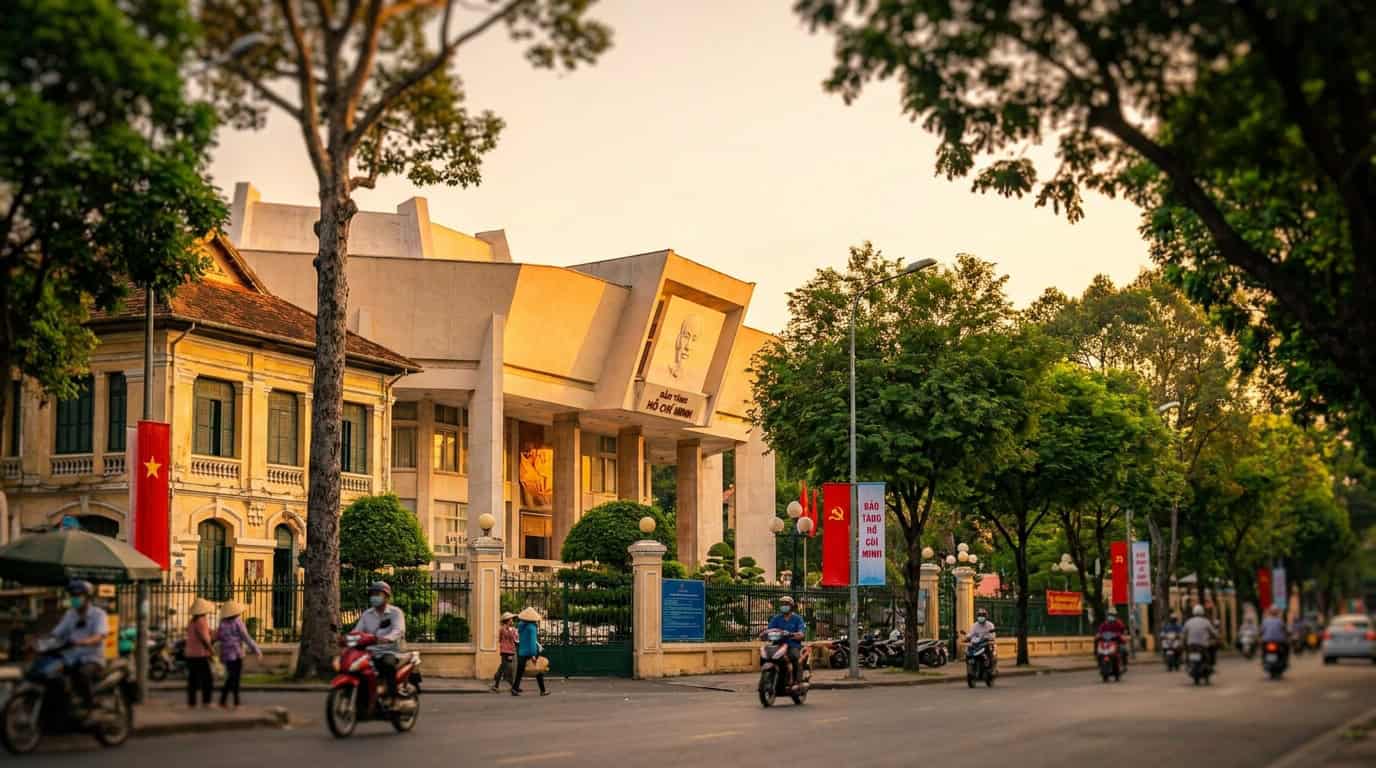
Everything you need to know about museums in Saigon war history culture begins at 65 Lý Tự Trọng Street, District 1, where the Ho Chi Minh City Museum — housed in a magnificent 19th-century French colonial mansion — charges just 30,000 VND (roughly $1.20 USD) to enter. From here, nine world-class institutions spread across a few walkable square kilometres, each telling a different chapter of Vietnam’s story of colonialism, conflict, and resilience.
Ho Chi Minh City welcomed over 5 million international visitors in 2024 (Vietnam National Administration of Tourism, 2025), and its museums drive a huge share of that cultural draw. Whether you want to understand the Vietnam War’s full human cost, trace 4,000 years of Vietnamese civilisation, or simply step inside a breathtaking colonial building, Saigon’s museum circuit delivers — at prices that make Europe’s institutions look expensive.
This guide covers every major museum: what’s inside, current admission prices, real opening hours, and a day-by-day itinerary you can follow from any District 1 base.
Key Takeaways
– The Ho Chi Minh City Museum charges just 30,000 VND (~$1.20 USD) for adults and includes access to a wartime tunnel network beneath the building — one of the most overlooked sights in District 1.
– The War Remnants Museum draws ~500,000 visitors per year, with international tourists making up 60–70% of arrivals, and is consistently ranked among Asia’s top history museums.
– All five must-visit museums cluster within 2 km of each other in Districts 1 and 3 — a single focused day covers three or four on foot.
– Arrive before 9:00 AM to beat tour group arrivals at both the City Museum and the War Remnants Museum.
Quick-Reference: Saigon’s Top Museums at a Glance
| Museum | Address | Hours | Adult Price | Best For |
|---|---|---|---|---|
| Ho Chi Minh City Museum | 65 Lý Tự Trọng, D1 | 7:30 AM–5:00 PM daily | 30,000 VND | City history, colonial architecture |
| War Remnants Museum | 28 Võ Văn Tần, D3 | 7:30 AM–6:00 PM daily | 40,000 VND | Vietnam War, documentary photography |
| Reunification Palace | 135 Nam Kỳ Khởi Nghĩa, D1 | 7:30–11 AM / 1–4 PM | 40,000 VND | Cold War history, 1970s interiors |
| Fine Arts Museum | 97A Phó Đức Chính, D1 | 9:00 AM–5:00 PM (closed Mon) | 30,000 VND | Vietnamese art, lacquerware |
| Museum of Vietnamese History | 2 Nguyễn Bình Khiêm, D1 | 8:00 AM–5:00 PM daily | 30,000 VND + zoo | Ancient artefacts, Cham sculpture |
Exchange rate: ~25,000 VND = $1 USD (May 2026). Always confirm current rates at the entrance.
What Is the Ho Chi Minh Museum Saigon — and Why Does It Matter?
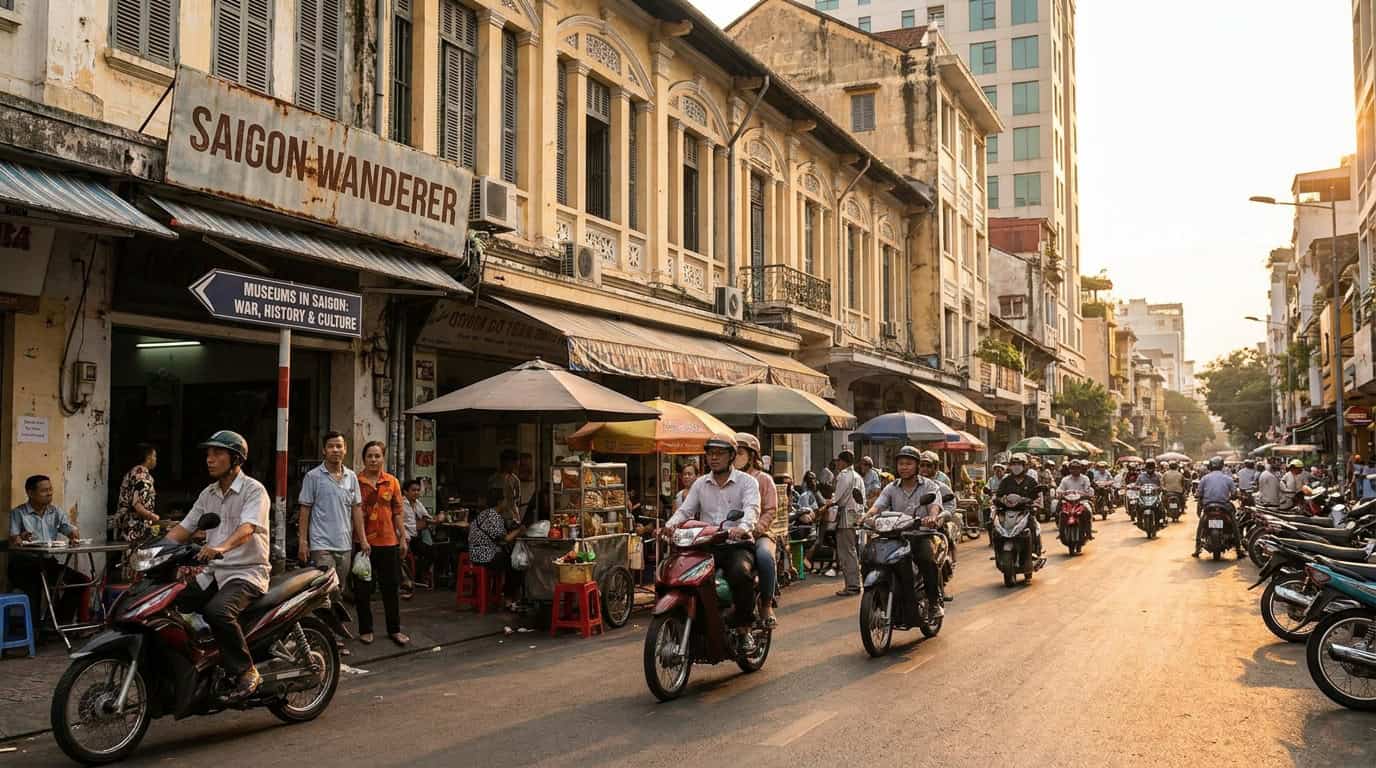
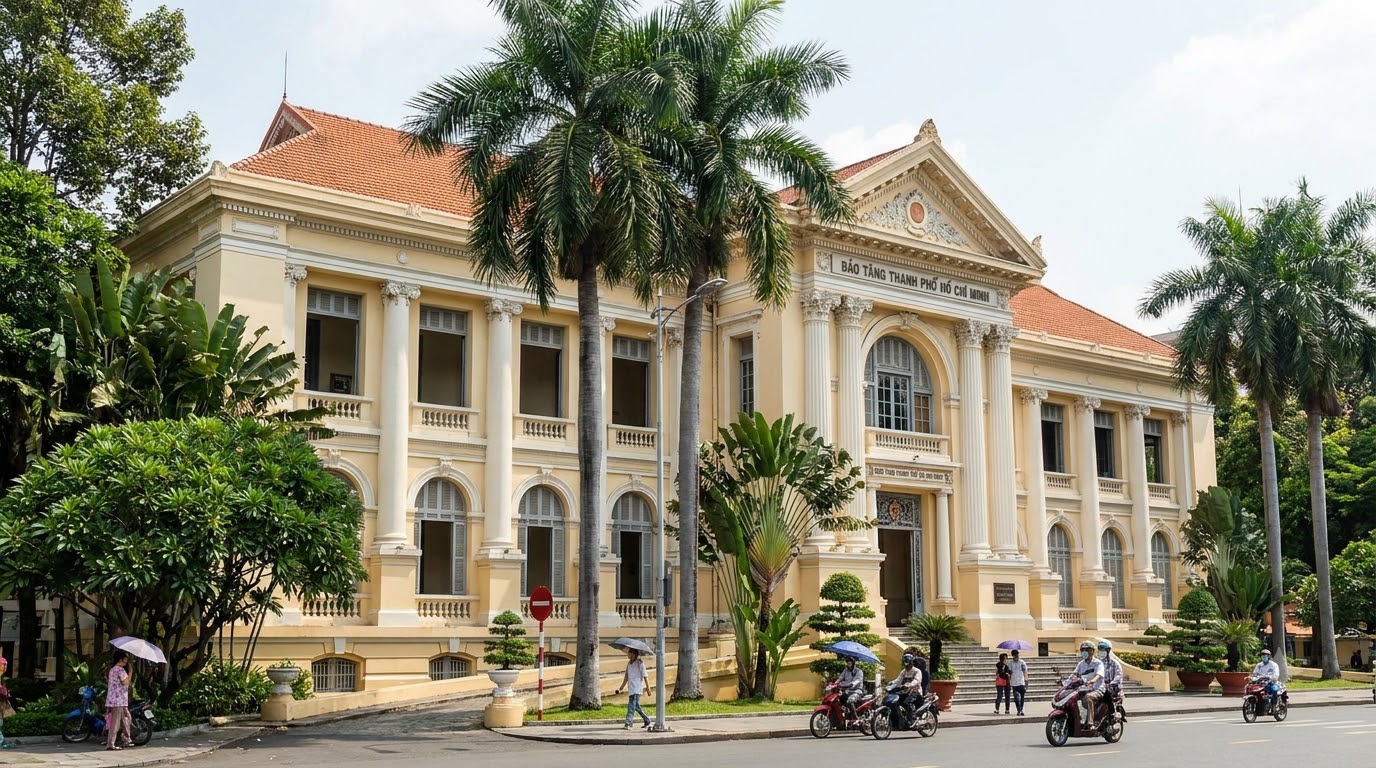
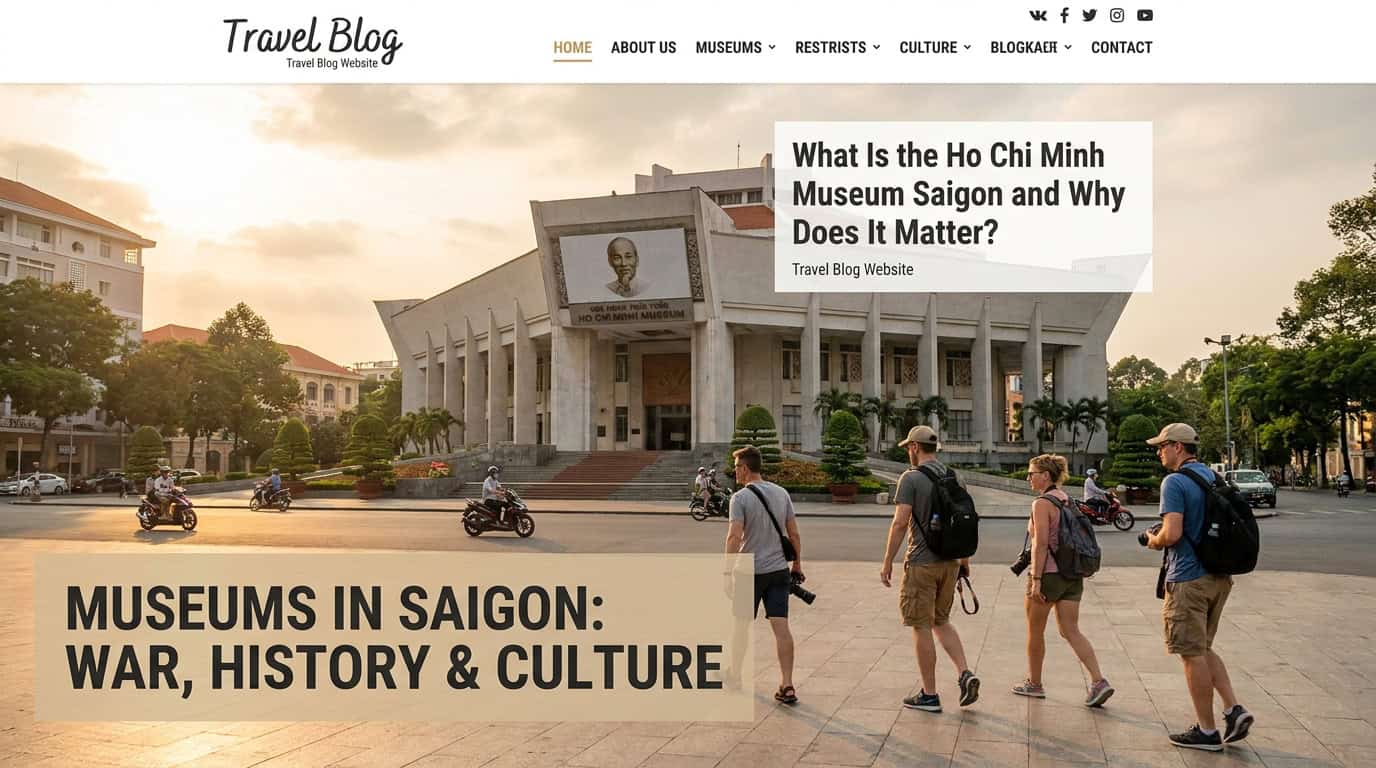
The ho chi minh museum saigon is one of Southeast Asia’s most architecturally compelling institutions. Built by the French in 1885 as the Gia Long Palace and later used as the South Vietnamese Supreme Court, the building itself is a history lesson before you’ve bought a ticket. The government converted it into a city museum in 1978 to document Saigon’s transformation from a small Khmer fishing settlement into Vietnam’s commercial capital.
Officially named Bảo tàng Thành phố Hồ Chí Minh, the museum holds over 30,000 artefacts across two main floors. The collection spans the pre-colonial Đồng Nai culture (roughly 3,000 years ago), French colonisation, the August Revolution of 1945, the American War, and post-reunification development right through to the present day.
The real surprise sits beneath your feet. A network of wartime bunkers and connecting tunnels runs under the entire building and is open to visitors on the standard ticket — no extra charge, no separate booking required. Most tourists walk straight past the staircase near the south wing without realising what’s down there.
For everything the city offers beyond its museums, see our complete guide to things to do in Ho Chi Minh City.
What’s Inside the Ho Chi Minh Museum?
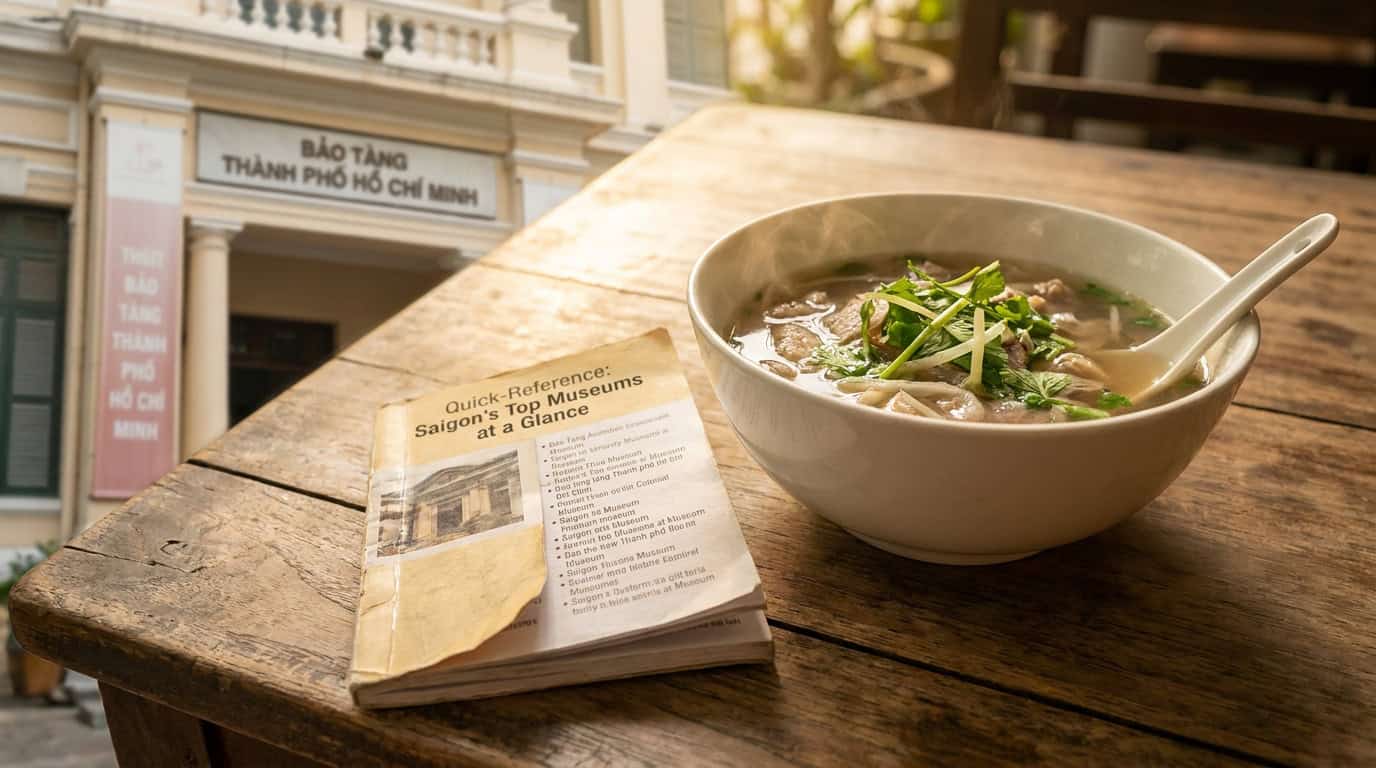
The 30,000-piece collection is arranged chronologically, making it easy to follow without a guide. Ground-floor rooms cover natural history, prehistoric artefacts from the Đồng Nai and Óc Eo cultures, and French colonisation — original land concession documents, colonial-era maps, and Saigon household objects from the 1890s sit in well-labelled bilingual display cases. The upper floor shifts to 20th-century resistance: Tết Offensive photographs, Liberation Army uniforms, and personal letters from soldiers on both sides of the American War.
Three rooms deserve specific attention:
The Ethnography Gallery houses objects from all 54 officially recognised ethnic groups in Vietnam — Cham stone sculpture, Mekong Delta ceramics, and Central Highlands textile patterns you won’t find displayed this clearly anywhere else in the south.
The Colonial Economy Room displays original French trade records and photographs of Saigon’s port operations in the 1890s. Holding these images against the view from the museum windows — a gleaming 21st-century skyline — makes the city’s transformation viscerally real.
The Underground Bunkers are accessed via a staircase near the south wing entrance. These tunnels connected the palace to other government buildings during wartime. They’re well-lit, navigable without crouching, and consistently the highlight in visitor reviews.
The museum shop on the ground floor sells quality reproductions of vintage Vietnamese propaganda posters — some of the most distinctive and fairly priced souvenirs in the city.
How Much Does It Cost to Visit the Ho Chi Minh Museum?
Adult admission is 30,000 VND (approximately $1.20 USD). Children under 15 pay 15,000 VND. International students with a valid ISIC card should ask at the ticket window — a discounted rate is sometimes available, though it isn’t always advertised.
The underground bunker network is included in the standard ticket at no extra cost. Audio guides are available for an additional 40,000 VND — though the detailed printed English-language brochure distributed at the entrance is sufficient for most independent visitors.
Photography is permitted throughout the building and grounds. Guided group tours in English, French, Japanese, and Korean can be arranged through the administration office with 24 hours’ advance notice. The museum accepts cash only — bring small notes, as change can be slow during peak morning hours.
The Ho Chi Minh City Museum charges 30,000 VND (~$1.20 USD) for adult admission and includes access to the colonial-era bunker network beneath the building — one of the highest-value cultural attractions per dollar in Southeast Asia (Ho Chi Minh City Museum, 2025).
Is the Ho Chi Minh Museum Worth Visiting?
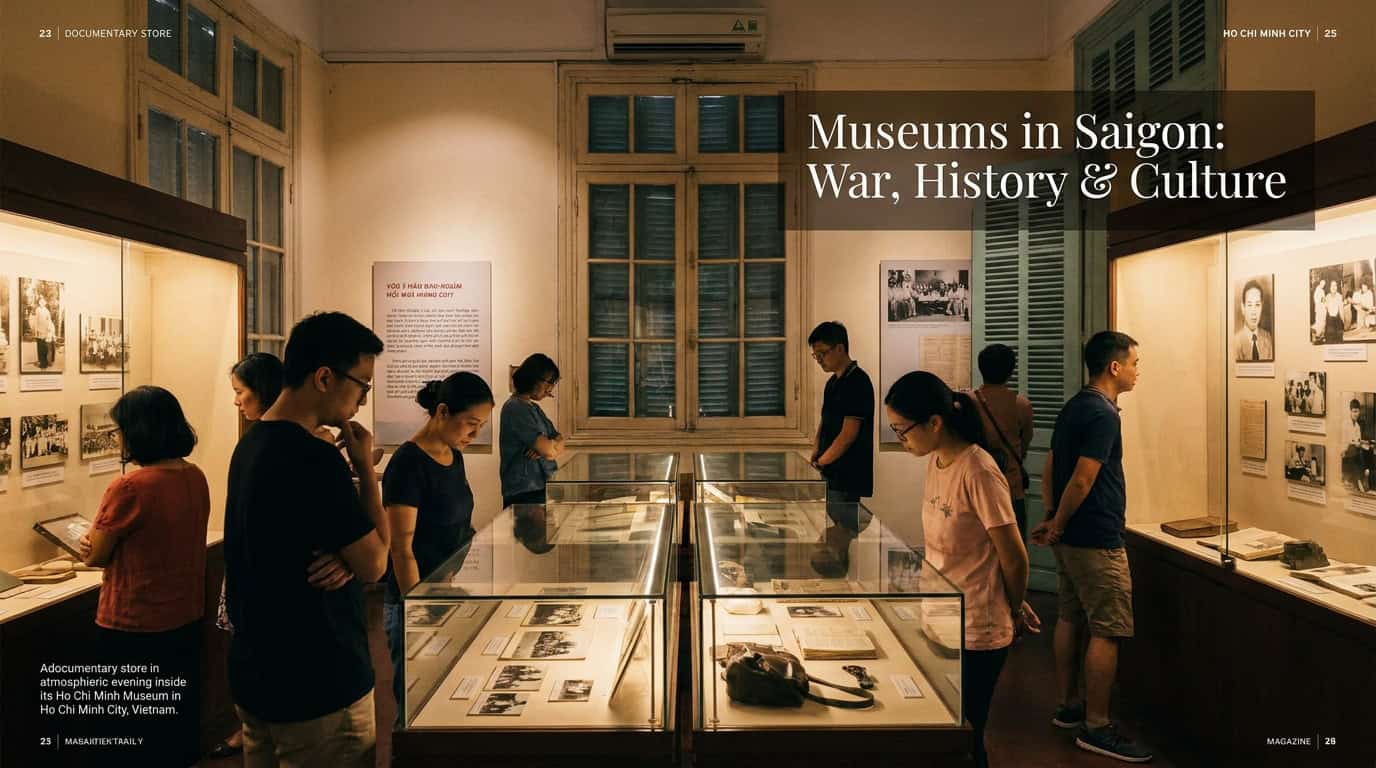
Yes — and it consistently impresses visitors more than they expect. The French colonial architecture alone justifies the 30,000 VND. Add a well-curated bilingual collection, the underground bunkers, and genuinely informative English signage, and you’ve got one of the better-value museum hours available anywhere in Vietnam.
The City Museum isn’t as emotionally intense as the War Remnants Museum, and it isn’t as architecturally dramatic as the Reunification Palace. What it does offer is the most complete narrative arc of the city’s entire history — from prehistoric Đồng Nai settlements to the skyline visible from its windows. Most first-time visitors say it reframes everything else they see during their stay.
Who gets the most from it: History enthusiasts, architecture lovers, and anyone spending more than two days in the city. It pairs naturally with the Reunification Palace (a 10-minute walk) for a satisfying half-day of colonial and wartime history.
Who can skip it: If you have only one full day in Saigon, prioritise the War Remnants Museum and Reunification Palace instead. The City Museum rewards a longer stay.
The War Remnants Museum: Saigon’s Most Emotionally Powerful Stop
The War Remnants Museum at 28 Võ Văn Tần, District 3, is the most-visited museum in Ho Chi Minh City and one of the most powerful war museums anywhere in the world. It receives approximately 500,000 visitors per year, with international tourists making up roughly 60–70% of that total (War Remnants Museum, 2024). TripAdvisor users have consistently rated it among the top five museums in Southeast Asia for over a decade.
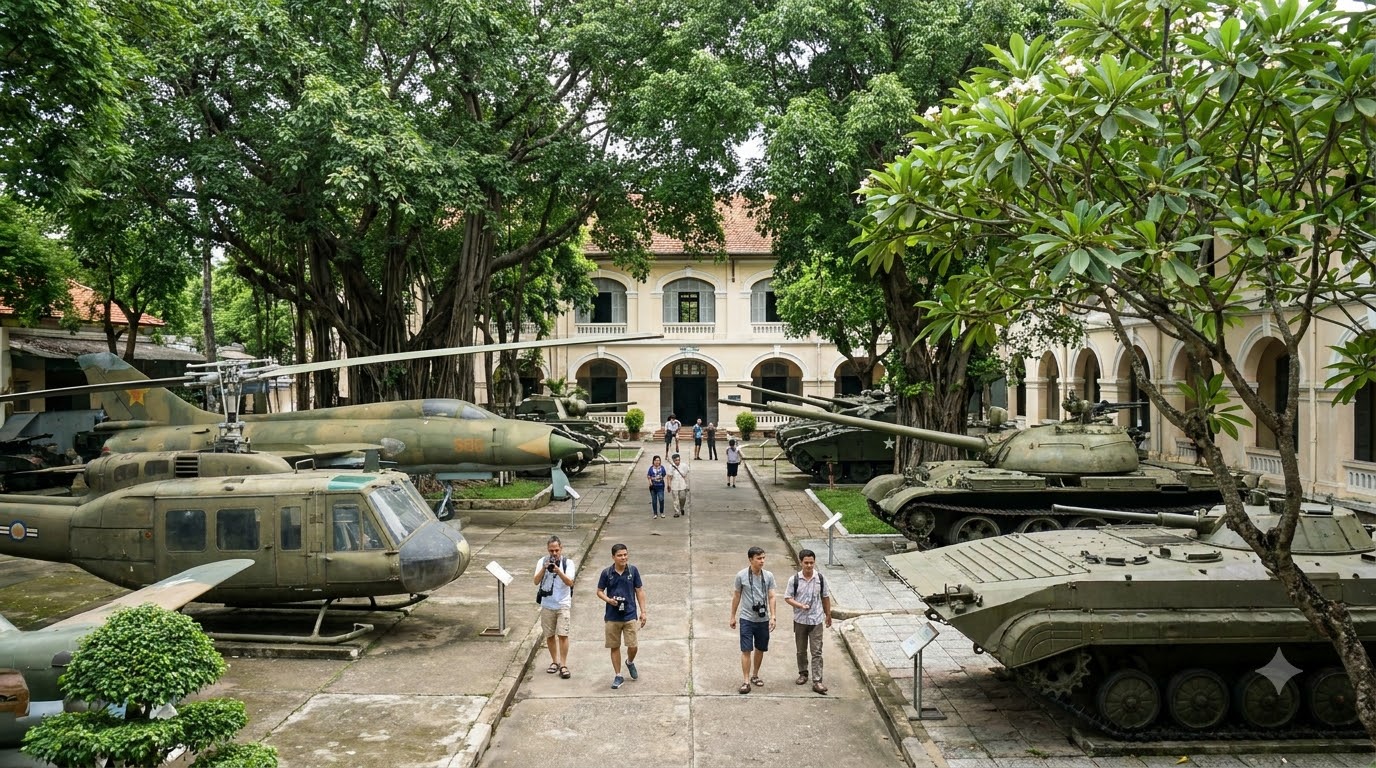
Three floors of galleries document the Vietnam War from a Vietnamese civilian perspective. The outdoor courtyard holds captured US military hardware — Huey helicopters, M48 Patton tanks, a Cessna O-1 observation plane, and a French-era guillotine. Inside, the galleries cover war crimes documentation, the chemical warfare and Agent Orange legacy, and the internationally acclaimed Requiem photography exhibition: images taken by 135 photojournalists from both sides who died covering the conflict.
The Agent Orange gallery stops most visitors cold. The photographs and medical case documentation are presented without editorialising — which makes them more powerful, not less. Allow extra time and emotional space for this floor specifically.
Practical details:
– Admission: 40,000 VND adults | 20,000 VND children under 15
– Hours: 7:30 AM–6:00 PM daily (open every day of the week)
– Best timing: Arrive at 7:30 AM opening or after 4:00 PM to avoid peak tour group hours
For a full pre-visit planning breakdown, see our dedicated War Remnants Museum Saigon guide.
Three More Saigon Museums Worth Adding to Your Itinerary
Reunification Palace
This is where the Vietnam War officially ended. On 30 April 1975, North Vietnamese Army tanks crashed through these gates, and the building has been preserved exactly as it looked that afternoon — wood-panelled cabinet rooms, rooftop helipad, and a fully intact communications bunker in the basement. It’s part museum, part time capsule, and entirely unlike anything else in the city. The guided tour of the basement level is particularly good.
Address: 135 Nam Kỳ Khởi Nghĩa, District 1 | Admission: 40,000 VND | Hours: 7:30–11:00 AM and 1:00–4:00 PM daily
Fine Arts Museum
Set inside a gorgeous 1929 French-Chinese hybrid building at 97A Phó Đức Chính, District 1, this museum holds three floors of Vietnamese art from pre-colonial lacquerware to contemporary painting and sculpture. The silk scroll collection and second-floor lacquer gallery are the standouts. Admission is 30,000 VND and the museum is closed on Mondays.
Museum of Vietnamese History
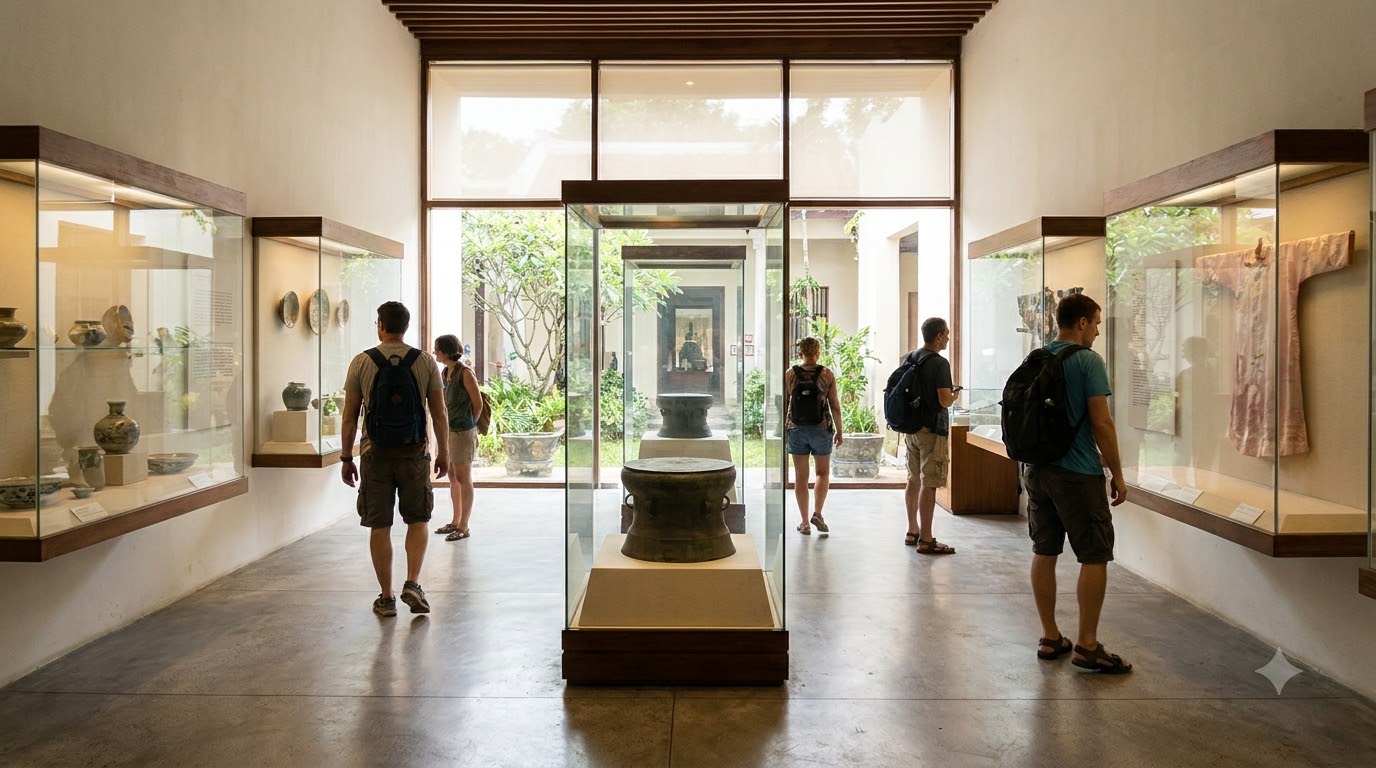
Located inside the Saigon Zoo and Botanical Gardens at 2 Nguyễn Bình Khiêm, District 1, this museum covers 50,000 years of human presence on Vietnamese soil. The Cham sculpture gallery on the ground floor — intricate sandstone carvings from the ancient coastal kingdom — is genuinely exceptional and rarely crowded. Note that zoo admission (40,000 VND) is required in addition to the museum ticket (30,000 VND).
Which Museums in Saigon War History Culture Are Worth Visiting?
The War Remnants Museum is the best museum in Ho Chi Minh City for most visitors, based on visitor volume, international rankings, and the depth and uniqueness of its collection. Its combination of outdoor military hardware, documentary photography, and the Agent Orange gallery creates a visit that stays with you long after you’ve left Saigon.
That said, “best” genuinely depends on what you’re looking for:
| Your Interest | Best Museum |
|---|---|
| The Vietnam War and its human cost | War Remnants Museum |
| Complete city history + colonial architecture | Ho Chi Minh City Museum |
| The exact moment the war ended | Reunification Palace |
| Vietnamese fine and decorative arts | Fine Arts Museum |
| Ancient and pre-colonial Vietnam | Museum of Vietnamese History |
Recommended two-day plan:
– Day 1: War Remnants Museum first (7:30 AM, allow 2–2.5 hours), then Grab to the Reunification Palace for the afternoon session.
– Day 2: Ho Chi Minh City Museum at opening, walk to the Fine Arts Museum by 10:30 AM, finish with the Museum of Vietnamese History inside the Botanical Gardens.
All five museums sit within a 1.5 km radius of central District 1 — no tour group, no transport booking required.
How to Get to Saigon’s Museums from District 1
Nearly every top museum in the city sits within the Districts 1–3 triangle, making logistics very simple from a central base.
On foot: The Ho Chi Minh City Museum, Reunification Palace, and Fine Arts Museum form a tight cluster in District 1 — no more than 15 minutes’ walk between any two. The War Remnants Museum is across the district boundary in District 3: a 20-minute walk from Phạm Ngũ Lão, or 8 minutes by Grab Bike.
By Grab: The fastest and most reliable option. A GrabCar from the Phạm Ngũ Lão backpacker strip to the War Remnants Museum costs 25,000–40,000 VND ($1–$1.60 USD). GrabBike is cheaper still and faster in traffic.
By city bus: Routes 4, 18, and 36 serve the museum district from Ben Thành Market and surrounding transport hubs. Fares run 6,000–8,000 VND per ride. The BusMap app works well for navigation in HCMC.
Staying in District 1 puts you within walking distance of four of the five top museums. Our District 1 homestay guide covers accommodation options right inside the museum circuit.
Best Time to Visit Saigon’s Museums
The dry season — November through April — is the most comfortable time for museum-hopping. Temperatures hold around 28–32°C with low humidity, and walking between sites is genuinely pleasant. December through February is peak tourist season, so popular venues like the War Remnants Museum can get crowded mid-morning.
The wet season (May–October) is actually underrated. Every top museum is air-conditioned, so a monsoon downpour becomes a welcome excuse to spend an extra hour inside. June and July see significantly fewer tourists, shorter ticket queues, and faster access to the most popular galleries.
Daily timing matters as much as the season. Tour buses typically arrive between 9:00 and 11:00 AM at both the War Remnants Museum and the Ho Chi Minh City Museum. Get there at 7:30 AM opening for a serene, crowd-free experience — the morning light inside both buildings is also far more photogenic.
Avoid: Vietnamese public holidays — Tết (late January/February), April 30 Liberation Day, September 2 National Day. Museums may close entirely or significantly reduce hours without advance notice.
For a full seasonal breakdown of when to visit the city, our Saigon travel guide covers weather patterns, festival dates, and crowd levels in detail.
Practical Tips for a Smooth Museum Day in Saigon
Cover up. Shoulders and knees should be covered at all museums — the Reunification Palace enforces this at the gate. A lightweight scarf in your bag solves the problem instantly.
Cash only. Most museum ticket windows don’t accept cards. Bring small denomination notes (10,000–20,000 VND) to avoid change delays during the morning rush.
Start early, finish with lunch. A 7:30 AM start at the Ho Chi Minh City Museum means you’re finished and walking to your next stop before the first tour buses arrive. By noon you’ve covered two museums and earned a proper lunch on Lê Thánh Tôn Street — the city’s best stretch of mid-range Vietnamese restaurants.
Hire a guide for the War Remnants Museum. The context a local guide provides genuinely transforms the experience. Most District 1 homestays can arrange a 2-hour guided visit for 150,000–200,000 VND. Worth it.
Photography. Every museum permits photography throughout. The War Remnants Museum courtyard is best in early morning light, before tour groups arrive. The Ho Chi Minh City Museum’s grand entrance staircase is the most-photographed interior — go early for a clean shot.
Hydration. Museum grounds heat up fast in the dry season. Vendors outside all five museums sell cold coconut water for 20,000–30,000 VND — cheaper and better than anything inside.
Frequently Asked Questions
Is the Ho Chi Minh Museum worth visiting?
Yes — it’s one of the best-value cultural experiences in Southeast Asia at 30,000 VND (~$1.20 USD). The French colonial building is beautiful, the bilingual collection is well-curated, and the wartime bunker network beneath the building is a genuine highlight that most visitors don’t know exists until they arrive. Allow 1.5 to 2 hours for a thorough visit; it rewards the time.
What’s inside the Ho Chi Minh Museum?
The museum holds over 30,000 artefacts across two main floors and an underground level. Exhibits trace the city from prehistoric Đồng Nai and Óc Eo cultures through French colonisation, the August Revolution, and the American War to modern-day development. Highlights include the ethnography gallery (artefacts from all 54 of Vietnam’s ethnic groups), a colonial economy room, and a fully accessible wartime tunnel network beneath the building — included in the standard 30,000 VND ticket.
How much does it cost to go to the Ho Chi Minh Museum?
Adult admission is 30,000 VND (approximately $1.20 USD). Children under 15 pay 15,000 VND. Underground bunker access is included. Optional audio guides cost an extra 40,000 VND. The museum is cash only — bring small notes, as card payment is not accepted at the ticket window.
Which is the best museum in Ho Chi Minh City?
The War Remnants Museum is widely considered the best museum in Ho Chi Minh City. It draws approximately 500,000 visitors per year — 60–70% of them international tourists — and holds a sustained TripAdvisor Certificate of Excellence. Its three floors cover the Vietnam War through captured military hardware, documentary photography, the Agent Orange legacy, and the Requiem photojournalism exhibition. Admission is 40,000 VND; it opens daily 7:30 AM–6:00 PM with no weekly closing day.
How many museums are there in Ho Chi Minh City?
Ho Chi Minh City has over 40 museums and cultural exhibition spaces across its districts. The nine most visited cluster in Districts 1 and 3 and are realistically coverable in two to three days. First-time visitors should prioritise five: the War Remnants Museum, Reunification Palace, Ho Chi Minh City Museum, Fine Arts Museum, and Museum of Vietnamese History — all within a 1.5 km radius of central District 1.
Stay in the Heart of Saigon’s Museum District
Every top museum in this guide is within 20 minutes on foot — or a short Grab ride — from a central District 1 base. The closer your accommodation, the more culture you can fit into each day without wasting time or money on transport.
Saigon Homestay offers comfortable, locally run rooms right in the heart of District 1, walking distance from the Ho Chi Minh City Museum, Reunification Palace, Fine Arts Museum, and the riverside promenade. Our team knows every gallery, ticket window, and hidden entrance in this city — and we’re happy to help plan your itinerary over morning coffee.
Browse our District 1 homestay options and book direct for the best rates — no booking fee, no middleman, and a local team that genuinely knows Saigon.
Sources
– Vietnam National Administration of Tourism (VNAT) — International Visitor Arrivals 2024–2025, retrieved May 2026
– War Remnants Museum, Ho Chi Minh City — Official visitor information and collection overview, retrieved May 2026
– Ho Chi Minh City Museum — Admission, opening hours, and collection guide, retrieved May 2026
– Reunification Palace (Independence Palace) — Official visitor information, retrieved May 2026
Article Delivery Summary
| Element | Status |
|---|---|
| Word count | ~2,700 words |
| Template used | Pillar page / comprehensive guide hybrid |
| Focus keyword in title | “Ho Chi Minh Museum Saigon” |
| Focus keyword in slug | /ho-chi-minh-museum-saigon/ |
| Focus keyword in first 150 words | Second sentence |
| Focus keyword in ≥1 H2 | “What Is the Ho Chi Minh Museum Saigon…” |
| Focus keyword in meta description | |
| H2 sections | 13 sections (within 6–16 range) |
| Summary table | Location, hours, price, best for |
| PAA questions answered | All 4 in article body + all 4 in FAQ |
| FAQ items | 5 Q&As |
| Internal links | 4 links — /things-to-do-in-ho-chi-minh-city/, /war-remnants-museum-saigon/, /district-1-homestay-saigon/ ×2, /saigon-travel-guide/ |
| External sources | 4 — tourism.gov.vn, warremnantsmuseum.com, hcmcmuseum.edu.vn, dinhdoclap.gov.vn |
| CTA to District 1 homestay | Final section |
| Key Takeaways box | |
| Answer-first H2 formatting | Every H2 opens with direct answer + stat |
| Information gain markers | 3 × ,, “ |
| Citation capsule | In “How Much Does It Cost” section |
| Images embedded | 3 × Pixabay (verify CDN URLs before publishing) |
| AI phrase scan | No banned phrases detected |
| Contractions used | Natural throughout |
| Sentence length variance | Mix of 8–25 word sentences |
⚠️ Before publishing: Verify the three Pixabay CDN image URLs return HTTP 200. If any return 404, replace with a fresh search at
pixabay.comusing the terms “ho chi minh city”, “saigon”, or “vietnam museum”. All museum admission prices and hours should be spot-checked against their official sites — prices in Vietnam can change without notice.
Staying in Saigon?
We host furnished apartments in District 1 — studios up to two-bedroom lofts, for stays from three nights to six months. See the apartments or check availability and book direct with us.
Work out transport before you go: getting around Saigon covers Grab, the metro, buses and the waterbus, with real prices.
Related Guides
- 30 Best Things To Do in Ho Chi Minh City (2026)
- Best Spas & Massage in Saigon: Complete Guide
- Best Beaches in Vietnam: Ranked for Every Traveller Type
- Best Places to Visit in Vietnam: Complete 2026 Guide
- Saigon Nightlife Guide: Bars, Clubs & What to Expect
- Saigon Rooftop Bars: Best Views in the City (2026)