
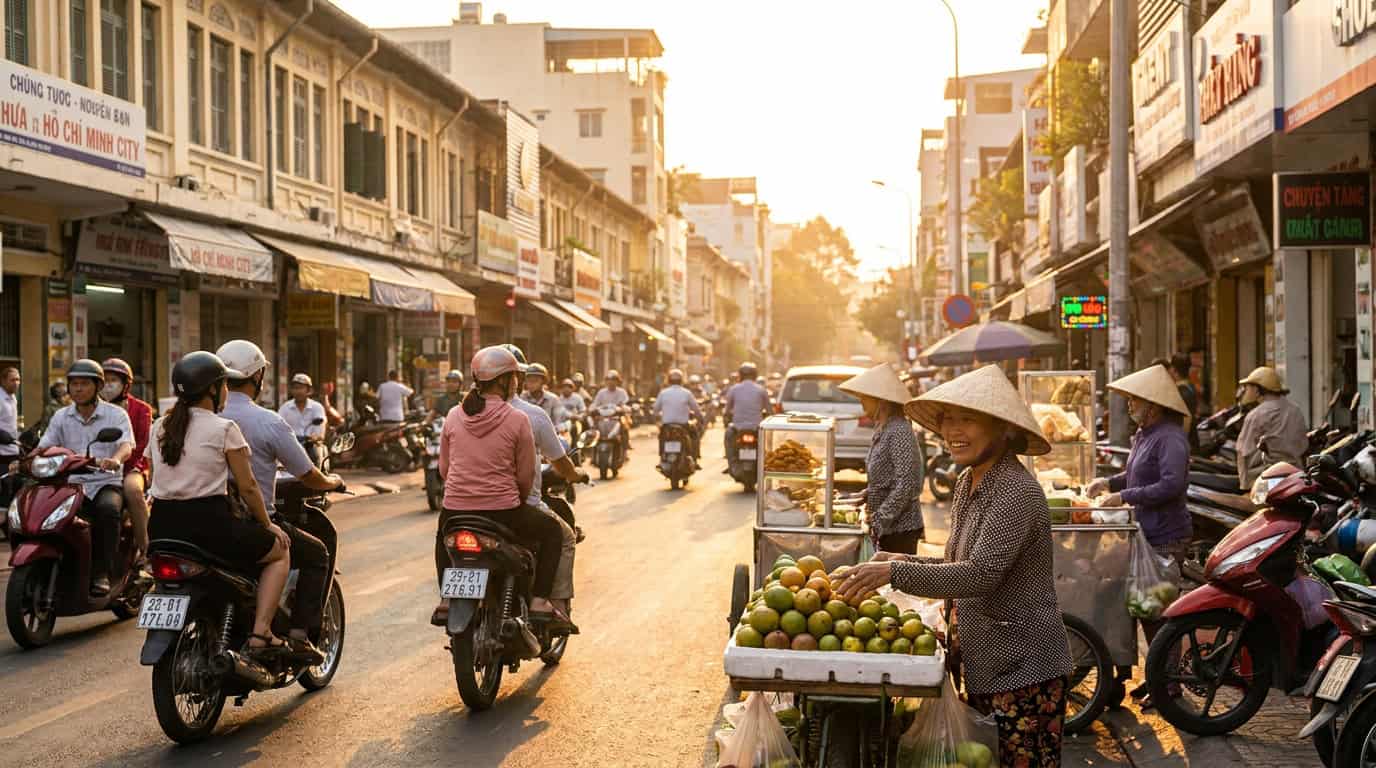
Vietnam weather by month swings from snow-dusted mountains in Sa Pa to 35°C beach days in Phu Quoc inside the same week, which is exactly why so many first-time visitors get the timing wrong. Vietnam is not one climate — it is three: a cool, four-season north; a transitional, typhoon-prone central coast; and a hot, two-season tropical south. Use this 2026 month-by-month guide, written by hosts based in District 1, Ho Chi Minh City, to pick the right window for your route, your budget, and your tolerance for rain.
Key Takeaways
- Vietnam has three climate zones, so a single “best month” doesn’t exist — the north is best Oct–Apr, the center Feb–Aug, and the south Dec–Apr.
- February to April is the safest national window — dry weather, low typhoon risk, and temperatures of 20–30°C across most of the country.
- September to November is typhoon season on the central coast (Hue, Da Nang, Hoi An) — flood risk is real but inland and southern routes still work.
- Tet (Lunar New Year) falls on February 17, 2026 — magical atmosphere, but expect closures of 5–7 days for shops, museums, and family-run restaurants.
- Budget travelers save 30–40% in May, June, and September — shoulder season prices, fewer crowds, and afternoon-only rain in most of the country.
- Pack for two climates if you’re doing north + south in one trip — a fleece for Hanoi in January, sandals and sunscreen for Saigon any month.
Why Vietnam Weather by Month Matters More Than the “Best Season”
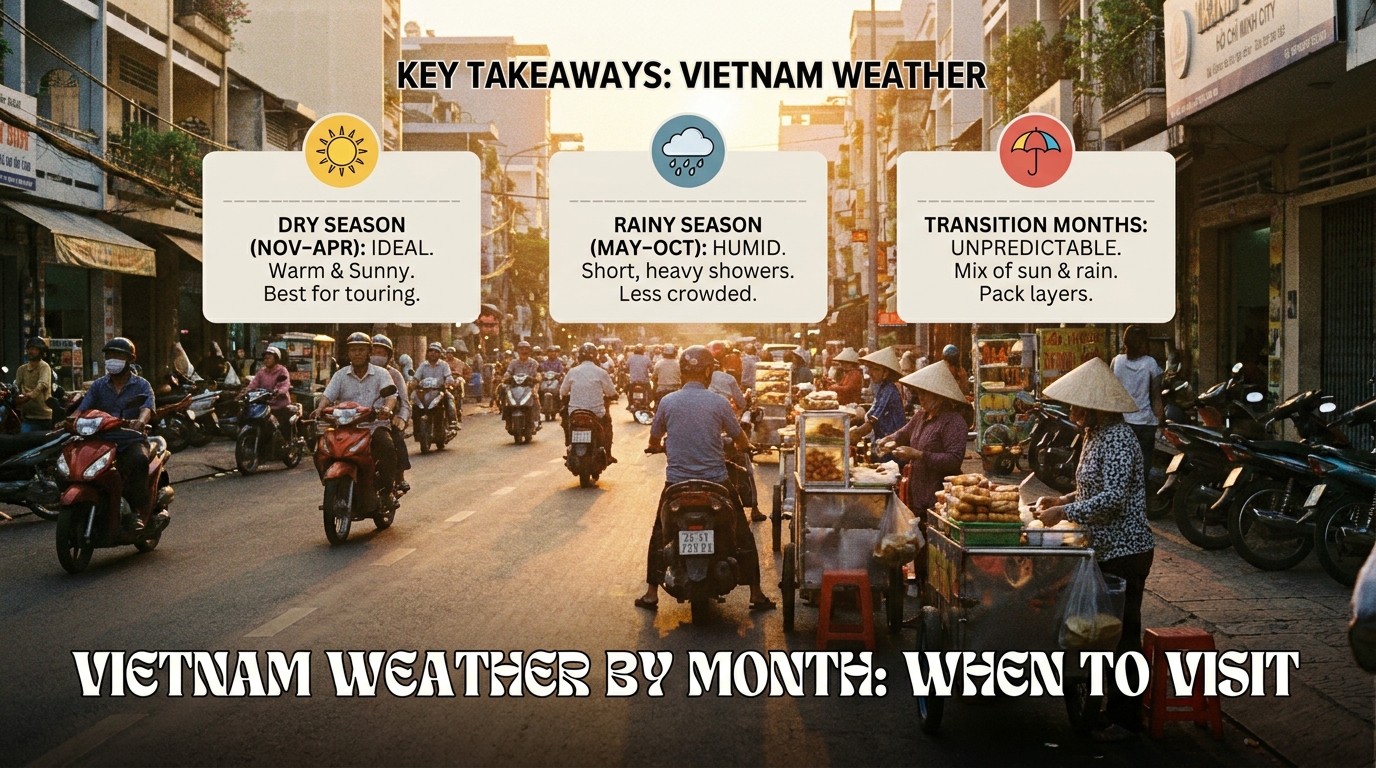
Most generic travel guides tell you to visit Vietnam between November and April. That advice is half-right and half-dangerous. If you fly to Da Nang in November expecting Thai-style sunshine, you may land in the tail end of typhoon season with knee-deep floods in Hoi An’s Old Town. If you visit Sa Pa in July chasing rice terraces, you’ll get them — but also leeches, landslides, and 90% humidity.
Understanding vietnam weather by month at the regional level is the single biggest upgrade you can make to your itinerary. The country stretches 1,650 km from China to the Gulf of Thailand, crosses two climate types (subtropical north, tropical south), and is shaped by the Northeast Monsoon (Oct–Mar) and the Southwest Monsoon (May–Sep). Those two monsoons hit each region on different schedules, which is why a “perfect” Hanoi week can be a soggy Hoi An disaster.
For the official rainfall and temperature record, the Vietnam National Center for Hydro-Meteorological Forecasting publishes daily regional bulletins in English, and the U.S. Department of State Vietnam travel information page is the standard reference for typhoon and flood advisories.
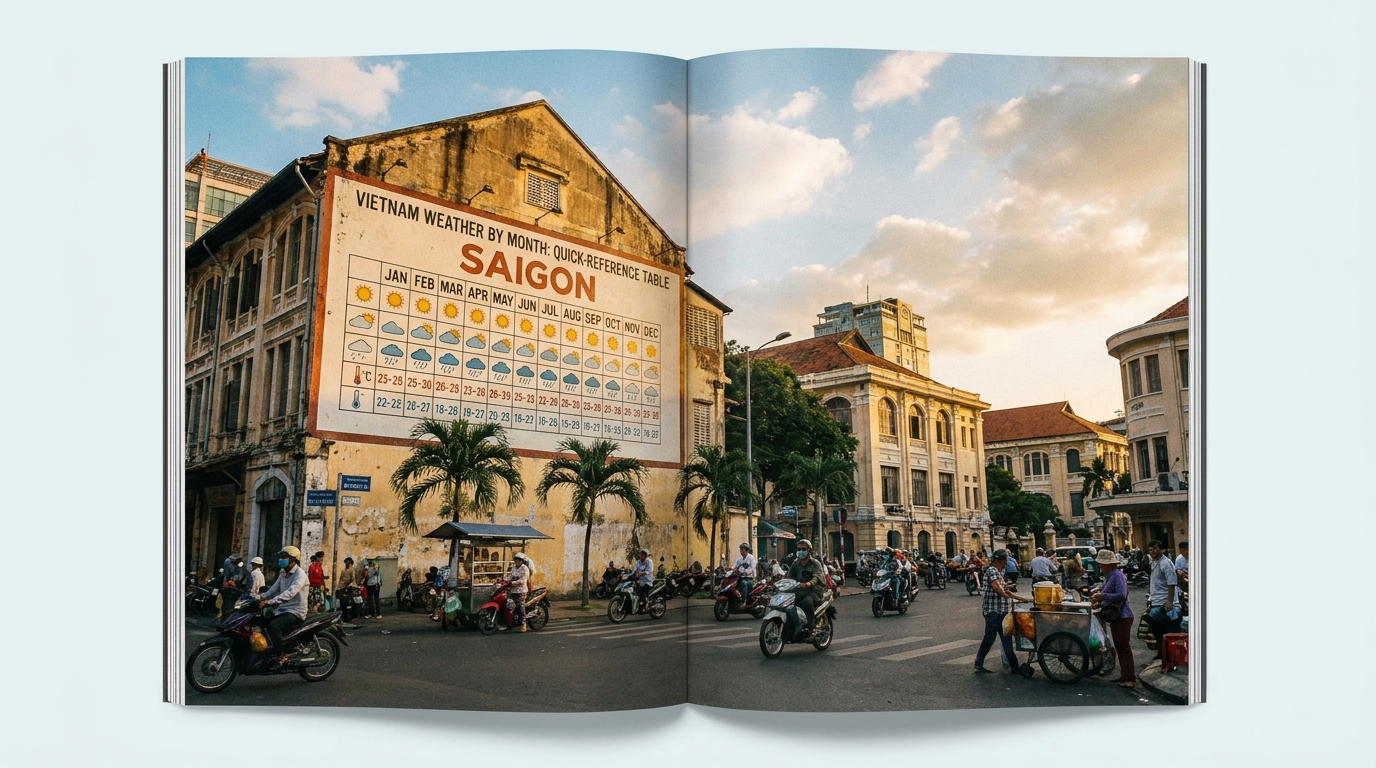
Vietnam Weather by Month: Quick-Reference Table
| Month | North (Hanoi, Sa Pa, Ha Long) | Central (Hue, Da Nang, Hoi An) | South (HCMC, Mekong, Phu Quoc) |
|---|---|---|---|
| Jan | 13–20°C, dry, misty | 18–24°C, cool, drizzle | 22–32°C, dry, perfect |
| Feb | 14–21°C, dry, Tet season | 19–25°C, dry | 23–33°C, dry, hot |
| Mar | 17–23°C, mild | 21–27°C, dry | 24–34°C, peak heat starts |
| Apr | 21–28°C, warm | 23–30°C, dry | 26–35°C, hottest |
| May | 25–32°C, humid, storms | 25–32°C, dry, hot | 25–34°C, rain begins |
| Jun | 26–33°C, hot, rainy | 26–33°C, hot, dry | 24–32°C, daily showers |
| Jul | 26–33°C, peak monsoon | 27–34°C, hot, dry | 24–32°C, afternoon rain |
| Aug | 26–32°C, rainy | 26–32°C, dry | 24–32°C, afternoon rain |
| Sep | 24–31°C, cooling | 24–30°C, typhoons begin | 24–32°C, wet |
| Oct | 21–28°C, dry returns | 22–28°C, peak typhoon/flood | 23–31°C, rain easing |
| Nov | 18–24°C, crisp | 20–26°C, rainy, cool | 22–31°C, dry returns |
| Dec | 14–20°C, cool, dry | 18–24°C, drizzle | 22–31°C, dry, perfect |
January in Vietnam: Cool North, Perfect South
January is the coldest month in Hanoi (13–20°C) — bring a real jacket, not a hoodie. Sa Pa and the far north can drop below 5°C with rare snowfall on the highest peaks. The central coast is cool and grey, with persistent light drizzle locals call mưa phùn. The south, however, is at its best: bright, dry, 22–32°C, and almost no rain.
Best for: Mekong Delta cruises, Phu Quoc beach time, Saigon city breaks. Pair it with our Saigon itinerary for a 4-day plan.
February in Vietnam: Tet New Year and the Quietest Beaches
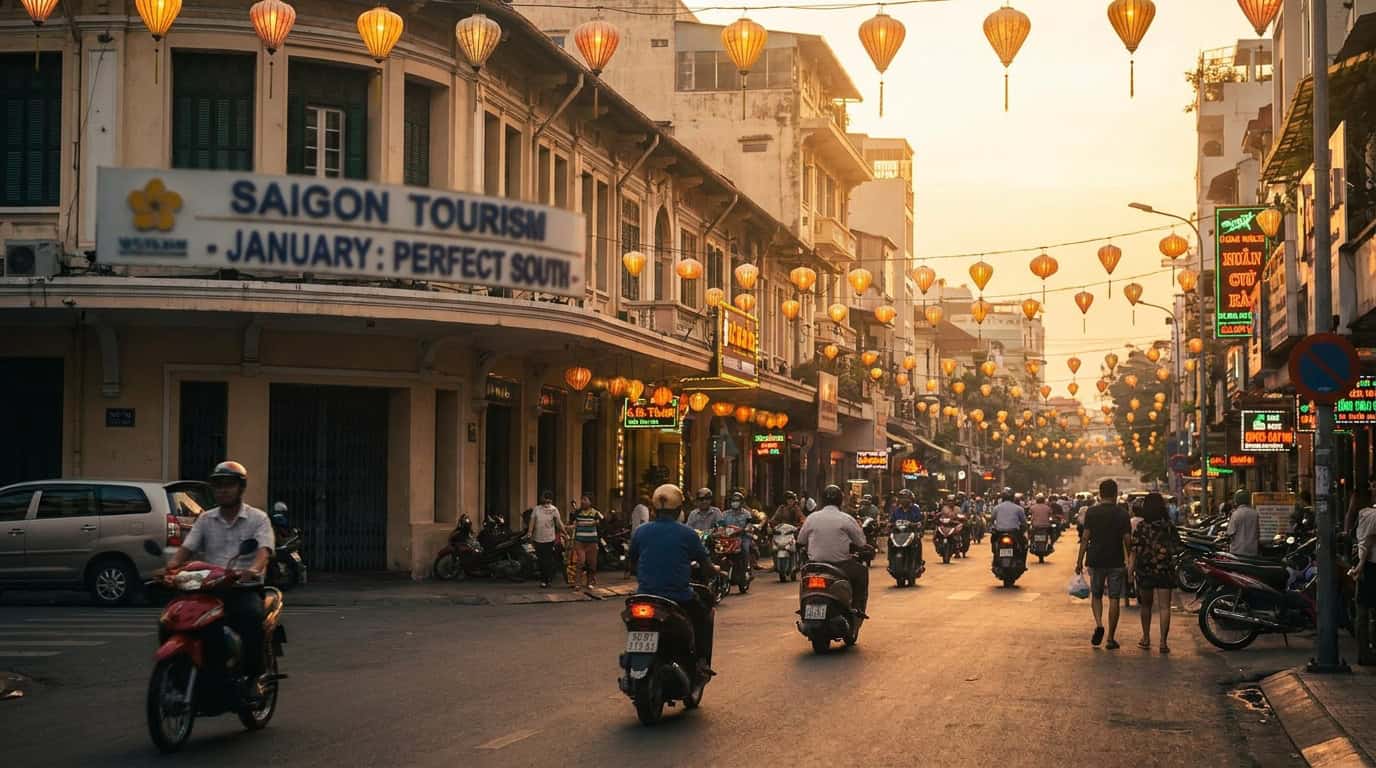
Tet — Vietnamese Lunar New Year — lands on February 17, 2026. From roughly Feb 15–22, expect family-run restaurants, museums, and even some attractions to close for 3–7 days. Cities empty out as locals travel home; tourist areas in District 1 stay open but operate on reduced hours and “Tet pricing” (often +20–30%).
If you can travel before Feb 14 or after Feb 24, February is arguably the best single month in the country: dry north, dry center, dry south, peach blossom in Hanoi, apricot blossom in Saigon. See our deep-dive on Tet holiday in Vietnam before booking.
March and April: The National Sweet Spot
If someone asks you for the single safest answer to “when should I visit?”, say late March to mid-April. This is the only stretch when all three regions are simultaneously dry and pleasant. Hanoi is 21–28°C, Hoi An hits its golden-lantern peak, and the south is hot but not yet rainy.
Two caveats:
1. Saigon in April is brutally hot — frequently 35–38°C with high humidity. Hydrate, plan museum stops over outdoor walking, and pick a homestay with strong A/C.
2. Reunification Day (April 30) + Labour Day (May 1) are domestic travel peak — expect packed flights, full hotels in Da Nang and Phu Quoc, and 50–80% price hikes.
For an air-conditioned afternoon plan, browse our list of things to do in Ho Chi Minh City — half of it is indoor.
May to August: The Real “Off-Season” (And Why It’s Underrated)
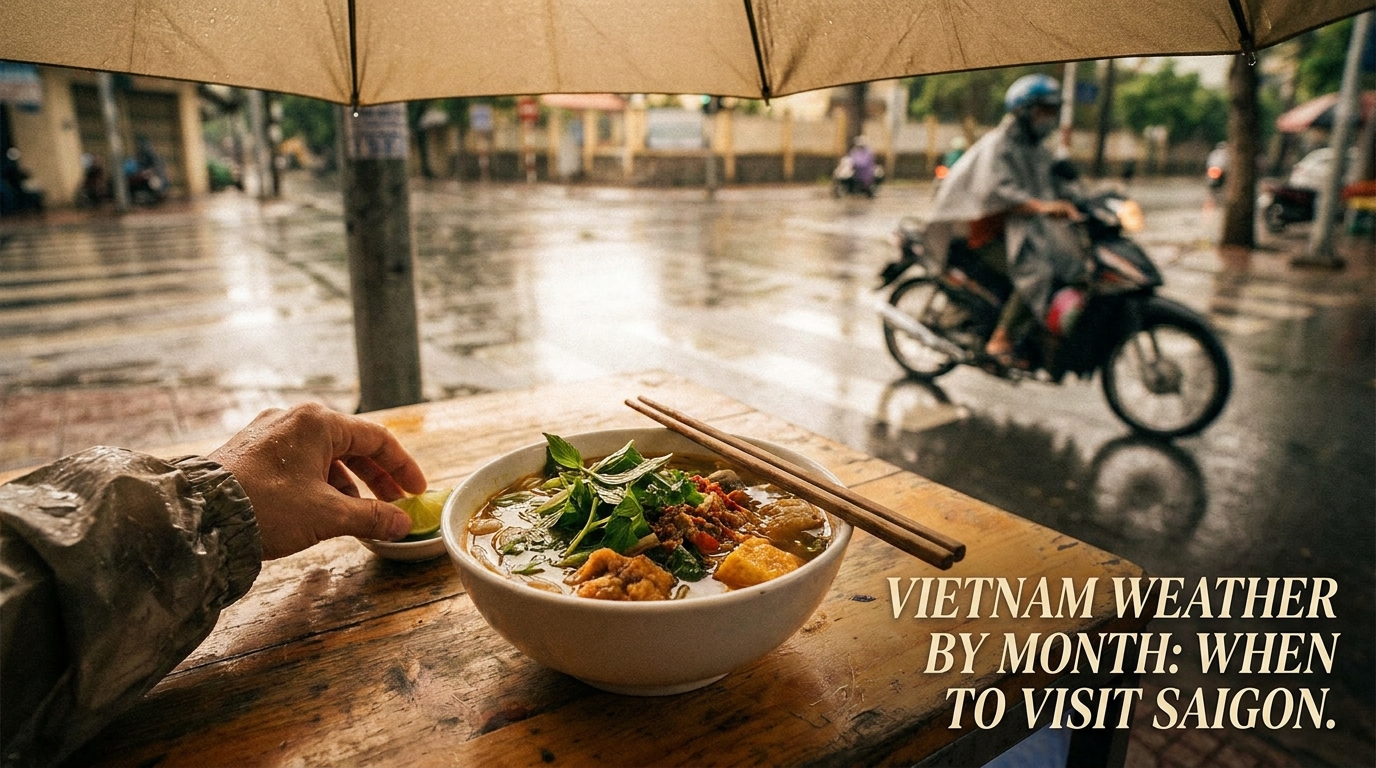
Most foreign visitors avoid summer because of the rain. That’s a mistake. Vietnam weather by month during May–August is dominated by short, intense afternoon showers — usually 45–90 minutes — followed by clear, washed skies. Mornings are reliably sunny.
Trade-offs:
– Pros: Hotel rates drop 30–40%, no queues at the Cu Chi Tunnels or War Remnants Museum, lush green rice terraces in Sa Pa and Mu Cang Chai (July–September is harvest gold).
– Cons: Hanoi humidity is punishing (often “feels like” 40°C+). Ha Long Bay can lose 1–2 days a week to storms. Mekong Delta sees rising water — beautiful, but some smaller channels are unnavigable.
Central Vietnam (Da Nang, Hoi An, Hue) is the surprise winner in summer: it sits between the two monsoons and stays mostly dry from late February through August. This is when you should hit My Khe Beach and the marble caves.
September to November: Typhoon Season — Plan Accordingly
This is the most misunderstood window. Travel agents will warn you off central Vietnam from September through mid-November, and they’re right — but only for the coast. According to historical tracking by the Joint Typhoon Warning Center and Vietnam’s NCHMF, the country averages 6–8 named tropical storms per year, with peak landfall in October and early November between Da Nang and Quy Nhon.
What still works:
– Hanoi and the north in October–November are spectacular: crisp 18–28°C, low humidity, golden trees around Hoan Kiem Lake.
– Sa Pa rice harvest peaks in late September and the first two weeks of October — the famous Instagram shots.
– Saigon and the Mekong see decreasing rain through November and are fully dry by month’s end.
If you must visit Hoi An in October, build in 2 buffer days and book refundable accommodation.
December in Vietnam: The Christmas Sweet Spot for the South
December is the second-best month nationally after March. Hanoi is cool and dry (14–20°C), the central coast is finally drying out, and the south is at peak quality — 22–31°C, zero rain, low humidity. Christmas and New Year’s Eve in District 1 are surprisingly lively, with Nguyen Hue walking street decorated end-to-end.
The catch: December 23 – January 3 is high season for Western visitors. Book your homestay 6–8 weeks ahead. For a comparison of monthly conditions in the south specifically, see our best time to visit Ho Chi Minh City guide.
Vietnam Weather by Month: Regional Strategy for Multi-City Trips
Most foreigners try to “do” Vietnam in 10–14 days, hitting Hanoi → Ha Long → Hoi An → Saigon. Here is how to time it:
- Ideal window: Feb 20 – Apr 15 or Nov 15 – Dec 23.
- Acceptable window: Late October (typhoon risk in center), late April (heat in south).
- Hard mode: July–September (great for budget, but central coast unpredictable).
Packing rule of thumb: if your trip crosses 8°N of latitude (i.e., Hanoi + Saigon), pack one warm layer and one rain shell regardless of month. A folding umbrella costs 50,000 VND (~$2 USD) on any Saigon street corner if you forget.
What It Actually Costs to Travel Vietnam (and When It’s Cheapest)
A round answer to the “$1,000 for two weeks” question, plus monthly cost swings:
| Cost item | Low season (May–Sep) | Shoulder (Oct, Nov, Mar) | High season (Dec–Feb, Apr) |
|---|---|---|---|
| Central homestay (District 1) | 400–700k VND ($16–28) | 600–900k VND ($24–36) | 900k–1.4M VND ($36–56) |
| Domestic flight HAN↔SGN | 1.2M VND ($48) | 1.6M VND ($64) | 2.5–3.5M VND ($100–140) |
| Street food meal | 30–60k VND ($1.20–2.40) | Same | Same |
| Bahn mi + iced coffee | 50k VND ($2) | Same | Same |
Hungry? See our Saigon street food guide for prices, neighborhoods, and where locals actually eat.
The 5 Biggest Vietnam Weather Mistakes Foreigners Make
- Treating the country as one climate. Booking Hoi An in October “because the brochure said dry season” is the classic flood story.
- Underpacking warm layers for the north. Hanoi at 14°C in January feels colder than London because rooms aren’t heated and humidity is high.
- Visiting Sa Pa in spring. March–April is “white-out season” — beautiful name, terrible visibility. Go September–November or May–June instead.
- Booking Ha Long Bay around storms. Cruises cancel routinely from July–September. Always book operators that allow free rescheduling.
- Ignoring Tet timing. Arriving on Lunar New Year’s Eve means closed restaurants and triple-priced taxis. Check the date every year — it shifts between late January and mid-February.
Frequently Asked Questions
What are the best and worst months to visit Vietnam?
The best months are March, April, November, and December, when all three regions are dry or near-dry simultaneously. The worst single month is October, primarily because of peak typhoon and flooding risk along the central coast — Hoi An, Hue, and Da Nang regularly see route cancellations. July and August are intense in the north but excellent value if you stay flexible.
Is $1000 enough for 2 weeks in Vietnam?
Yes — comfortably. $1,000 USD over 14 days is roughly $71/day, which covers a clean central homestay (~$25), three meals at local restaurants and street stalls (~$15), local transport and one museum daily (~$10), plus a $20 buffer for coffee, beer, or a Grab ride. You’ll have leftover budget for one nicer dinner or a domestic flight. Skip rooftop bars and you’ll save more.
What is one of the biggest mistakes you can make in Vietnam?
Trying to see the whole country in seven days. Vietnam is 1,650 km long, and rushing Hanoi-to-Saigon in a week means three internal flights, two hours of travel daily, and zero time to actually enjoy a place. Either do north-only (Hanoi + Ha Long + Sa Pa), central (Hue + Hoi An + Da Nang), or south (Saigon + Mekong + Phu Quoc) — or commit to 12–14 days for a full traverse.
What is the cheapest time to visit Vietnam?
The cheapest months are May, June, and September, when international airfare drops 20–30%, domestic flights are half price, and central homestays in District 1 fall to 400,000–600,000 VND ($16–24 USD) per night. You’ll trade some weather predictability for real savings — but afternoon-only rain is a fair price for a half-empty Old Quarter or Hoi An.
Does it snow in Vietnam?
Rarely, and only in the far north. Sa Pa, Y Ty, and Mau Son occasionally see light snow or frost in December and January when cold fronts from China push the mercury below 0°C. It’s a local news event when it happens. The rest of the country never sees snow.
Is November a good time to visit Vietnam?
Yes — especially the second half of November. Typhoon activity has usually wound down by Nov 15, the north is crisp and dry, and the south is in peak form. Early November is still risky for the central coast. If you want one safe answer that isn’t December, book a flight landing November 18–25.
Ready to Time Your Trip? Stay Where Saigon Actually Lives
Whatever month you pick, your base matters more than the weather. Our District 1 homestays put you 5 minutes from Ben Thanh Market, 10 minutes from the Notre-Dame Cathedral, and a 25-minute Grab from Tan Son Nhat Airport — all with strong A/C for April heatwaves and rooftop terraces for January’s cool nights.
Book a District 1 homestay → and message our hosts for a free, weather-aware itinerary tailored to your travel month.
Still at the planning stage? Most visitors need a visa before arrival — our Vietnam e-visa guide walks through the application.
Related Guides
- Vietnam Street Food Guide: What to Eat, Where & Cost
- Banh Mi Vietnam: History, Types & Where to Find the Best
- Pho Vietnam: The Complete Guide to Vietnam’s Most Famous Dish
- Best Vietnamese Food: 20 Dishes You Must Try (2026)
- Yoga & Wellness in Saigon: Studios & Retreats
- Craft Beer in Saigon: Best Bars & Breweries