
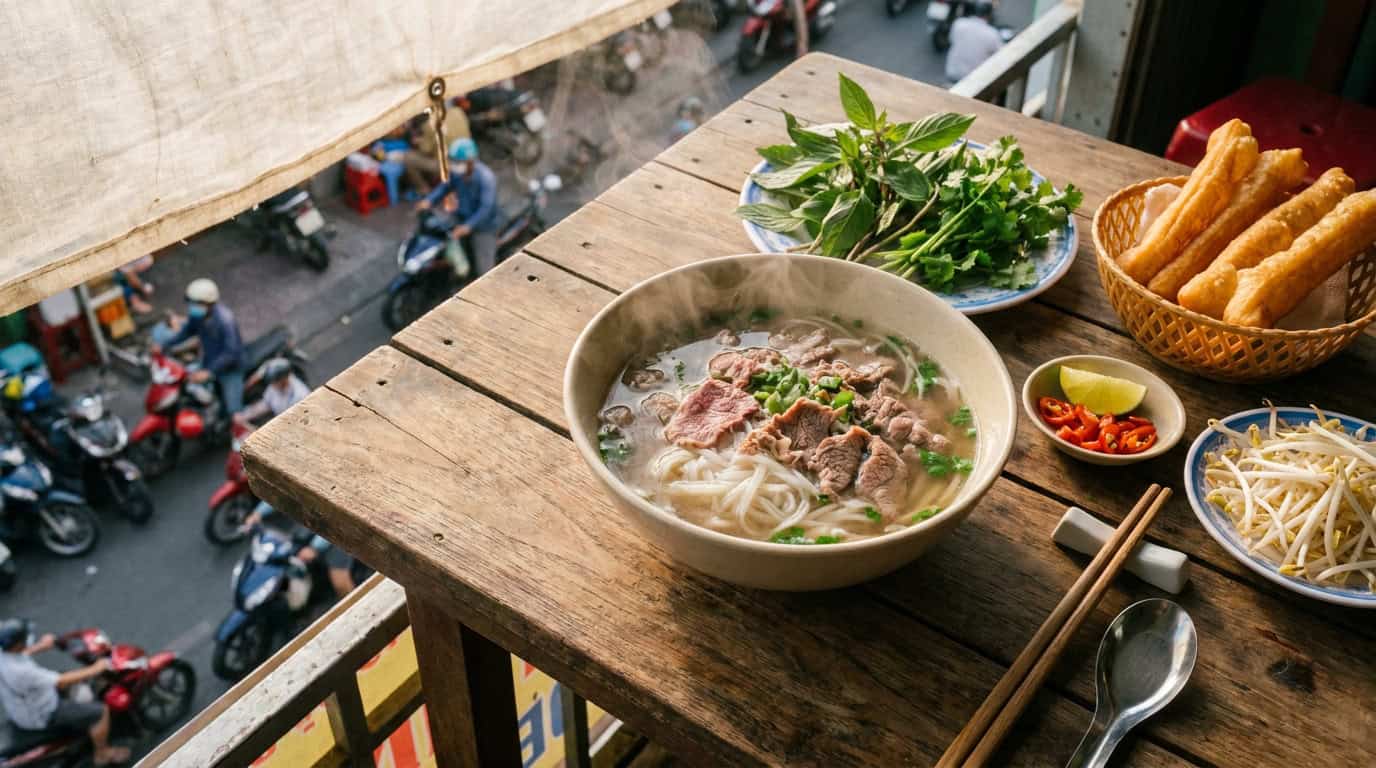
Pho vietnam is a fragrant rice-noodle soup made from a slow-simmered beef or chicken broth, flat bánh phở noodles, fresh herbs, and thinly sliced meat — and in 2026 it remains the country’s most internationally recognised dish, with bowls served everywhere from US$1 sidewalk stools in Saigon to one-star Michelin dining rooms. Whether you have just landed at Tân Sơn Nhất Airport or you have been living in District 1 for years, this guide will show you exactly what to order, where to find the best bowls, how much you should pay, and how to eat it like a local.
Key Takeaways
- What it is: Pho is a Vietnamese noodle soup of clear aromatic broth, flat rice noodles, herbs and thinly sliced beef (phở bò) or chicken (phở gà).
- Two main styles: Northern Phở Bắc (clear, savory, minimal garnish) and Southern Phở Nam (sweeter, served with a mountain of herbs and sprouts).
- Typical price (2026): 50,000–120,000 VND (US$2–4.80) for a standard bowl in Saigon; up to 750,000 VND (US$30) for Wagyu versions.
- Best time to eat: Breakfast (6:00–10:00 a.m.), when broths are freshest and locals queue up.
- Cultural note: Pho was added to Vietnam’s official list of National Intangible Cultural Heritage in 2024.
- Pro tip: Add lime and chili gradually — too much hides the broth the chef worked 8–12 hours to make.
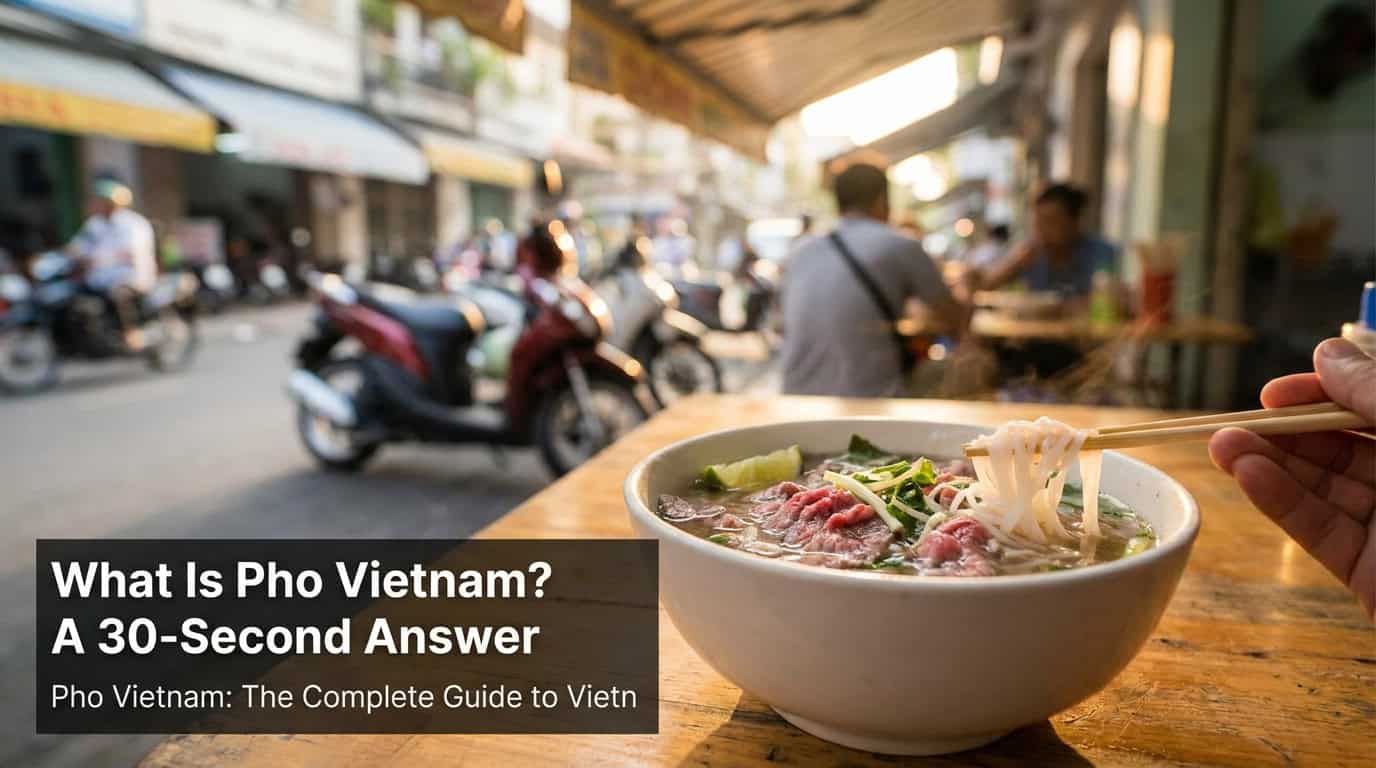
What Is Pho Vietnam? A 30-Second Answer
Pho vietnam (pronounced “fuh”, not “foh”) is a noodle soup built on four pillars: a long-simmered bone broth seasoned with star anise, cinnamon, cardamom and roasted ginger; flat rice noodles called bánh phở; protein (usually beef cuts like brisket, flank, or rare steak slices); and a plate of garnishes — Thai basil, culantro, bean sprouts, lime, and bird’s-eye chili.
The dish originated in northern Vietnam in the early 1900s and migrated south after the 1954 partition, where it picked up its sweeter, herb-heavy character. Today, UNESCO-recognised heritage status, a Michelin star at Phở Gia Truyền in Hanoi, and a 12,100-search-per-month global appetite confirm that pho is no longer just street food — it is Vietnam’s edible flag.
| Detail | Information |
|---|---|
| Origin | Nam Định / Hanoi region, ~1900–1910 |
| Standard price (Saigon, 2026) | 50,000–120,000 VND (US$2–4.80) |
| Premium bowl | 200,000–750,000 VND (US$8–30) |
| Best eating hours | 6:00 a.m. – 10:00 a.m. |
| Common varieties | Phở bò (beef), phở gà (chicken), phở chay (vegetarian) |
| Heritage status | National Intangible Cultural Heritage (recognised 2024) |
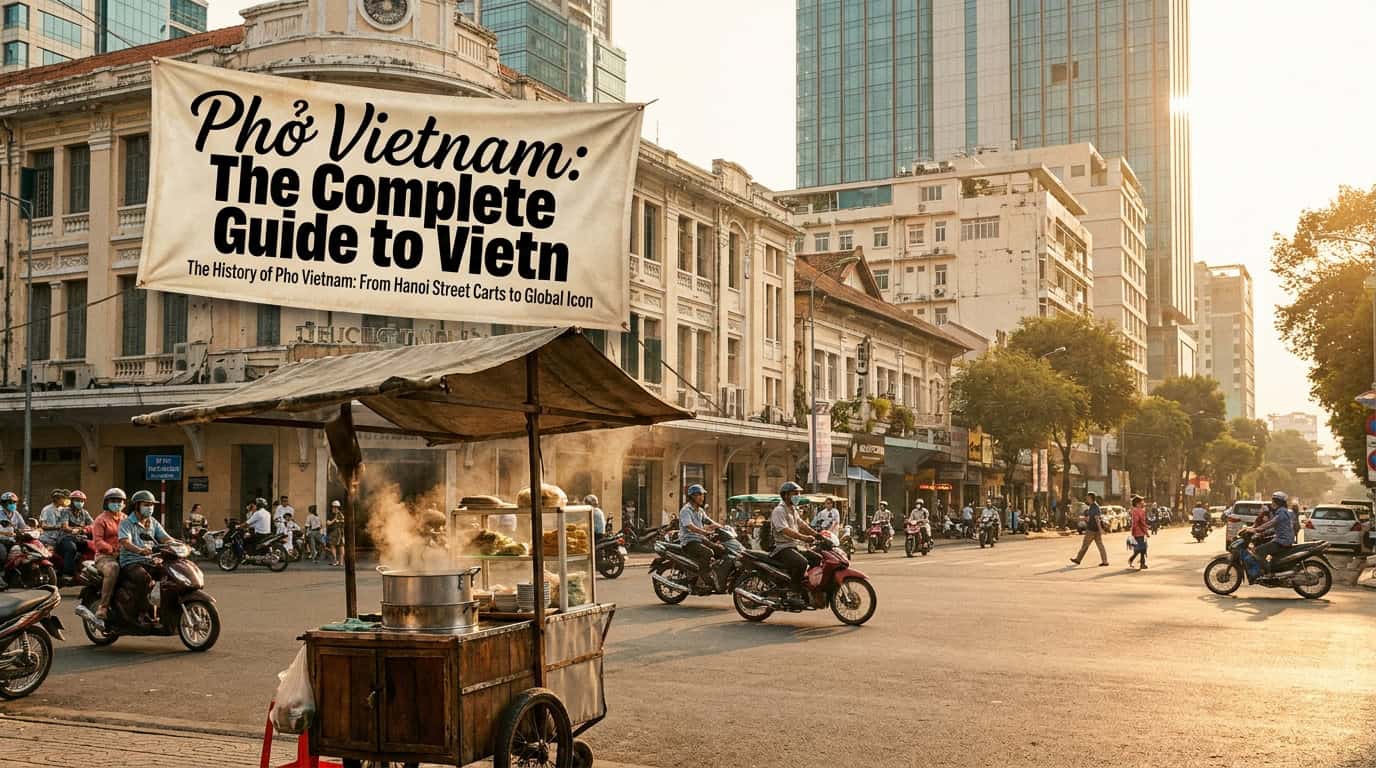
The History of Pho Vietnam: From Hanoi Street Carts to Global Icon
Food historians broadly agree that pho emerged around 1900 in the Nam Định province south of Hanoi, where French colonial demand for beef created a surplus of bones that Vietnamese cooks transformed into a fragrant broth. Early vendors carried gánh phở — bamboo shoulder poles with a charcoal stove on one side and a noodle station on the other — selling bowls to factory workers for a few centimes.
The dish travelled south after the 1954 Geneva Accords split Vietnam in two and roughly one million northerners migrated to Saigon. In the warmer south, cooks added rock sugar to the broth, piled on herbs, and introduced the now-iconic side plate of hoisin and sriracha.
Vietnam’s official tourism authority recounts the dish’s evolution from working-class breakfast to national symbol on vietnam.travel, and in 2024 the Ministry of Culture inscribed pho on the country’s list of National Intangible Cultural Heritage — placing it on the same register as áo dài tailoring and lacquerware.
Pho Bac vs Pho Nam: Why Your Bowl Tastes Different
A bowl of pho vietnam in Hanoi looks and tastes nothing like one in Saigon. Knowing the difference saves you from disappointment and helps you order the style you actually want.
Phở Bắc (Northern Style)
- Broth: Clear, savory, salt-forward. Long simmer with minimal spice.
- Noodles: Wider, slightly chewier.
- Garnish: Just spring onion, a slice of lime, and chili vinegar. Almost no fresh herbs.
- Where to try in Saigon: Phở Bắc Hải (Q.10), Phở Hòa Pasteur (Q.3).
Phở Nam (Southern Style)
- Broth: Sweeter (rock sugar is added), slightly cloudy, more aromatic from star anise and cinnamon.
- Noodles: Thinner.
- Garnish: A heaping plate of Thai basil, culantro (ngò gai), saw-leaf, bean sprouts, lime, chili, plus hoisin and sriracha at the table.
- Where to try: Almost any street-side stall in Districts 1, 3 and Bình Thạnh.
If you’re staying near the backpacker area, our things to do in Ho Chi Minh City hub plots both styles within walking distance of each other.
Key Ingredients That Make Pho Vietnam Unique
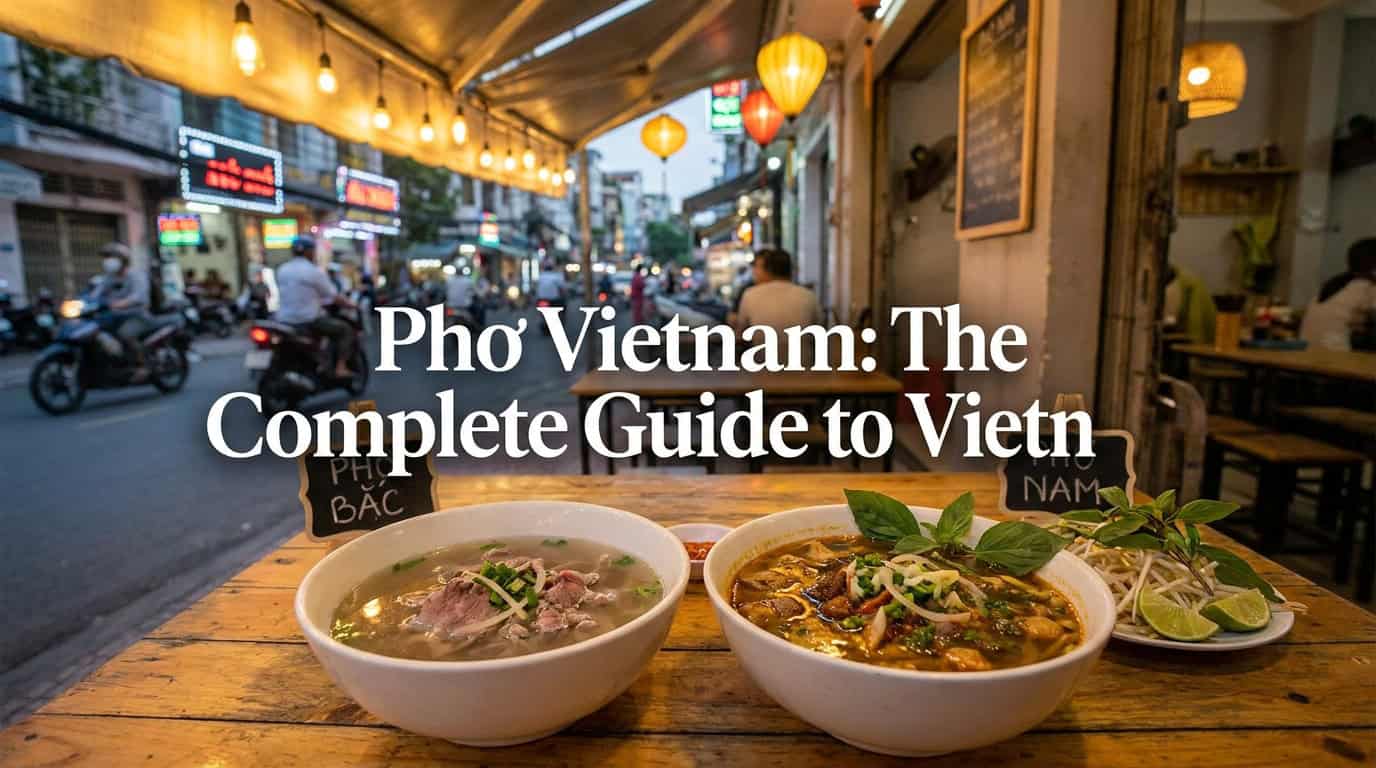
A real bowl of pho vietnam rests on four non-negotiable ingredients:
- The broth. Beef bones (knuckle, marrow, oxtail) are blanched, then simmered 8–12 hours with charred ginger, charred onion, star anise, cinnamon stick, cardamom pods, cloves and a pinch of rock sugar. Skim, skim, skim — clarity is everything.
- Bánh phở noodles. Flat rice noodles made fresh daily. Dried versions exist but never appear in a respected shop.
- The protein. Brisket (nạm), flank (gầu), tendon (gân), tripe (sách) and paper-thin raw steak (tái) that cooks in the hot broth at the table.
- The herb plate. Thai basil and culantro are essential; mint and cilantro are optional.
You’ll see phở tái nạm gầu gân sách on most menus — that’s the “everything bowl” with rare steak plus four cooked beef cuts. It’s the safe order for first-timers who don’t know what they want.
How to Order Pho Vietnam Like a Local
Walk in. Sit down. The server will usually approach you within 30 seconds. Here’s the script:
- “Cho tôi một tô phở tái, nạm.” — One bowl of pho with rare steak and brisket, please.
- “Không hành” — No spring onion (if you don’t like it).
- “Nước béo” — Extra fatty broth (the local power move).
- “Quẩy” — A side of fried dough sticks for dipping (3,000–5,000 VND).
Don’t ask for “extra spicy” — the chili is on your plate, you control it. Don’t dump in hoisin before tasting; in Hanoi-style shops, the cook may quietly hate you for it. Squeeze lime over the broth, tear basil leaves in by hand, add bean sprouts a few at a time so they stay crunchy.
For more on ordering culture, see our Vietnamese street food etiquette guide.
Best Places to Eat Pho Vietnam in Ho Chi Minh City
Saigon has thousands of pho shops. These five consistently land on Michelin, Bib Gourmand and local “best of” lists for 2025–2026:
1. Phở Lệ — 413 Nguyễn Trãi, District 5
Open since 1970. Beloved for bone-marrow-rich broth and 24-hour service. Around 90,000 VND (US$3.60).
2. Phở Hòa Pasteur — 260C Pasteur, District 3
The most famous tourist-friendly address in town. English menu, air-con, side plate of giò (Vietnamese ham). 110,000 VND (US$4.40).
3. Phở Việt Nam — 369 Võ Văn Tần, District 3
A Michelin Guide-listed restaurant known for its clean, balanced broth and signature phở bò viên (beef meatballs).
4. Phở Quỳnh — 323 Phạm Ngũ Lão, District 1
Walking distance from Bùi Viện. Famous for phở bò kho (beef stew pho) at 75,000 VND (US$3).
5. Phở Phú Vương — 23 Trần Quang Khải, District 1
The cleanest phở gà (chicken pho) in the city. 70,000 VND (US$2.80).
Planning to hit all five? Our 3-day Saigon itinerary builds breakfast pho stops into a sensible walking route.
How Much Does Pho Cost in Vietnam? (2026 Prices)
| Type of shop | Price (VND) | Price (USD) |
|---|---|---|
| Plastic-stool street stall | 35,000–55,000 | $1.40–$2.20 |
| Standard neighborhood shop | 60,000–90,000 | $2.40–$3.60 |
| Tourist-friendly (Pasteur, Bùi Viện) | 95,000–150,000 | $3.80–$6.00 |
| Hotel restaurant | 180,000–280,000 | $7.20–$11.20 |
| Premium / Wagyu pho | 350,000–750,000 | $14–$30 |
Inflation has pushed standard bowls up about 8% since 2024, but pho is still one of the cheapest hot meals in any major world capital. Carry small VND notes — most stalls cannot break a 500,000 VND bill.
Pho Etiquette and Cultural Tips for Foreign Visitors
A few unwritten rules will earn you respect (and sometimes a free quẩy):
- Eat it hot. Pho is a breakfast and morning dish; broth quality drops sharply after lunch.
- Slurp the noodles. Silence at a pho table reads as polite in some cultures, but in Vietnam slurping signals enjoyment.
- Chopsticks + spoon. Chopsticks in your right hand, ceramic spoon in your left. Lift noodles to the spoon, then to your mouth.
- Don’t waste the broth. Locals drink it directly from the bowl at the end. Leaving half is a small insult to the cook.
- Tipping: Not expected. Round up to the nearest 10,000 VND if you want to be generous.
For more cultural orientation, our first-timer’s guide to Saigon covers transport, SIM cards, and the dos and don’ts every visitor should know.
Frequently Asked Questions
Is pho healthy?
Yes — relatively. A standard bowl runs 350–450 calories, with roughly 30 g of protein, moderate carbs from rice noodles, and very little fat if you skip the nước béo. The herbs add antioxidants. Watch the sodium (a typical bowl has 900–1,400 mg) and skip the sugary hoisin if you’re cutting sugar.
How is pho pronounced?
Pho rhymes with “duh”, not “doe”. The Vietnamese tone falls slightly, so it sounds closer to “fuhh?” with a downward inflection. The dish is written phở in Vietnamese; the circumflex and hook indicate the tone, not an “o” sound.
What’s the difference between pho and ramen?
Both are noodle soups, but pho uses a clear, herbaceous broth and flat rice noodles eaten with fresh raw garnishes. Ramen uses wheat noodles and an opaque, often pork-fat-rich broth with cooked toppings. Pho is generally lighter and gluten-free; ramen is heartier and salt-forward.
Can vegetarians eat pho?
Yes. Look for phở chay — a meat-free version with mushroom or vegetable broth, tofu, and seitan-style “beef”. Saigon has dedicated vegetarian pho shops near Buddhist temples in Districts 1, 3 and 10. Expect to pay 45,000–70,000 VND (US$1.80–$2.80) per bowl.
Is it safe to eat pho from street stalls?
Generally yes, if the stall is busy. High turnover means fresh broth and noodles. Look for places where locals queue, plastic stools are full, and the cooking area is visible. Avoid bowls that look like they’ve been sitting in lukewarm broth.
What should I drink with pho?
Vietnamese iced tea (trà đá) is free at most shops and cuts the richness. Adventurous eaters order a salty-sweet xí muội plum soda. Beer is uncommon at breakfast but acceptable at lunch. See our Saigon drinks guide for more pairings.
Plan Your Pho Vietnam Pilgrimage from a Central Saigon Base
Every bowl in this guide is within a 15-minute walk or 5-minute Grab ride of central District 1 — which is exactly where you want to wake up hungry. Book a Saigon Homestay in the heart of District 1 to step out your door at 6:30 a.m., follow the smell of star anise, and be slurping your first bowl of pho vietnam before the morning traffic builds.
For a full week of food and culture, pair this guide with our 3-day Saigon itinerary and our deep-dive on bánh mì in Saigon. Pho is just the first chapter of Vietnam’s edible story — and Saigon is the best place in the world to start reading.
Prices here are in Vietnamese dong. Our Vietnam currency and money exchange guide covers live rates, ATM fees and where to change money.
Related Guides
- Vietnam Street Food Guide: What to Eat, Where & Cost
- Vietnam Weather by Month: When to Visit Each Region
- Banh Mi Vietnam: History, Types & Where to Find the Best
- Best Pho in Ho Chi Minh City: Where Locals Actually Eat
- Best Vietnamese Food: 20 Dishes You Must Try (2026)
- Yoga & Wellness in Saigon: Studios & Retreats