
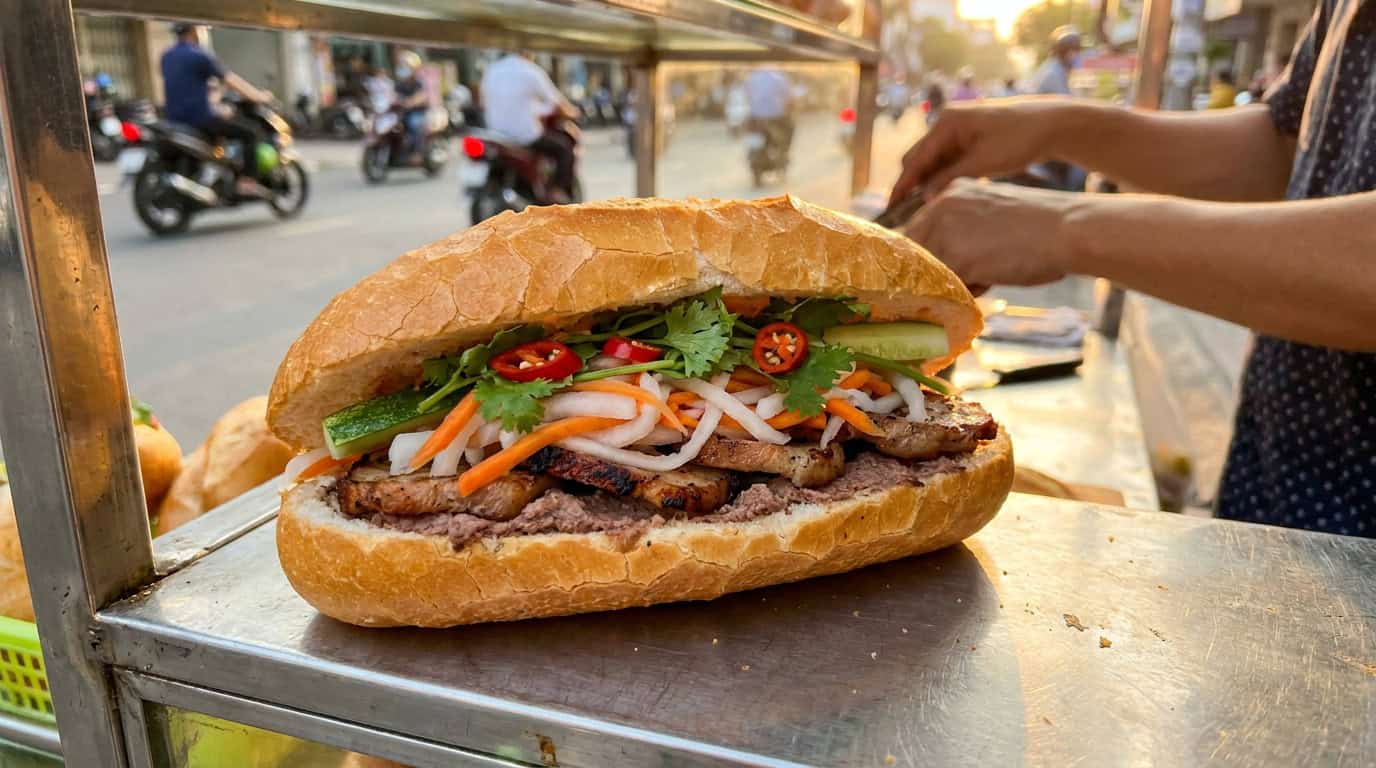
Banh mi vietnam is the country’s most iconic street food — a crispy baguette stuffed with pâté, grilled meats, pickled vegetables, and fresh herbs that costs less than a coffee and outranks most fine-dining sandwiches on global “best food” lists. Born from French colonial bread and reinvented by Saigon cooks in the 1950s, today’s banh mi is sold from over 50,000 carts and shops across Vietnam, with prices in 2026 starting at just 25,000 VND (≈US$1) for a classic combo.
This guide unpacks the full history, the 8 essential varieties, where to find the very best in Ho Chi Minh City and Hoi An, and how to order like a local — written for foreign visitors and expats who want to skip the tourist traps and eat the real thing.
Key Takeaways
- Banh mi vietnam dates to the 1950s in Saigon, fusing French baguette technique with Vietnamese fillings.
- The word “banh mi” was officially added to the Oxford English Dictionary in 2011.
- A classic banh mi thit costs 25,000–45,000 VND (US$1–1.80) in 2026; expect 60,000+ VND at famous shops.
- There are 8+ major types, from banh mi thit nguoi (cold cuts) to banh mi xiu mai (meatball) and vegetarian banh mi chay.
- The best banh mi cities are Ho Chi Minh City, Hoi An, and Hanoi, each with distinct regional styles.
- Pickled daikon-carrot (do chua), pâté, and crisp-airy baguette are the three non-negotiable elements.
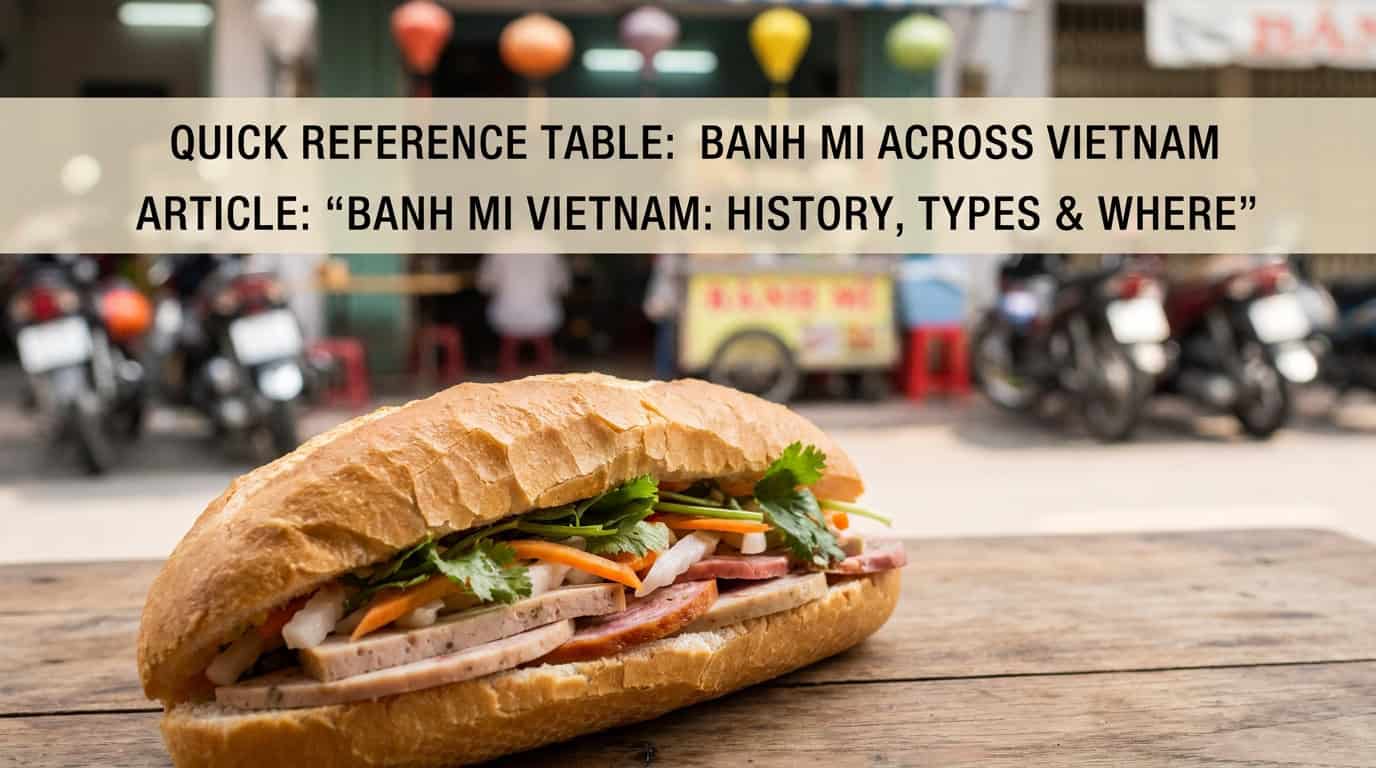
Quick Reference Table: Banh Mi Across Vietnam
| City | Signature Style | Average Price (2026) | Best Time to Eat | Famous Shop |
|---|---|---|---|---|
| Ho Chi Minh City | Banh mi thit thap cam (combo) | 30,000–50,000 VND | 6–10 AM, 4–7 PM | Banh Mi Huynh Hoa |
| Hoi An | Banh mi with grilled pork & house sauce | 30,000–40,000 VND | All day | Banh Mi Phuong |
| Hanoi | Banh mi pate, thicker bread | 20,000–35,000 VND | Morning | Banh Mi 25 |
| Hue | Banh mi nem lui (lemongrass skewer) | 25,000–40,000 VND | Lunch | Banh Mi O Tho |
| Da Nang | Banh mi bo kho (beef stew dip) | 35,000–55,000 VND | Breakfast | Banh Mi Ba Lan |
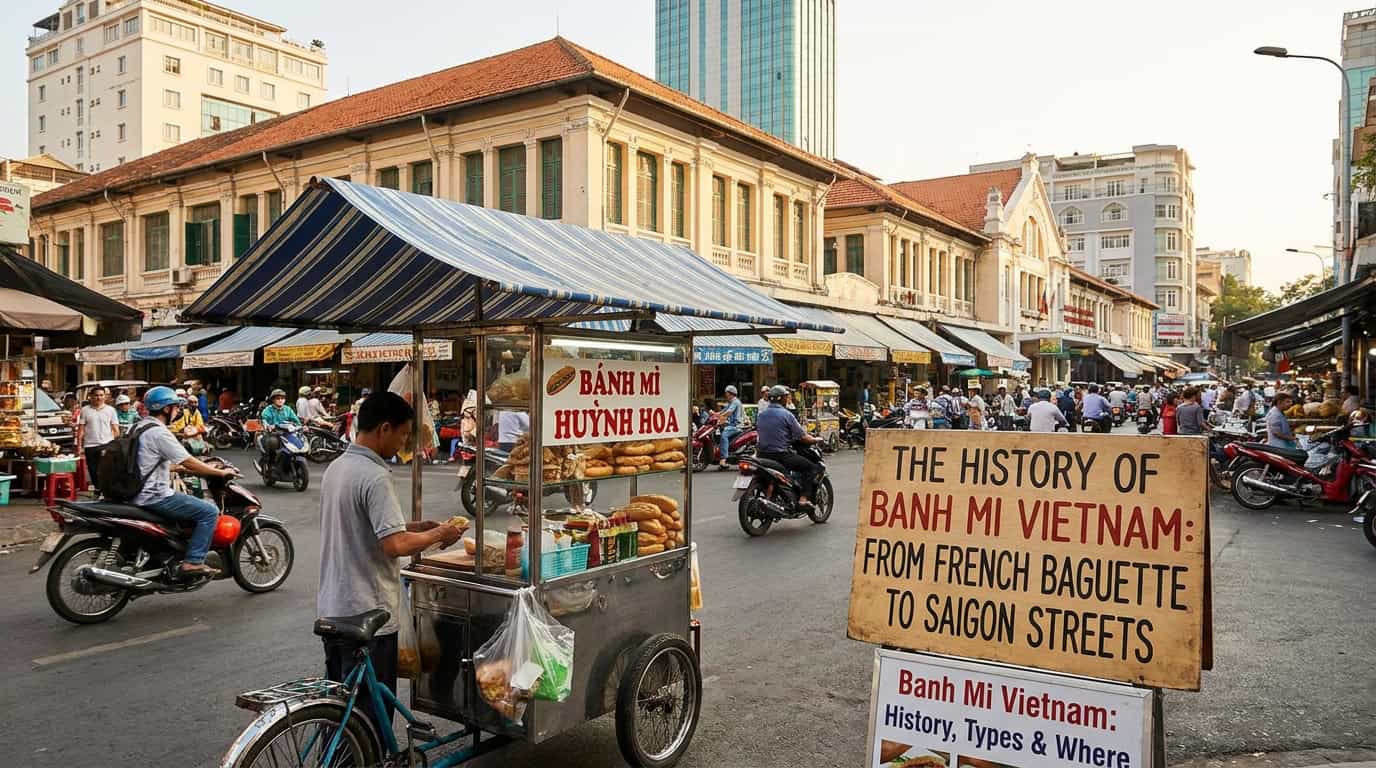
The History of Banh Mi Vietnam: From French Baguette to Saigon Streets
The story of banh mi vietnam begins in 1859, when French colonists arrived in Saigon and brought wheat flour, butter, and the baguette. For nearly a century, the French loaf — known locally as banh tay (“Western bread”) — was an elite food, eaten with cold cuts and mayonnaise in colonial cafés.
Everything changed after the 1954 Geneva Accords, when over one million northerners migrated south. In Saigon, families like the legendary Hoa Ma stall (still operating in District 3) began splitting the baguette lengthwise and stuffing it with affordable Vietnamese ingredients: liver pâté, head cheese, pickled vegetables, soy-based Maggi seasoning, fresh cilantro, and chili.
The result was lighter, crispier, and shorter than its French cousin. Vietnamese bakers added rice flour to the dough, creating a hollow, paper-thin crust unique in the sandwich world. By the late 1950s, banh mi as we know it had been born on the streets of Saigon.
The word entered global food culture in March 2011, when the Oxford English Dictionary officially added “banh mi” as a standalone English term. The Michelin Guide and CNN have repeatedly named banh mi among the world’s best sandwiches throughout the 2020s.
What Goes Inside a Banh Mi? The Classic Anatomy
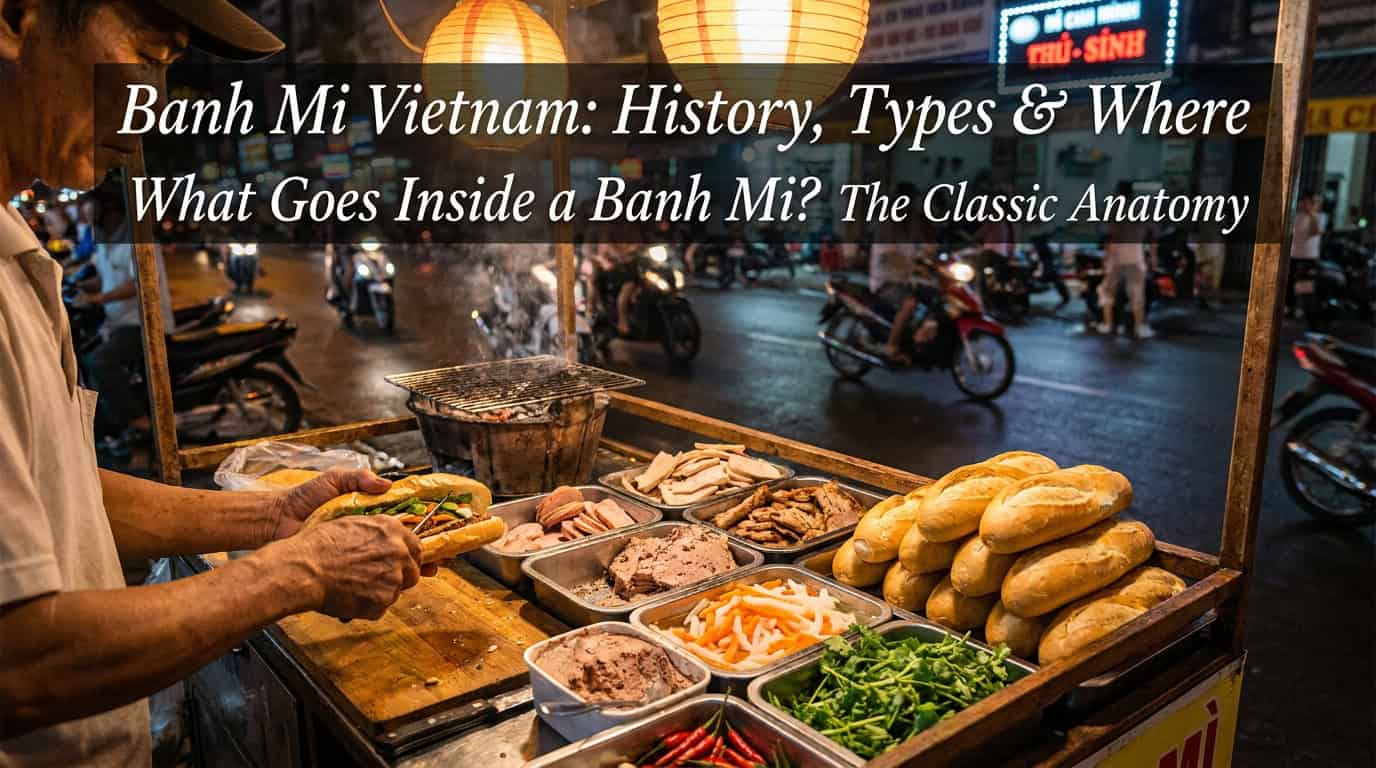
A traditional banh mi is built in a precise order, layer by layer, in under 60 seconds:
- The baguette — split, lightly toasted on charcoal, sometimes hollowed to fit more filling.
- Pâté — usually pork liver, spread thickly on the bottom.
- Butter or mayonnaise — house-made, often whipped with egg yolk.
- Protein — grilled pork, cold cuts (cha lua, gio thu), meatballs, chicken, or pâté-only.
- Do chua — pickled julienned daikon and carrot, the acidic backbone.
- Cucumber slices — for crunch.
- Fresh cilantro (rau mui) and sometimes Vietnamese mint.
- Soy sauce + Maggi seasoning — a few drops.
- Chili — fresh slices or chili sauce, to taste.
This 9-step build is what separates a real Vietnamese banh mi from international imitations. The balance of textures (crispy, soft, crunchy) and flavors (savory, sour, sweet, fresh, spicy) is the secret. Curious how other dishes stack up? Compare it side-by-side in our pho vs banh mi guide.
The 8 Best Types of Banh Mi Vietnam You Must Try
Vietnam has dozens of regional banh mi varieties, but these eight cover every traveler’s must-eat list.
1. Banh Mi Thit Nguoi (Cold Cuts Combo)
The most common version — a mix of Vietnamese ham (cha lua), head cheese (gio thu), and pâté. Sold everywhere, perfect for first-timers.
2. Banh Mi Thit Nuong (Grilled Pork)
Marinated lemongrass pork grilled over charcoal. The Hoi An specialty — smoky, sweet, slightly caramelized.
3. Banh Mi Xiu Mai (Pork Meatballs)
Tender meatballs simmered in tomato sauce, originating from Da Lat. Often served deconstructed with the bread on the side for dipping.
4. Banh Mi Op La (Sunny-Side-Up Egg)
A breakfast favorite. Two fried eggs over pâté with cha lua and pickles. Popular in Da Nang and Saigon morning markets.
5. Banh Mi Ga (Chicken)
Shredded poached chicken or grilled chicken with chili-lime dressing. Lighter than pork versions.
6. Banh Mi Ca Moi (Sardine)
A budget classic — canned sardines in tomato sauce, often eaten by students. Surprisingly delicious.
7. Banh Mi Bo Kho (Beef Stew Dip)
A Da Nang and Saigon morning ritual. A bowl of slow-cooked beef stew with banh mi on the side for dipping. Not technically a stuffed banh mi, but unmissable.
8. Banh Mi Chay (Vegetarian)
Tofu, mushrooms, mock pâté, and pickled vegetables. Found at Buddhist-run stalls and on the 1st and 15th of each lunar month.
For more iconic dishes, see our complete Vietnamese street food guide.
Where to Find the Best Banh Mi Vietnam in 2026
Saigon (Ho Chi Minh City) is the undisputed banh mi capital — but Hoi An gives it a serious run. Here are the legendary shops worth the trip in 2026.
Ho Chi Minh City — The Banh Mi Mecca
- Banh Mi Huynh Hoa (26 Le Thi Rieng, District 1) — The “skyscraper” banh mi, stacked with five kinds of cold cuts. 68,000 VND (≈US$2.70). Open 6 AM–10 PM, expect a queue.
- Banh Mi Hong Hoa (62 Nguyen Van Trang, District 1) — Saigon’s “second-best” since 1968. 45,000 VND.
- Banh Mi Hoa Ma (53 Cao Thang, District 3) — The original Saigon banh mi, served on a plate (banh mi chao) since 1958.
- Banh Mi Bay Ho (19 Huynh Khuong Ninh, District 1) — Cult favorite for grilled pork. 35,000 VND.
You can walk to most of these from central District 1 — plan it into your Saigon itinerary or explore them on a guided District 1 food tour.
Hoi An — The Anthony Bourdain Pilgrimage
- Banh Mi Phuong (2B Phan Chau Trinh) — Made famous when Anthony Bourdain called it “a symphony in a sandwich” in 2009. House pâté and secret sauce. 40,000 VND.
- Banh Mi Madam Khanh (“The Banh Mi Queen”, 115 Tran Cao Van) — Hand-built by an 80-year-old grandmother since the 1960s.
Hanoi — Northern Restraint
Northern banh mi is simpler: more bread, less filling, often just pâté and cha lua. Try Banh Mi 25 (25 Hang Ca, Old Quarter) for the cleanest example. BBC Travel has profiled both Hoi An and Hanoi banh mi traditions multiple times.
How to Order Banh Mi Like a Local
Foreign visitors often miss two simple tricks:
- Say “khong cay” (no chili) if you’re spice-shy — vendors assume foreigners want chili by default in Hoi An, and less by default in Saigon.
- Say “mang di” for takeaway (eaten warm in 5 minutes) or “an tai cho” to eat at the stall (sometimes served on a plate).
Cash tips: Carry 20,000 and 50,000 VND notes. Most carts still don’t accept cards in 2026, though QR-code VietQR payments are now nearly universal at shop fronts. Eat your banh mi within 10 minutes — the bread softens fast in Vietnam’s humidity.
Banh Mi Vietnam Prices in 2026: What You Should Pay
Inflation has nudged banh mi prices up roughly 15% since 2024, but it remains one of the world’s best-value meals:
- Local cart, plain (just pâté + cha lua): 20,000–25,000 VND (US$0.80–1.00)
- Standard combo (thit thap cam): 30,000–45,000 VND (US$1.20–1.80)
- Famous tourist shops (Huynh Hoa, Phuong): 55,000–75,000 VND (US$2.20–3.00)
- Hotel / airport banh mi: 90,000–150,000 VND — avoid these.
A reasonable budget is 150,000 VND per day (≈US$6) to eat three banh mi from quality vendors — pair that with a 25,000 VND Vietnamese iced coffee from one of our best coffee shops in Saigon for the perfect breakfast.
Banh Mi vs. the World: Why It Keeps Winning
The Michelin Guide, The Guardian, CNN Travel, and National Geographic have all crowned banh mi among the world’s top street foods in the past five years. Three reasons:
- Texture engineering: The rice-flour baguette has 3× the crust-to-crumb ratio of a French baguette.
- Flavor density: 9 ingredients in under 200 grams of food.
- Affordability: Under US$2 for restaurant-quality satisfaction.
Banh mi has also crossed into global pop culture: NYC’s Num Pang, LA’s Mendocino Farms, and Sydney’s Marrickville Pork Roll all trace their menus directly to Saigon’s 1950s carts.
Looking for more food-led experiences? Our roundup of things to do in Ho Chi Minh City includes night-market food crawls and morning cart-hopping tours.
Frequently Asked Questions About Banh Mi Vietnam
Bánh mì nổi tiếng Việt Nam? (What is Vietnam’s most famous banh mi?)
The most famous banh mi vietnam is Banh Mi Phuong in Hoi An, made world-famous by Anthony Bourdain in 2009, and Banh Mi Huynh Hoa in Saigon, known as the “skyscraper banh mi.” Both consistently appear in Michelin Guide street-food features and draw daily queues of locals and travelers from breakfast through late evening.
Nguồn gốc bánh mì Việt Nam? (What is the origin of Vietnamese banh mi?)
Banh mi originated in Saigon during the 1950s, after French colonists introduced the baguette in 1859. Vietnamese bakers added rice flour to lighten the dough, and street vendors split the loaf to stuff it with pâté, cold cuts, pickled vegetables, and herbs — creating an entirely new sandwich. The Hoa Ma stall in District 3 is widely credited as the first banh mi shop, opened in 1958.
Nhân bánh mì gồm những gì? (What’s inside a banh mi?)
A classic banh mi contains 9 layers: a crispy baguette, pork pâté, butter or mayonnaise, protein (grilled pork, cold cuts, or meatballs), pickled daikon-carrot (do chua), cucumber, fresh cilantro, Maggi soy seasoning, and chili. The balance of crispy, soft, sour, savory, and fresh is what defines authentic banh mi vietnam — every ingredient plays a textural or flavor role.
Các loại bánh mì Việt Nam? (What are the types of Vietnamese banh mi?)
The main types are banh mi thit nguoi (cold cuts), banh mi thit nuong (grilled pork), banh mi xiu mai (meatballs), banh mi op la (fried egg), banh mi ga (chicken), banh mi ca moi (sardine), banh mi bo kho (beef stew dip), and banh mi chay (vegetarian). Each region has signature versions — Hoi An favors grilled pork, Da Nang loves bo kho, and Saigon dominates the combo style.
Is banh mi safe to eat from street carts?
Generally yes. Choose carts with high turnover and visible refrigeration. The pâté and cold cuts are the items to watch — they should be cold to the touch, not sitting at room temperature for hours. Vendors who serve dozens of customers per hour rotate stock too fast for bacteria to develop. Stick to shops with a queue and you’ll be fine.
What’s the difference between Saigon and Hanoi banh mi?
Saigon banh mi is bigger, sweeter, and packed with more fillings (often 5+ ingredients plus mayonnaise and chili). Hanoi banh mi is smaller, simpler, and bread-forward, typically just pâté and cha lua with very light pickles. Hoi An sits between the two with grilled pork and a signature house sauce. Most foreign palates prefer the Saigon style.
Final Word: Eat the Sandwich Where It Was Born
Banh mi vietnam is more than a sandwich — it’s a 70-year-old fusion story you can eat for less than the price of a metro ticket. Start with a classic thit thap cam from Banh Mi Huynh Hoa, work your way through the eight varieties, and don’t skip the humble cart on the corner of your hostel street — that’s often where the best one hides.
Stay in the Heart of Banh Mi Country
The best banh mi shops in Ho Chi Minh City are all within a 10-minute walk of District 1. Book a central Saigon homestay with us and wake up steps from Banh Mi Huynh Hoa, Hoa Ma, and a dozen family-run carts. Your first bite of authentic banh mi vietnam is closer than you think — see you in Saigon.
Carrying the right cash matters more than most visitors expect — see the Vietnam currency and money exchange guide before you arrive.
Related Guides
- Best Banh Mi in Saigon: Ranked & Reviewed
- Vietnam Street Food Guide: What to Eat, Where & Cost
- Vietnam Weather by Month: When to Visit Each Region
- Pho Vietnam: The Complete Guide to Vietnam’s Most Famous Dish
- Best Vietnamese Food: 20 Dishes You Must Try (2026)
- Yoga & Wellness in Saigon: Studios & Retreats