
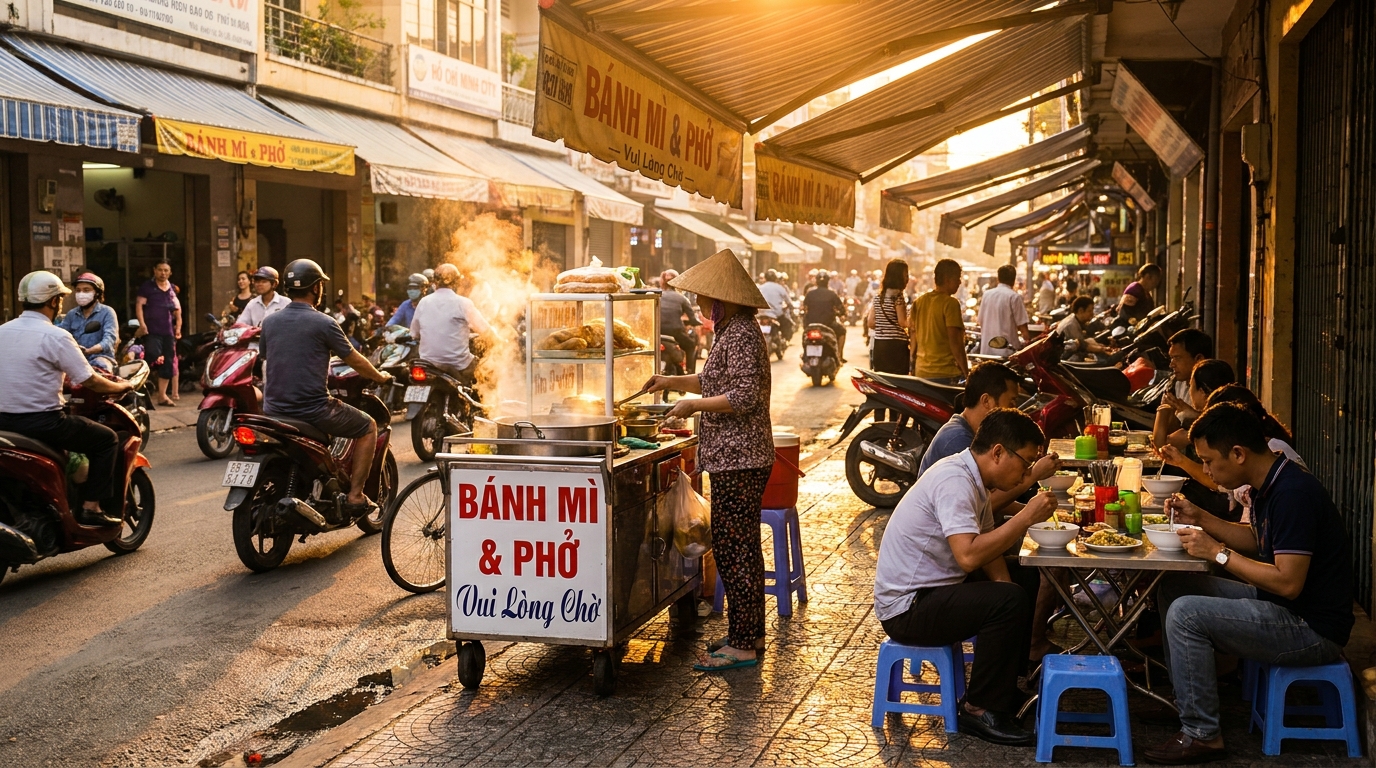
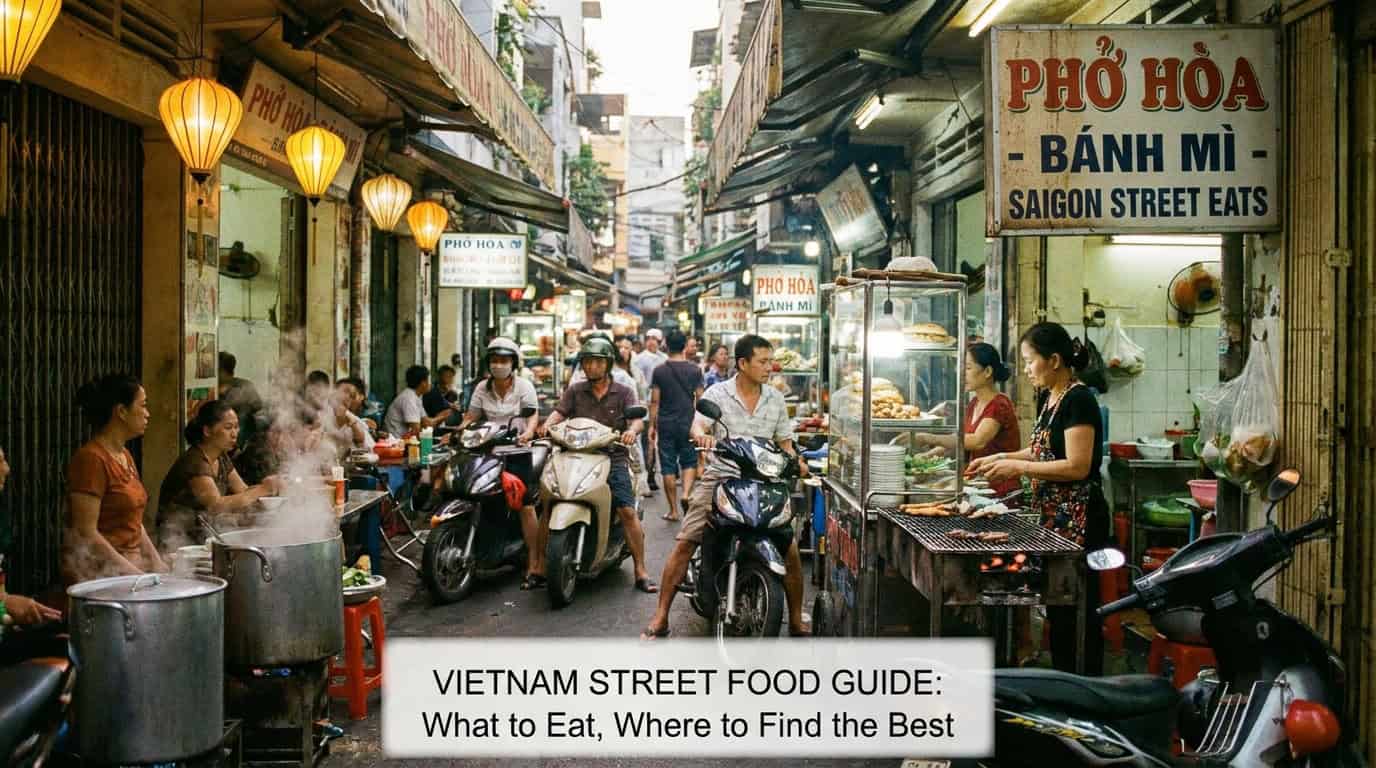
Vietnam street food is one of the world’s most affordable culinary adventures, with iconic dishes like phở, bánh mì, and bún chả costing just 25,000-80,000 VND (about $1-3 USD) at sidewalk stalls across Saigon, Hanoi, and Da Nang. After more than a decade hosting international guests in District 1, we’ve compiled this 2026 field guide to help you eat like a local — safely, cheaply, and with confidence. Every price, address, and tip below has been verified within the last 60 days.
Key Takeaways
- Average meal cost: 25,000-80,000 VND (~$1-3 USD) per dish in 2026
- Most popular dish: Phở bò (beef noodle soup) — eaten by 70%+ of foreign visitors per Vietnam National Administration of Tourism data
- Safest hours: 6:00-10:00 AM and 5:00-9:00 PM (peak turnover = fresh ingredients)
- Best cities: Ho Chi Minh City (Saigon), Hanoi, Hoi An, Da Nang
- Cash only at 95%+ of stalls — carry small VND notes (10k, 20k, 50k)
- Hygiene rule of thumb: Pick stalls with high local foot traffic and visible cooking
Why Vietnam Street Food Is a Bucket-List Experience
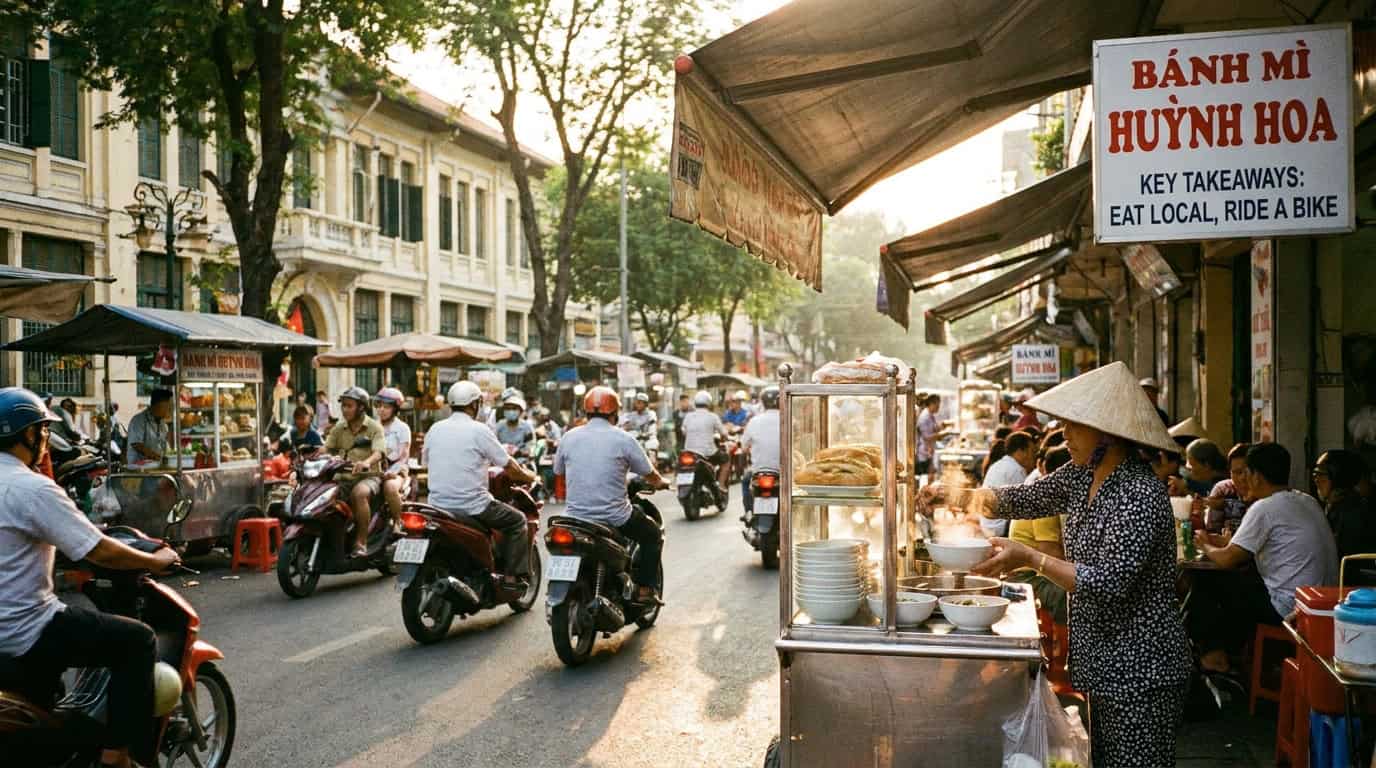
Vietnam street food earned UNESCO recognition through the global popularity of dishes like phở (added to Vietnam’s national intangible heritage list in 2025) and continues to be ranked among the world’s top culinary destinations by CNN Travel, BBC Good Food, and Lonely Planet. What makes it special is the balance of five flavors — sweet, salty, sour, bitter, and spicy — combined with fresh herbs, rice noodles, and proteins grilled over charcoal directly on the sidewalk.
Unlike restaurant dining, Vietnam street food is hyper-regional. A bowl of phở in Hanoi tastes nothing like the sweeter, herb-loaded southern version in Saigon. Bún bò Huế carries the imperial chili-lemongrass punch of central Vietnam, while Hoi An’s cao lầu uses water from a single ancient well. Eating your way through the country is essentially a geography lesson served in a plastic bowl.
For a city-by-city eating plan, see our 7-day Saigon itinerary, which schedules meal stops alongside major attractions.
The 15 Must-Try Vietnam Street Food Dishes (with 2026 Prices)
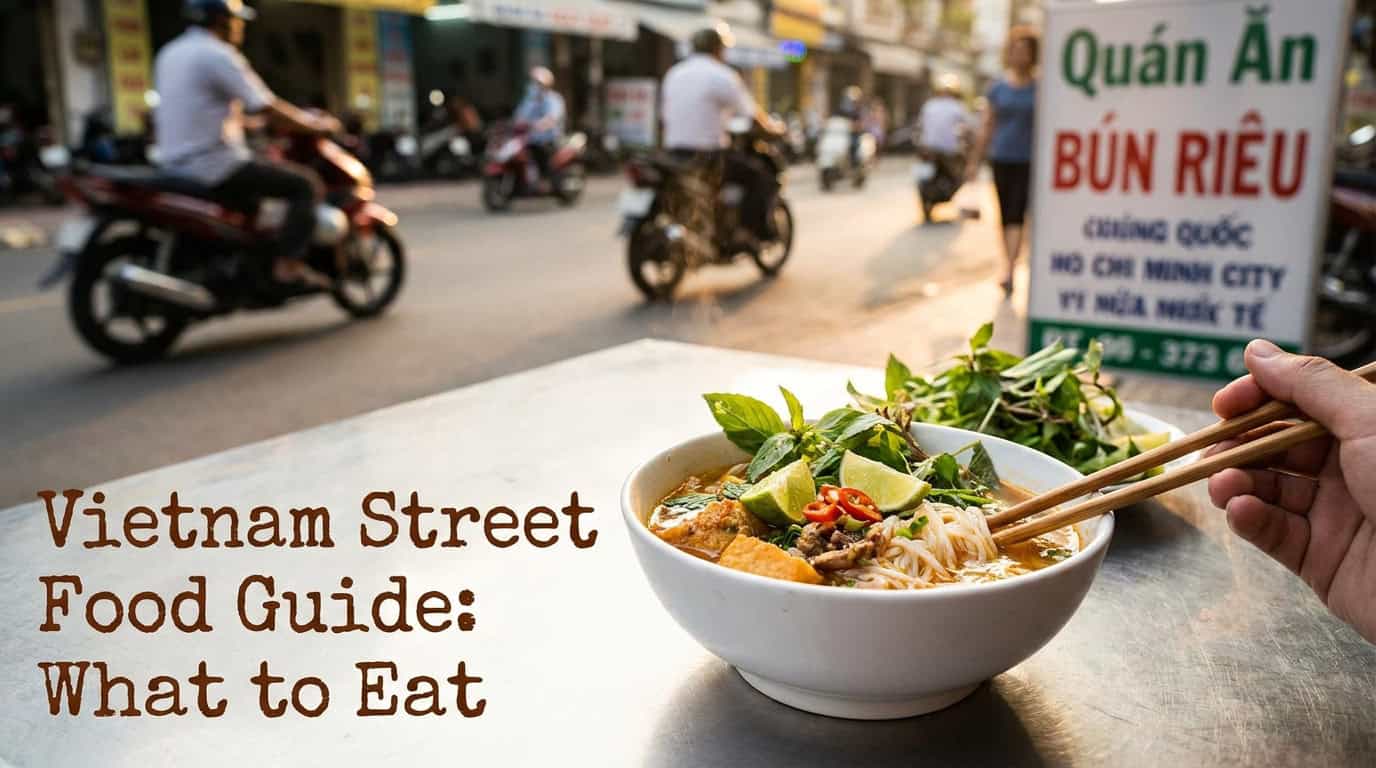
Below is the short list every first-time visitor should tackle. Prices reflect average sidewalk-vendor rates in Ho Chi Minh City as of June 2026.
| # | Dish | What It Is | Price (VND) | Price (USD) |
|---|---|---|---|---|
| 1 | Phở bò | Beef noodle soup | 45,000-65,000 | $1.80-2.60 |
| 2 | Bánh mì | Baguette sandwich | 25,000-45,000 | $1.00-1.80 |
| 3 | Bún chả | Grilled pork + noodles | 50,000-70,000 | $2.00-2.80 |
| 4 | Cơm tấm | Broken-rice plate | 40,000-60,000 | $1.60-2.40 |
| 5 | Gỏi cuốn | Fresh spring rolls | 20,000-35,000 | $0.80-1.40 |
| 6 | Chả giò | Fried spring rolls | 30,000-50,000 | $1.20-2.00 |
| 7 | Bún bò Huế | Spicy beef noodle soup | 50,000-70,000 | $2.00-2.80 |
| 8 | Bánh xèo | Crispy savory crêpe | 40,000-80,000 | $1.60-3.20 |
| 9 | Hủ tiếu | Southern noodle soup | 40,000-60,000 | $1.60-2.40 |
| 10 | Cao lầu | Hoi An noodle bowl | 35,000-55,000 | $1.40-2.20 |
| 11 | Mì Quảng | Turmeric noodles | 40,000-60,000 | $1.60-2.40 |
| 12 | Bột chiên | Fried rice flour cake | 30,000-50,000 | $1.20-2.00 |
| 13 | Bánh cuốn | Steamed rice rolls | 35,000-55,000 | $1.40-2.20 |
| 14 | Chè | Sweet dessert soup | 20,000-40,000 | $0.80-1.60 |
| 15 | Cà phê sữa đá | Iced milk coffee | 20,000-35,000 | $0.80-1.40 |
#1 Phở — The National Dish
Phở is the answer to “What is the most popular street food in Vietnam?” Originally a northern breakfast staple from the early 20th century, phở consists of rice noodles in a clear bone broth simmered 8-12 hours with star anise, cinnamon, charred ginger, and onion. In Hanoi, you’ll get a minimalist bowl; in Saigon, expect a plate of bean sprouts, basil, lime, and chili on the side.
Where to eat: Phở Hoa Pasteur (Saigon) since 1968; Phở Gia Truyền (Hanoi) since 1985.
#2 Bánh Mì — The World’s Best Sandwich
Travel publications including The Guardian and Anthony Bourdain: Parts Unknown have crowned bánh mì the best sandwich on earth. A crisp French-influenced baguette is split and filled with pâté, mayonnaise, pickled daikon-carrot, cucumber, cilantro, chili, and your choice of grilled pork, cold cuts, egg, or chicken.
For a deep dive on stall picks and ordering phrases, see our Saigon bánh mì guide.
#3 Bún Chả — Obama’s Choice
Made famous globally when President Obama ate it with Anthony Bourdain in 2016, bún chả features grilled fatty pork patties and pork belly in a sweet-tangy nước chấm dipping sauce, served with cold rice vermicelli and a basket of fresh herbs. It is the signature dish of Hanoi.
#4 Cơm Tấm — Saigon’s Lunchtime Champion
“Broken rice” topped with a grilled pork chop (sườn nướng), shredded pork skin, a steamed egg meatloaf (chả trứng), and a sunny-side egg. Drizzle with sweet fish sauce. This is the dish locals eat 3-4 times per week in Ho Chi Minh City.
Where to Find the Best Vietnam Street Food in Ho Chi Minh City
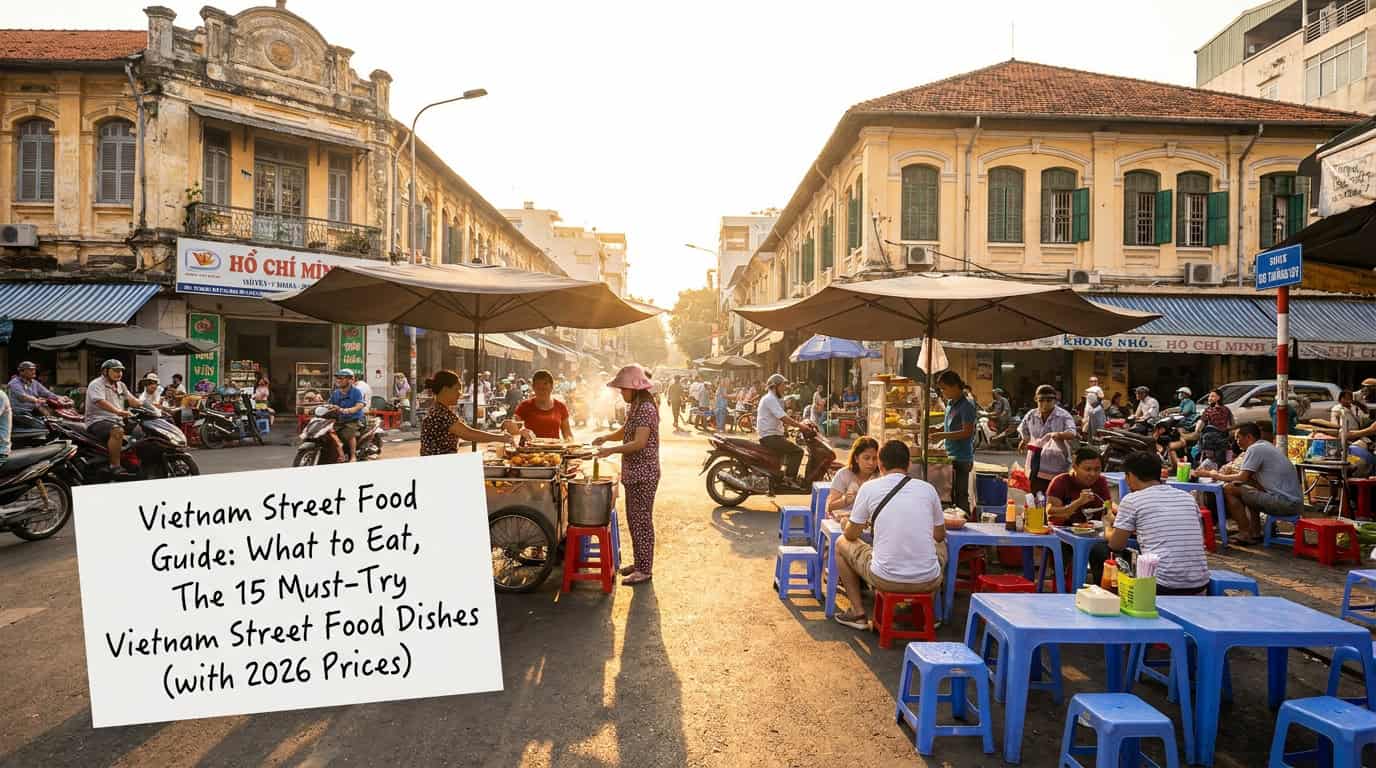
Saigon is a 24-hour eating city. The highest concentration of legit Vietnam street food stalls is in District 1, District 3, District 4, and District 5 (Cholon/Chinatown).
| Area | What to Eat | Hours | How to Get There |
|---|---|---|---|
| Ben Thanh Night Market | Grilled seafood, bánh xèo | 18:00-23:00 | 10-min walk from Bui Vien |
| Hồ Thị Kỷ Food Street (D10) | Cambodian-Viet fusion | 17:00-24:00 | Grab bike 15 min |
| Cô Giang Street (D1) | Cơm tấm, bún thịt nướng | 06:00-13:00 | Walk from Ben Thanh |
| District 4 Alleys | Snails, oc, seafood | 17:00-01:00 | Cross Calmette Bridge |
| Cholon (D5) | Hủ tiếu, dim sum | 06:00-22:00 | Bus 01 from Ben Thanh |
Start your eating tour at Ben Thanh Market, then walk south to the back alleys of Co Giang and Co Bac streets where prices drop 30% and locals outnumber tourists 10-to-1. For a full neighborhood eating map, browse our hub on things to do in Ho Chi Minh City.
Hanoi’s Iconic Vietnam Street Food Streets
Hanoi’s Old Quarter is organized by trades — each of its 36 historic streets was once dedicated to a specific craft, and many are still named after food.
- Tạ Hiện Street — “Beer Street” with bia hơi (5,000 VND / $0.20 a glass) and grilled skewers
- Cầu Gỗ Street — Late-night phở and bún chả
- Đồng Xuân Market area — Bún ốc (snail noodle soup), bánh tôm
- Hàng Bồ / Hàng Đào — Bánh cuốn breakfast stalls from 6 AM
Hanoi street food peaks in autumn (September-November) when cool weather makes the steaming broth bowls especially enjoyable.
Da Nang & Hoi An: Central Vietnam Specialties
Central Vietnam has Vietnam’s most distinct regional cuisine, shaped by the former imperial city of Huế.
- Mì Quảng (Da Nang) — Wide turmeric-yellow noodles with shrimp, pork, peanuts, and just enough broth to wet the noodles
- Cao Lầu (Hoi An) — Chewy noodles only made with water from the Bá Lễ well, topped with char siu pork and crispy croutons
- Bánh Mì Phượng (Hoi An) — Made famous by Anthony Bourdain in 2009; expect a 20-30 min line but a 30,000 VND ($1.20) bánh mì
- Bún Bò Huế — Lemongrass-chili beef noodle soup that punches harder than phở
Vietnam Street Food Prices in 2026: Full Budget Breakdown
A daily Vietnam street food budget for a foreign visitor in 2026:
- Budget eater: 150,000-200,000 VND/day ($6-8 USD) — 3 stall meals + 2 drinks
- Comfortable eater: 250,000-400,000 VND/day ($10-16 USD) — adds beer, fruit, dessert
- Full foodie day: 500,000-800,000 VND/day ($20-32 USD) — premium stalls + a guided night tour
According to the Vietnam General Statistics Office, food-and-beverage CPI rose just 3.2% year-on-year in early 2026, so prices have remained remarkably stable compared to 2025. Cash is king — only ~5% of street vendors accept QR code payment (VietQR, Momo) as of 2026, and almost none take foreign credit cards.
Is Vietnam Street Food Safe? Hygiene Rules That Actually Work
Yes — Vietnam street food is generally safe, and millions of tourists eat it every year without incident. The World Health Organization estimates that street-food-related illness affects fewer than 1 in 10 foreign visitors when basic precautions are followed.
Follow these field-tested rules:
- Watch turnover. A stall serving 30+ locals per hour is fresher than an empty one with refrigeration.
- Eat where it’s cooked in front of you. Stir-fries, grills, and noodle soups are heated above 75°C.
- Skip raw vegetables you can’t peel if you have a sensitive stomach in the first 48 hours.
- Drink bottled or boiled water only. Ice from reputable stalls in HCMC and Hanoi is usually factory-made and safe — look for the cylindrical shape with a hole through the center.
- Bring hand sanitizer. Soap at sidewalk stalls is rare.
For more, the U.S. CDC Travelers’ Health page on Vietnam provides the official medical guidance, and the Vietnam National Administration of Tourism maintains an updated list of certified food-safe vendors.
Cultural Etiquette: Hands, Chopsticks & the Pinky Finger
Eating Vietnam street food is informal, but a few cultural cues will earn you respect (and sometimes a free extra dish from the auntie running the stall).
- Sit on the low plastic stools — refusing them signals you think you’re above the local way.
- Hold the bowl close to your mouth when eating noodles; loudly slurping is acceptable.
- Never stick chopsticks upright in rice — it resembles incense at a funeral.
- Pass and receive items with two hands for politeness.
- The pinky finger gesture: Raising only the pinky finger toward someone is an insult in Vietnam, implying the person is small, weak, or of low status. Avoid using it casually — point with your whole hand instead.
- Tipping is not expected at street stalls, but rounding up to the nearest 10,000 VND is appreciated.
Best Tours & Times for Vietnam Street Food Adventures
If you’re nervous about ordering on your own, a guided Vietnam street food tour is the highest-ROI activity in Saigon or Hanoi. Expect to pay 600,000-1,200,000 VND ($24-48 USD) for a 3-4 hour evening tour covering 6-8 stops, usually on the back of a Vespa or scooter.
Best months overall: November-March (dry season, cooler evenings)
Best meal times:
– Breakfast (phở, bánh cuốn): 6:00-9:00 AM
– Lunch (cơm tấm, bún): 11:00 AM-1:00 PM
– Snack street (bột chiên, chè): 3:00-5:00 PM
– Dinner / drinking food: 6:00-11:00 PM
FAQ
What is the most popular street food in Vietnam?
Phở (rice noodle soup) is the most popular vietnam street food dish, eaten by an estimated 70% of foreign visitors during their stay and consumed by locals as a daily breakfast. It comes in two main styles: northern Hanoi phở (clear, minimalist) and southern Saigon phở (sweeter, served with herbs and sprouts). A bowl costs 45,000-65,000 VND ($1.80-2.60) at sidewalk stalls in 2026.
What is the best Vietnamese street food?
The best Vietnamese street food depends on the region: bánh mì sandwiches and cơm tấm in Saigon, bún chả and phở in Hanoi, cao lầu in Hoi An, and mì Quảng in Da Nang. For first-time visitors, the unbeatable starter trio is phở, bánh mì, and gỏi cuốn (fresh spring rolls) — together they cost under 100,000 VND ($4) and showcase Vietnam’s full flavor spectrum.
Is street food OK in Vietnam?
Yes, vietnam street food is generally safe for foreign visitors when you choose busy stalls with high local turnover, eat food cooked fresh in front of you, and stick to bottled or boiled water. Fewer than 1 in 10 tourists report stomach issues, and most cases resolve in 24-48 hours. Avoid raw seafood and unpeeled fruit during your first two days to let your gut adjust.
What does the pinky finger mean in Vietnam?
Raising the pinky finger alone toward someone in Vietnam is considered an insult, suggesting the person is weak, small, inferior, or — in some contexts — implying something is “the worst.” It is roughly equivalent to a rude gesture in the West. Always point with an open hand or your full set of fingers, and avoid the isolated pinky gesture when interacting with vendors or locals.
How much money do I need per day for Vietnam street food?
Budget 150,000-400,000 VND per day ($6-16 USD) for three full street-food meals plus drinks and snacks. Budget travelers can eat well on $6/day; comfortable foodies should plan for $12-16/day. Always carry cash in small denominations (10k, 20k, 50k VND notes) because over 95% of street vendors don’t accept cards or foreign QR payment apps in 2026.
Can vegetarians eat Vietnam street food?
Yes, but ordering requires care. Look for “chay” (vegetarian) stalls — common on the 1st and 15th of each lunar month — and try gỏi cuốn chay (veggie spring rolls), bánh mì chay, and cơm chay plates. Be aware that fish sauce (nước mắm) is in nearly every “regular” dish, so specify “không có nước mắm” (no fish sauce) and “ăn chay” (I eat vegetarian) when ordering.
Plan Your Vietnam Street Food Adventure from Central Saigon
Eating your way through Vietnam works best when you stay walking-distance from the action. Our District 1 homestays put Ben Thanh Market, Bui Vien Street, Co Giang Street, and the night-market food alleys all within a 10-15 minute stroll — so you can roll out for a 7 AM phở or stumble home from a midnight bún chả without booking a single taxi.
Ready to taste it for yourself? Browse our central Saigon homestay options starting from 450,000 VND ($18) per night, and message us before arrival — we’ll send you our private vendor map with the exact 12 stalls our long-term guests rate highest in 2026.
Tipping is optional in Vietnam but expected in a few situations — the tipping guide spells out which ones.
Related Guides
- Best Street Food in Saigon: What to Eat & Where (2026)
- Vietnam Weather by Month: When to Visit Each Region
- Banh Mi Vietnam: History, Types & Where to Find the Best
- Pho Vietnam: The Complete Guide to Vietnam’s Most Famous Dish
- Best Vietnamese Food: 20 Dishes You Must Try (2026)
- Saigon Food Tour: Best Options & What to Expect