
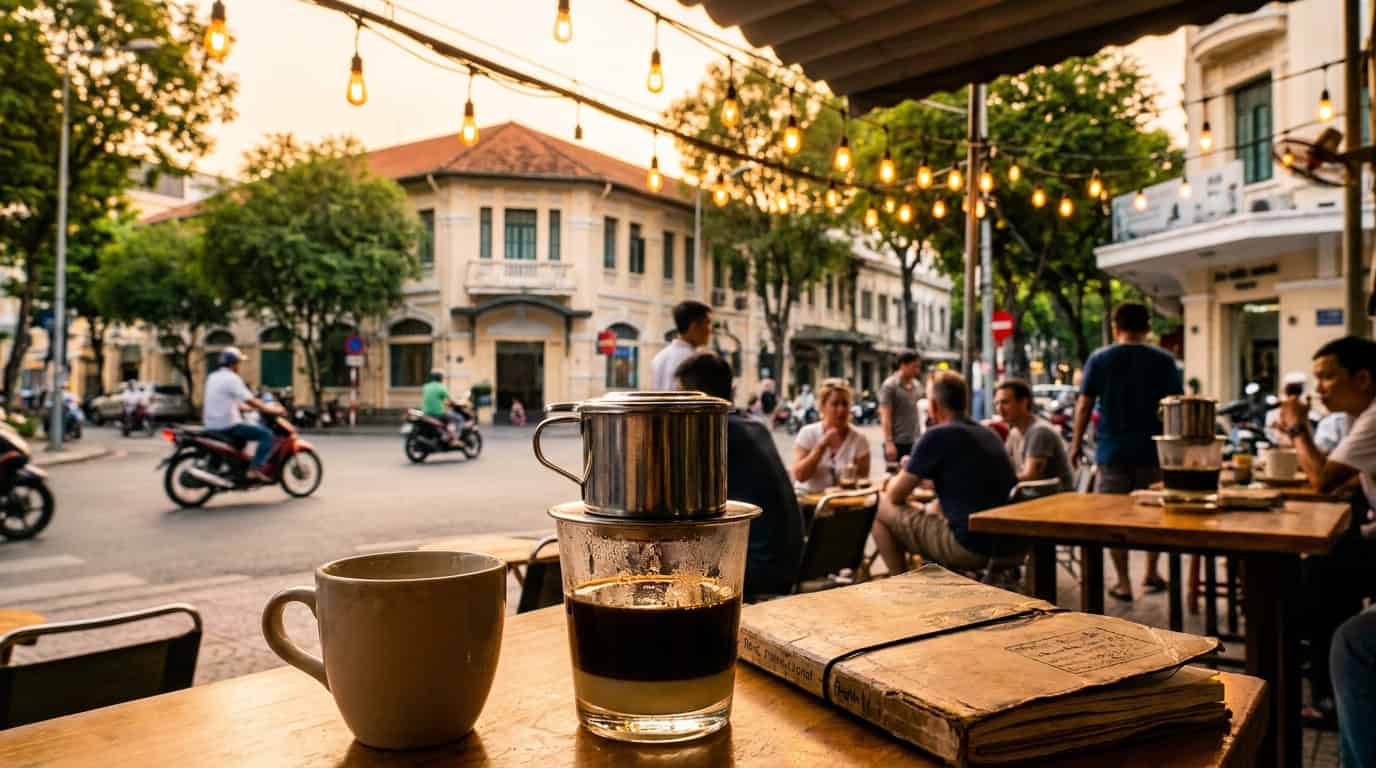
The best cafes coffee shops in Saigon number around 11,000 in 2026 — more per capita than Seattle — and they split into two glorious tribes: old-school sidewalk slingers who have been pouring the same ₫20,000 cup since the 1970s, and third-wave specialty roasters who can tell you the exact altitude their Cầu Đất arabica was grown at. Vietnamese coffee is the soul of this city: a slow drip of dark robusta beans through a tin phin filter, sweetened with condensed milk and poured over ice.
This guide is the one we wish we had when we moved into our first District 1 apartment. We’ve spent the last three months drinking through more than 60 cafes — from the cracked-tile alley shops in District 4 to the rooftop concept bars overlooking the Saigon River — to rank the spots that genuinely matter. Whether you want to learn what authentic vietnamese coffee actually tastes like, or you just need a quiet laptop-friendly corner with reliable Wi-Fi, this list has you covered.
Why Saigon Is the World’s Most Underrated Coffee City
Vietnam has been the world’s second-largest coffee exporter for over two decades, producing roughly 1.8 million metric tons annually according to the International Coffee Organization. What’s changed in the last five years is that Vietnamese farmers, roasters, and baristas have stopped exporting all the good stuff — the best Cầu Đất, Sơn La, and Khe Sanh micro-lots now stay in-country, and most of them land in Saigon cafes within 72 hours of roast.
The city is also where you’ll find the most stylistic diversity. In one walk through District 1 you can drink a traditional cà phê sữa đá at a plastic-stool sidewalk shop, a salt coffee invented in Huế, an egg coffee borrowed from Hanoi, a coconut coffee that’s pure Saigon, and a cold-brew nitro pour using single-origin fine robusta — all within a 15-minute radius.
A Quick Primer: What Is Vietnamese Coffee, Really?
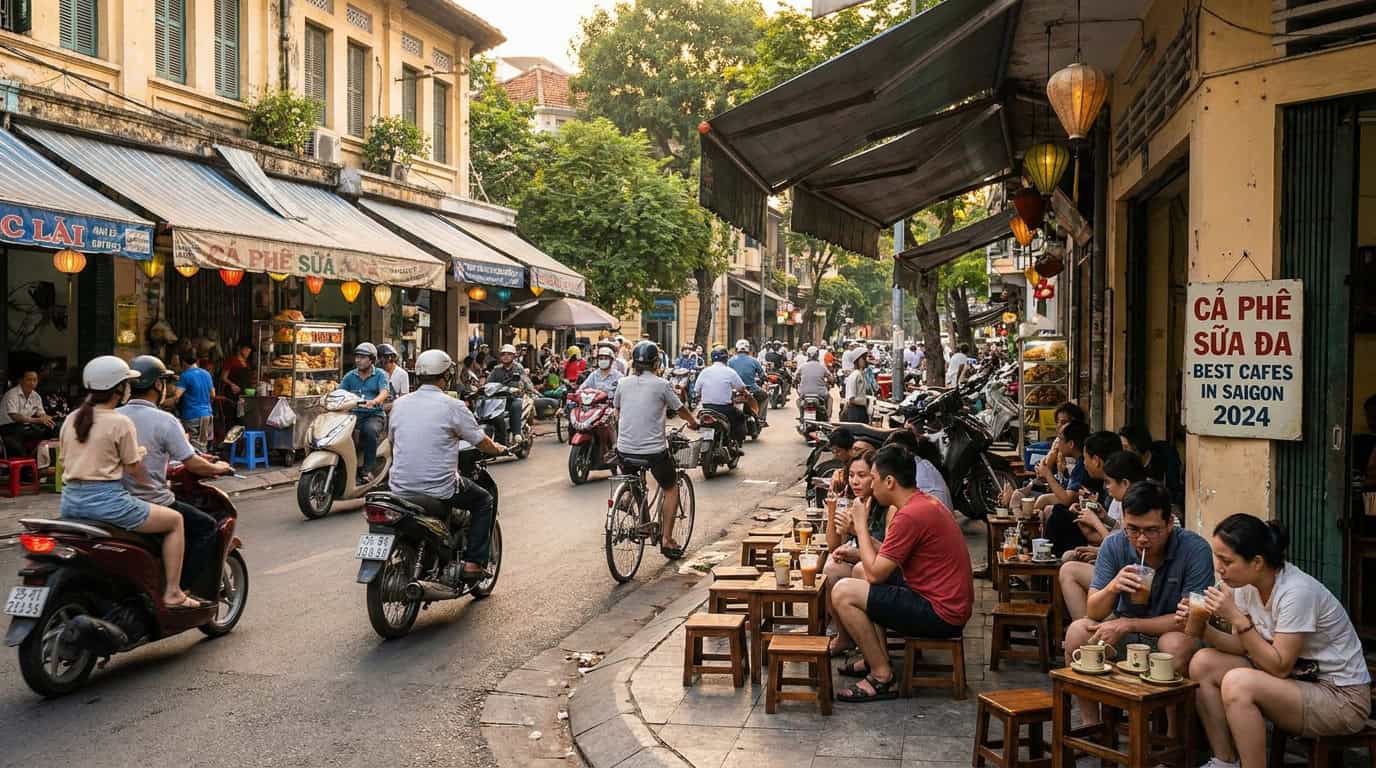
Before the cafes, let’s settle some basics. Traditional vietnamese coffee is made from dark-roasted robusta beans (not arabica), brewed slowly through a small metal drip filter called a phin, and almost always served with sweetened condensed milk because the original French colonial-era importers couldn’t get fresh dairy. The result is intense — about twice the caffeine of an espresso, balanced by the sweet, syrupy milk.
But the modern Saigon scene now includes:
- Cà phê đen đá — black iced coffee, no milk
- Cà phê sữa đá — iced coffee with condensed milk (the classic)
- Bạc xỉu — “white a little” — much more milk than coffee
- Cà phê trứng — egg coffee, whipped yolk and condensed milk
- Cà phê muối — salt coffee, a creamy salted-cream layer
- Cà phê dừa — coconut coffee, blended with coconut cream and ice
- Specialty pour-over and espresso — arabica from Đà Lạt highlands
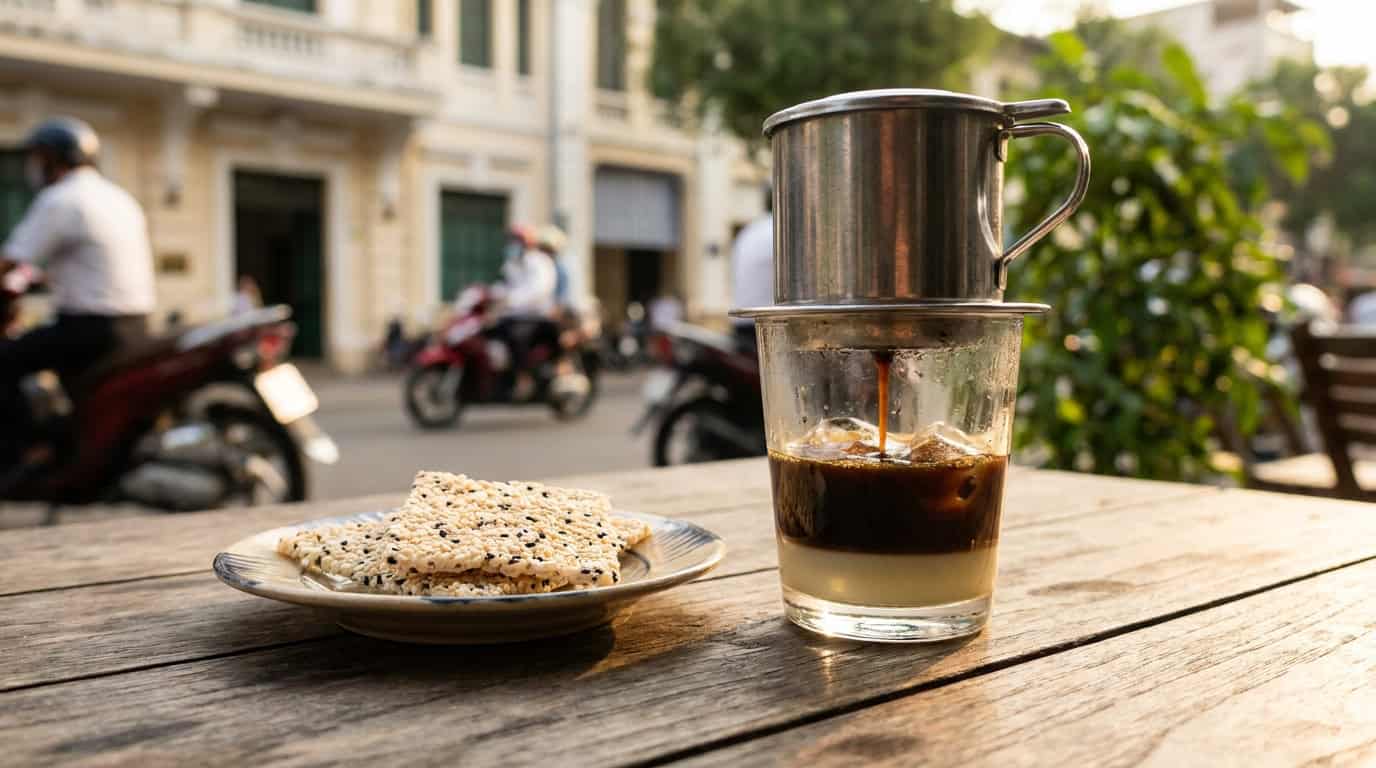
Summary Table: Best Cafes Coffee Shops in Saigon — Our 10 Picks at a Glance
| Cafe | District | Hours | Price (₫) | Best Time | Vibe |
|---|---|---|---|---|---|
| Cà Phê Vợt Cheo Leo | District 3 | 06:00–18:00 | 20,000–35,000 | Early morning | Heritage sidewalk |
| The Workshop | District 1 | 08:00–21:00 | 60,000–110,000 | Mid-morning | Third-wave loft |
| Shin Coffee | District 1 | 07:00–22:30 | 55,000–120,000 | Afternoon | Specialty bar |
| Cộng Cà Phê (Lý Tự Trọng) | District 1 | 07:00–23:30 | 45,000–75,000 | Sunset | Retro propaganda |
| Cheo Leo (Original) | District 3 | 06:00–17:00 | 25,000 | Pre-dawn | Old Saigon |
| Partea English Tearoom | District 1 | 09:00–22:00 | 70,000–140,000 | Rainy afternoon | Cozy hideaway |
| Okkio Caffè | District 1 | 07:30–22:00 | 50,000–95,000 | Anytime | Pastel modern |
| Bosgaurus Coffee | District 2 | 07:00–22:00 | 65,000–130,000 | Weekend brunch | Garden roastery |
| Ka Coffee Roasters | District 1 | 08:00–22:00 | 55,000–100,000 | Work session | Industrial calm |
| Maison Marou Saigon | District 1 | 09:00–22:30 | 80,000–150,000 | Dessert pairing | Chocolate + coffee |
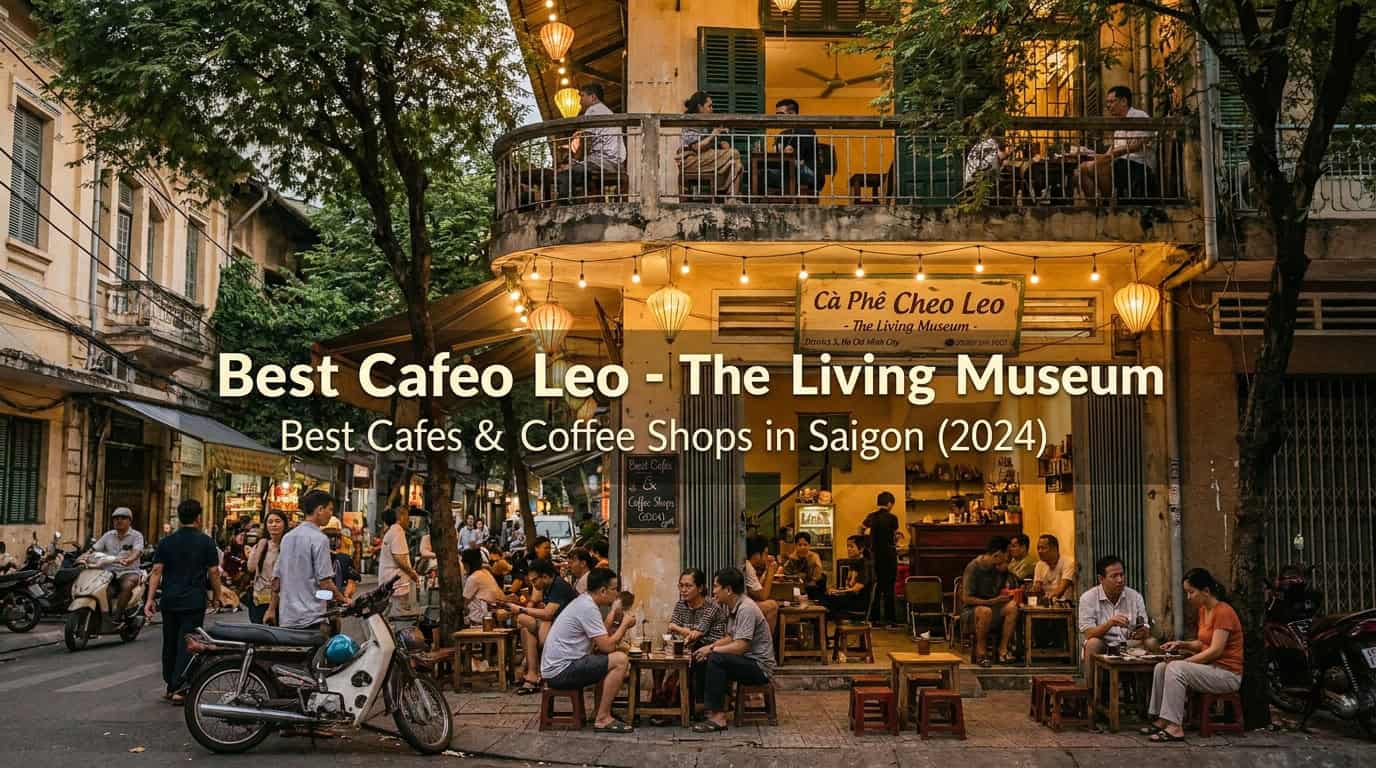
1. Cà Phê Vợt Cheo Leo — The Living Museum (District 3)
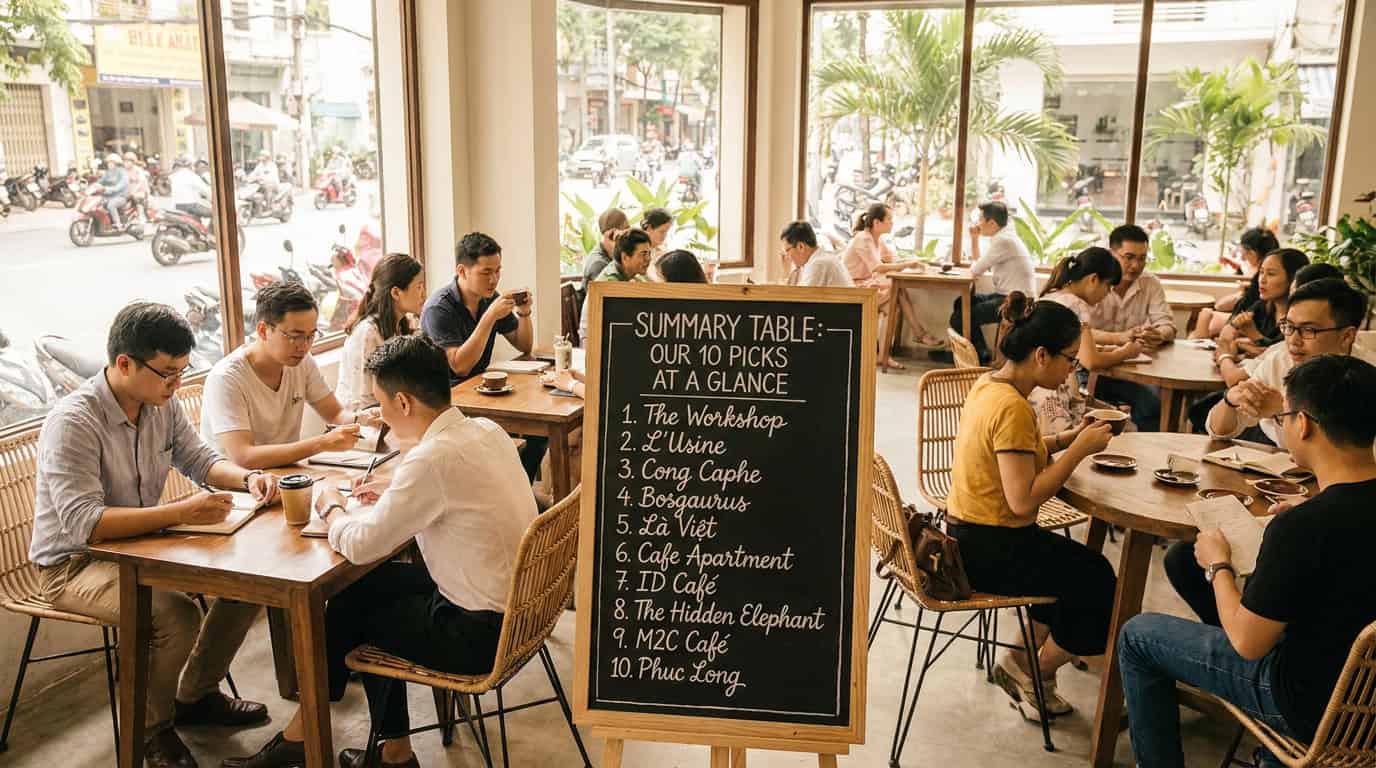
If you only drink one vietnamese coffee in Saigon, drink it here. Cheo Leo opened in 1938 and is the last remaining “cà phê vợt” shop in the city — meaning the coffee is brewed in a cloth sock filter (vợt) over charcoal, the same method used before phin filters became common. The current owner is the granddaughter of the founder, and she still pours from the same blackened aluminum pots used in the 1950s.
Order the bạc xỉu, sit on a tiny red plastic stool in the alley off Nguyễn Thiện Thuật, and watch District 3 wake up. A cup costs about ₫25,000 (roughly $1) and comes with a small cup of jasmine tea on the side, as tradition dictates.
2. The Workshop Coffee — Where Saigon’s Third Wave Was Born (District 1)
Tucked above a tailor shop on Ngô Đức Kế, The Workshop has been the unofficial HQ of Vietnamese specialty coffee since 2014. The space is a converted French colonial loft with 5-meter ceilings, exposed beams, and a horseshoe bar where baristas pull pour-overs from a Marzocco Strada and a half-dozen V60s.
Their menu rotates through small-batch lots from Đà Lạt, Sơn La, and the new Khe Sanh growing region. The honey-processed Bourbon from Mr. Long’s farm in Cầu Đất is the standout in 2026, and they’ll happily walk you through the tasting notes. Wi-Fi is excellent, outlets are abundant, and they don’t blink if you sit for four hours with a single cup.
3. Shin Coffee — Obsessive Single-Origin Specialists (District 1)
Shin’s founder Nguyễn Hữu Long is one of Vietnam’s only Q-grader certified roasters, and his Nam Kỳ Khởi Nghĩa flagship doubles as a working roastery. Order the Shin Heritage flight: three small cups served side-by-side — one phin, one espresso, one cold brew — all from the same single-origin bean, so you can taste how the brew method changes the flavor profile.
For something different, try the cà phê muối (salt coffee). Shin’s version uses a house-made salted cream foam that sits on top of the espresso like a cloud — sweet, salty, and slightly umami in a way that makes you wonder why you’ve been drinking coffee without salt your whole life.
4. Cộng Cà Phê — Instagram-Famous With Substance (District 1)
You’ll recognize Cộng instantly from social media: military-green walls, vintage propaganda posters, enamel mugs, and rattan stools designed to make you photograph everything. It’s a chain, yes, but the Lý Tự Trọng location near the Notre Dame Cathedral is the best, with a leafy second-floor terrace overlooking the street.
Their signature is the cà phê cốt dừa — coconut coffee — a slushy blend of robusta, coconut cream, and crushed ice that tastes like a frozen dessert. It’s the drink that converts every “I don’t usually like coffee” tourist within thirty seconds.
5. Okkio Caffè — The Pastel Pour-Over Pioneer (District 1)
Okkio (Italian for “watch out”) brought the millennial pastel aesthetic to Saigon coffee culture, and their three District 1 locations are all worth visiting. The Đồng Khởi flagship has a sun-drenched second floor that’s perfect for a morning laptop session.
Try the cà phê trứng — egg coffee. Hanoi may have invented it, but Okkio’s version is creamier and less eggy, made with pasteurized yolks whipped with vanilla and condensed milk, then floated over a hot espresso shot. It’s basically tiramisu in a cup.
6. Bosgaurus Coffee Roasters — Garden Roastery Across the River (District 2)
Worth the 15-minute Grab ride to Thảo Điền. Bosgaurus operates their own farm in Lâm Đồng and roasts on-site in a converted villa with a tropical garden seating area. Weekends bring a small farmers’ market and live acoustic sets.
Their Vietnamese Honey Drip is the must-order: a phin-brewed honey-processed arabica served with a tiny pitcher of condensed milk on the side, so you can sweeten to taste. It’s the most respectful upgrade of the classic cà phê sữa đá we’ve found.
7. Maison Marou — Coffee Meets Bean-to-Bar Chocolate (District 1)
Marou is Vietnam’s most celebrated craft chocolate maker, and their Calmette Street cafe pairs their single-origin chocolates with house-roasted Đà Lạt coffee. Order the Tien Giang 70% drinking chocolate alongside an espresso for a flight that genuinely competes with anything in Paris or Tokyo.
8. Ka Coffee Roasters — The Quiet Productivity Spot (District 1)
If you’re a digital nomad reading this from a coworking space and wondering where to escape, Ka is the answer. Tucked into a small alley off Pasteur Street, this minimalist concrete-and-wood space has fast fiber Wi-Fi, ergonomic seating, and a strict no-loud-calls policy that locals actually respect.
9. Partea English Tearoom — When You Need a Break From Coffee (District 1)
Sometimes the heat breaks you and you need air-con, a sofa, and a pot of tea. Partea is a converted French villa on Ngô Thời Nhiệm with stained glass, vintage china, and the city’s best afternoon tea set. They also serve excellent coffee — a rare egg coffee made with fresh free-range yolks.
10. Original Sidewalk Spots — The ₫15,000 Experience
No guide is complete without a nod to the unnamed cà phê cóc (squat coffee) stalls that line every Saigon street corner. Look for a small folding table, a stack of phin filters, and locals reading newspapers on tiny stools. A cup costs ₫15,000–25,000, comes with free jasmine tea, and is, in many ways, the most authentic vietnamese coffee experience you can have.
Our favorite anonymous spot: the corner of Hai Bà Trưng and Lê Thánh Tôn, run by a woman named Cô Tư since 1989. No sign, no menu, no Wi-Fi. Just coffee.
How to Order Like a Local: A Cheat Sheet
- “Cho tôi một cà phê sữa đá” — One iced coffee with milk, please
- “Ít đường” — Less sugar
- “Không đá” — No ice (rare; locals think you’re crazy)
- “Tính tiền” — Check, please
Tipping isn’t expected at sidewalk shops, but at specialty cafes a ₫10,000–20,000 round-up is appreciated.
The Best Saigon Coffee Neighborhoods, Mapped
- District 1 (Bến Nghé, Bến Thành): Highest density of specialty cafes, walkable from most hotels and homestays.
- District 3: Heritage shops, less tourist-heavy, best for old-Saigon atmosphere.
- District 2 (Thảo Điền): Expat-friendly, larger spaces, garden cafes.
- District 4: Up-and-coming, alley cafes with serious local cred.
- District 7 (Phú Mỹ Hưng): Modern chains and roastery flagships.
For a deeper neighborhood walkthrough, see our District 1 walking guide and our breakdown of the best things to do in Ho Chi Minh City.
Frequently Asked Questions
What is special about Vietnamese coffee?
Vietnamese coffee is special for three reasons: the bean, the brew, and the milk. Vietnam grows mostly robusta beans (about 95% of national output), which contain roughly twice the caffeine and far less acidity than the arabica used in most Western coffee. The traditional brewing method uses a small metal phin filter that drips slowly for 4–5 minutes, producing a concentrated, syrupy cup. And the standard pairing with sweetened condensed milk is a legacy of French colonial dairy shortages that has become beloved in its own right. Together, these create a flavor profile — dark chocolate, toasted nuts, low acid, intense caffeine — that you simply cannot replicate with espresso.
Is Vietnamese coffee just coffee with condensed milk?
No, that’s only one variation. Cà phê sữa đá (iced coffee with condensed milk) is the most internationally famous version, but Vietnamese coffee culture includes dozens of distinct drinks: black phin coffee (cà phê đen), egg coffee (cà phê trứng), salt coffee (cà phê muối), coconut coffee (cà phê dừa), yogurt coffee (sữa chua cà phê), and the milky bạc xỉu. Modern Saigon cafes also serve pour-over, espresso, cold brew, and nitro using single-origin Vietnamese arabica from the Đà Lạt and Sơn La highlands.
What is Vietnamese coffee made of?
Traditional Vietnamese coffee requires just four ingredients: dark-roasted robusta coffee beans, hot water, sweetened condensed milk, and ice. The beans are ground to a medium-coarse consistency and brewed in a phin filter — a small metal apparatus with a perforated base, a coffee chamber, and a press disc. Hot water is poured over the grounds and drips slowly through the press into a glass that already contains 2–3 tablespoons of condensed milk. Stir, pour over ice, and serve. That’s it. No special equipment beyond the ₫30,000 (~$1.20) phin filter.
Is Vietnamese coffee very strong?
Yes — significantly stronger than most Western coffee. A standard cup of cà phê đen contains approximately 180–220 mg of caffeine, compared to about 95 mg in a typical American drip coffee and 64 mg in a single espresso shot, according to data published by the USDA FoodData Central database. The high caffeine content comes from robusta beans, which naturally contain about 2.2% caffeine versus arabica’s 1.2%. The condensed milk masks the bitterness but doesn’t reduce the caffeine, so first-timers should plan accordingly — one cup at 3 PM may keep you up well past midnight.
When is the best time of day to drink coffee in Saigon?
Locals drink coffee twice: first at 6:30–8:00 AM at a sidewalk shop with the morning paper, and again at 3:00–4:30 PM as a midday refresh during the hottest hours. Specialty cafes are quietest between 10:00 AM and noon on weekdays — ideal for laptop work. Avoid 7:00–9:00 PM on weekends at Instagram-famous spots like Cộng or Okkio, when wait times can exceed 30 minutes.
Where to Stay for the Best Coffee Access
The vast majority of our top 10 cafes sit within a 1.5-kilometer radius of Bến Thành Market, which is exactly why District 1 remains the best base for any coffee-focused trip to Saigon. Staying central means you can walk to a sidewalk phin shop for breakfast, a specialty roaster for an afternoon work session, and a rooftop espresso bar for sunset — all without ever needing a Grab.
If you’re planning your trip, browse our hand-picked central District 1 homestays — all are within walking distance of at least five of the cafes on this list. For longer stays, our monthly apartment rentals in Saigon come with built-in espresso machines and a welcome bag of locally roasted beans from Shin or Bosgaurus.
Further Reading & Sources
- Vietnamese Iced Coffee — Wikipedia — historical background on cà phê sữa đá
- Michelin Guide: A Guide to Vietnamese Coffee — editorial overview of regional styles
- International Coffee Organization — Vietnam Country Profile — production and export data
Ready to drink your way through Saigon? Book a central District 1 homestay and wake up steps from Cheo Leo, The Workshop, and Shin Coffee. Our hosts will even pour you a complimentary cà phê sữa đá on arrival — made with beans from our favorite local roaster, brewed in a real phin, and served the way it’s been served in Saigon for nearly a century. Hẹn gặp lại!
Staying in Saigon?
We host furnished apartments in District 1 — studios up to two-bedroom
lofts, for stays from three nights to six months.
See the apartments or
check availability and book direct with us.
Unsure what to tip here? Our tipping in Vietnam guide gives amounts for restaurants, drivers, spas and tour guides.