
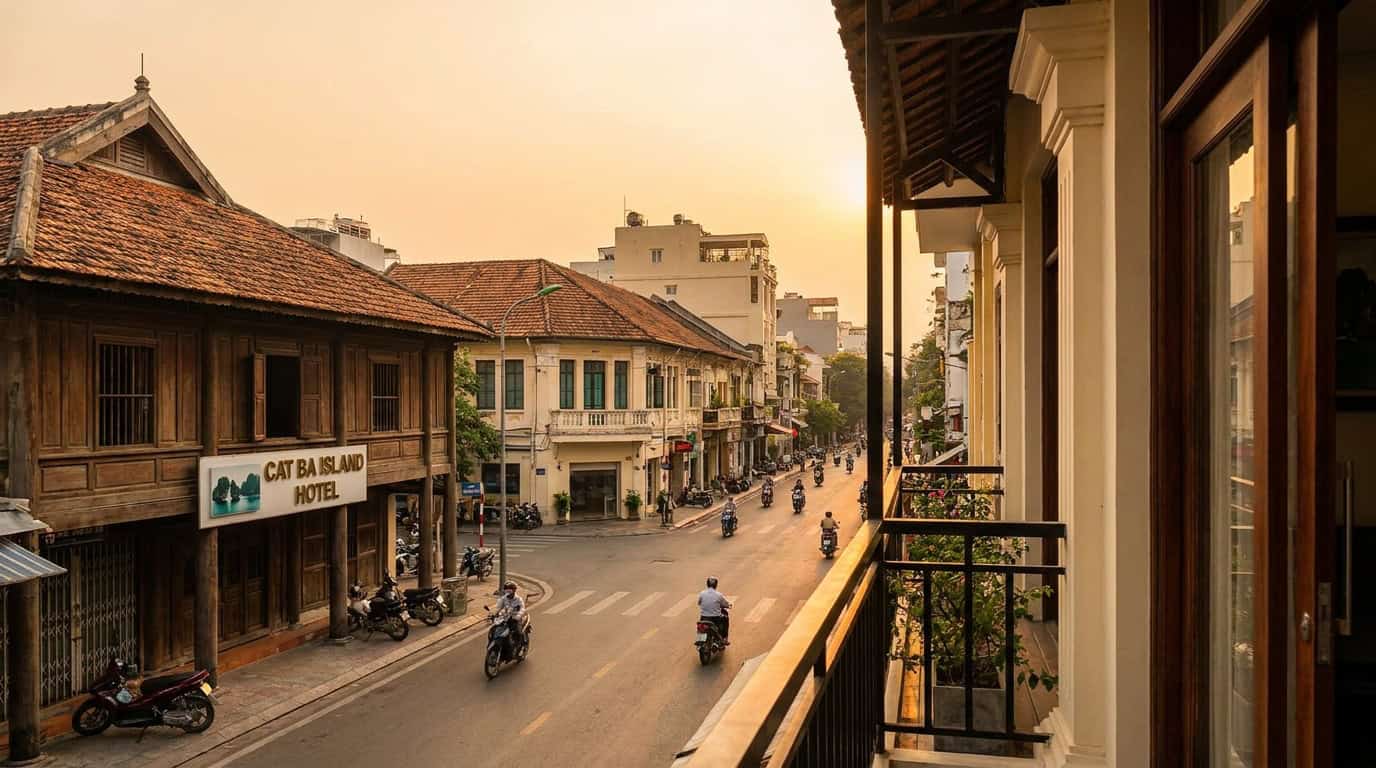
The cat ba island vs ha long bay debate is one of the most common planning decisions facing visitors to northern Vietnam, and it’s easy to see why — this region pulls more than 5 million international tourists annually, yet the two experiences on offer couldn’t feel more different. One puts you on a floating cabin among hundreds of cruise ships. The other drops you on a rugged island with hiking trails, sport climbing cliffs, and a harbor full of bia hoi stalls. This guide breaks down costs, crowds, transport, and atmosphere for both — so you can stop guessing and start packing.
Key Takeaways
– Ha Long Bay offers the iconic cruise experience; Cat Ba Island gives you land-based freedom and lower costs
– Budget travelers save 40–60% choosing Cat Ba over a mid-range Ha Long Bay cruise
– Cat Ba Town has 200+ accommodations from 200,000 VND/night (~$8) dorm beds to 3,000,000 VND/night (~$120) resorts
– The ideal Cat Ba stay is 2–4 nights; Ha Long Bay works well as a 1–2 night cruise
– Best time to visit both: October–April (dry season, calm seas)
Cat Ba Island vs Ha Long Bay: Key Differences at a Glance
Ha Long Bay receives roughly 3.2 million visitors per year according to the Vietnam National Administration of Tourism, with the vast majority arriving on pre-booked cruises. Cat Ba Island, sitting just 45 km across the bay, handles far fewer overnighters — which means you get the same iconic limestone karst scenery with noticeably more breathing room.
Here’s a side-by-side look at the core differences before we get into the detail.
| Feature | Cat Ba Island | Ha Long Bay |
|---|---|---|
| Location | Ha Long Bay–Cat Ba Archipelago, 45 km east of Hai Phong | Gulf of Tonkin, ~160 km east of Hanoi |
| Travel time from Hanoi | 3.5–4 hours (bus + ferry) | 2.5–3 hours (bus to Tuan Chau Marina) |
| Accommodation type | Hotels, hostels, boutique beach resorts on land | Overnight cruise cabins (floating) |
| Price range per night | 200,000–3,500,000 VND (~$8–$140) | 1,500,000–15,000,000 VND/person (~$60–$600) |
| Best for | Independent travelers, hikers, climbers, budget travelers | First-timers, couples, package tourists |
| Crowd level | Moderate (busy on Saturdays) | High (500+ licensed vessels in peak season) |
| UNESCO status | Biosphere Reserve since 2004 | World Heritage Site since 1994 |
| Top activity | Lan Ha Bay kayaking, national park hiking | Sung Sot Cave, Ti Top Island, sunrise from deck |
Prices above are June 2026 estimates. Always confirm directly with accommodation providers before booking.
Location and How to Get There
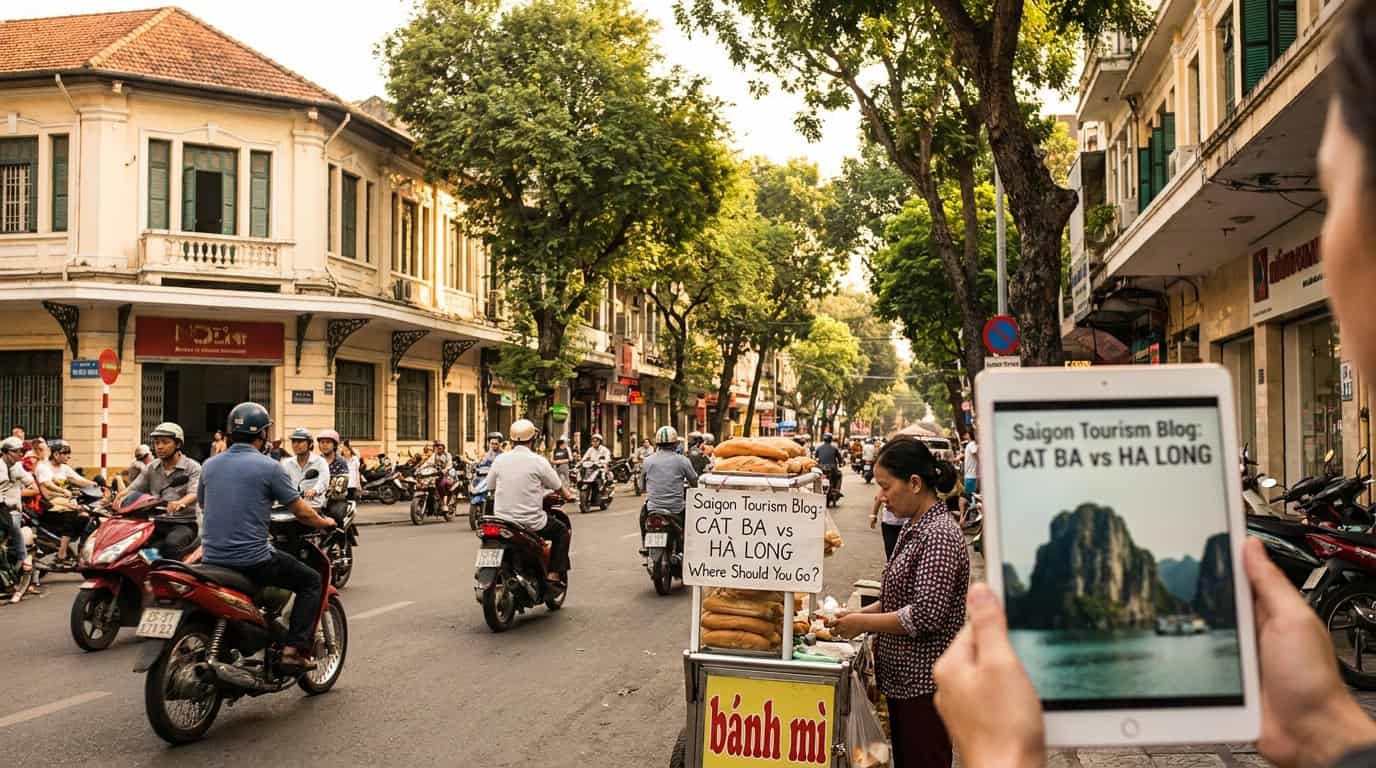
Cat Ba Island sits 45 km east of Hai Phong, technically inside the Ha Long Bay–Cat Ba Archipelago — so you’re already in the bay the moment you arrive. Getting there from Hanoi costs around 250,000 VND (~$10) per person each way, via the Hung Long bus-ferry combination that departs My Dinh or Luong Yen bus stations. Door to harbor runs about 3.5–4 hours total. It’s an easy trip that independent travelers handle without a tour agent.
Ha Long Bay is closer to Hanoi. The drive to Tuan Chau Marina takes 2.5–3 hours, and most cruise operators include the transfer in their package price. If you’re booking independently, budget 600,000 VND (~$24) return for a shared minibus. Day trips to the bay start at 1,000,000 VND ($40) per person, though these feel rushed and barely scratch the surface. Overnight cruises range from 3,000,000–8,000,000 VND ($120–$320) per person for two nights, all-inclusive.
For full transport logistics and suggested routes through the north, check the Northern Vietnam travel guide.
Traveler’s tip: The Hung Long bus-ferry combo drops you right at Cat Ba Town harbor. Buy your ticket online the night before in peak season (April–September) — the 7:00 AM Hanoi departure sells out fast, and the next slot is two hours later.
Scenery and Natural Attractions

Ha Long Bay is a UNESCO World Heritage Site designated in 1994, recognized for its extraordinary karst landscape of 1,553 islands and islets rising from the Gulf of Tonkin. The most-visited highlights include Ti Top Island (with its staircase panorama viewpoint), Thien Cung Cave (lit stalactites, heavily trafficked), and Bai Tho Mountain. The scenery is genuinely stunning — but you see most of it from a boat deck, at the same time as dozens of other boats.
Cat Ba is part of the same Ha Long Bay–Cat Ba Archipelago, listed as a UNESCO Biosphere Reserve since 2004. The island covers 354 km², with Cat Ba National Park protecting 263 km² of tropical forest, coral reefs, and mangrove swamps. The park is home to the critically endangered Cat Ba langur, with only around 70 individuals surviving in the wild — making any sighting a remarkable moment.
On Cat Ba’s eastern side, Lan Ha Bay offers the same dramatic limestone karst towers as Ha Long Bay, but with roughly one-third of the boat traffic. It’s quieter, greener, and feels closer to what the whole bay must have looked like before mass tourism arrived. Most Cat Ba day-trip operators run kayaking and swimming tours into Lan Ha rather than the busier Ha Long side.
Our finding: Lan Ha Bay is where most experienced Vietnam travelers send their friends. The karst scenery is identical to Ha Long Bay’s most famous views, the water visibility is better (fewer propeller wakes churning up sediment), and you’ll paddle past floating fish farms and hidden lagoons without another boat in sight. It’s not a secret — but it’s not on the standard cruise itinerary either.

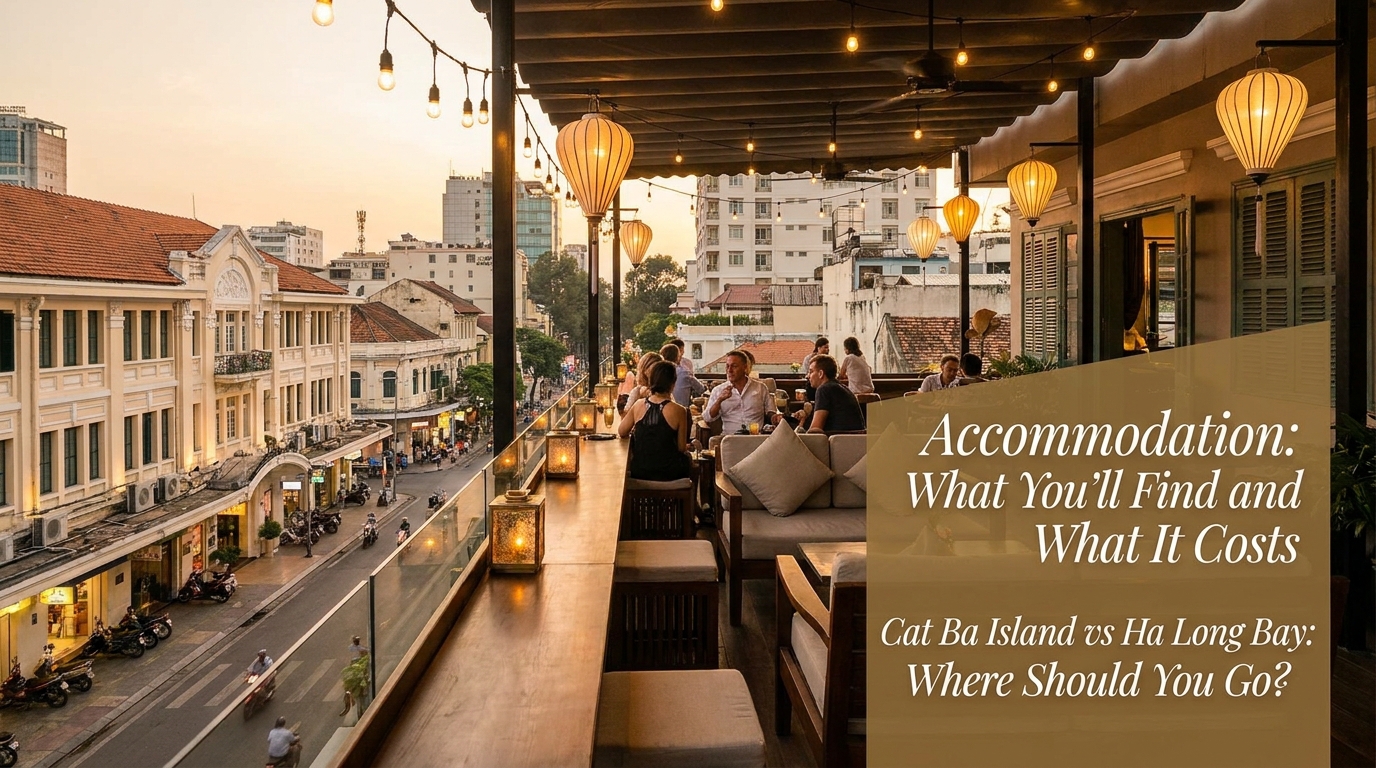
Accommodation — What You’ll Find and What It Costs

Cat Ba Town holds more than 200 hotels, hostels, and guesthouses, with prices in 2026 ranging from 200,000 VND (~$8) per night for a dorm bed to 3,500,000 VND (~$140) for a boutique beach resort on Cat Co beach. That spread means budget backpackers and mid-range travelers both find something comfortable. Ha Long Bay accommodation, by contrast, is priced per person and tied entirely to your cruise tier.
So the cat ba island vs ha long bay accommodation comparison isn’t really apples to apples — one is hotel-style flexibility, the other is a floating package.
Cat Ba Island Accommodation
Budget dorms at guesthouses and hostels along the main Cat Ba Town seafront run 200,000–350,000 VND/night (~$8–$14). Clean, social, and often includes breakfast for a small extra charge.
Mid-range hotels in Cat Ba Town proper cost 600,000–1,200,000 VND/night (~$24–$48). Several of these offer partial sea views across the harbor to the limestone towers. Good value by any regional standard.
Boutique beach resorts on Cat Co beach sit at 2,000,000–3,500,000 VND/night (~$80–$140). These are small, low-rise properties with direct beach access, not international luxury chains. Quiet in the evenings, worth considering for a 2-night splurge if the budget allows.
Ha Long Bay Cruise Tiers
Budget junk boats cover the basics — shared cabins, basic meals, one or two cave stops — for 1,500,000–2,500,000 VND/person (~$60–$100) for a 2-day, 1-night cruise.
Mid-range cruises are the sweet spot for most travelers: 3,000,000–5,500,000 VND/person (~$120–$220) for two nights, typically including all meals, kayaking, and cave visits. Operators like Peony Cruises and Bhaya Classic fit this tier.
Luxury cruises (Indochina Sails, Paradise Elegance) start at 8,000,000 VND/person (~$320) and run up to 15,000,000 VND (~$600) for premium suites with private balconies and butler service.
A note on Ha Long City itself: there are land-based hotels on the mainland, but the area has little character and is mostly used by logistics workers. It’s not a destination in its own right.
Activities and Things to Do
Both destinations center on limestone karst scenery, but the activity menu is genuinely different. Ha Long Bay delivers a curated, scheduled itinerary run by cruise staff — great for first-timers who want zero planning. Cat Ba gives you the freedom to choose your own pace, combine land and water activities, and spend extra time wherever interests you most.
Cat Ba Island Activities
Cat Ba National Park hikes range from short 2-hour forest loops to full-day treks reaching the summit of Ngu Lam Peak. Park entrance costs around 200,000 VND (~$8) per person. Guides are available through most guesthouses for an additional 300,000–500,000 VND.
Lan Ha Bay kayaking day trips depart Cat Ba Town harbor most mornings. Expect to pay 550,000–750,000 VND (~$22–$30) per person for a full day that includes a guide, kayak, snorkeling stop, and lunch at a floating restaurant. Asia Outdoors and Cat Ba Ventures are the two most-cited operators among independent travelers.
Rock climbing is a serious draw. Cat Ba Island is northern Vietnam’s best sport-climbing destination, with bolted routes graded 5a through 7c+ on karst cliffs above the sea. Half-day sessions run around 750,000–950,000 VND (~$30–$38) per person through Asia Outdoors.
Beaches at Cat Co 1, 2, and 3 are small, sheltered coves a short walk from Cat Ba Town. Cat Co 3 is the quietest and least developed — arrive before 9 AM on weekdays and you’ll often have it to yourself.
Cai Beo floating fishing village sits at the southern end of Cat Ba harbor — one of Southeast Asia’s oldest inhabited floating villages, with roots going back roughly 7,000 years. Boat tours visit most afternoons for around 100,000–150,000 VND (~$4–$6).
Ha Long Bay Cruise Activities
The typical 2-night cruise covers Sung Sot (Surprise) Cave, Ti Top Island swimming stop, a kayak session through limestone arches, a squid-fishing session after dark, and a sunrise on the top deck. The experience is logistically smooth and visually impressive. The trade-off is that the same 500+ licensed vessels are often working the same route simultaneously — so the “sunrise over empty karsts” shot requires some creative cropping.
Our finding: Cat Ba kayaking day trips to Lan Ha Bay cost 2–3 times less than the same activity on a mid-range Ha Long Bay cruise, and you’re paddling in significantly less crowded water. The cruise kayak session typically gives you 45–60 minutes; a Cat Ba day trip gives you 5–6 hours on the water.
Crowds, Atmosphere, and Vibe
Ha Long Bay in peak season (June–August) can genuinely disappoint first-timers who arrive expecting solitude among the karsts. There are more than 500 licensed cruise vessels operating in the bay. At sunrise near Ti Top Island, it’s common to count 50–80 boats anchored within view simultaneously. It’s not wilderness — it’s organized nature tourism at scale. That doesn’t make it bad, but it’s worth knowing before you go.
Cat Ba absorbs tourists differently. Weekends bring Vietnamese domestic visitors from Hai Phong and Hanoi, particularly on Saturdays. But the island is big enough that you can walk 10 minutes past Cat Co 1 beach and find yourself on an empty jungle trail with nothing but bird calls and the distant sound of fishing boats.
The vibe contrast is real. Ha Long Bay attracts honeymoon couples, family package tourists, and bucket-list visitors doing Vietnam in two weeks. Cat Ba Town draws independent backpackers, sport climbers, adventure families, and repeat Vietnam travelers who already did the cruise and want something rawer.
The harbourfront at night is genuinely fun. Plastic stools, bia hoi fresh beer at around 15,000 VND ($0.60) per glass, grilled seafood restaurants with the catch displayed on ice out front, and motorbike rental shops for the next morning’s adventure. It doesn’t feel curated. That’s the point.

Cat Ba Island vs Ha Long Bay: Budget Breakdown for 3 Days
The cat ba island vs ha long bay cost gap is real, and it adds up fast. The same karst scenery that costs $224 on a mid-range Ha Long Bay cruise costs around $118 on Cat Ba — and on Cat Ba that figure includes transport, two nights of accommodation, all meals, a full kayaking day, and national park entrance. Here’s the breakdown.
Cat Ba Island — 3 Days, Budget Traveler
| Item | VND | USD |
|---|---|---|
| Bus + ferry from Hanoi (return) | 500,000 | ~$20 |
| Budget guesthouse, 2 nights | 1,000,000 | ~$40 |
| Food (local restaurants, 3 meals/day) | 600,000 | ~$24 |
| Lan Ha Bay kayaking day trip | 650,000 | ~$26 |
| National park entrance + guide | 200,000 | ~$8 |
| Total | ~2,950,000 VND | ~$118 |
Ha Long Bay — 2-Night Mid-Range Cruise
| Item | VND | USD |
|---|---|---|
| Bus from Hanoi to Tuan Chau (return) | 600,000 | ~$24 |
| Mid-range 2-night cruise (all-inclusive) | 4,500,000/person | ~$180 |
| Tips, drinks, extras | 500,000 | ~$20 |
| Total | ~5,600,000 VND | ~$224 |
Honest note: the cruise price is genuinely all-inclusive. You won’t spend separately on meals or activity fees during the trip itself. But the gap remains significant — about 47% less for the Cat Ba option at budget level. For many independent travelers, that difference funds an extra week in Vietnam.
The cat ba island vs ha long bay savings grow larger the longer you stay on Cat Ba, since the fixed transport cost is spread across more nights.
Cat Ba Island vs Ha Long Bay: Which Is Right for You?
The honest answer depends on your travel style and how much time you have. Both destinations are genuinely worth visiting if your schedule allows. But if you’re choosing one, the decision usually comes down to independence versus convenience, and budget versus spectacle.
Choose Cat Ba Island if you:
- Have 2+ nights and want flexibility over a fixed itinerary
- Travel on a budget (under 3,000,000 VND / ~$120 total for 3 days)
- Like active travel: hiking, climbing, independent kayaking
- Are on a second Vietnam trip and already done the classic cruise
- Want karst scenery with far fewer boats around
Choose Ha Long Bay cruise if you:
- Are on your first Vietnam trip and want the bucket-list experience
- Have only 1–2 nights and want maximum scenery per hour
- Prefer guided, all-inclusive logistics where everything is handled
- Are celebrating a honeymoon, anniversary, or special occasion as a couple
Here’s the honest truth: if your schedule allows it, do both. Two nights on Cat Ba followed by one night on a Ha Long Bay cruise gives you the full picture — active land exploration and the classic floating-cabin experience. Combined cost sits around 6,500,000–7,000,000 VND (~$260–$280) per person at mid-range, which is reasonable for five days of exceptional scenery.
Many travelers who start their trip in Ho Chi Minh City fly north to Hanoi to begin this loop. Checking out things to do in Ho Chi Minh City before you fly north is a good way to structure your southern days around the northern adventure.
What’s the Best Time to Visit?
October through April is the sweet spot for visiting both destinations. Temperatures sit at a comfortable 18–25°C, seas are calm enough for kayaking and cave access, and rainfall is minimal. The karst scenery in January and February takes on a particular atmosphere — cool mist settles between the limestone towers at dawn, creating the dramatic mood you’ve seen in travel photography.
May is an underrated shoulder month. School holidays haven’t started yet for most foreign markets, accommodation prices run 15–20% lower than June, and the weather is warming without being oppressive.
Avoid June through August if crowds and weather are concerns. Typhoon season peaks between July and September, and rough seas regularly restrict kayaking and close cave access for 1–3 days at a time. August is the busiest month by visitor count for both destinations.
The Vietnam National Administration of Tourism publishes updated seasonal information for Ha Long Bay that’s worth checking before you book.
For broader planning across the country, the Vietnam travel tips guide covers visa requirements, transport booking windows, and what to pack for the north-to-south climate difference.
Frequently Asked Questions
Are there hotels on Cat Ba Island?
Yes — Cat Ba Town had more than 200 hotels, hostels, and guesthouses operating in 2026. Budget dorm beds start at 200,000 VND (~$8) per night. Mid-range doubles with sea views run 600,000–1,200,000 VND (~$24–$48). Several boutique beach resorts sit directly on Cat Co beach from around 2,000,000 VND (~$80) per night, offering direct sand access and harbor views.
Can you stay on Cat Ba Island?
Absolutely — Cat Ba Island is built for multi-night independent stays. The town has a full tourism infrastructure: restaurants, tour operators, motorbike rentals, ATMs, and a lively harbourfront at night. Most foreign travelers stay 2–4 nights, using the island as a base for Lan Ha Bay day trips, Cat Ba National Park hikes, and the surrounding Cat Co beaches.
Is it worth going to Cat Ba Island?
Cat Ba Island is absolutely worth it, especially if you’ve already done the Ha Long Bay cruise. You get the same dramatic limestone karst scenery with far fewer boats, plus unique land experiences — national park hikes, sport climbing routes, and a visit to Cai Beo floating village, one of Southeast Asia’s oldest inhabited sites at roughly 7,000 years old. The cost savings over a cruise are a welcome bonus.
How long should I stay on Cat Ba Island?
Two nights is the minimum to genuinely experience Cat Ba — enough time for a national park hike and a Lan Ha Bay kayaking day. Three to four nights is the sweet spot: add rock climbing, a beach afternoon at Cat Co 3, and a sunset motorbike ride north to Tung Thu beach. Rock climbers working multi-pitch routes often stay a full week.
Plan Your Vietnam Trip from Saigon
Most international flights into Vietnam touch down in Ho Chi Minh City (Saigon) before travelers head north to Hanoi for the Cat Ba and Ha Long Bay loop. A comfortable, central base in District 1 makes that layover genuinely useful rather than just a transit stop.
Saigon Homestay offers private rooms and apartment-style suites in the heart of District 1, walking distance from Ben Thanh Market, Bui Vien walking street, and the main bus connections north. Bilingual hosts, fast Wi-Fi, and flexible checkout mean you can store your bags on the morning you fly north — without paying for an extra night.
Before you leave the south, the best beaches in Vietnam guide is worth reading — several are a short bus ride from Saigon and work well as a warmup before the northern adventure.
Check availability at Saigon Homestay — centrally located in District 1, walking distance from everything you need.
Sources: Vietnam National Administration of Tourism, Ha Long Bay destination guide, https://vietnam.travel/places-to-go/northern-vietnam/ha-long, retrieved 2026-06-09 · UNESCO World Heritage Centre, Ha Long Bay listing, https://whc.unesco.org/en/list/672, retrieved 2026-06-09 · Cat Ba Ventures pricing, June 2026 · Indochina Sails cruise rates, June 2026
Carrying the right cash matters more than most visitors expect — see the Vietnam currency and money exchange guide before you arrive.
Related Guides
- Ha Long Bay vs Bai Tu Long Bay: Which Should You Choose?
- Ha Long Bay Luxury Cruise: Best High-End Options (2026)
- Ha Long Bay 2-Day 1-Night Cruise: What to Expect
- Ha Long Bay Safety: Is It Worth the Risk?
- Ha Long Bay Beaches: Best Spots for Swimming & Sunsets
- Ha Long Bay Kayaking: Best Routes & Tours (2026)