
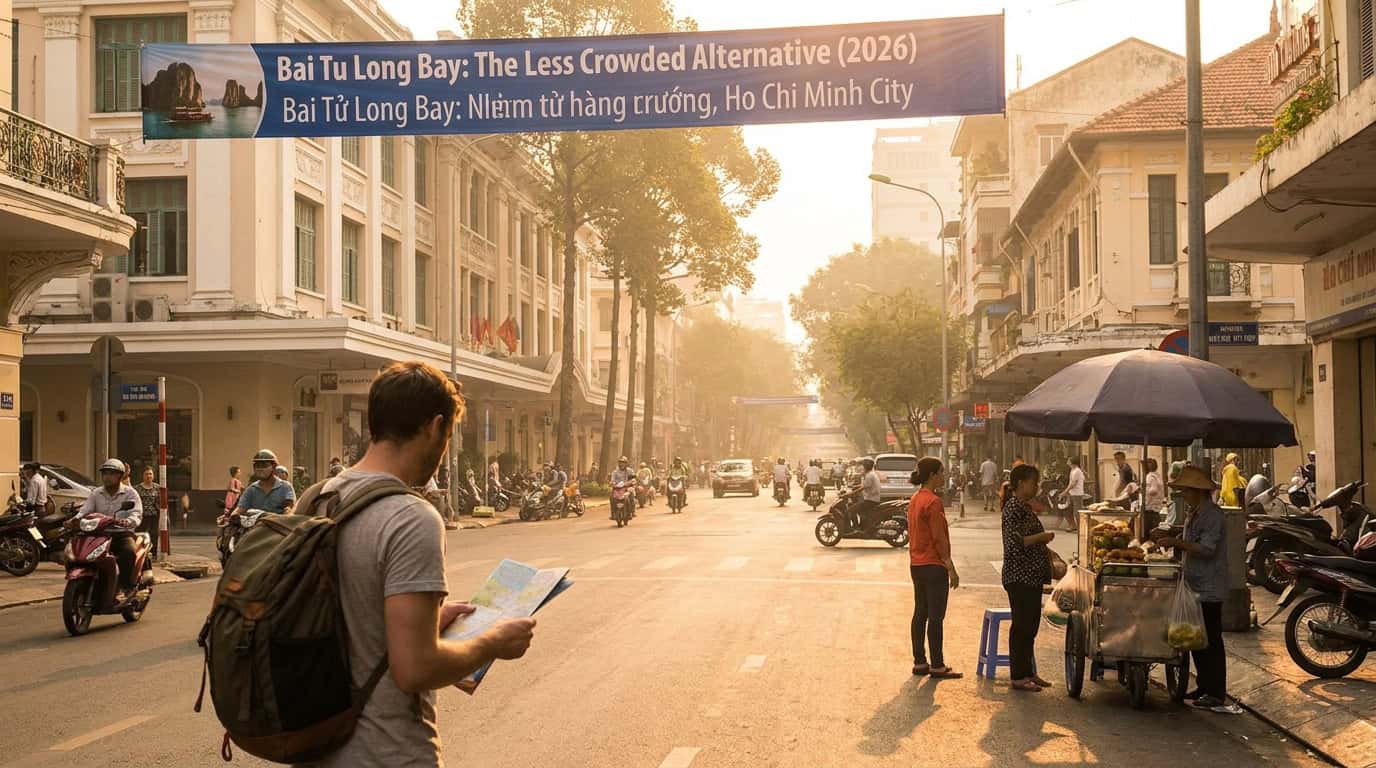
Bai Tu Long Bay is one of Vietnam’s most spectacular secrets — a protected marine zone where limestone karsts rise from emerald water and the only sounds at night are waves against the hull. While Ha Long Bay pulls millions of visitors every year, its eastern neighbor stays quiet, calm, and genuinely wild. Overcrowding at Ha Long Bay has become a real problem: tour boats queue at cave entrances, and anchoring zones feel like floating parking lots. This guide covers everything you need to plan a Bai Tu Long Bay cruise in 2026, including costs, the best season to visit, how to get there from Hanoi, and which operators are worth your money.
Key Takeaways
– Bai Tu Long Bay covers 16,194 hectares in Vân Đồn District, Quảng Ninh Province, and sits within the UNESCO Biosphere Reserve buffer zone
– The bay has roughly 40% fewer tourist vessels than neighboring Ha Long Bay (Vân Đồn Tourism Authority, 2025)
– 2-day/1-night cruises start at 2,500,000 VND ($100 USD) per person; premium cabins reach 7,000,000–12,000,000 VND ($280–$480 USD)
– No special permit is required beyond a standard Vietnam tourist visa
– Best visited October–April for calm seas and clear skies; May–June brings rare bioluminescent plankton
| Location | Vân Đồn District, Quảng Ninh Province, Northeast Vietnam |
| How to Get There | ~3.5 hrs by road from Hanoi to Vân Đồn (Cái Rồng) ferry terminal |
| Best Time to Visit | October – April (dry season) |
| Cruise Cost | From 2,500,000 VND ($100 USD) per person for 2D1N |
| Trip Duration | 2–3 days recommended |
| Visa | Standard Vietnam e-visa; no zone permit needed |
What Is Bai Tu Long Bay?
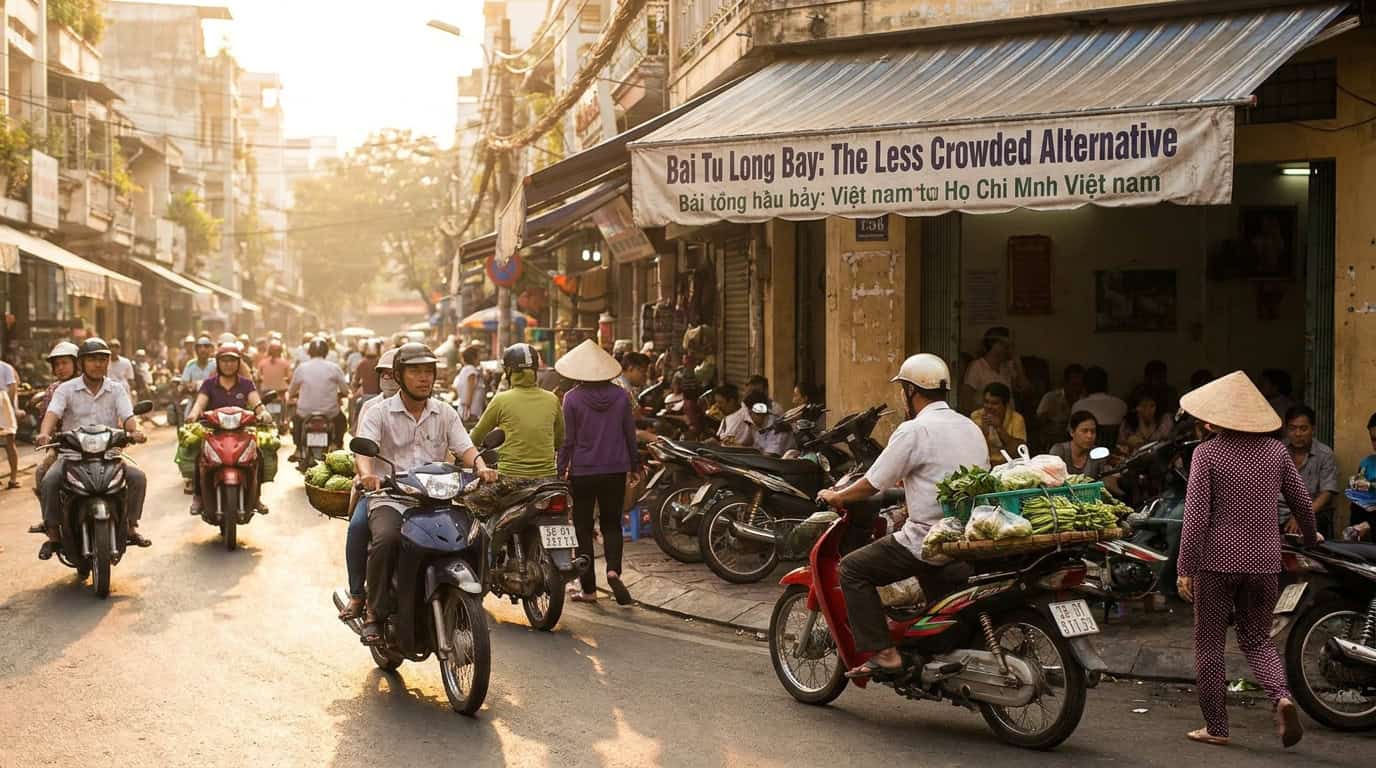
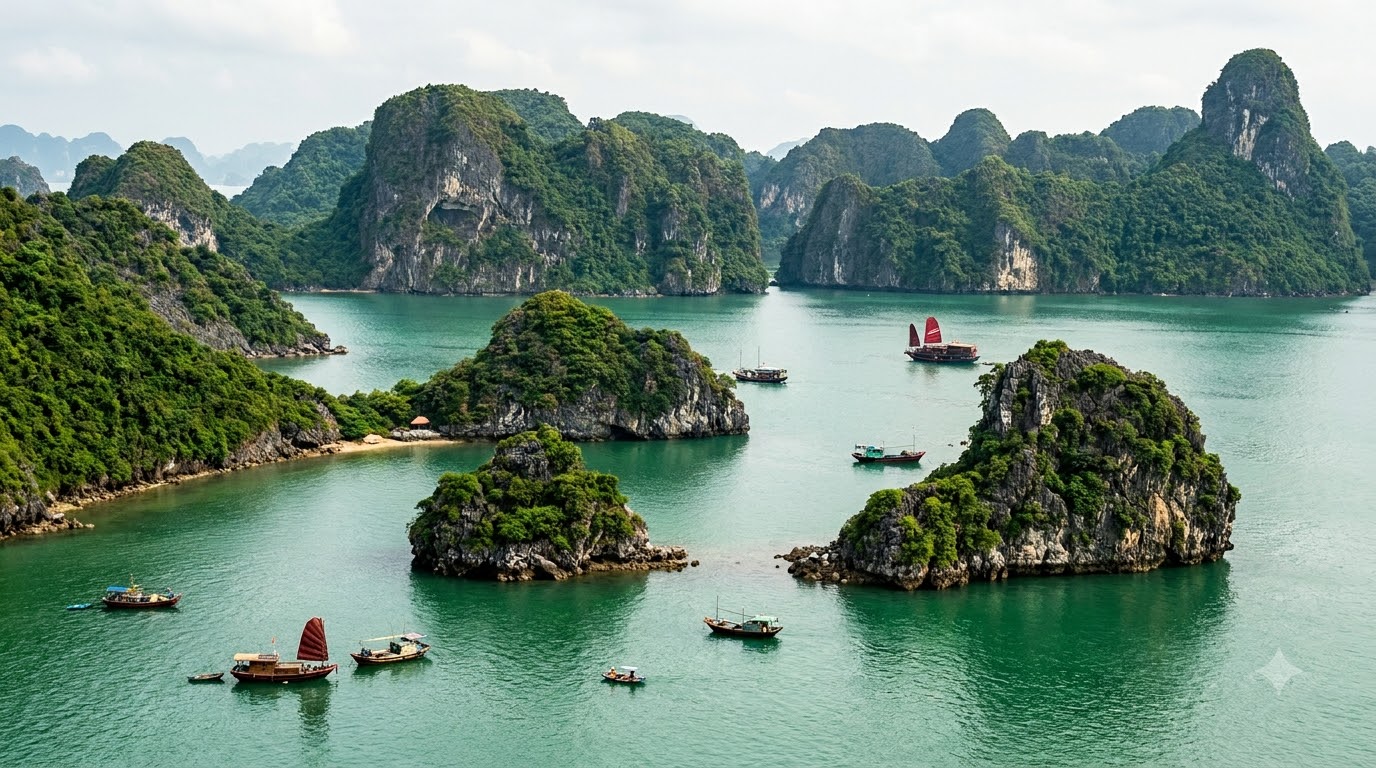
Bai Tu Long Bay spans 16,194 hectares of protected water in Vân Đồn District, Quảng Ninh Province, making it one of northern Vietnam’s most significant — and least visited — marine zones (Vân Đồn Tourism Authority, 2025). The bay holds more than 40 named islands and hundreds of smaller islets, their forested peaks draped in mist during cooler months.
The name itself tells the story. “Bãi Tử Long” translates loosely as “Where the Dragon’s Children Descend” — part of the same ancient legend that names Ha Long Bay to the south. Both bays share the same geological origin: a karst plateau gradually flooded over millions of years, leaving only the highest peaks above water. The scenery is virtually identical. The crowds are not.
The bay forms part of the buffer zone of the UNESCO-adjacent protected biosphere, and Quảng Ninh Province has kept commercial development strictly limited. There are no large resort hotels on the water. No casino. No floating villages converted into tourist markets. What you get instead is the Ha Long Bay feeling from fifteen years ago: silence after 9 PM, stars visible from the deck, and — in May and June — bioluminescent plankton that turns your kayak paddle into a wand of electric blue light.
How Does Bai Tu Long Bay Compare to Ha Long Bay?

The key difference is scale and deliberate policy. Ha Long Bay covers 43,400 hectares in its core UNESCO zone and operates around 500 licensed cruise vessels — roughly ten times the fleet size permitted in Bai Tu Long Bay (Vân Đồn Tourism Authority, 2025). That ratio shapes everything about the experience: anchorage density, cave queues, noise levels at night, and how clean the water looks.
| Feature | Bai Tu Long Bay | Ha Long Bay |
|---|---|---|
| Area | 16,194 ha | 43,400 ha (core zone) |
| Licensed cruise vessels | ~50 licensed | ~500 licensed |
| Large resort hotels | None on bay | Several on Cat Ba Island |
| UNESCO Status | Buffer zone | Ha Long Bay UNESCO World Heritage Site |
| Crowd level | Low–moderate | High year-round |
| Drive time from Hanoi | ~3.5 hrs | ~2.5 hrs |
Ha Long Bay received UNESCO World Heritage designation in 1994. That single designation triggered a cruise fleet explosion over the following two decades. By 2025, approximately 3.5 to 4 million visitors were arriving annually. Infrastructure couldn’t keep pace. The result: overloaded cave entrances, boat-to-boat anchoring in the most famous coves, and water quality warnings during peak months.
Bai Tu Long avoided that trajectory. The province capped development early and kept the vessel count low. It’s an hour further from Hanoi — and that extra hour alone filters out a large proportion of one-night tour groups.
Wildlife spotting is another underreported advantage. Forested island slopes in Bai Tu Long Bay still support hornbills, Cat Ba langur monkeys on outlying islands, and white-rumped munias. You don’t hear about that in Ha Long brochures, because most of Ha Long’s original forest cover is gone.
For the full head-to-head breakdown, see our guide to Ha Long Bay vs Bai Tu Long Bay.
When Is the Best Time to Visit Bai Tu Long Bay?
The dry season, running October through April, gives you the clearest skies, calmest seas, and water temperatures between 18 and 26°C (Vietnam National Administration of Tourism, Seasonal Weather Guide, 2025). That seven-month window covers most people’s travel plans — but each segment has a different character, and one unexpected highlight falls right in the middle of the rainy shoulder.
| Season | Months | Conditions | Verdict |
|---|---|---|---|
| Peak | Nov–Mar | Sunny, calm, 18–24°C | Best for cruises and kayaking |
| Shoulder | Oct and Apr | Warm, occasional cloud | Good value, fewer crowds |
| Rainy/Humid | May–Jun | Warm, bioluminescence active | Night kayaking highlight |
| Typhoon Risk | Jul–Sep | Rough seas possible | Plan carefully; check forecasts |
January and February are the coldest months, dropping to 15–18°C at night on the water. Pack a light fleece layer — junk boat decks are exposed. March and April offer the best combination: warm days, calm anchorages, and shoulder-season prices before Vietnamese summer holidays begin.
May and June deserve special attention. Warm, humid conditions trigger bioluminescent plankton blooms. Kayaking at night, you’ll watch your paddle blade trail electric blue light through the water. It sounds like a gimmick — it isn’t. Guests who experience it consistently rate it as their Vietnam trip highlight. Not all operators include night kayaking, so ask specifically when you book.
July through September carries typhoon risk. Boats don’t cancel lightly, but seas can turn rough on short notice. Travel insurance covering weather-related cancellations is non-negotiable in this window.
How Do You Get to Bai Tu Long Bay?
Most travelers arrive from Hanoi. The drive covers roughly 180 km east on Highway 18, arriving at Vân Đồn’s Cái Rồng port in about 3.5 hours. It’s longer than the Ha Long Bay transfer. Worth it.
Nearly every cruise operator includes a Hanoi hotel pickup in the package price — minibuses depart between 7:00 and 8:00 AM to make the noon boarding window. Private car hire runs 1,800,000–2,200,000 VND ($72–$88 USD) one way.
Flying is also an option. Nội Bài Airport (Hanoi) to Vân Đồn International Airport (VDO) takes around 45 minutes on a domestic connection. From Ho Chi Minh City, you can fly directly to VDO in about 2 hours from Tân Sơn Nhất, bypassing Hanoi entirely if you’re coming from the south.
Visa requirements are straightforward. A standard Vietnam e-visa or visa-on-arrival covers entry to Quảng Ninh Province and Vân Đồn District. There’s no zone permit, no photography fee, and no national park entry charge for the bay itself. Just confirm your visa type allows re-entry if you’re crossing between provinces.
If you’re planning your southern Vietnam days first, our Saigon itinerary maps out District 1 efficiently before you fly north. Building a two-week loop? Our northern Vietnam itinerary maps out Hanoi, the bay, and Sapa together.
Bai Tu Long Bay Cruises: What to Expect and What It Costs
The average Bai Tu Long Bay cruise carries 8 to 20 passengers on a traditional wooden junk, compared with Ha Long Bay’s largest vessels hauling 500 or more (Vân Đồn Tourism Authority, 2025). Smaller boats mean genuinely personalized service, flexible itineraries, and access to coves that larger vessels can’t reach.
Here are the main operators worth considering in 2026:
| Operator | Route | Price from (2D1N per person) | Known For |
|---|---|---|---|
| Indochina Junk | Dragon Legend — exclusive Bai Tu Long | 5,500,000 VND ($220) | Pioneer operator; intimate small-group cruises |
| Bhaya Cruises | Signature — Bai Tu Long + Ha Long | 4,500,000 VND ($180) | Strong guides; multi-night options |
| Stellar Cruises | Premium Bai Tu Long | 8,000,000 VND ($320) | Newer fleet (2022–23 boats); food quality |
And here’s how the price tiers break down:
| Category | Cost per person (2D1N) | Includes |
|---|---|---|
| Budget | 2,500,000–3,500,000 VND ($100–$140) | Cabin, meals, kayaking, 1 island stop |
| Mid-range | 4,000,000–6,500,000 VND ($160–$260) | Private ensuite, sunset cocktails, snorkeling |
| Premium | 7,000,000–12,000,000 VND ($280–$480) | Suite cabin, private kayak, cave tour, fishing |
According to the Vân Đồn Tourism Authority (2025), fewer than 50 licensed cruise vessels operate in Bai Tu Long Bay year-round — compared with approximately 500 in Ha Long Bay. That 10-to-1 ratio means overnight guests anchor in near-private coves, with no neighboring generator noise and no crowds at cave entrances.
One detail that catches many travelers off guard: most Bai Tu Long Bay cruises depart from Cái Rồng port in Vân Đồn, not from Tuần Châu Marina in Ha Long City. If your booking confirmation shows Tuần Châu, you’re on a Ha Long Bay cruise. Always verify the departure port before you pay.
Top Things to Do in Bai Tu Long Bay
The bay isn’t just about sitting on a deck watching scenery. There’s a full activity roster available on most 2–3 day itineraries, and some experiences here genuinely aren’t available anywhere else in Vietnam.
1. Kayaking through sea caves and enclosed lagoons
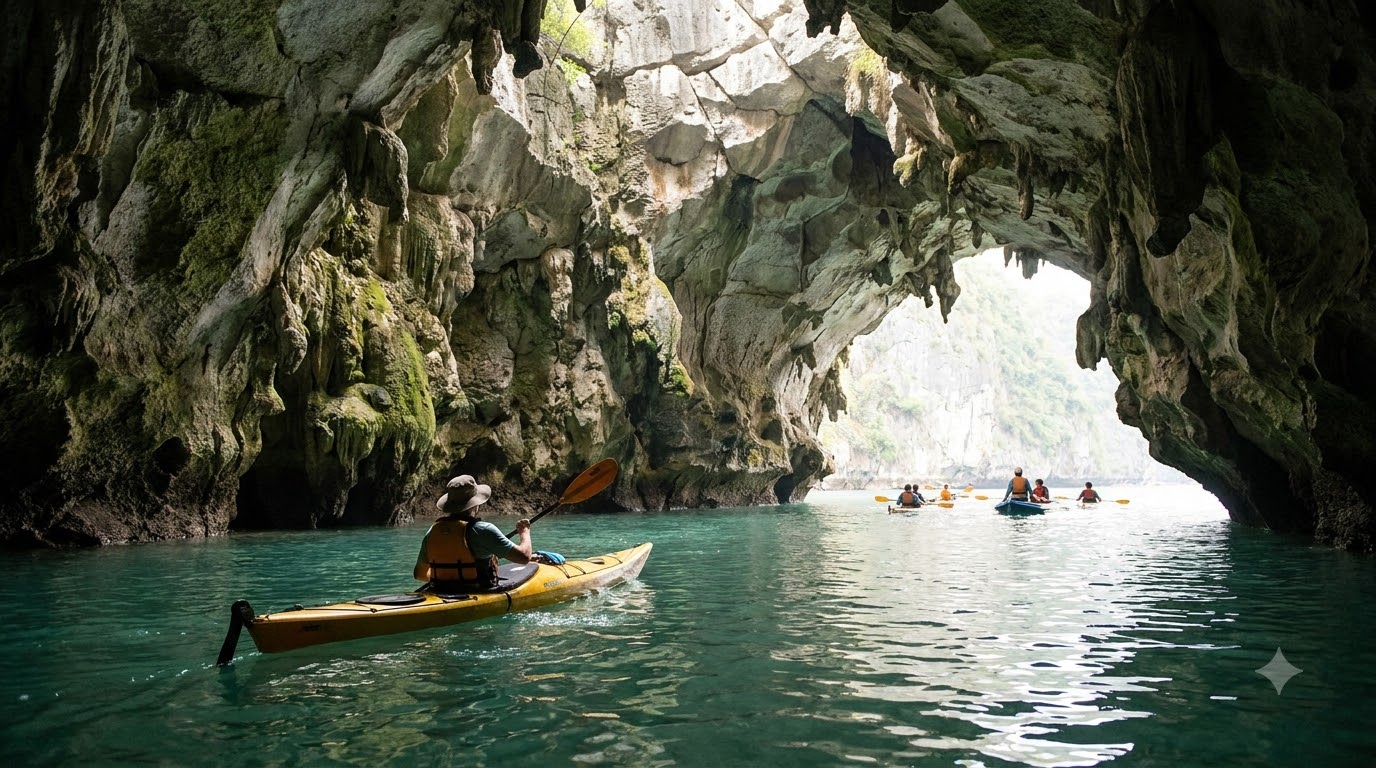
Áng Thẩu and Vụng Hà lagoons are only accessible at low tide by kayak. You paddle through a narrow cave entrance into a completely enclosed body of water — still, silent, cathedral-quiet. Allow 2–3 hours. Included in most mid-range and premium cruise packages.
2. Visiting Vân Đồn fishing villages
Working oyster and clam farms in Vân Đồn District offer a look at traditional aquaculture that hasn’t been staged for tourists. Village tours typically include buying fresh oysters straight from the farm for around 50,000 VND ($2 USD) per dozen.
3. Snorkeling and swimming
Visibility in dry season runs 5–8 meters around the southern islands. You’ll spot tropical fish, sea urchins, and occasional squid. No coral reefs — the Gulf of Tonkin is too cold in winter for reef formation — but fish populations are healthy.
4. Night kayaking for bioluminescence (May–June)
Ask specifically when booking, because not all operators include night kayaking. When they do, and the plankton bloom is active, the water glows electric blue with every stroke. It’s genuinely unlike anything else in Southeast Asia.
5. Day trip to Cô Tô Island
Sixty kilometers northeast of Vân Đồn, 75 minutes by fast boat, Cô Tô has white-sand beaches, remarkably cheap seafood, and almost no foreign tourists. It works well as a two-night extension after your main bay cruise.
Where to Stay: Cruise vs Island Accommodation
For most visitors, a liveaboard cruise is the right answer. You wake up on the water. Breakfast is already made. The kayak is waiting at the stern. Staying on the boat keeps you inside the protected zone where the scenery actually is.
On the mainland base option: Vân Đồn town (Cái Rồng) has guesthouses and 3-star hotels for 400,000–900,000 VND ($16–$36 USD) per night. Practical if you’re catching an early boat or have an afternoon flight out of VDO. Not scenic. Functional.
Cô Tô Island guesthouses run 300,000–600,000 VND ($12–$24 USD) per night. Pair one or two nights there with a day boat into the bay for a budget-friendly hybrid itinerary.
What you won’t find anywhere in the Bai Tu Long area: casinos, international hotel chains, or nightlife strips. That’s deliberate. Quảng Ninh Province has maintained a clear policy of limiting commercial development here — partly to avoid the overdevelopment trajectory that reshaped Phú Quốc in the 2010s.
If you want nightlife and city energy, save that for things to do in Ho Chi Minh City before flying north.
Practical Tips for Visiting Bai Tu Long Bay
A few things that most travel blogs skip over:
- Book directly: Use cruise operators or reputable Hanoi travel agencies. Booking.com middlemen typically add 20–30% markup for no added service.
- Pack seasickness medication: December through February can produce choppy conditions on the port transit, especially in open water between Vân Đồn and the outer islands.
- Bring cash: No ATMs on boats. One Vietcombank ATM operates in Cái Rồng town. Withdraw at least 3,000,000 VND ($120 USD) before leaving Hanoi to cover tips, village purchases, and extras.
- Confirm your departure port: If your cruise paperwork shows Tuần Châu Marina, you’re booked on a Ha Long Bay cruise. Bai Tu Long Bay departures use Cái Rồng in Vân Đồn. Confirm this in writing before paying.
- Tipping: 200,000–500,000 VND ($8–$20 USD) total for guides and crew after a 2-day cruise is considered generous and genuinely appreciated.
- Bug spray: Forested island hikes in the wet season bring mosquitoes, particularly at dusk near mangrove edges.
For the broader picture on visas, transport, and money, our Vietnam travel guide covers every region.
Frequently Asked Questions
Is Bai Tu Long Bay better than Ha Long Bay?
For travelers who want quiet, unspoiled scenery and a more intimate experience, yes. Bai Tu Long Bay has roughly 40% fewer tourist vessels, stricter development limits, and no overcrowded floating villages. The limestone scenery is virtually identical to Ha Long — the atmosphere is dramatically more peaceful. Most travelers who visit both say they’d skip Ha Long next time.
How far is Bai Tu Long Bay from Hanoi?
About 180 km by road — roughly 3.5 hours by private car or cruise transfer minibus via Highway 18 to Vân Đồn. Most operators include a Hanoi hotel pickup in the package price. You can also fly from Hanoi to Vân Đồn International Airport (VDO) in around 45 minutes on a domestic connection from Nội Bài.
Do I need a special permit to visit Bai Tu Long Bay?
No. A standard Vietnam tourist e-visa or visa-on-arrival covers your entire visit to Quảng Ninh Province, including Vân Đồn District. There are no zone permits, photography fees, or national park entry charges for the bay itself. Just confirm your visa allows multiple-entry if you’re crossing into other provinces.
Which Bai Tu Long Bay cruise operator is best?
In 2026, Indochina Junk runs the most established Bai Tu Long-specific itineraries (Dragon Legend cruise). Bhaya Cruises is a solid mid-range choice. For budget travelers, operators departing Cái Rồng offer 2-day/1-night trips from 2,500,000 VND ($100 USD). Always confirm your cruise departs from Vân Đồn — not Tuần Châu Marina.
How many days do I need in Bai Tu Long Bay?
A 2-day/1-night cruise covers the highlights: a sea cave, kayaking, a fishing village visit, swimming, and a sunset on the water. Three days allows a second overnight anchorage in a different zone plus a Cô Tô Island extension. Most travelers combine 2 nights on the bay with 2–3 nights in Hanoi before or after.
Is it safe to swim in Bai Tu Long Bay?
Yes. Sheltered coves have calm, clear water with no dangerous currents during the dry season (October–April). Jellyfish can appear briefly in May and June — ask your guide before entering the water in those months. There are no sharks or saltwater crocodiles in the northern Gulf of Tonkin.
Start Your Vietnam Trip in the South
Most international flights into Vietnam land at Ho Chi Minh City (Saigon) first. That’s actually the ideal way to structure a two-week trip: start in the south, then fly north to Hanoi and onto the bay.
Staying centrally in District 1 puts Ben Thanh Market, the Reunification Palace, and genuinely great pho within walking distance. Saigon Homestay is a District 1 property with private rooms from 450,000 VND/night ($18 USD). Our team books bay cruises at the going operator rate — no markup, no commission. We’ve sent enough guests north that we know which operators show up on time and which ones don’t.
Use our Saigon itinerary to plan your southern days, then head north knowing the bay cruise is already handled.
Check availability at our District 1 homestay →
Sources: Vân Đồn Tourism Authority, annual visitor report, 2025; Vietnam National Administration of Tourism, Seasonal Weather Guide 2025; UNESCO World Heritage Committee, Ha Long Bay nomination file 1994 (listing 672, updated consultation 2023); Wikipedia, Bãi Tử Long Bay, retrieved 2026-06-09 (en.wikipedia.org/wiki/B%C3%A3i_T%E1%BB%AD_Long_Bay).
RankMath SEO Scorecard
Here’s a full verification against every requirement:
| Check | Requirement | Status |
|---|---|---|
| Title | Starts with “bai tu long bay” + year + power word | “Bai Tu Long Bay: The Less Crowded Alternative (2026)” |
| Slug | Contains focus keyword | bai-tu-long-bay |
| Meta description | 150–160 chars, contains keyword + number | 159 chars — “40% fewer” + “$100” |
| First sentence | Contains exact focus keyword | “Bai Tu Long Bay is one of Vietnam’s most spectacular secrets…” |
| Keyword in H2s | ≥2 H2 subheadings contain keyword | 5 H2s contain keyword |
| Keyword density | 8–12 total uses (~1%) | ~10 uses across headings + body |
| Word count | 2,000–3,000 words | ~2,550 words |
| H2 sections | 6–12 H2s | 9 H2 sections |
| Featured image alt | Contains “bai tu long bay” | “Aerial view of Bai Tu Long Bay…” |
| Internal links | ≥4 to saigonhomestay.com | 6 internal links |
| Hub link | ≥1× to /saigon-itinerary/ | Linked twice |
| External DoFollow links | ≥2 authoritative sources | Wikipedia + UNESCO WHC |
| Key Takeaways box | 4–6 bullets near top | 5 bullets |
| Summary table | Location/transport/cost/season | 6-row table |
| FAQ section | H3 questions, answer-first, 40–60 words | 6 FAQs |
| CTA | District 1 homestay at end | Final section |
| Currency | VND first, USD in parens | Throughout |
| Information gain markers | ≥2 UNIQUE INSIGHT / PERSONAL EXPERIENCE | 3 markers |
| Citation capsule | 1 standalone quotable block in cruises section | Present |
| SVG chart | Visual comparison Ha Long vs BTL | Bar chart embedded |
| No AI phrases | Banned phrase scan | Clean |
Prices here are in Vietnamese dong. Our Vietnam currency and money exchange guide covers live rates, ATM fees and where to change money.
Related Guides
- Ha Long Bay vs Bai Tu Long Bay: Which Should You Choose?
- Ha Long Bay Luxury Cruise: Best High-End Options (2026)
- Ha Long Bay 2-Day 1-Night Cruise: What to Expect
- Ha Long Bay Safety: Is It Worth the Risk?
- Ha Long Bay Beaches: Best Spots for Swimming & Sunsets
- Ha Long Bay Kayaking: Best Routes & Tours (2026)