

Sapa trekking is the single most rewarding outdoor experience in northern Vietnam, with more than 30 marked trails ranging from gentle 3-hour valley walks to the 3,143-metre summit of Fansipan — the highest peak in Indochina. Whether you have a free afternoon or a full week, this 2026 guide gives you the exact routes, difficulty grades, costs in VND (and USD), and local tips you need to book confidently and trek safely.
We’ve cross-checked every detail against Hoang Lien National Park’s official records, local H’mong and Red Dao guides we’ve worked with since 2019, and reader trip reports from the past 12 months.
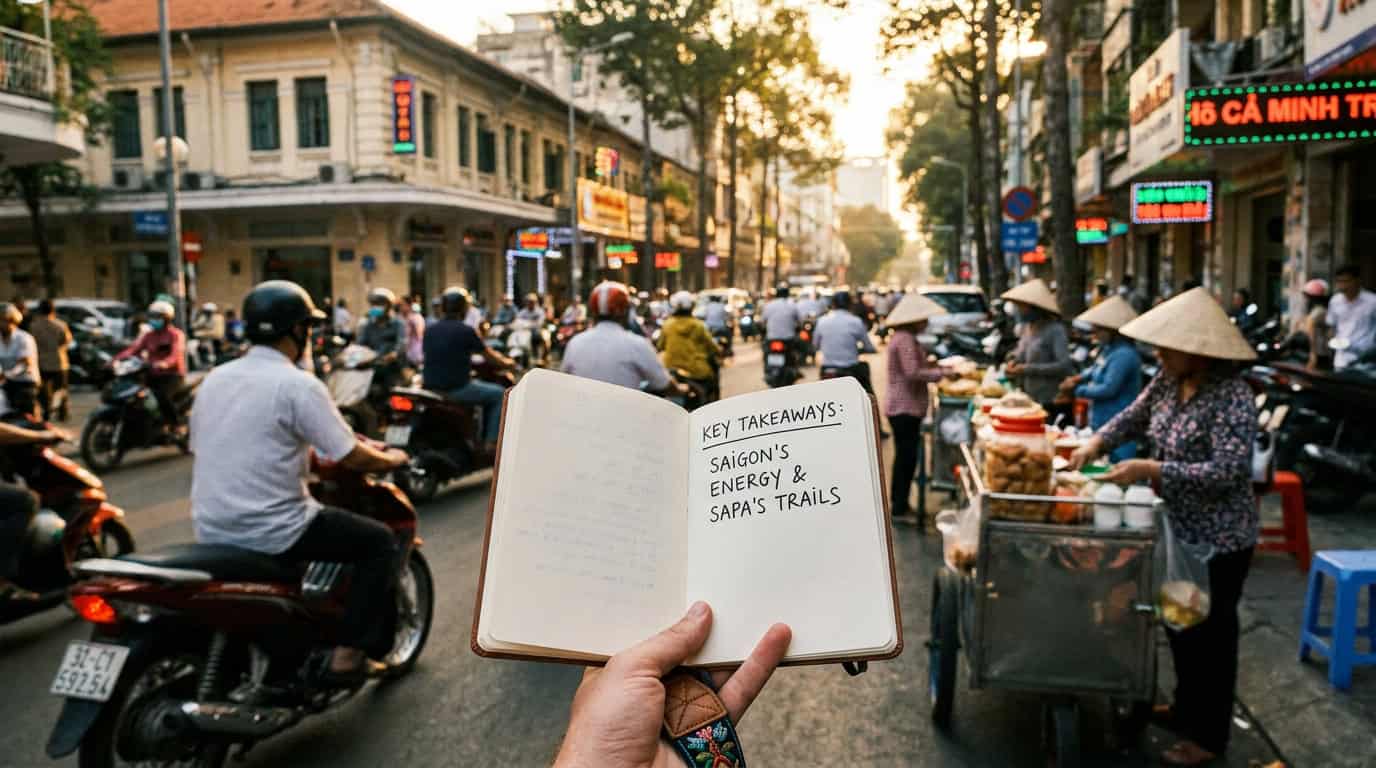
Key Takeaways
- Sapa trekking covers 4 difficulty levels: easy (Cat Cat, Ta Phin loop), moderate (Lao Chai – Ta Van), challenging (Y Linh Ho – Ban Ho), and expert (Fansipan summit, 2-day Bac Ha ridges).
- Best months: March–May and September–November (dry, clear skies, 15–22°C).
- Average daily cost with a local guide + homestay: 850,000–1,400,000 VND (~US$34–56) per person.
- Booking direct with H’mong-led co-ops (Sapa O’Chau, ETHOS) returns ~70% more income to villages than tourist-street agencies.
- Permits: none required for day hikes; Hoang Lien National Park entry is 80,000 VND (~US$3.20).
- Pair Sapa with 2–3 nights in Hanoi or Ho Chi Minh City for a balanced 7–10 day Vietnam itinerary.
Sapa Trekking at a Glance
| Detail | Information |
|---|---|
| Location | Lao Cai Province, 320 km NW of Hanoi |
| Elevation range | 950 m (town) – 3,143 m (Fansipan) |
| Best months | Mar–May, Sep–Nov |
| Park entry fee | 80,000 VND (~US$3.20) |
| Guide rate (day) | 600,000–900,000 VND (~US$24–36) |
| Homestay (full board) | 350,000–500,000 VND (~US$14–20) |
| Difficulty range | Easy → Expert (4 grades) |
| Typical trek length | 3 hours – 3 days |
Why Choose Sapa Trekking in 2026?
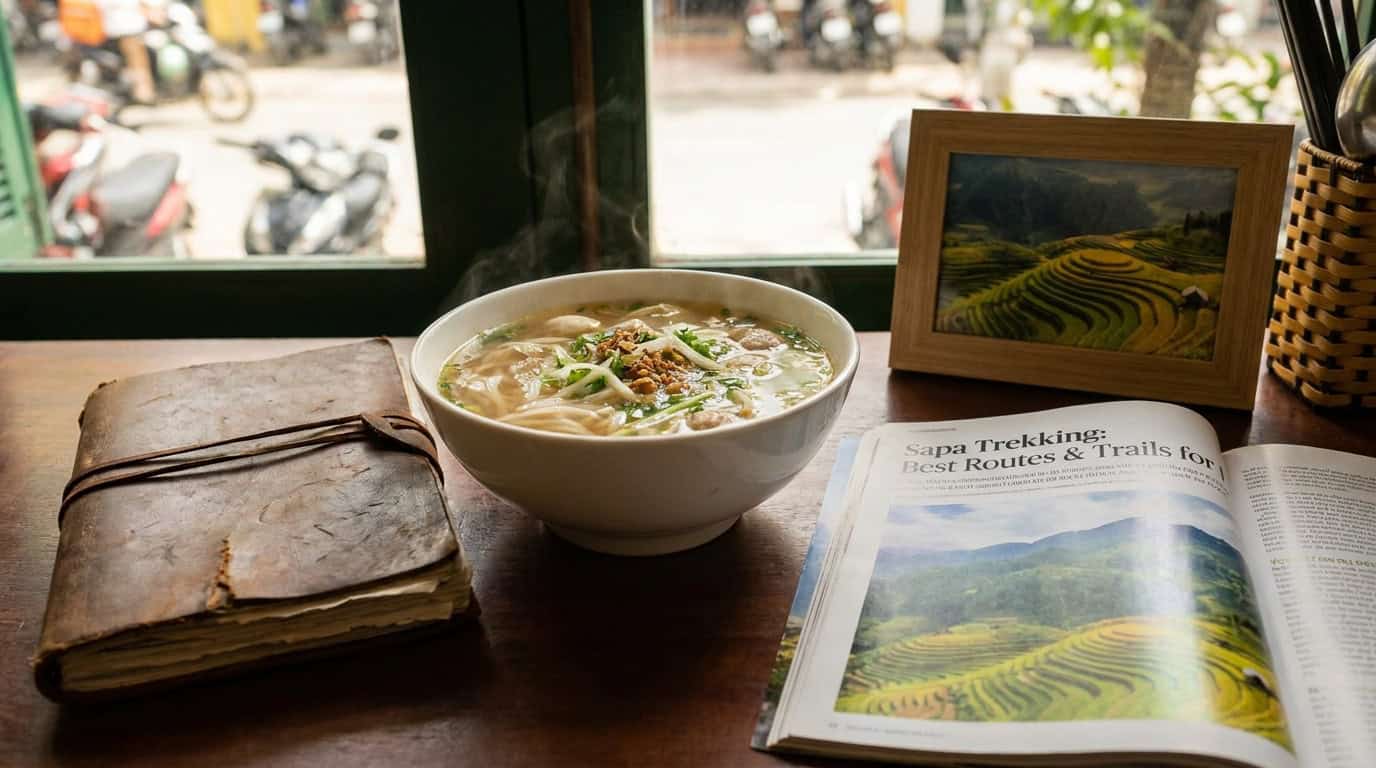
Sapa sits inside Hoang Lien National Park, a UNESCO-recognised biodiversity hotspot with more than 2,000 plant species and 66 mammals, including the threatened black gibbon. Five ethnic minority groups — H’mong, Red Dao, Tay, Giay, and Xa Pho — live in villages scattered through the valleys, and most trekking routes pass directly through their farms and weaving workshops.
What’s new for 2026:
- The Muong Hoa cable car extension (opened February 2026) now lets less-mobile travellers reach the central valley viewpoint in 12 minutes.
- Stricter homestay registration: every overnight stop must report guest names; carry your passport.
- New 22 km loop trail between Sin Chai and Cat Cat opened in late 2025, taking pressure off the overcrowded Lao Chai path.
According to the Vietnam National Administration of Tourism, Lao Cai province welcomed 8.2 million visitors in 2025, and roughly 1 in 4 booked at least one guided hike.
Sapa Trekking Difficulty Levels Explained

Before picking a route, match it honestly to your fitness. Local guides grade trails on four levels:
- Easy (Grade 1): under 8 km, < 200 m elevation gain, flat farm tracks. Suitable for kids 8+ and casual walkers.
- Moderate (Grade 2): 8–15 km, 200–600 m gain, mud and stream crossings. Need everyday fitness.
- Challenging (Grade 3): 15–25 km over 1–2 days, 600–1,200 m gain, steep clay sections. Regular hiking experience required.
- Expert (Grade 4): Fansipan via Tram Ton or Sin Chai routes — 1,700+ m gain, altitude effects, sub-zero nights.
When in doubt, choose one grade lower than you’d pick at home. Humidity in Sapa often sits above 85%, which makes any climb feel one full grade harder.
Best Easy Sapa Trekking Routes for Beginners

1. Cat Cat Village Loop (5 km, 3 hrs)
The closest village to Sapa town, reached on foot in 30 minutes downhill. Wide paved paths, a 25-metre waterfall, and a working hydroelectric mill from the French colonial era. Entry 70,000 VND (~US$2.80). Best done before 9 a.m. to avoid tour buses.
2. Ta Phin Red Dao Loop (7 km, 4 hrs)
A flat circular walk through Ta Phin commune, famous for its herbal bath houses. Combine the hike with a 45-minute soak in a wooden tub of 12 medicinal plants (200,000 VND / ~US$8). Most accessible route for travellers over 60.
3. Sapa Town – Sin Chai Viewpoint (6 km, 3 hrs)
A gentle paved climb to a panoramic platform facing Fansipan. No guide needed; signs are in English and Vietnamese.
Best Moderate Sapa Trekking Trails
4. Lao Chai – Ta Van – Giang Ta Chai (12 km, 6–7 hrs)
The classic Muong Hoa Valley route. You’ll descend 350 m through rice terraces, cross two suspension bridges, and stop in three villages (Black H’mong, Giay, Red Dao). End with a homestay dinner in Ta Van — sticky rice in bamboo, smoked buffalo, and corn wine.
5. Y Linh Ho – Lao Chai – Ban Ho (18 km, 2 days)
Adds a second day descending to Ban Ho’s Tay village (520 m elevation), where the climate is tropical and you can swim in the La Ve waterfall plunge pool. Overnight in stilted wooden houses.
Best Advanced Sapa Trekking & Multi-Day Routes
6. Fansipan Summit via Tram Ton (Expert, 2–3 days)
The classic route: 11.2 km one-way, starting at Tram Ton Pass (1,940 m) and climbing 1,200 m to the summit at 3,143 m. Camps at 2,200 m and 2,800 m. Mandatory licensed guide (1,800,000 VND / ~US$72 per group per day), porter optional. Snow possible December–February.
For travellers short on time, the Fansipan cable car reaches the summit in 15 minutes — useful as a “Plan B” if weather closes the trail.
7. Bac Ha – Hoang Su Phi Ridge (3 days)
A serious off-the-grid route eastward into Ha Giang province. 42 km total, sleeping in two unmarketed Flower H’mong villages. Permit through a licensed operator only. Best in October when Hoang Su Phi’s terraces turn gold.
What to Pack for Sapa Trekking
A minimal packing list keeps your daypack under 6 kg:
- Waterproof shell jacket (rain is possible any month)
- Quick-dry trousers — avoid cotton jeans
- Trail shoes or light boots with aggressive lugs
- 2 L water bladder; refill at homestays (boiled water free)
- Headlamp + spare batteries
- Cash in small VND notes; ATMs only in Sapa town
- Power bank — most homestays have only 1–2 outlets
- Sunscreen SPF 50+ and a buff for sun and dust
For multi-day Sapa trekking, add a 0°C sleeping bag liner (homestays provide blankets but they’re rarely washed daily) and water-purification tablets.
Best Time to Go for Sapa Trekking
| Season | Months | Conditions | Recommendation |
|---|---|---|---|
| Spring | Mar–May | 15–22°C, wildflowers | Best overall |
| Summer | Jun–Aug | 20–28°C, heavy rain, leeches | Avoid Grade 3+ |
| Autumn | Sep–Nov | 16–23°C, gold rice terraces | Best for photos |
| Winter | Dec–Feb | 0–12°C, occasional snow | Cable car only for most |
The golden rice harvest peaks between 15 September and 5 October — book homestays at least 6 weeks ahead. As Lonely Planet notes, this window is also when guide rates rise by roughly 25%.
Hiring Guides & Choosing Homestays
Two ethical operators we recommend:
- Sapa O’Chau — H’mong-founded social enterprise; trains young women from the villages as guides.
- ETHOS Spirit of the Community — small-group cultural treks, profits reinvested in local schools.
Avoid being recruited on Sapa’s main square — those women are often paid below market rate and you’ll get an unlicensed guide. Book online or at the operator’s office.
Homestays vary widely. Look for these markers of quality:
- Hot shower (gas, not just solar)
- Mosquito net over each mattress
- Western toilet (most have one even if also a squat)
- Owner speaks at least basic English (or your guide stays the night)
Safety, Permits & Local Etiquette
Day hikes inside the Muong Hoa Valley don’t require permits, but you must pay the 80,000 VND park fee at the Cat Cat or Y Linh Ho gates. For Fansipan and any overnight wild camping, your guide handles the park permit (included in the package price).
A few etiquette rules that locals appreciate:
- Ask before photographing people, especially elderly women in traditional dress.
- Buy directly from weavers rather than the souvenir stalls — prices are similar, income stays local.
- Decline politely if children offer to sell trinkets; this discourages truancy.
- Remove shoes before entering any stilt house.
Mobile signal disappears beyond Ta Van; download offline maps (Maps.me or Gaia GPS) before leaving town.
How to Get to Sapa from Hanoi or Saigon
From Hanoi: the easiest route is the overnight train to Lao Cai (8 hours, soft sleeper 750,000 VND / ~US$30), then a 35 km shuttle van to Sapa town (50,000 VND / ~US$2). Sleeper buses are cheaper (450,000 VND / ~US$18) but less comfortable on the new expressway curves. For a step-by-step booking walkthrough, see our Hanoi to Sapa transport guide.
From Ho Chi Minh City: fly to Hanoi (2 hours, from 1,200,000 VND / ~US$48), then continue by train or bus. Many of our guests base themselves in District 1 first, using our Ho Chi Minh City things-to-do hub to plan 2–3 acclimation days before flying north. If you’re building a longer trip, our Saigon 7-day itinerary pairs perfectly with a 4-night Sapa extension.
For deeper context on northern Vietnam culture and food, browse our Vietnam travel guide before you fly.
Sample 4-Day Sapa Trekking Itinerary
- Day 1: Arrive Sapa town, easy Cat Cat loop afternoon, dinner on Cau May Street.
- Day 2: Guided trek Lao Chai → Ta Van (12 km), homestay in Ta Van village.
- Day 3: Continue Ta Van → Giang Ta Chai → Ban Ho (15 km), waterfall swim, second homestay.
- Day 4: Easy morning walk back to road head, transfer to Sapa town, evening train to Hanoi.
Total cost (excluding train): roughly 4,200,000 VND (~US$168) per person with a private guide, all meals, two homestays, and the park fee.
FAQ
Is Sapa trekking suitable for solo female travellers?
Yes. Sapa is one of the safest destinations in Vietnam for solo women, and most local guides are themselves women from the H’mong or Red Dao communities. Join a small group through Sapa O’Chau or ETHOS for company, and stick to homestays with verified reviews. Avoid hiking after dark on rural sections.
How fit do I need to be for the Lao Chai to Ta Van route?
Average fitness is enough. The 12 km route descends 350 m and re-ascends about 200 m over 6–7 hours at a relaxed pace, with lunch and photo stops. If you can walk briskly for one hour without stopping, you can complete this trail — just expect muddy patches between June and August.
How much should I tip my Sapa trekking guide?
Tipping is appreciated but not obligatory. A fair tip is 100,000–200,000 VND (~US$4–8) per traveller per day for a guide, and 50,000–80,000 VND for porters or homestay hosts. If you booked through a co-op, the tip goes 100% to the guide; through commercial agencies, hand it directly to avoid splits.
Can I trek Fansipan without a guide?
No. Since 2018, Hoang Lien National Park has required a licensed guide for any foot ascent of Fansipan, primarily for rescue accountability after several fatalities on the Sin Chai route. The cable car remains open to independent visitors and costs 800,000 VND (~US$32) return.
What happens if it rains during my trek?
Light rain is normal and treks proceed as planned — bring a proper shell jacket. Guides only cancel for thunderstorms, landslide warnings, or sustained heavy rain. If your trek is cut short, most reputable operators offer a partial refund or a free reschedule. Always confirm the cancellation policy in writing before paying.
Are there ATMs and Wi-Fi in the villages?
ATMs are only available in Sapa town (Agribank, BIDV, Vietcombank). Most homestays in Ta Van and Cat Cat now have Wi-Fi, but speeds drop to 1–2 Mbps. Beyond Giang Ta Chai, expect no signal at all — perfect for a digital detox.
Final Tips & Where to Stay Before You Fly North
A successful Sapa trekking trip starts with two relaxed days in a southern city to adjust to the heat and time zone before you head into the mountains. Many of our international guests fly into Tan Son Nhat, spend two nights with us in District 1, then take the morning flight to Hanoi and the overnight train onward to Lao Cai.
Ready to plan your Vietnam trip? Book a quiet, centrally located room at our Saigon Homestay in District 1 — walking distance to Ben Thanh Market, the Reunification Palace, and the airport shuttle stop. Our hosts will store extra luggage for free while you’re trekking up north, so you only travel with what you need on the trail.
Safe trekking, and see you in Saigon.
Prices here are in Vietnamese dong. Our Vietnam currency and money exchange guide covers live rates, ATM fees and where to change money.