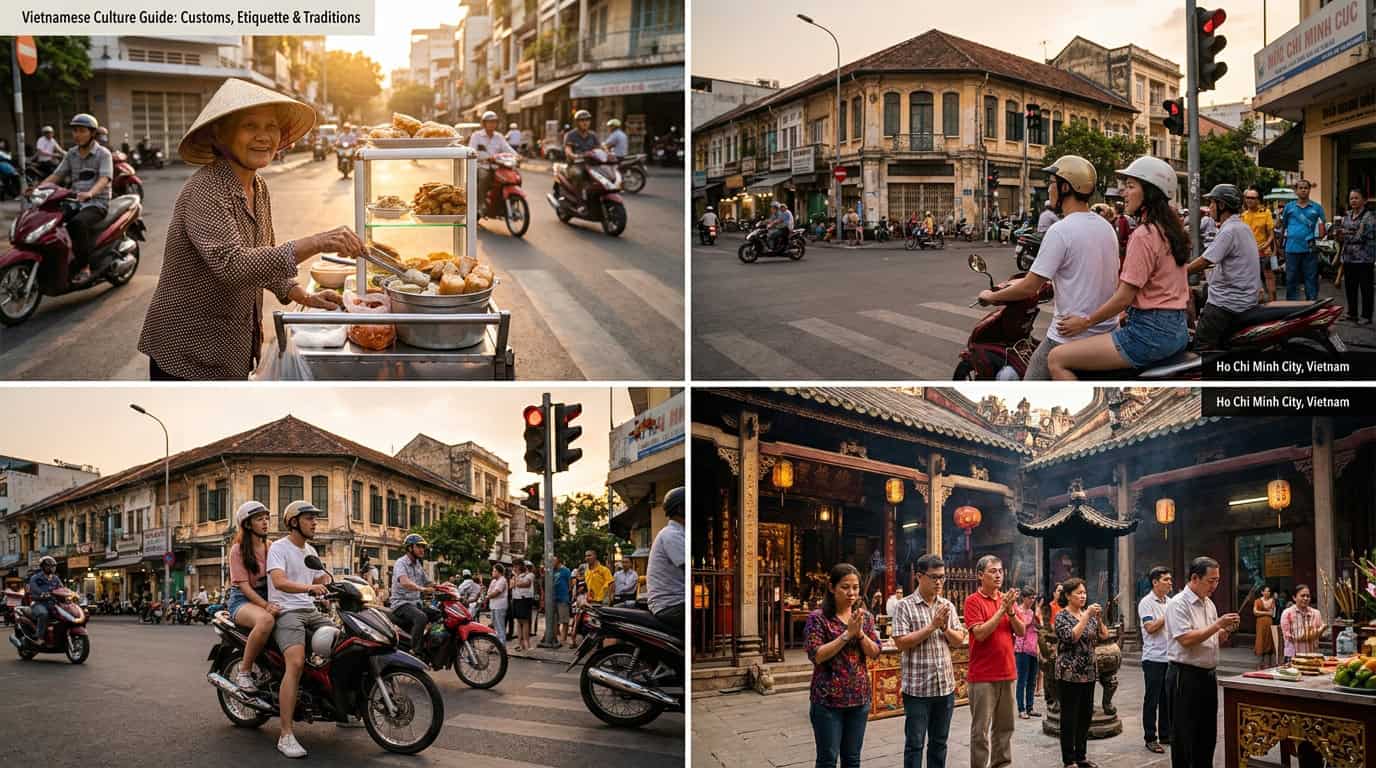
Vietnamese culture is a 4,000-year-old blend of Confucian family ethics, Buddhist spirituality, French colonial flourishes, and the daily rhythms of 54 officially recognized ethnic groups — and understanding even the basics will transform how locals treat you the moment you land in Saigon or Hanoi. Whether you are visiting for ten days or moving here for ten years, the small gestures (a two-handed handshake, the way you hold chopsticks, when to remove your shoes) signal respect faster than any phrasebook can. This 2026 guide distills what foreign visitors and expats actually need to know — customs, etiquette, religion, family, food, festivals, and the modern social shifts shaping Vietnam today.
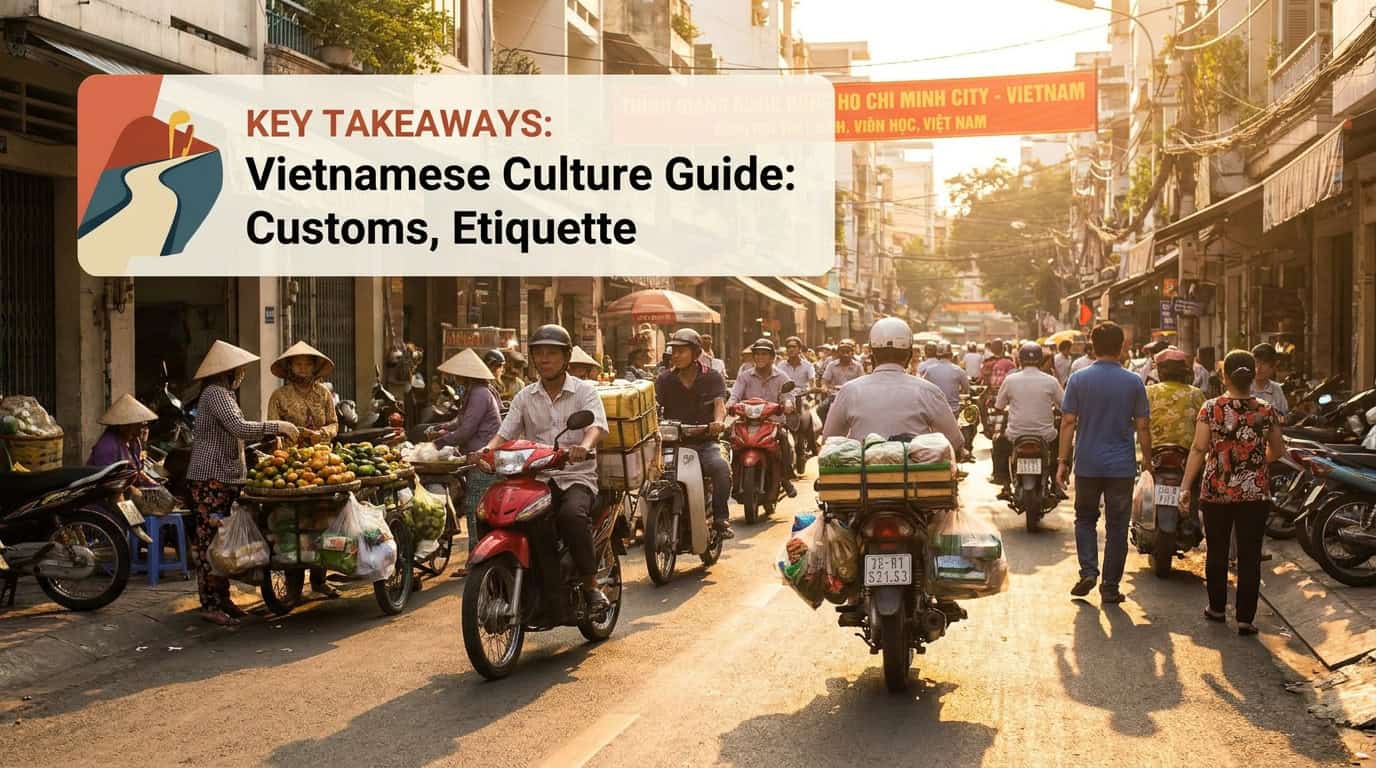
Key Takeaways
- Vietnamese culture blends Confucian, Buddhist, Taoist and Catholic influences with strong family-first values that still guide everyday decisions in 2026.
- 54 ethnic groups are officially recognized; the Kinh majority make up roughly 85% of Vietnam’s 100+ million population (General Statistics Office, 2024).
- Tết (Lunar New Year) is the single most important holiday — businesses close 7–10 days and prices for transport and homestays can rise 30–50%.
- Etiquette essentials: remove shoes indoors, use both hands when giving items to elders, never point chopsticks upward in a rice bowl, dress modestly at pagodas.
- Polygamy is illegal and Vietnam is one of the most LGBT-friendly countries in Southeast Asia, though same-sex marriage is not yet legally recognized.
- Budget tip: a cultural day in Ho Chi Minh City (museum + pagoda + street food + coffee) costs roughly 400,000–600,000 VND (≈ 16–24 USD).
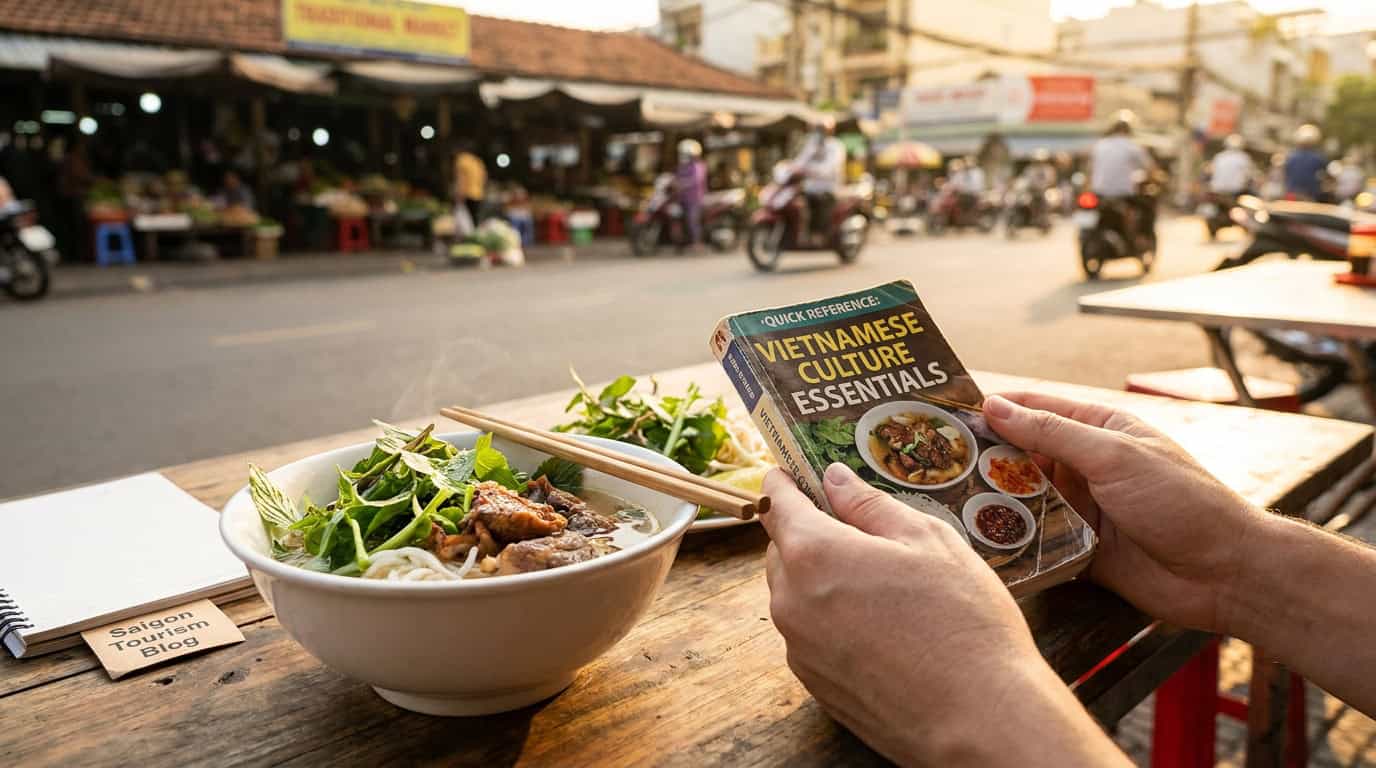
Quick Reference: Vietnamese Culture Essentials for Travelers
| Aspect | Detail | Best Time / Cost |
|---|---|---|
| Official language | Vietnamese (Tiếng Việt) | English widely spoken in tourist zones |
| Religion | 73% folk / non-religious, 14% Buddhist, 7% Catholic | Pagoda visits free; donations 20,000 VND (~0.80 USD) |
| Biggest holiday | Tết Nguyên Đán (Lunar New Year) | Late Jan – mid Feb 2026 |
| Tipping | Not expected, but appreciated | 10–20,000 VND per service |
| Dress code (temples) | Cover shoulders & knees | Free sarong rental at major sites |
| Best cultural city | Hanoi (north), Hue (center), Saigon (south) | Year-round; avoid Tết for sightseeing |
| Currency | Vietnamese Dong (VND) | 1 USD ≈ 25,400 VND (June 2026) |
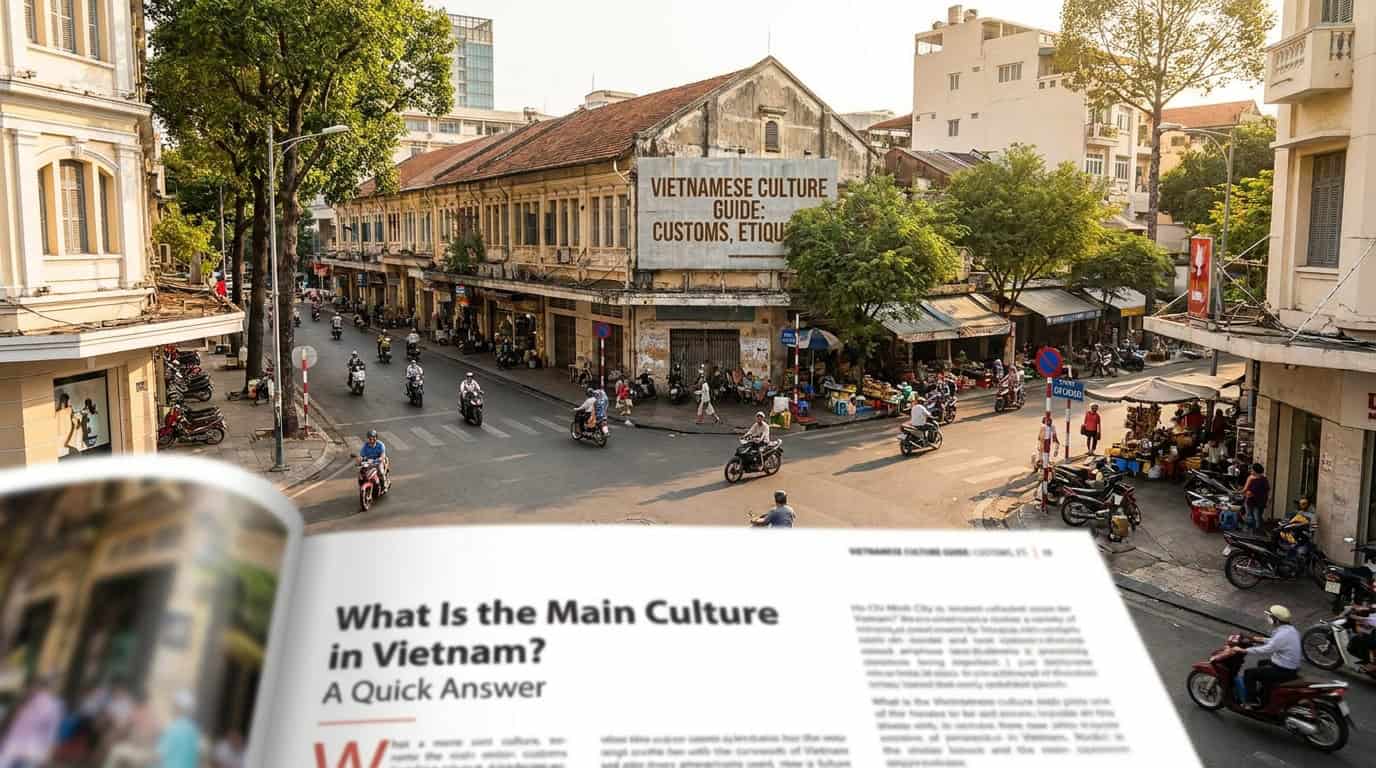
What Is the Main Culture in Vietnam? A Quick Answer
The main culture in Vietnam is Kinh (Việt) culture, which represents about 85% of the population and is built on four pillars: the extended family, Confucian respect for hierarchy and education, Mahayana Buddhist spirituality blended with ancestor worship, and a deep connection to rice agriculture. The remaining 15% spans 53 ethnic minorities — Tày, Thái, Mường, H’mông, Khmer, Hoa (Chinese), Cham and others — each with distinct languages, dress and rituals. According to the General Statistics Office of Vietnam, the country crossed 100 million people in April 2023, making Vietnamese culture one of the largest living traditions in mainland Southeast Asia.
What outsiders often miss: Vietnam is regionally tri-partite. The North (Hanoi) is formal, Confucian, four-seasoned; the Center (Hue, Da Nang, Hoi An) carries royal Nguyễn-dynasty refinement; the South (Ho Chi Minh City / Saigon) is freewheeling, entrepreneurial, and shaped by Khmer, Cham, French and overseas-Chinese influences. Saying “Vietnamese culture” without specifying a region is a bit like saying “American culture” without distinguishing Boston from New Orleans.
The Historical Roots of Vietnamese Culture
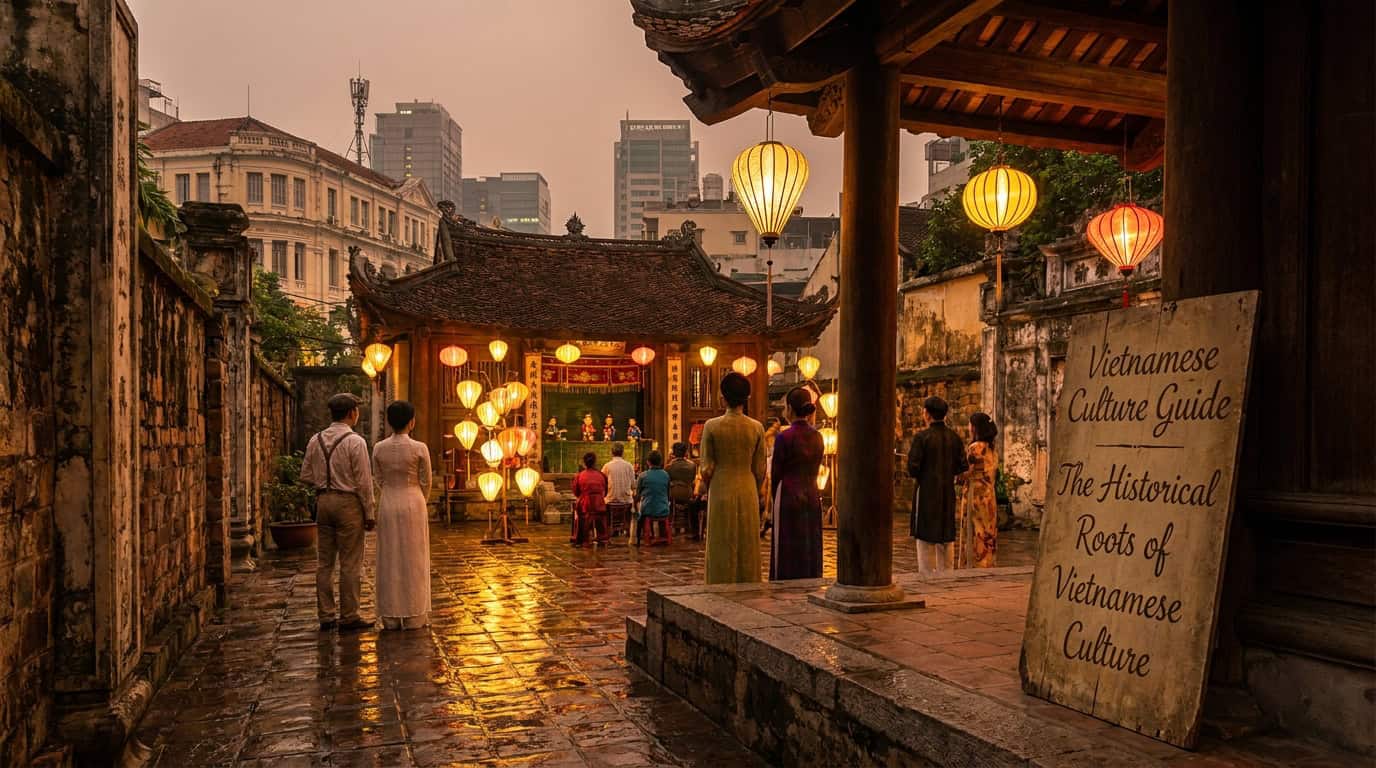
Four foreign influences shaped modern Vietnamese culture, and you can still see each of them on any city block:
- Chinese (111 BCE – 938 CE): A thousand years of Han rule gave Vietnam Confucianism, Mahayana Buddhism, chopsticks, the lunar calendar, ancestor altars and the original written script (chữ Hán).
- Indigenous Đại Việt dynasties (939 – 1858): Lý, Trần, Lê and Nguyễn dynasties built the imperial citadels, áo dài silhouette, water-puppetry, and the Vietnamese-language script chữ Nôm.
- French colonialism (1858 – 1954): Bequeathed Catholicism (now ~7% of the population), baguettes (bánh mì), egg coffee, the Latin-based quốc ngữ alphabet, and the wide boulevards of District 1.
- American era and Đổi Mới reforms (1955 – today): The 1986 Đổi Mới opening produced the energetic market economy you see now, plus a global diaspora of ~5.3 million Việt Kiều who flow culture, money and ideas back home.
UNESCO has inscribed eight Vietnamese sites on its World Heritage List, including the Complex of Huế Monuments and Hoi An Ancient Town — both essential stops for anyone serious about understanding the culture (UNESCO World Heritage Centre).
Family, Hierarchy and the “Face” Concept in Vietnamese Culture
Family is the operating system of Vietnamese culture. Three or even four generations under one roof remains common, especially outside the big cities, and the obligations are real: adult children are legally and morally expected to support aging parents, and the eldest son traditionally maintains the ancestor altar.
A few practical things this means for you as a visitor:
- Address people by hierarchy, not first name. Older man = chú or anh, older woman = cô or chị, grandparents = ông/bà. Using “you” (bạn) with someone older than you sounds rude.
- Avoid public confrontation. “Saving face” (giữ thể diện) is paramount. If a hotel makes a mistake, a calm private word fixes it; raising your voice in the lobby will freeze the staff and end the conversation.
- Compliments are deflected, not accepted. Say a meal is delicious and the host will say “it was nothing, badly cooked.” This is modesty, not insecurity.
- Gift-giving: bring a small token (fruit, tea, sweets from your home country) when invited to someone’s home. Avoid handkerchiefs (funeral association) and clocks (the word đồng hồ sounds close to “attending a funeral” in Chinese-influenced superstition).
For families planning their first trip, our Saigon itinerary for first-time visitors walks through the etiquette in context — temples in the morning, lunch with a local family, night markets in the evening.
Religion and Spirituality: The Triple Religion
Vietnamese spirituality is famously syncretic. The official census says only 14% of Vietnamese identify as Buddhist, but in practice the vast majority of households practice Tam Giáo (“Three Religions”) — a fusion of Mahayana Buddhism, Confucianism and Taoism, layered over ancestor worship and folk beliefs. Walk into any Vietnamese home and you’ll see a small altar with a photo of a deceased grandparent, a bowl of fruit, and a few burning incense sticks. That’s the real religion of Vietnam.
Other faiths you’ll encounter:
- Catholicism (~7%): Hanoi’s St. Joseph’s Cathedral and Saigon’s Notre-Dame are major landmarks.
- Cao Đài (~2.5%): A uniquely Vietnamese 20th-century religion that venerates Victor Hugo, Sun Yat-sen and Jesus alongside Buddha. The Tây Ninh Holy See, two hours from Saigon, is unforgettable.
- Hòa Hảo Buddhism (~1.5%): Concentrated in the Mekong Delta.
- Islam: Practiced primarily by the Cham ethnic minority.
Pagoda etiquette: dress modestly (no shorts above the knee, no tank tops), remove your shoes before stepping onto the prayer platform, never point your feet at a Buddha statue, and ask before photographing monks. A small donation of 10,000–50,000 VND (≈ 0.40–2.00 USD) into the wooden box is appreciated but not required.
Vietnamese Etiquette: Do’s and Don’ts for 2026 Visitors
This section answers the second People Also Ask question directly. Print it, screenshot it, or tattoo it — whatever helps.
Do:
- Greet elders first when entering a room, and use both hands when giving or receiving items, money, or business cards.
- Remove your shoes before entering homes, many homestays, and almost all pagodas and temples.
- Try a little of everything when invited to eat — refusing food can offend the host.
- Bargain politely at markets (start at ~50% of the asking price) but never at supermarkets, restaurants or pharmacies where prices are fixed.
- Carry small bills. Many street vendors cannot break 500,000 VND notes (≈ 20 USD).
Don’t:
- Don’t touch anyone’s head, including children — the head is considered spiritually sacred.
- Don’t point with your index finger. Use your whole hand, palm up.
- Don’t stick chopsticks vertically into a bowl of rice — it resembles incense at a funeral.
- Don’t show public affection beyond hand-holding; kissing in public still draws stares outside backpacker areas.
- Don’t wear red or white head-to-toe to a funeral, and don’t wear all black to a wedding.
- Don’t photograph military installations, police, or border posts — a fineable offense.
- Don’t discuss the 1955–1975 war, the Communist Party, or the South China Sea (called the East Sea here) unless a Vietnamese friend brings it up first.
For deeper context on local manners, our things to do in Ho Chi Minh City hub pairs each attraction with the specific etiquette you’ll need on-site.
Festivals and Traditions That Define the Year
Vietnamese culture lives most vividly during its festivals. The ten you’re most likely to encounter:
| Festival | Lunar Date | 2026 Gregorian | What Happens |
|---|---|---|---|
| Tết Nguyên Đán | 1/1 | Feb 17, 2026 | Lunar New Year — country shuts down for a week |
| Lễ Vu Lan | 7/15 | Aug 27, 2026 | Buddhist “Ghost Month” / honoring mothers |
| Tết Trung Thu | 8/15 | Sep 25, 2026 | Mid-Autumn / Children’s Festival, lanterns & mooncakes |
| Hung Kings’ Festival | 3/10 | Apr 26, 2026 | National holiday honoring Vietnam’s founding ancestors |
| Reunification Day | — | Apr 30, 2026 | National holiday |
| Labor Day | — | May 1, 2026 | National holiday |
| National Day | — | Sep 2, 2026 | Independence Day parades |
Tết is the big one. If you’re traveling between February 14 and February 24, 2026, book trains, buses and homestays at least eight weeks in advance, expect 30–50% price surges, and know that many family-run restaurants will simply close. The upside: Saigon’s flower street (Đường hoa Nguyễn Huệ) and the firework displays on the Saigon River are spectacular, and our Tet holiday survival guide covers what stays open.
Food Culture: More Than Just Phở
Food is the gateway most foreigners use to fall in love with Vietnamese culture, and the cuisine reflects every regional and historical influence in the country.
- North (Hanoi): subtle, less sweet, dominated by broths and herbs. Birthplace of phở and bún chả.
- Center (Hue, Da Nang): the spiciest and most ornate; royal-court dishes like bún bò Huế and cơm hến.
- South (Saigon, Mekong): sweeter, with coconut milk, tropical fruit and Khmer influences — hủ tiếu, bánh xèo, cá kho tộ.
A typical Vietnamese meal is shared family-style: rice in the center, several dishes around it (one soup, one vegetable, one meat or fish, often a pickled or fermented side), and a small bowl of nước chấm dipping sauce. Each person has a small rice bowl and chopsticks, and you serve yourself one bite at a time. Eating slowly and chatting is the point — meals last an hour minimum.
A cultural eating day in Saigon — phở breakfast, bánh mì lunch, Vietnamese coffee at 3 PM, cơm tấm dinner, a Saigon Beer nightcap — costs about 300,000 VND (12 USD) total. Our Vietnamese food guide for foreigners maps it street by street.
Modern Vietnamese Culture: Marriage, LGBT Rights and Social Change
Vietnam is changing faster than almost any society in Asia, and two questions foreign readers ask most deserve direct answers.
Can you have multiple wives in Vietnam? No. Polygamy is illegal under Vietnam’s 2014 Law on Marriage and Family, which defines marriage as a monogamous union between one man and one woman over the age of 18 (women) or 20 (men). Polygamy was practiced historically — emperors had multiple consorts and concubinage was tolerated until the French colonial era — but a man (or woman) who marries while still legally married today can face administrative fines and, in some cases, criminal penalties.
Is Vietnam an LGBT-friendly country? Comparatively, yes — Vietnam is one of the most LGBT-tolerant countries in Southeast Asia, though full equality is still pending. Homosexuality has never been criminalized. The 2015 amended Law on Marriage and Family removed the prohibition on same-sex weddings (they can be held privately, though not legally registered), and in 2022 the Ministry of Health formally declared that “homosexuality is not a disease.” VietPride parades happen annually in Hanoi, Saigon and Da Nang. Same-sex marriage is not yet legally recognized, and adoption rights for same-sex couples remain limited. Most younger urban Vietnamese — especially in Ho Chi Minh City’s District 1, 2 and 3 — are openly welcoming; rural attitudes lag a decade behind.
Other modern shifts worth noting in 2026:
- Average age of first marriage has risen to 27.9 for men and 24.1 for women (General Statistics Office, 2024) — five years later than a generation ago.
- Birth rate has fallen to 1.96, below replacement.
- Over 79% of the population now has internet access, and TikTok and Zalo (a domestic super-app) shape culture as much as television once did.
Where to Experience Vietnamese Culture Firsthand in Saigon
If you have 48 hours in Ho Chi Minh City and want a concentrated dose of Vietnamese culture, three neighborhoods deliver:
- District 1 — Bến Thành & Đồng Khởi: colonial architecture, the Central Post Office, Notre-Dame Cathedral, the Reunification Palace, and Bến Thành Market. Walkable, beginner-friendly.
- District 5 — Chợ Lớn (Cholon): the largest Chinatown in Vietnam, with 18th-century Hoa pagodas like Thiên Hậu and Nhị Phủ Miếu.
- District 3 — Café and Áo Dài Museum belt: mid-century apartment cafés, the Áo Dài Museum, and the War Remnants Museum for the harder side of recent history.
Add a half-day cooking class in a local home and a Mekong Delta day trip and you have the cultural backbone of a perfect first visit.
Frequently Asked Questions About Vietnamese Culture
What is the main culture in Vietnam?
The main culture in Vietnam is Kinh (Việt) culture, practiced by roughly 85% of the population. It blends Confucian family ethics, Mahayana Buddhism, Taoism and ancestor worship, with strong regional flavors in the north (Hanoi), center (Hue) and south (Saigon). Fifty-three additional recognized ethnic minorities add linguistic, culinary and religious diversity across the country.
What are the main do’s and don’ts in Vietnam?
Do remove shoes before entering homes and pagodas, use both hands when giving items to elders, dress modestly at temples, and bargain politely at markets. Don’t touch anyone’s head, stick chopsticks upright in rice, show heavy public affection, photograph military sites, or discuss the war or politics unless a local friend raises the topic first.
Can you have multiple wives in Vietnam?
No. Polygamy is illegal in Vietnam under the 2014 Law on Marriage and Family, which defines marriage as monogamous between one man (20+) and one woman (18+). Historical emperors practiced polygyny, but today bigamy carries administrative fines and, in some cases, criminal penalties. Same-sex marriage is also not yet legally recognized, though weddings can be held privately.
Is Vietnam an LGBT-friendly country?
Vietnam is one of the most LGBT-tolerant countries in Southeast Asia. Homosexuality has never been illegal, the prohibition on same-sex weddings was lifted in 2015, and the Ministry of Health declared in 2022 that homosexuality is not a disease. Annual VietPride events run in Hanoi, Saigon and Da Nang. Same-sex marriage and adoption are not yet fully legal.
What language do Vietnamese people speak?
Vietnamese (Tiếng Việt) is the official language, written in the Latin-based quốc ngữ alphabet introduced by 17th-century Portuguese and French missionaries. It is tonal (six tones in the northern dialect, five in the south). English is widely spoken in tourist zones and among under-35 urban professionals; French is occasionally heard from older generations.
Is it safe to wear shorts and tank tops in Vietnam?
Yes in beach towns (Da Nang, Nha Trang, Phu Quoc) and inside Ho Chi Minh City’s tourist core, but always cover shoulders and knees when visiting pagodas, temples, government buildings or rural villages. Many religious sites will refuse entry or hand you a borrowed sarong if you arrive underdressed.
Plan Your Cultural Stay in District 1, Saigon
The fastest way to experience Vietnamese culture is to live inside it for a few days — wake up to the sound of street vendors, drink your cà phê sữa đá on a low plastic stool, and walk to Bến Thành Market before the morning crowd arrives. Our centrally located District 1 homestays put you within ten minutes’ walk of the Central Post Office, Notre-Dame Cathedral, the Reunification Palace, and the city’s best street-food alleys, with hosts who can introduce you to the customs in this guide one cup of egg coffee at a time.
Ready to book? Browse our handpicked homestays in central Saigon and message the host directly — most reply within an hour and can arrange airport pickup, cooking classes and motorbike day trips on request. Hẹn gặp lại bạn ở Sài Gòn — see you in Saigon.
Sources & further reading: Vietnam Embassy in the USA – Culture and Society, UNESCO World Heritage – Vietnam, General Statistics Office of Vietnam. Last updated: 8 June 2026.
Related Guides
- Getting Around Saigon: Grab, Metro, Bus & Waterbus Guide (2026)
- Basic Vietnamese Phrases Every Traveller Should Know (2026)
- Vietnam Visa on Arrival vs E-Visa: Which Is Better?
- Rent Motorbike Vietnam: Everything You Need to Know (2026)
- Vietnam Public Holidays 2026: Complete Calendar
- Cost of Living in Saigon: Monthly Budget Breakdown