
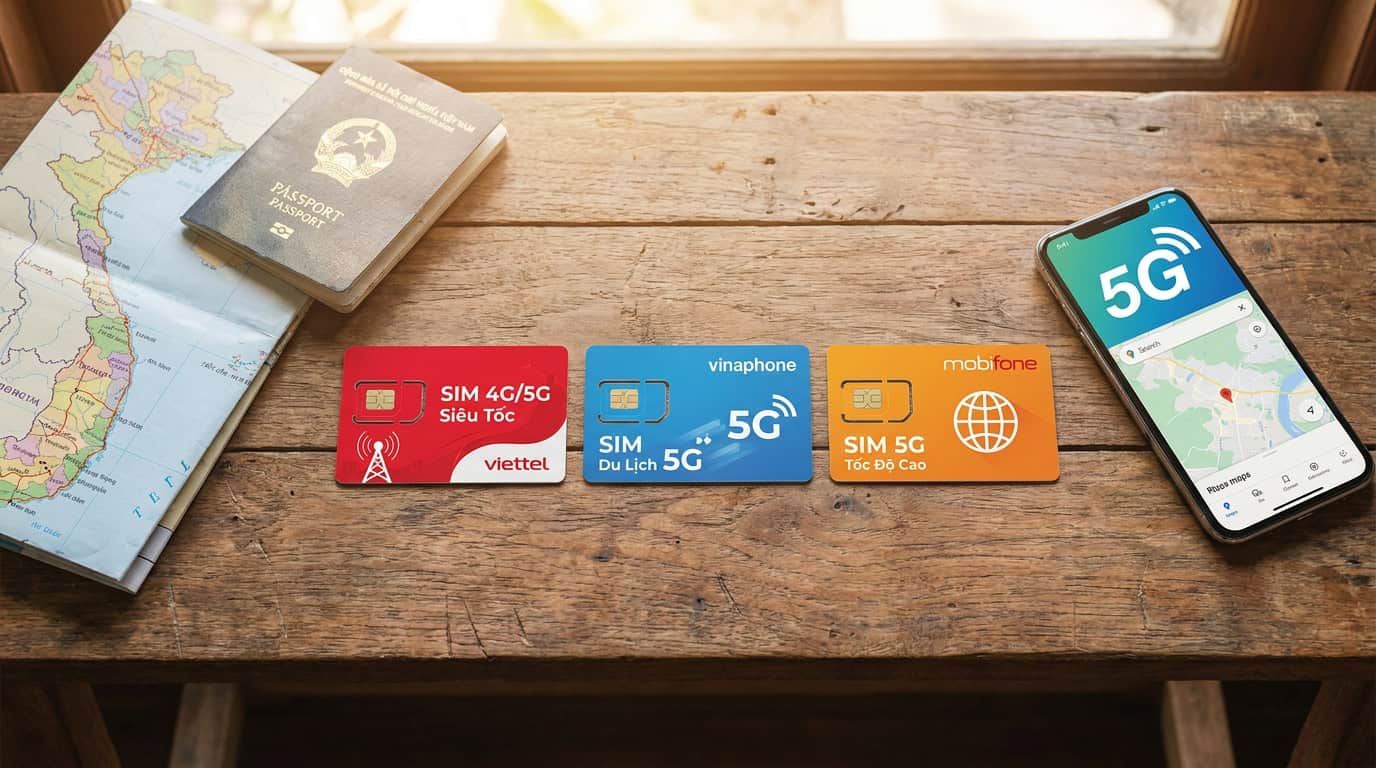
Getting a local Vietnam SIM card is one of the smartest moves you can make within the first hour of landing. Vietnam has 131.5 million mobile subscribers as of 2025 (Globe Newswire, 2025), and the country’s three major carriers collectively cover 94–95% of the mobile market (VietnamNet, 2024). That means connectivity is genuinely excellent almost everywhere you’ll travel. The challenge isn’t finding a signal — it’s choosing the right plan and avoiding the overpriced options pushed on tired arrivals at the airport. This guide cuts through every option: physical SIM vs. eSIM, Viettel vs. Vinaphone vs. Mobifone vs. international providers, airport vs. city store pricing, and how to activate everything in under ten minutes.
Key Takeaways
– Viettel dominates with 54–56% market share and 5G speeds of 617 Mbps (vietnam.vn, 2026) — the most reliable choice for most tourists.
– City store SIM plans cost 30–50% less than the same plans at the airport (Vietnam Backpacker Hostels).
– eSIMs work on most modern iPhones and Androids — but iPhones sold in mainland China do NOT support eSIM.
– Download a VPN before you board: Telegram was banned in Vietnam as of May 2025, and some other services are restricted.
Do You Actually Need a Local SIM Card in Vietnam?
Yes, a local Vietnam SIM card is worth it for almost every visitor. Vietnam’s average mobile broadband speed hit 136.21 Mbps in mid-2025, putting it well ahead of the regional average. A local SIM costs between $2.50 and $7 for 30 days of unlimited-ish data — less than a single coffee at most airport cafes. International roaming plans from home carriers typically charge $10–$15 per day for comparable data.
The practical case is even stronger than the price. Grab (ride-hailing), Google Maps, Agoda, and Booking.com all work perfectly on a Vietnamese data connection. Restaurant menus increasingly use QR codes. ATMs and hotels may send OTP codes to a local number. If you’re staying more than two or three days, roaming simply isn’t competitive.
The only visitors who might skip a local SIM are those on a 24-hour layover or business travelers with corporate plans that cover Vietnam. Everyone else should pick one up.
Physical SIM vs. eSIM: Which Should You Choose?
A physical SIM is cheaper and easier for most travelers; an eSIM is better if you want to keep your home number active simultaneously. Physical SIMs for tourists in Vietnam start at 60,000 VND (~$2.50) at city stores and require passport registration. eSIMs from international providers like Airalo start at $4 for 1 GB / 3 days (Airalo).
The key deciding factors come down to your phone and your travel style.
Choose a physical SIM if:
– You want the cheapest data rates
– You’re comfortable swapping SIM trays
– You don’t need to keep your home number active
Choose an eSIM if:
– You want to keep your home number for calls while using Vietnamese data
– You’re arriving late at night and want connectivity before finding a store
– Your phone supports eSIM (check by dialing *#06# and looking for an EID number)
One important caveat: iPhones purchased in mainland China do not support eSIM, regardless of model year. Check your phone’s origin before assuming eSIM will work.
International eSIM provider Airalo offers Vietnam eSIM plans starting at $4 for 1 GB over 3 days, running on the Vinaphone network (Airalo, 2026). Physical tourist SIMs from domestic carriers start at 60,000 VND (~$2.50) for a 7-day plan purchased at a city store, making them roughly 37–60% cheaper per day than entry-level eSIM options for longer stays.
The Big Three: Viettel vs. Vinaphone vs. Mobifone Compared
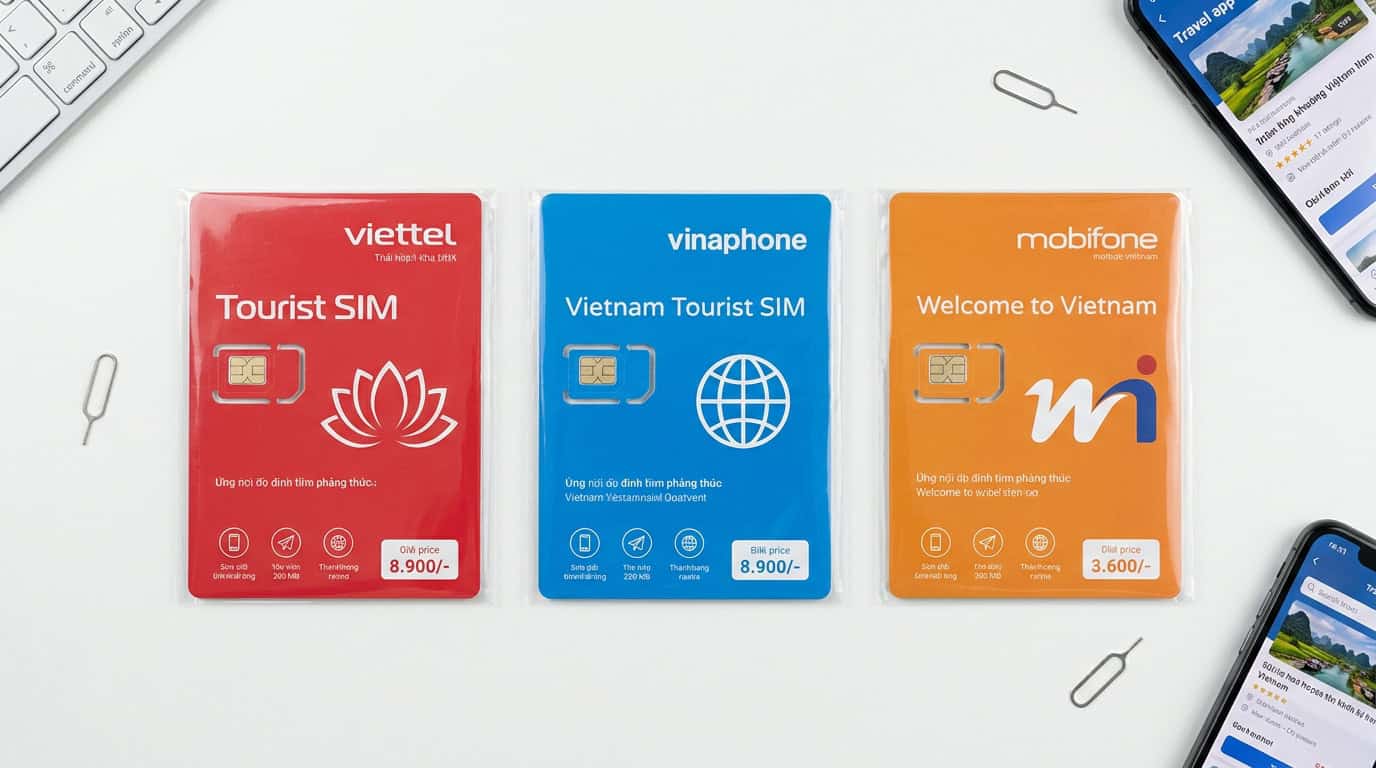
Viettel, Vinaphone, and Mobifone together control 94–95% of Vietnam’s mobile market (VietnamNet, 2024). For tourists, the real competition is between Viettel’s breadth and the slightly cheaper plans sometimes available from the other two. All three networks are fast in cities; the differences emerge in rural areas and on motorway stretches between provinces.
| Carrier | Market Share | 5G Speed | 4G Population Cover | Best For |
|---|---|---|---|---|
| Viettel | 54–56% | 617 Mbps | 98.6% | All-round coverage, rural travel, reliability |
| Vinaphone | ~21% | 311 Mbps | Strong urban | City stays, eSIM availability |
| Mobifone | ~18% | 187 Mbps | Strong urban | Budget plans, Ho Chi Minh City |
Viettel’s 5G network reached 617 Mbps average download speed in January 2026 according to VNNIC measurements published by vietnam.vn — more than double Vinaphone’s 311 Mbps and more than triple Mobifone’s 187 Mbps. Viettel also operates 30,000+ 5G base stations across the country, a scale that neither competitor has matched.
As of January 2026, Viettel led Vietnam’s 5G performance with an average download speed of 617 Mbps, ahead of Vinaphone at 311 Mbps and Mobifone at 187 Mbps, according to VNNIC data published by vietnam.vn (vietnam.vn, 2026). Viettel’s 4G network covers 98.6% of Vietnam’s population.
Viettel Tourist SIM Plans & Prices (2026)
Viettel is the best all-round Vietnam SIM card for tourists, covering 98.6% of the population on 4G and offering the fastest 5G in the country at 617 Mbps (vietnam.vn, 2026). Its tourist SIM plans are available at city stores, Viettel branded shops, and most convenience stores — though airport kiosks charge a premium.
The three main tourist-oriented Viettel plans sold at city stores in 2026:
| Plan Name | Duration | Data | Calls | City Price | Airport Price (approx.) |
|---|---|---|---|---|---|
| 5G60T | 7 days | 5 GB/day | None | 60,000 VND (~$2.50) | ~84,000–90,000 VND |
| 5G150T | 30 days | 5 GB/day | None | 150,000 VND (~$6.00) | ~210,000–225,000 VND |
| 5G180H | 30 days | 5 GB/day | Domestic calls incl. | 180,000 VND (~$7.20) | ~252,000–270,000 VND |
The 5G150T plan at 150,000 VND (~$6) for 30 days of 5 GB/day is the clear standout value. Five gigabytes daily is more than enough for navigation, messaging, and streaming — most travelers use two to three gigabytes on heavy days. The 5G180H plan at 180,000 VND adds local calling minutes, which is worth it if you plan to book local restaurants, tours, or taxis by phone.
Useful Viettel USSD codes:
– Check balance: *101#
– Check remaining data: *098#
– Register a new package: dial customer service at 198
Viettel’s 30-day 5G150T tourist SIM plan costs 150,000 VND (~$6 USD) when purchased at a city store in Vietnam in 2026, providing 5 GB of daily data on a network covering 98.6% of Vietnam’s population on 4G. The same plan purchased at Tan Son Nhat or Noi Bai airport typically costs 30–50% more (Vietnam Backpacker Hostels).
Vinaphone Tourist SIM Plans & Prices (2026)
Vinaphone is Vietnam’s second-largest carrier with roughly 21% market share and 5G speeds of 311 Mbps, making it a solid option for city-based travelers. Its key differentiator is eSIM availability — Vinaphone is the network Airalo’s Vietnam eSIM runs on, which means international travelers can access Vinaphone coverage without a physical SIM swap. Urban coverage in Ho Chi Minh City and Hanoi is strong; rural and mountain coverage lags behind Viettel.
Vinaphone’s main tourist SIM option for 2026:
| Plan | Duration | Data | Calls | Price |
|---|---|---|---|---|
| Tourist SIM (physical) | 15 days | Unlimited (FUP applies) | Domestic incl. | 199,000 VND (~$8) |
| eSIM (via Vinaphone direct) | 30 days | 5 GB/day | None | ~$20 USD |
The 15-day physical SIM at 199,000 VND is good for shorter trips and includes local calling minutes. For a full month, the Viettel 5G150T undercuts Vinaphone on price while offering better rural coverage — so Vinaphone’s advantage is mainly for travelers who specifically need the eSIM option or are staying in major urban centers.
Useful Vinaphone data check: Send SMS “KT DATA” to 999.
Mobifone Tourist SIM Plans & Prices (2026)
Mobifone holds roughly 18% of Vietnam’s mobile market with 5G speeds of 187 Mbps and strong Ho Chi Minh City coverage, making it a decent choice for travelers who will spend most of their trip in the south. Mobifone’s standout product for international arrivals is the Way2Go SIM, sold exclusively at airport counters.
| Plan | Channel | Duration | Data | Calls | Price |
|---|---|---|---|---|---|
| Way2Go | Airport only | 30 days | 6 GB total | 60 min local + 30 min intl + 100 SMS | 250,000 VND (~$10) |
| Standard tourist SIM | City stores | 30 days | 3–5 GB/day (plan varies) | Varies | 100,000–150,000 VND |
The Way2Go plan at 250,000 VND is the priciest of the major airport options, but it includes 30 minutes of international calling — something neither Viettel’s nor Vinaphone’s basic plans include. If you regularly call home on a voice line rather than WhatsApp, this might justify the premium. For pure data users, it’s overpriced compared to Viettel’s city-store plans.
Useful Mobifone USSD code: Dial *345# to enable 4G LTE on a new SIM.
International eSIM Providers: Airalo, Holafly & Others
International eSIM providers offer a convenient pre-arrival option, but they cost two to ten times more than local SIM plans for equivalent data. Airalo’s Vietnam eSIM starts at $4 for 1 GB over 3 days (Airalo), and Holafly’s unlimited 7-day plan is $29.90, rising to $74.90 for 30 days. Both run on the Vinaphone network.
The main argument for international eSIMs isn’t price — it’s the dual-SIM convenience. Keeping your home number active for banking OTPs and two-factor authentication while routing all data through a Vietnamese number is genuinely useful. Anyone who has been locked out of online banking mid-trip because their home carrier’s SIM was offline will understand. For that specific use case, the premium is defensible.
Top international eSIM providers for Vietnam (2026):
| Provider | Network | Entry Plan | 30-Day Unlimited | Notes |
|---|---|---|---|---|
| Airalo | Vinaphone | $4 / 1 GB / 3 days | ~$25–30 | Most popular; easy app |
| Holafly | Vinaphone | N/A | $74.90 / 30 days | Unlimited data; no calls |
| Saily | Vinaphone | $3.99 / 1 GB / 7 days | ~$22 | Good mid-range option |
| Nomad | Vinaphone | $3.50 / 1 GB / 7 days | ~$20 | Competitive pricing |
For stays longer than two weeks, a local Viettel SIM bought in the city is cheaper every time. For trips under a week or same-day arrivals, international eSIMs earn their convenience premium.
Where to Buy: Airport vs. City Store vs. Online
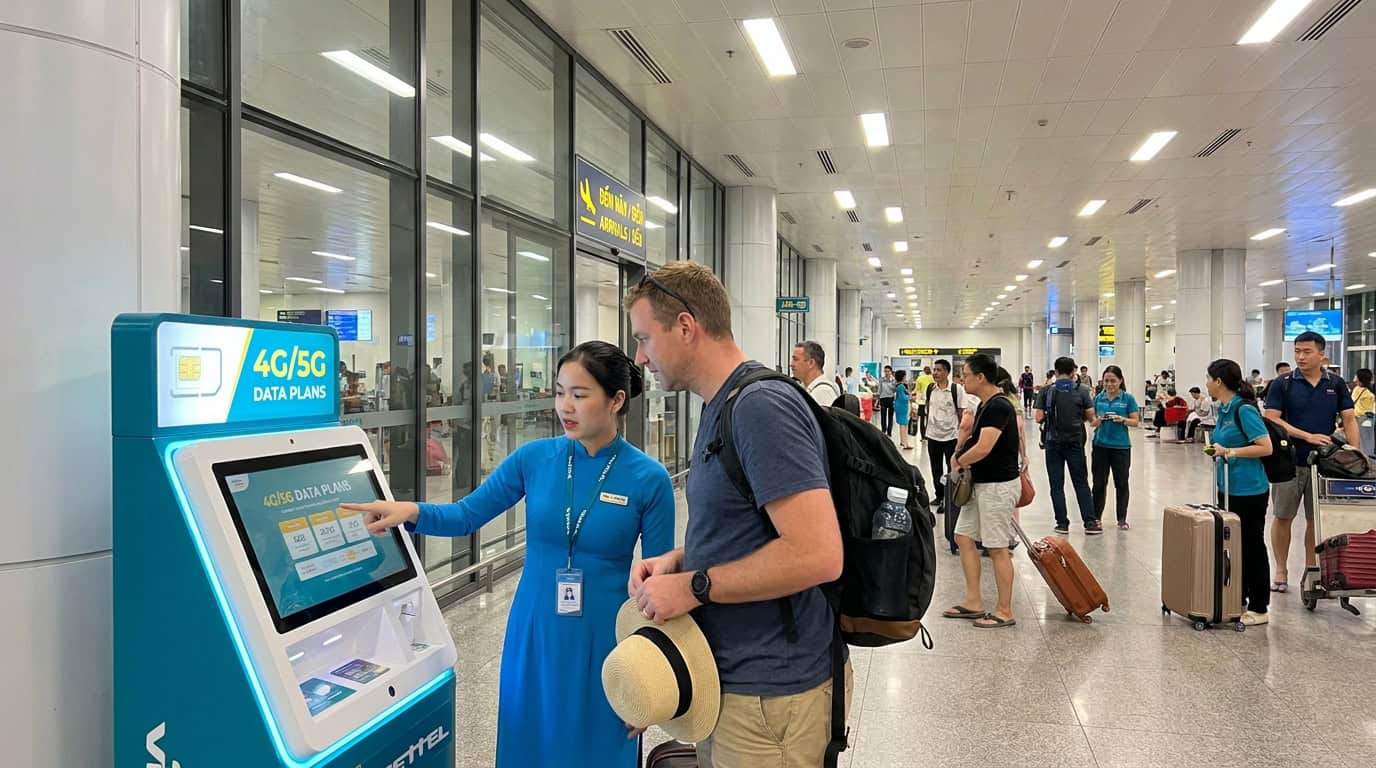
City stores are 30–50% cheaper than airport counters for the same Vietnam SIM card plans (Vietnam Backpacker Hostels). The price premium at Tan Son Nhat and Noi Bai airports is consistent across all three carriers. That said, the airport is the right choice if you need connectivity the moment you clear customs — especially for late-night arrivals when city stores are closed.
At Tan Son Nhat Airport (Ho Chi Minh City):
Viettel, Vinaphone, and Mobifone all have official kiosks in both the international arrival halls of Terminal 1 and Terminal 2. Look for uniformed staff at branded counters directly after the customs exit. Avoid anyone who approaches you in the arrival hall holding SIM cards — these are often “ghost SIMs” registered to someone else’s passport, which Vietnamese regulations can deactivate at any time.
At city stores:
In Ho Chi Minh City, Viettel stores are concentrated along Nguyen Hue boulevard in District 1, at Saigon Centre, and inside WinMart and Circle K locations. You’ll also find SIM counters in Co.op Mart supermarkets and Vincom shopping centers. Most convenience stores can top up an existing SIM but may not activate new ones.
Online (pre-arrival):
Airalo, Holafly, Saily, and Nomad all allow full purchase and profile download before you board. This is the cleanest option for travelers who want to land with data active, provided their phone supports eSIM.
Ghost SIM warning: A “ghost SIM” is a prepaid SIM sold without proper passport registration in your name. Vietnamese law requires SIM registration with a valid passport. Ghost SIMs can be deactivated without notice. Always buy from an official carrier store or a reputable convenience chain, and expect to show your passport.
How to Activate Your Vietnam SIM Card (Step-by-Step)
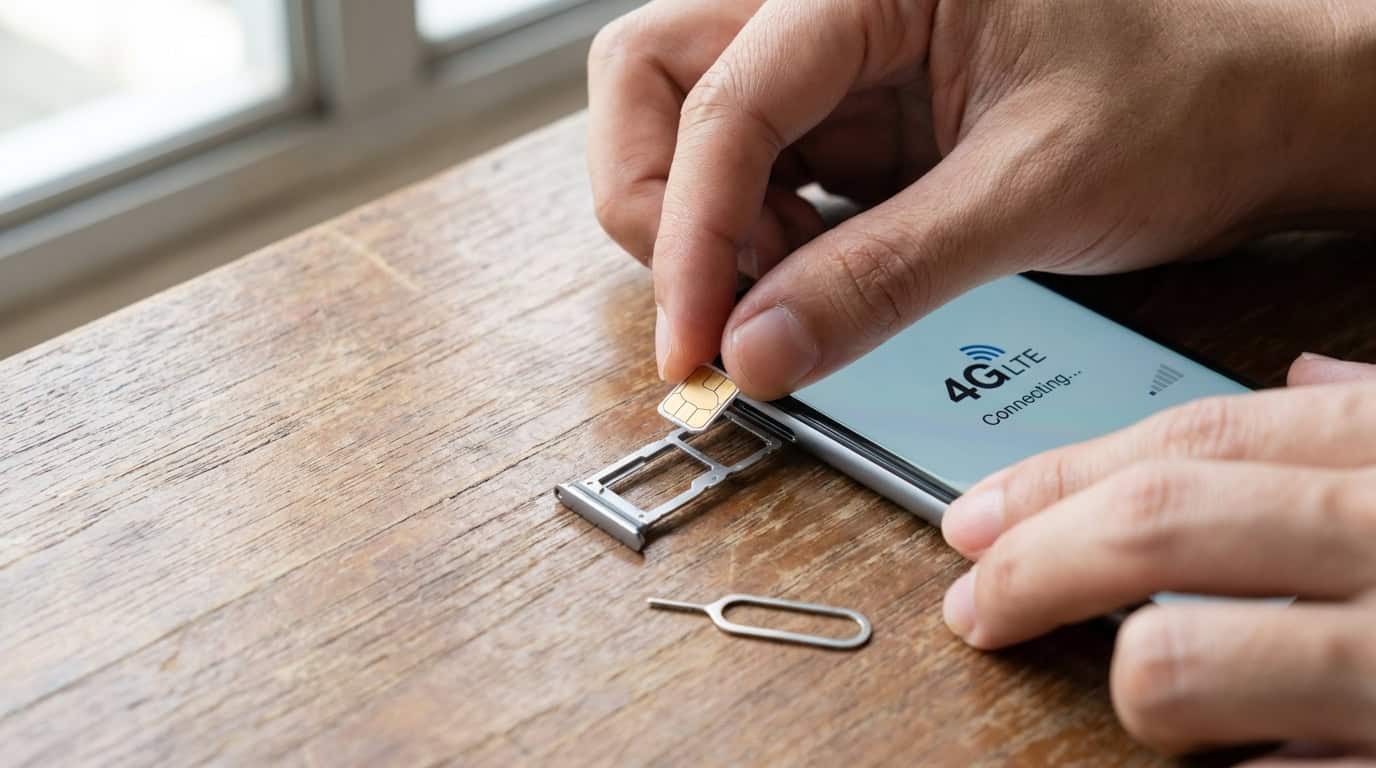
Activating a Vietnam SIM card takes under five minutes if you follow the steps in order. Most tourist SIMs sold at official counters are pre-activated with the data package already loaded. The steps below cover both the standard activation flow and the self-service registration that some city-store purchases require.
For a physical SIM purchased at an official store:
- Power off your phone before swapping SIM trays — hot-swapping can cause recognition errors on some Android models.
- Insert the new SIM. Power on and wait 60–90 seconds for the carrier to register.
- Confirm you see “Viettel,” “Vinaphone,” or “Mobifone” in the carrier field at the top of your screen.
- Dial
*101#(Viettel) or*345#(Mobifone) to confirm your account balance and data status. - If data doesn’t connect within two minutes, go to Settings → Mobile Data → APN settings and verify the APN matches the carrier’s published APN (Viettel:
v-internet; Vinaphone:m3-world; Mobifone:m-wap). - Test with a browser load or Google Maps.
For an eSIM:
- Download the provider app (Airalo, Holafly, etc.) and purchase your plan before arriving in Vietnam.
- In phone Settings → Mobile Data (or Cellular), add the eSIM profile using the QR code provided.
- Set the eSIM as your primary data line. Keep your physical SIM as your call/SMS line if you need your home number active.
- On arrival in Vietnam, your eSIM should connect automatically. If it doesn’t, toggle airplane mode off and on.
Top-up options: Circle K, WinMart, and 7-Eleven sell physical top-up vouchers for all three carriers. The MyViettel, MyVNPT, and MyMobifone apps handle top-ups digitally. MoMo and ZaloPay also support carrier top-ups if you have a Vietnamese bank-linked account.
Vietnam SIM Card for Ho Chi Minh City: What’s Best?
For Ho Chi Minh City specifically, Viettel’s 5G150T plan at 150,000 VND is the best all-round Vietnam SIM card for 30-day stays. All three networks have strong urban coverage in the city, so the coverage gap between carriers is less relevant here than it is in rural Vietnam. The decision comes down to price, and Viettel wins on that metric at city store prices.
For short stays under two weeks in District 1 or District 3, Mobifone’s standard tourist SIM is also perfectly reliable — the network is dense in the inner city. The coverage difference only becomes noticeable if you take a day trip to the Mekong Delta or Cu Chi Tunnels, where Viettel’s broader tower infrastructure keeps a signal alive longer.
Ho Chi Minh City-specific notes:
- Grab: Works on any Vietnamese data connection. Set up payment and save your accommodation address before leaving the airport.
- Be My Eyes / translation apps: High data usage. The 5 GB/day plans handle this without throttling.
- District 1 dead zones: Underground sections of some tunnels and the basement of a few large malls have weak signals. Wi-Fi calling via WhatsApp covers these gaps.
- Buying in the city: The Viettel store at 180 Tran Hung Dao, District 1, is the most convenient option for travelers staying in the backpacker or central hotel district.
Do You Need a VPN in Vietnam?
A VPN is not legally required in Vietnam, but it’s a practical necessity for certain apps and services. VPNs are legal to use in Vietnam (NordVPN, 2025). The critical rule is to download and configure your VPN before you arrive — the VPN provider websites themselves are sometimes blocked on Vietnamese networks, making post-arrival installation unreliable.
As of May 2025, Telegram is banned in Vietnam. Facebook and YouTube are technically accessible but have experienced intermittent throttling during politically sensitive periods. Google services, WhatsApp, Instagram, and TikTok all work without a VPN under normal conditions.
Services that work fine without a VPN:
– WhatsApp, Line, Zalo
– Google Maps, Google Search, Gmail
– Instagram, Facebook (usually)
– Grab, Be (local ride-hailing)
– Netflix, Spotify (some geo-restrictions apply on content catalog)
Services that require a VPN or are blocked:
– Telegram (banned as of May 2025)
– Some corporate VPN-gated business tools
Recommended VPNs: NordVPN, ExpressVPN, and Surfshark all maintain servers in Singapore and Hong Kong with reliably low latency from Vietnam. The speed hit with a good VPN is under 20 Mbps on a standard Vietnamese connection — unnoticeable for messaging and browsing.
VPN use is legal in Vietnam as of 2026 (NordVPN, 2025), but Telegram has been banned since May 2025. VPN provider websites are sometimes inaccessible on Vietnamese networks, so travelers should download and configure their VPN before arriving in Vietnam. Free VPNs are generally unreliable on throttled connections — a paid subscription is worth the cost for a multi-week trip.
Troubleshooting Common SIM Card Problems
Most Vietnam SIM card problems resolve within five minutes using the steps below. The most common issues are APN misconfiguration (data shows connected but nothing loads) and SIM not recognized (usually a physical seating problem). Both are fixable without visiting a store.
Problem: SIM shows signal but data doesn’t load
– Check APN settings (Settings → Mobile Data → APN):
– Viettel: APN = v-internet
– Vinaphone: APN = m3-world
– Mobifone: APN = m-wap
– Delete any existing APN entries your phone auto-created and enter the correct one manually.
– Toggle airplane mode off and on after saving.
Problem: SIM not recognized
– Power off, remove the SIM, reseat it firmly, power back on.
– Check that you’re using the correct SIM tray slot — dual-SIM phones sometimes have slot-specific behavior.
– If still unrecognized after two attempts, the SIM may be faulty. Return to the store where you bought it with your passport — legitimate stores will replace it.
Problem: Balance shows zero / data exhausted
– Viettel balance check: *101#
– Vinaphone data check: SMS “KT DATA” to 999
– Mobifone: *345#
– Top up at Circle K, WinMart, 7-Eleven, or via the carrier app.
Problem: Calls going to voicemail on an eSIM
– Most eSIM data-only plans do not include a call number. Use WhatsApp or Zalo for voice calls.
– If you need a local Vietnamese number, a physical SIM is the only option.
Problem: SIM deactivated without warning (“ghost SIM”)
– This is the ghost SIM situation. The SIM was registered to another person’s passport. It cannot be reactivated in your name.
– Go to any official carrier store with your passport and purchase a new SIM. Request proof of registration.
Frequently Asked Questions
Which SIM card is best for tourists in Vietnam?
Viettel’s 5G150T plan is the best SIM card for most tourists in Vietnam in 2026. It costs 150,000 VND (~$6) at city stores, provides 5 GB of daily data for 30 days, and runs on a network covering 98.6% of Vietnam’s population on 4G with 5G speeds reaching 617 Mbps in urban areas (vietnam.vn, 2026). For travelers who only need a week, the 5G60T plan at 60,000 VND (~$2.50) covers 7 days.
Do I need my passport to buy a SIM card in Vietnam?
Yes, a valid passport is required to purchase a SIM card in Vietnam. Vietnamese law mandates passport registration for all prepaid SIM activations, including tourist SIMs. Stores that sell SIMs without asking for a passport are selling unregistered “ghost SIMs,” which are illegal and can be deactivated at any time without warning. Always buy from an official carrier store or a reputable convenience chain.
Is a SIM card cheaper at the airport or in the city?
City stores are consistently 30–50% cheaper than airport counters for the same plans (Vietnam Backpacker Hostels). A Viettel 30-day plan that costs 150,000 VND (~$6) at a city store typically runs 210,000–225,000 VND at Tan Son Nhat or Noi Bai airport. If you arrive during business hours, it’s worth the short wait to buy in the city. For late-night arrivals, buying at the airport is acceptable — just buy the minimum plan and upgrade later.
Can I use WhatsApp, Google Maps, and Grab with a Vietnamese SIM?
Yes, WhatsApp, Google Maps, and Grab all work without restrictions on a Vietnamese SIM card. Vietnam’s major networks deliver average mobile broadband speeds of 136.21 Mbps (mid-2025), which is more than sufficient for voice calls, navigation, and ride-hailing. Telegram is an exception — it has been banned in Vietnam since May 2025 and requires a VPN to access. All other widely used travel apps function normally.
Do I need a VPN in Vietnam?
A VPN is legal in Vietnam and useful but not strictly necessary for most travelers. The main app that requires a VPN is Telegram, which has been banned since May 2025 (NordVPN, 2025). Google, WhatsApp, Instagram, Facebook, and most streaming services work without one. The critical rule: download and set up your VPN before arriving, as VPN provider websites are sometimes blocked on Vietnamese networks and cannot be accessed after landing.
Sources
- Vietnam.vn — Viettel 5G speed 617 Mbps
- VietnamNet — Top three telecoms control 95% market share
- Vietnam Backpacker Hostels — Vietnam Tourist SIM Card Guide
- Airalo — Vietnam eSIM
- Globe Newswire — Vietnam mobile subscribers 2025
- NordVPN — VPN legality in Vietnam
Related Guides
- Getting Around Saigon: Grab, Metro, Bus & Waterbus Guide (2026)
- Vietnam Visa on Arrival vs E-Visa: Which Is Better?
- Rent Motorbike Vietnam: Everything You Need to Know (2026)
- Vietnam Public Holidays 2026: Complete Calendar
- Tipping in Vietnam: How Much & When (2026 Guide)
- Vietnam Currency & Money Exchange Guide (2026)