
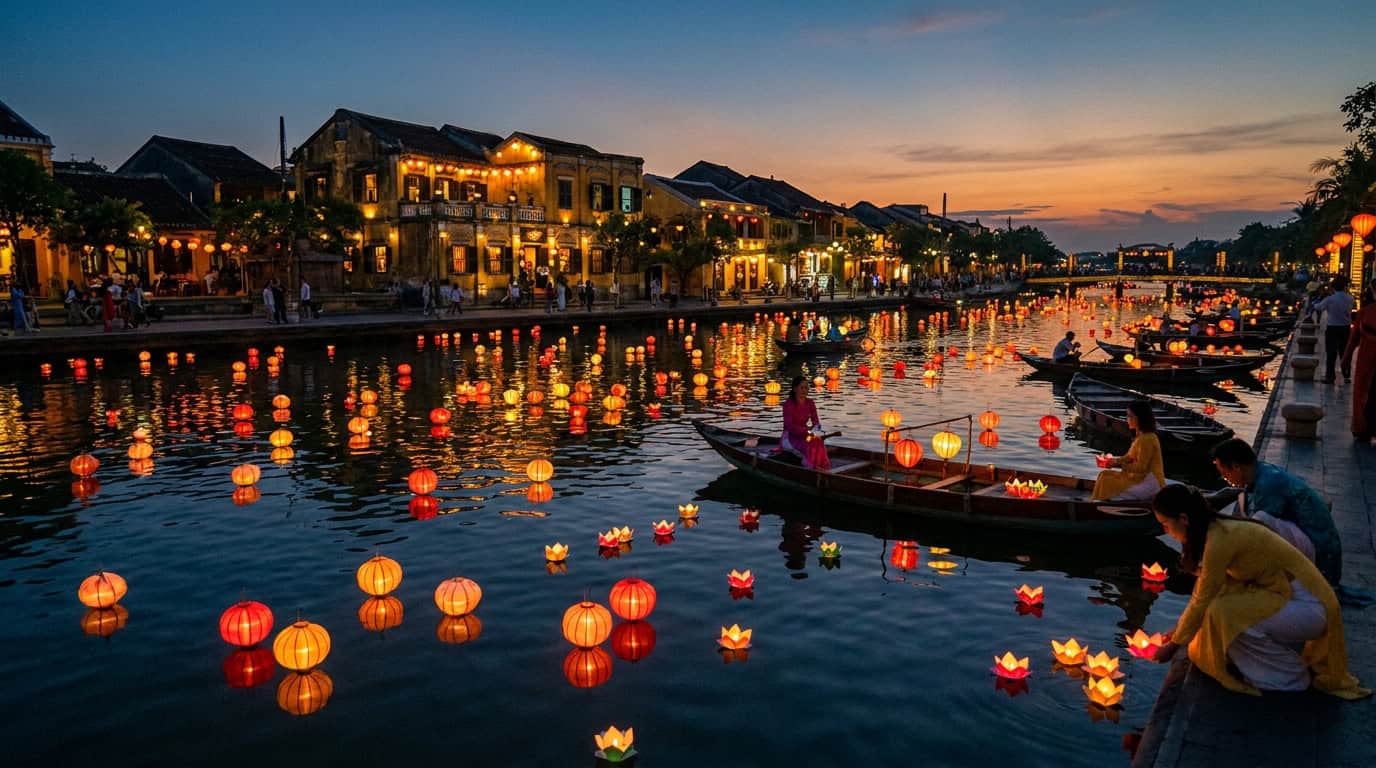
The Hoi An Lantern Festival is a monthly full-moon celebration held in Hoi An Ancient Town (Quang Nam Province, central Vietnam) on the 14th day of every lunar month, when all electric lights are switched off and the streets glow only with thousands of handmade silk lanterns. For 2026, the next festivals fall on June 28, July 28, August 26, September 25, October 24, November 23, and December 23, with the most famous edition coinciding with the Mid-Autumn Festival in late September. If you are based in Saigon (Ho Chi Minh City) and planning a trip up the coast, this guide tells you exactly when to go, where to stand for the best view of the floating lanterns, what it costs, and how to fit Hoi An into a broader Vietnam itinerary.
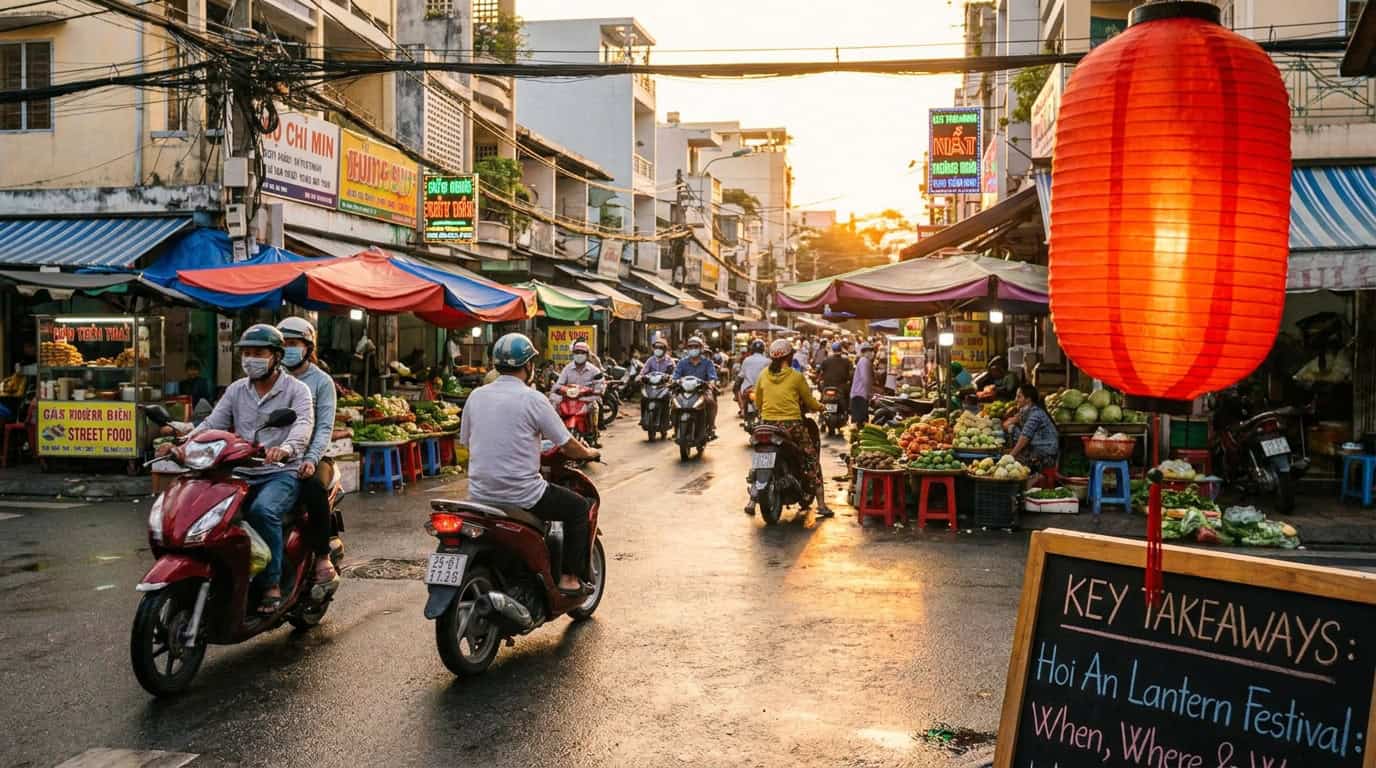
Key Takeaways
- The Hoi An Lantern Festival happens once a month on the 14th day of the lunar calendar — not every night, despite what many social media reels suggest.
- 2026 festival dates: June 28, July 28, Aug 26, Sept 25 (Mid-Autumn — biggest), Oct 24, Nov 23, Dec 23.
- Core hours run 6:00 PM to 10:00 PM, with lights officially extinguished around 6:30 PM after sunset.
- Best floating-lantern spots: An Hoi Bridge, Cau An Hoi pedestrian area, and the riverside path along Bach Dang Street.
- A paper lotus lantern to float on the Thu Bon River costs 10,000–20,000 VND (about $0.40–$0.80 USD).
- Entry to the Ancient Town requires a sightseeing ticket of 120,000 VND ($4.80 USD) for foreign visitors.
Hoi An Lantern Festival at a Glance
| Detail | Information |
|---|---|
| Location | Hoi An Ancient Town, Quang Nam Province |
| Frequency | Monthly, on the 14th day of the lunar calendar |
| Hours | 6:00 PM – 10:00 PM (lights off ~6:30 PM) |
| Ticket | 120,000 VND ($4.80 USD) Ancient Town pass |
| Paper lantern | 10,000–20,000 VND ($0.40–$0.80 USD) |
| Best vantage | An Hoi Bridge & Bach Dang riverside |
| Nearest airport | Da Nang International (DAD), 45 min by car |
| 2026 highlight | Mid-Autumn edition — September 25, 2026 |
What Is the Hoi An Lantern Festival?
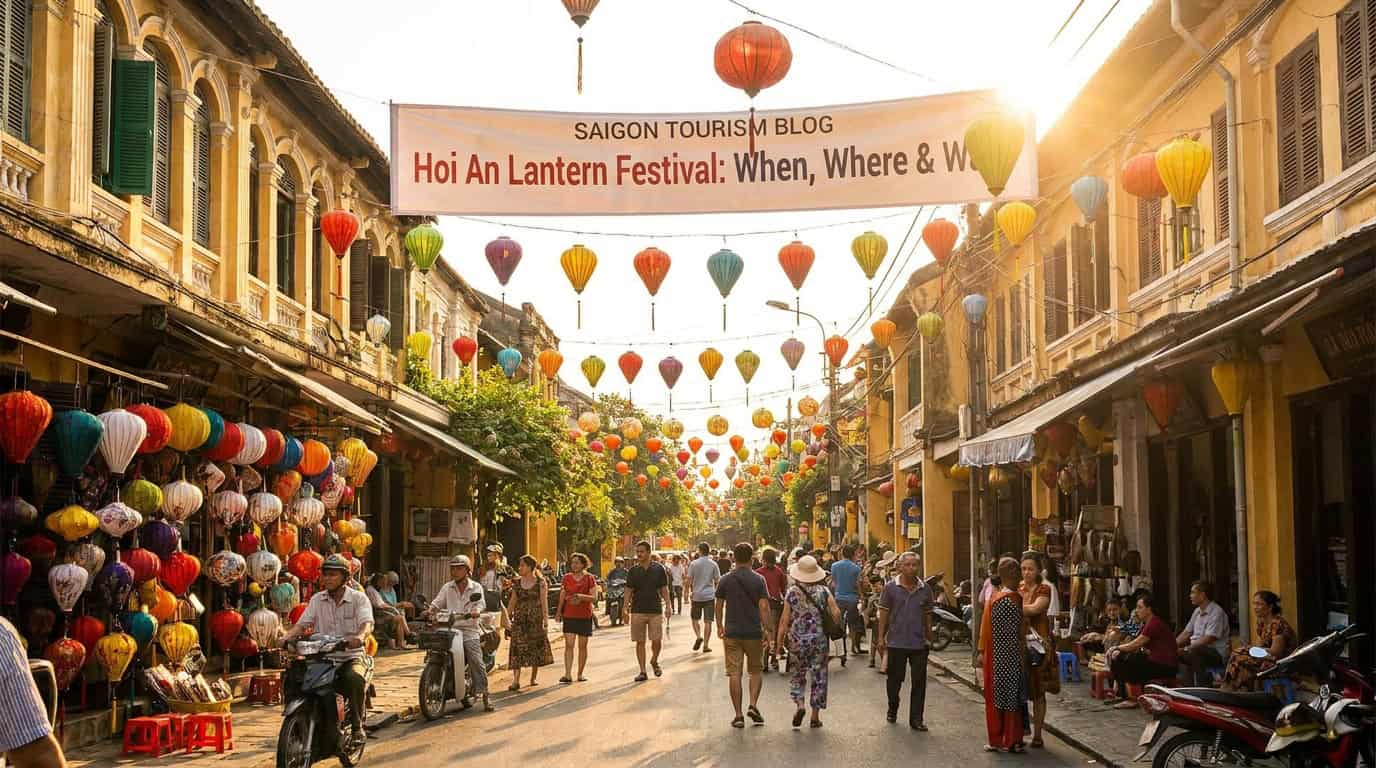
The Hoi An Lantern Festival (officially “Đêm Phố Cổ” — “Ancient Town Night”) began in 1998 as a cultural revival initiative by the Hoi An People’s Committee, six months after the town was inscribed as a UNESCO World Heritage Site. On the night of the full moon, the entire Ancient Town turns off its electricity, vehicles are banned, motorbikes are silenced, and the 16th-century shophouses are lit only by traditional silk and bamboo lanterns hung from every eave, doorway, and bridge.
The festival is rooted in a Buddhist and ancestor-worship tradition: residents light candles for departed family members and float small paper lotus lanterns down the Thu Bon River, each carrying a private wish or prayer. Visitors are warmly invited to join, and the experience has become one of Vietnam’s most photographed cultural events, second only to Tết (Lunar New Year).
Unlike fireworks-driven festivals elsewhere in Southeast Asia, this one is intentionally quiet. Live Vietnamese folk music — including bài chòi singing, a UNESCO-recognized intangible heritage — drifts from open shopfronts and small floating stages on the river.
When Is the Hoi An Lantern Festival in 2026?
The festival falls on the 14th day of every lunar month, which always lands one day before the full moon on the Gregorian calendar. Here are the confirmed 2026 dates:
| Lunar Month | 2026 Gregorian Date | Notes |
|---|---|---|
| 5th | Sunday, June 28, 2026 | Quiet edition, warm weather |
| 6th | Tuesday, July 28, 2026 | Rainy-season risk |
| 7th | Wednesday, August 26, 2026 | Ghost Month — extra rituals |
| 8th | Friday, September 25, 2026 | Mid-Autumn Festival — biggest of the year |
| 9th | Saturday, October 24, 2026 | Best weather, peak tourist season |
| 10th | Monday, November 23, 2026 | Cool, dry, smaller crowds |
| 11th | Wednesday, December 23, 2026 | Christmas-week overlap |
The Mid-Autumn edition on September 25, 2026 is the most spectacular: lion dances, mooncake stalls, and children parading hand-painted star lanterns are added to the regular program. If you can only visit once, aim for this date — but book accommodation at least eight weeks in advance, because room rates in central Hoi An typically rise 40–60% that weekend.
For accurate planning beyond 2026, the official Vietnam tourism portal at vietnam.travel publishes the lunar-calendar conversions every November.
Are the Lanterns in Hoi An Every Night?
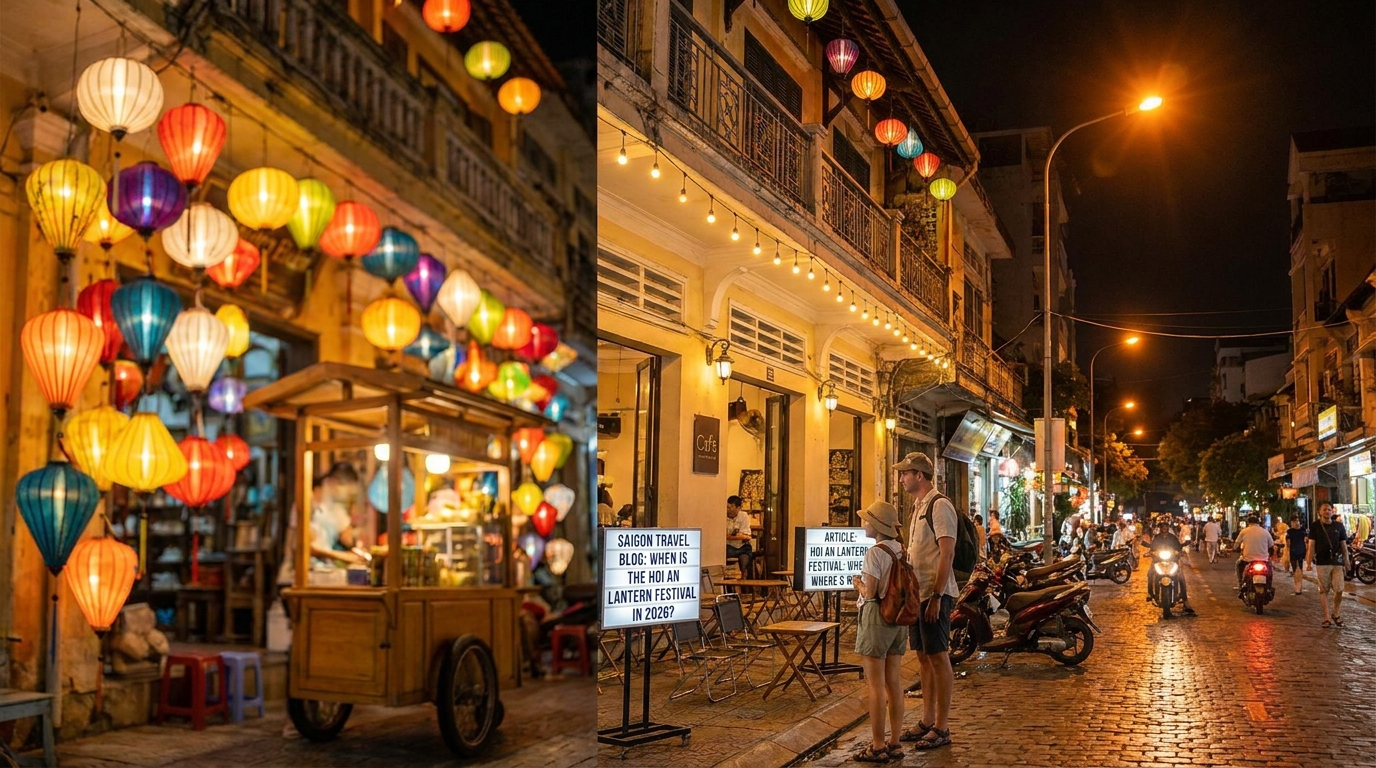
Yes — but with an important distinction. The decorative silk lanterns hang from buildings every single night of the year, and the Ancient Town is genuinely beautiful seven days a week. What only happens once a month is the full festival experience: lights-off, no vehicles, live music on the streets, and the river crowded with floating paper lanterns.
On non-festival nights you can still:
- Buy and float a paper lantern from any of the boat ladies on the Thu Bon River (10,000–20,000 VND).
- Hire a rowboat for a 20-minute river cruise (150,000 VND, about $6 USD per boat, up to 4 people).
- Watch the lit shophouses from An Hoi Bridge.
But you will not see the magical “lights-off” effect, the street performers, or the dense river of thousands of floating candles. If the lantern festival is the reason you’re visiting Hoi An, lock in your dates around the lunar calendar — don’t trust generic “any night works” advice from Instagram reels.
What Time Does the Lantern Show Start in Hoi An?
There is no single “show” with a curtain time. Instead, the Hoi An Lantern Festival unfolds gradually between roughly 5:30 PM and 10:00 PM:
- 5:30 PM — Vendors begin setting up paper-lantern stalls along Bach Dang Street.
- 6:00 PM — Sun sets; silk lanterns are lit; first folk-music stages open.
- 6:30 PM — Municipal electric lights are switched off in the Ancient Town core (the official “lights-off” moment).
- 7:00–9:00 PM — Peak crowds, peak photography light, peak river traffic.
- 9:30 PM — Music stages wind down.
- 10:00 PM — Lanterns gradually dim; electric lights return.
The best photographic window is the 30 minutes around 6:30 PM “blue hour,” when the sky is still deep navy but the lanterns are already glowing. Arrive by 5:00 PM if you want a clear shot from An Hoi Bridge — by 6:30 PM, the bridge railing is shoulder-to-shoulder.
Where Can I See Floating Lanterns in Hoi An?
The floating lanterns concentrate on a 400-meter stretch of the Thu Bon River between An Hoi Bridge (Cầu An Hội) and the Cau An Hoi pedestrian bridge to the south. The four best vantage points:
- An Hoi Bridge — the iconic postcard shot, looking east toward the yellow Japanese Covered Bridge area. Free.
- Bach Dang Street riverside — buy your paper lotus from a boat lady here and release it yourself. Most atmospheric.
- A rowboat on the river — 150,000 VND ($6 USD) per boat for 20 minutes. You’ll glide directly through the floating-lantern field. Worth it once.
- Cau An Hoi Bridge (south) — quieter, fewer tourists, equally beautiful, especially for families with kids who don’t want crowds.
Avoid the Japanese Covered Bridge itself as a viewing spot — it’s a heritage structure, foot traffic is tightly controlled, and you can’t see the river from on top of it.
What to Expect at the Hoi An Lantern Festival as a Foreign Visitor
Foreign visitors sometimes arrive expecting a Disney-style spectacle and feel underwhelmed for the first ten minutes. The Hoi An Lantern Festival is intentionally low-key, intimate, and slow. Here’s what your evening will actually look like:
Crowds. Expect 8,000–15,000 visitors on a regular full-moon night and upwards of 25,000 on the Mid-Autumn edition, according to figures published by Vietnam News. Move with the flow; don’t fight it.
Photography. Tripods are technically permitted but practically impossible in the throng. A modern phone with night mode (iPhone 13+, Pixel 6+, Galaxy S22+) produces excellent results. Shoot RAW if your phone supports it.
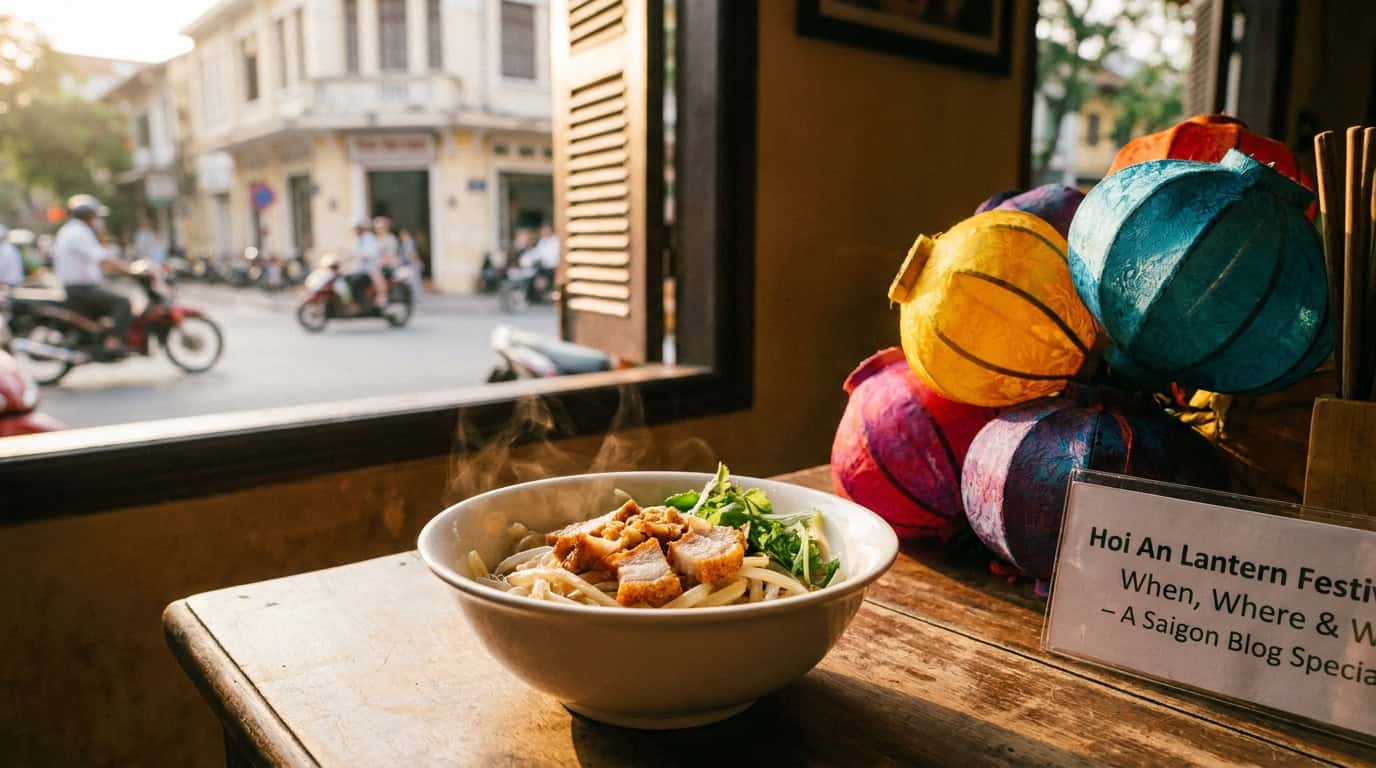
Food. The festival is not a food festival, but riverside stalls sell bánh mì (35,000 VND), cao lầu — Hoi An’s signature pork noodle dish (50,000 VND), and white rose dumplings (60,000 VND). Cash only at most stalls.
Dress code. Modest casual. Many Vietnamese visitors rent an áo dài (traditional dress) for the evening — rental shops near the market charge 150,000–300,000 VND ($6–$12 USD) for 4 hours including a photographer.
Atmosphere. Despite the crowds, the festival is calm. No drunken behavior, no loud music, no aggressive vendors. It’s family-friendly and safe well past midnight.
How to Get to Hoi An from Saigon (Ho Chi Minh City)
If you’re already based in Saigon — as most readers of saigonhomestay.com are — you have three realistic options:
By air (recommended). Fly Saigon (SGN) to Da Nang (DAD) — 1h 20m, 800,000–1,800,000 VND ($32–$72 USD) one-way on Vietjet, Bamboo, or Vietnam Airlines. From Da Nang airport, a private car to Hoi An costs 400,000 VND ($16 USD) and takes 45 minutes. Grab works at the airport.
By overnight train. The Reunification Express from Saigon to Da Nang takes 17–19 hours. Soft sleeper berth: 1,100,000 VND ($44 USD). Romantic in theory, exhausting in practice. Only recommended if the journey is the point.
By overnight sleeper bus. Around 600,000 VND ($24 USD) and 18 hours of misery. Not recommended.
Plan to spend at least two nights in Hoi An — one for the festival, one to actually explore the Ancient Town in daylight. Pair the trip with our Saigon itinerary guide for a balanced north-south Vietnam route, or extend to Hué (3 hours north) for the imperial-history half-day.
Insider Tips for the Hoi An Lantern Festival
After a decade of sending Saigon-based guests up to central Vietnam for the full-moon nights, here’s the condensed advice we give every foreign visitor:
- Arrive 24 hours early. Don’t fly in the same afternoon. Weather delays at SGN are common in rainy season (Sept–Nov), and missing the festival by a few hours is heartbreaking.
- Buy your Ancient Town ticket at the booth, not from touts. Official price is 120,000 VND. Touts on motorbikes will quote 200,000 VND.
- Bring small bills. 10,000, 20,000, and 50,000 VND notes are gold for paper-lantern vendors and food stalls. Withdraw cash before you arrive — central Hoi An ATMs run dry during festivals.
- Don’t book a riverside dinner for 7 PM. You’ll spend the peak hour staring at a menu. Eat at 5:30 PM or 9:30 PM instead.
- Wear closed-toe shoes. Cobblestones are uneven and partly flooded near the river during rainy season. Skip the heels.
- Respect the floating ritual. When releasing your lotus lantern, take a moment of silence. Locals are genuinely making wishes for ancestors — it’s not a TikTok prop.
For broader Vietnam etiquette, see our Vietnam travel tips for foreigners and the Vietnam currency guide before you fly.
Where to Stay for the Hoi An Lantern Festival
Hoi An accommodation falls into three rough zones:
Inside the Ancient Town (walking distance to the river). Boutique hotels in restored shophouses. 2,500,000–6,000,000 VND ($100–$240 USD) per night during festival weekends. You’ll walk out your door into the festival.
An Hoi Island (south of the river). Mid-range hotels and homestays, 5–10 minute walk over the bridge. 1,200,000–2,800,000 VND ($48–$112 USD). Best price-to-location ratio.
Cua Dai Beach (4 km east). Resorts and beach hotels, quiet, requires a 100,000 VND taxi each way. Skip this zone for the festival night.
For visitors building a multi-city Vietnam trip, we recommend basing in Saigon for the first and last leg of the journey and flying up to Hoi An for 2–3 nights in the middle. Our central District 1 homestays put you walking distance from Ben Thanh Market and the airport express, and our hosts can book your Hoi An flights and Da Nang transfers in one message.
Best Time of Year for the Hoi An Lantern Festival
Beyond picking the right lunar date, central Vietnam’s weather varies dramatically by season:
| Month | Weather | Festival Notes |
|---|---|---|
| Jan–Mar | Cool, dry, 20–26°C | Lowest crowds, best photography light |
| Apr–Aug | Hot, dry, 30–38°C | Sunset-friendly, sticky evenings |
| Sept–Nov | Rainy, typhoon risk | Mid-Autumn edition spectacular but flood risk |
| Dec | Cool, occasional rain, 22–27°C | Christmas-week overlap, mid-range crowds |
Statistically, February, March, and November offer the best balance of weather, crowds, and price. The September Mid-Autumn edition is the cultural peak but carries genuine typhoon risk — buy travel insurance and have a refund-able flight.
For a deeper seasonal breakdown across the whole country, see our best time to visit Vietnam guide.
Combining the Festival with the Rest of Vietnam
The Hoi An Lantern Festival pairs naturally with three other central Vietnam experiences:
- My Son Sanctuary (1 hour west) — 4th-century Cham temple ruins, UNESCO listed.
- Marble Mountains (30 min north toward Da Nang) — limestone caves and pagodas.
- Ba Na Hills & the Golden Bridge (1.5 hours north-west) — the giant stone-hands bridge.
For a tight one-week loop from Saigon, we suggest: 2 nights Saigon → 3 nights Hoi An (including the festival) → 2 nights back in Saigon. Use the things to do in Ho Chi Minh City hub to plan the bookend days.
Frequently Asked Questions
What date is the Lantern Festival in Hoi An?
The Hoi An Lantern Festival is held on the 14th day of every lunar month, the night before the full moon. In 2026, the dates are June 28, July 28, August 26, September 25 (Mid-Autumn — the biggest edition), October 24, November 23, and December 23. Always cross-check against the Vietnamese lunar calendar before booking, since lunar dates shift each year.
Are the lanterns in Hoi An every night?
The decorative silk lanterns are hung throughout the Ancient Town every single night of the year, so the streets always look beautiful after dark. However, the full festival experience — lights-off, traffic-free streets, live folk music, and thousands of paper lanterns floating on the river — only happens once a month on the 14th lunar day.
What time does the lantern show start in Hoi An?
The festival begins gradually around 5:30 PM as vendors set up, with municipal electric lights switched off in the Ancient Town core at approximately 6:30 PM after sunset. Peak hours run from 7:00 to 9:00 PM, and the event winds down around 10:00 PM. Arrive by 5:00 PM to claim a good photo spot on An Hoi Bridge before the crowds arrive.
Where can I see floating lanterns in Hoi An?
The best spots for floating lanterns are An Hoi Bridge for the iconic postcard view, the Bach Dang Street riverside for releasing your own paper lotus, and a 20-minute rowboat ride on the Thu Bon River (150,000 VND or about $6 USD per boat). The southern Cau An Hoi pedestrian bridge offers an equally beautiful but quieter alternative.
How much does the Hoi An Lantern Festival cost?
Entry to the Ancient Town requires a sightseeing ticket of 120,000 VND ($4.80 USD) for foreign visitors, which is required during festival nights. A paper lotus lantern costs 10,000–20,000 VND ($0.40–$0.80 USD), and an optional rowboat ride is 150,000 VND ($6 USD) per boat for up to four people. Budget around 500,000 VND ($20 USD) per person including dinner.
Do I need to book in advance for the lantern festival?
Yes — for accommodation, absolutely. Hoi An hotels sell out 6–8 weeks ahead for the Mid-Autumn edition and 2–3 weeks ahead for regular full-moon nights. You do not need to book festival entry in advance; the 120,000 VND Ancient Town ticket is bought at the booth on arrival.
Plan Your Vietnam Trip from Central Saigon
The Hoi An Lantern Festival is unforgettable, but it’s a single magical evening — most travelers spend the rest of their Vietnam trip eating, exploring, and unwinding in Saigon. Our centrally located District 1 homestays put you 10 minutes from Ben Thanh Market, 15 minutes from the Notre-Dame Cathedral, and 30 minutes from Tan Son Nhat Airport, with hosts who can book your Hoi An flights, arrange a Da Nang airport pickup, and load you up with the small-denomination VND notes you’ll need for the lantern vendors. Browse our central Saigon homestays and message a host directly — most respond within an hour.
Last updated June 10, 2026. Festival dates verified against the Vietnamese lunar calendar.