
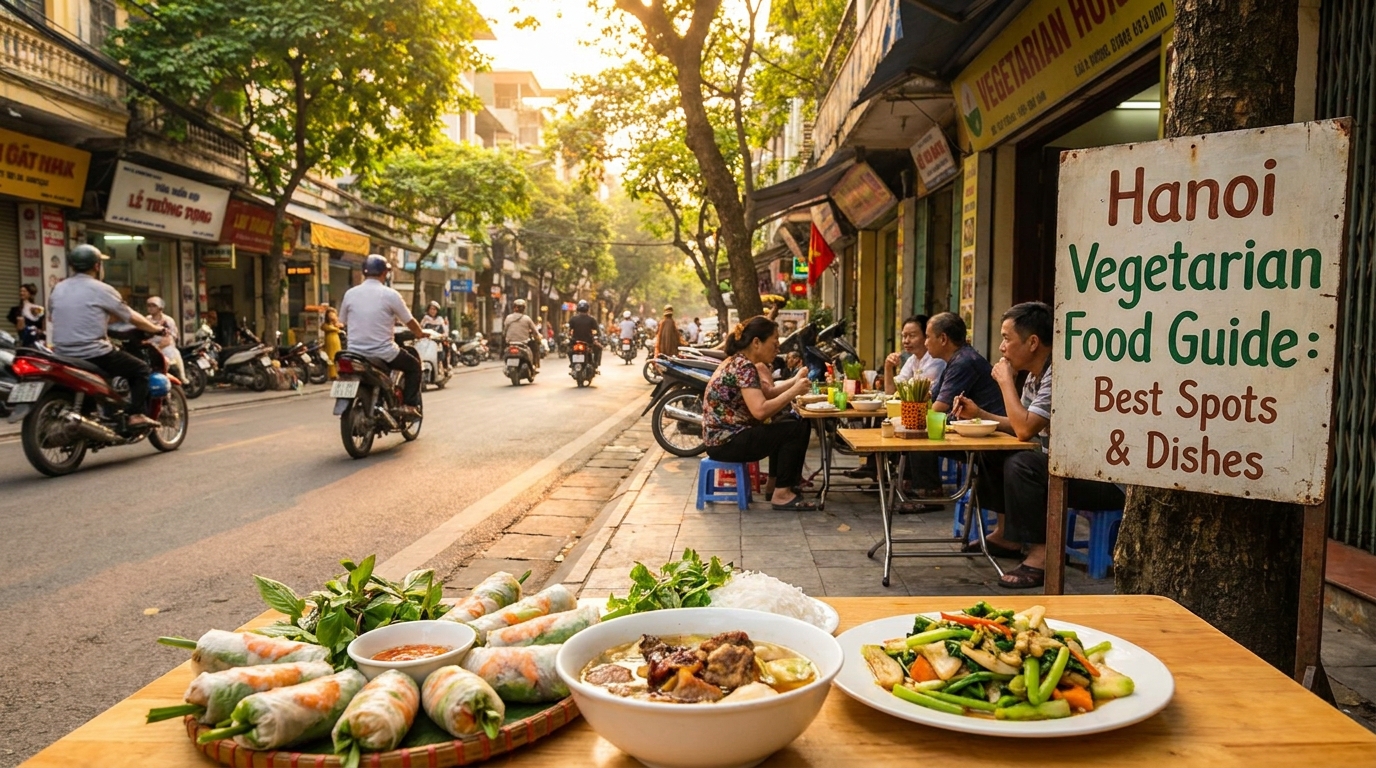
Hanoi vegetarian food has quietly become one of Southeast Asia’s most rewarding plant-based culinary experiences, with more than 80 dedicated chay (vegetarian) restaurants now operating across the city as of 2026. From steaming bowls of pho chay in the Old Quarter to elegant Buddhist temple banquets in Tay Ho, you can eat exceptionally well — and ethically — for as little as 30,000 VND (about $1.20 USD) a meal. This guide cuts through the noise to show you exactly where to go, what to order, and how much to pay.
Key Takeaways
- Hanoi has 80+ vegetarian restaurants ranging from 30,000 VND street stalls to 250,000 VND upscale chay banquets.
- The best Hanoi vegetarian food districts are the Old Quarter (Hoan Kiem), French Quarter, and Tay Ho around West Lake.
- Lunar 1st and 15th of each Vietnamese month are peak chay days — expect crowds at temple kitchens.
- Must-try dishes: pho chay, bun bo Hue chay, banh mi chay, nem chay, and che (sweet dessert soup).
- Most plant-based meals cost 40,000–90,000 VND ($1.60–$3.60 USD) — roughly half the price of Saigon equivalents.
- Saying “ăn chay” (pronounced “an chay”) at any restaurant signals you eat vegetarian and unlocks off-menu options.
Why Hanoi Vegetarian Food Stands Out in Vietnam
Vietnam’s vegetarian tradition is rooted in Mahayana Buddhism, which spread south from China more than a thousand years ago. According to the Vietnam National Administration of Tourism, an estimated 10% of Vietnamese practice vegetarianism at least part-time, observing chay on the 1st and 15th of every lunar month.
What makes Hanoi vegetarian food distinct from southern Vietnamese chay is the cuisine’s restraint. Northern Vietnamese cooking favors clear broths, subtle herbs, and a lighter touch with sugar and chili. The result: dishes that taste of the ingredients themselves rather than masking sauces. A bowl of Hanoi pho chay relies on charred ginger, star anise, and dried mushrooms for depth — no fish sauce, no MSG at the better restaurants.
The city also has an unusually high concentration of temple-affiliated kitchens. Quan Su Pagoda, Tran Quoc Pagoda, and Phuc Khanh Pagoda all run public canteens or partner with nearby restaurants, keeping prices low and quality consistent.
8 Must-Try Hanoi Vegetarian Dishes
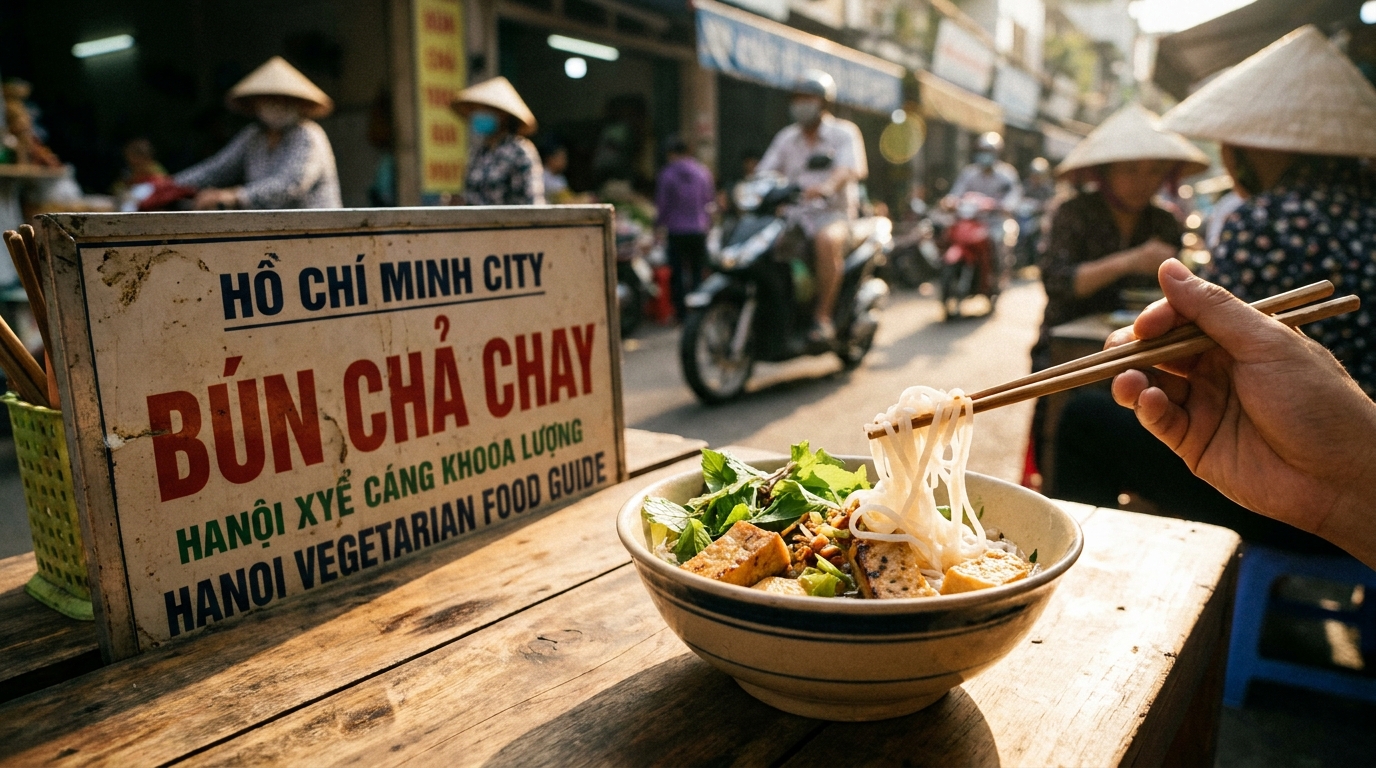
Before you start ordering, here are the eight dishes that define Hanoi vegetarian food in 2026:
| Dish | Vietnamese Name | Typical Price (VND) | What It Is |
|---|---|---|---|
| Vegan pho | Phở chay | 40,000–70,000 | Rice noodles in mushroom-anise broth with tofu |
| Vegan Hue noodle soup | Bún bò Huế chay | 45,000–75,000 | Spicy lemongrass broth with seitan and herbs |
| Vegetarian banh mi | Bánh mì chay | 25,000–40,000 | Baguette with mock pâté, pickles, cilantro |
| Fresh spring rolls | Gỏi cuốn chay | 30,000–50,000 | Rice paper with tofu, vermicelli, herbs |
| Fried spring rolls | Nem chay | 40,000–60,000 | Crispy rolls with mushroom-glass noodle filling |
| Lotus rice | Cơm sen chay | 80,000–150,000 | Sticky rice steamed in lotus leaf with vegetables |
| Sweet dessert soup | Chè | 20,000–40,000 | Warm or chilled bean, jelly, and coconut soup |
| Stir-fried morning glory | Rau muống xào tỏi | 35,000–55,000 | Garlic-fried water spinach, naturally vegan |
A useful rule when scanning menus: any dish ending in chay is vegetarian. Most restaurants in Hanoi also clearly label “thuần chay” (fully vegan, no eggs or dairy) versus “chay có trứng” (lacto-ovo).
Best Vegetarian Restaurants in the Old Quarter
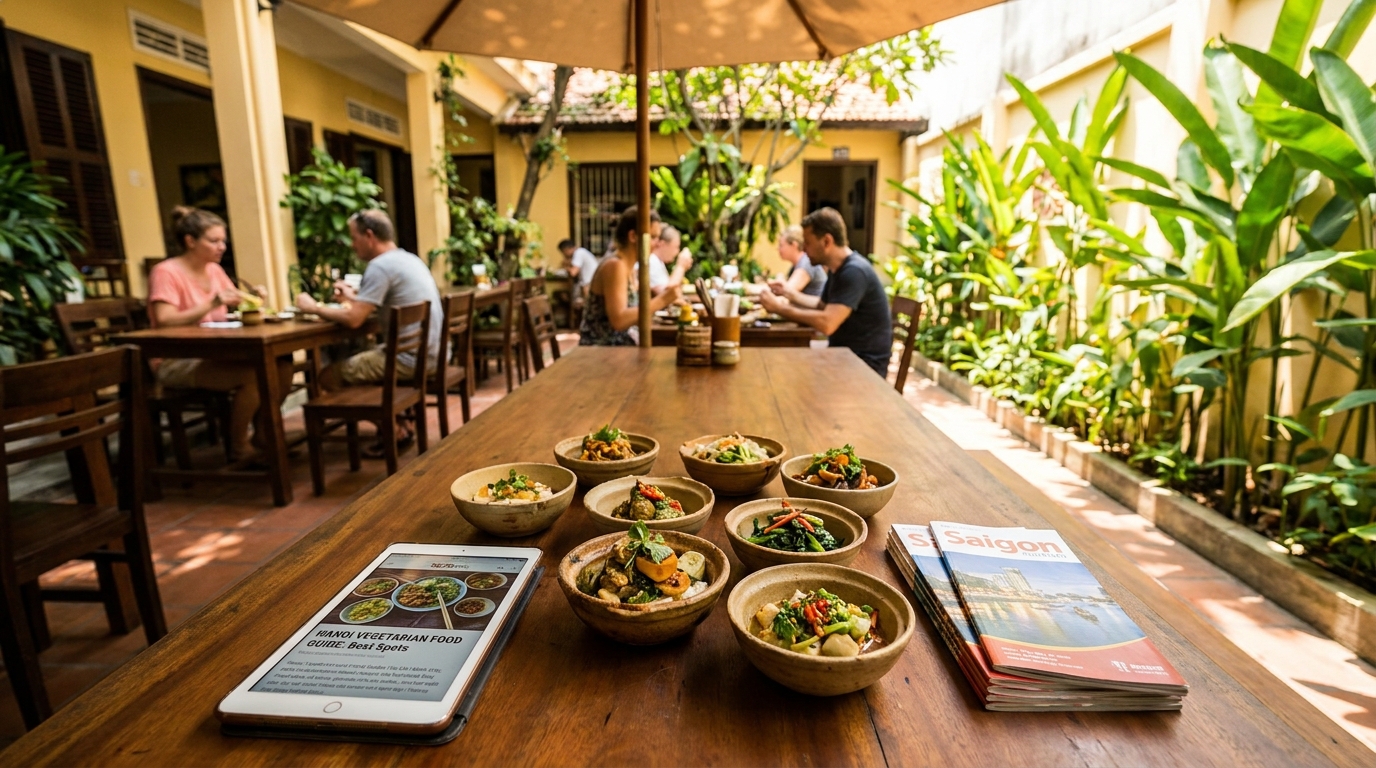
The Old Quarter (Hoan Kiem District) packs the highest density of Hanoi vegetarian food in the city. Five spots stand out:
Loving Hut Hoan Kiem (5 Hang Bai Street) — A reliable international chain serving 100% vegan menus. Their phở chay (55,000 VND) and “chicken” rice (75,000 VND) are consistent crowd-pleasers. Open 09:00–21:30.
Nha Hang Chay An Lac (109 Tran Hung Dao) — A long-running family restaurant beloved by locals for its lunchtime buffet (90,000 VND). Expect 15+ rotating dishes including stewed jackfruit and tamarind tofu.
Uu Dam Chay (55 Nguyen Du) — The most upscale option in this list. Multi-course tasting menus from 250,000 VND ($10 USD). Excellent for a date night or celebration meal.
Com Chay Nang Tam (79A Tran Hung Dao) — Famous for its mock-meat “imperial banquet” set menus that reference Hue royal cuisine. Sets from 180,000 VND per person.
Bia Chay Veggie Castle (33A Tran Hung Dao) — Casual and budget-friendly, with a strong nem chay (fried spring rolls) plate at 45,000 VND.
If you’re plotting a longer trip and considering southern Vietnam as well, our Saigon street food guide maps the equivalent scene there.
Vegan-Friendly Spots in the French Quarter and Tay Ho
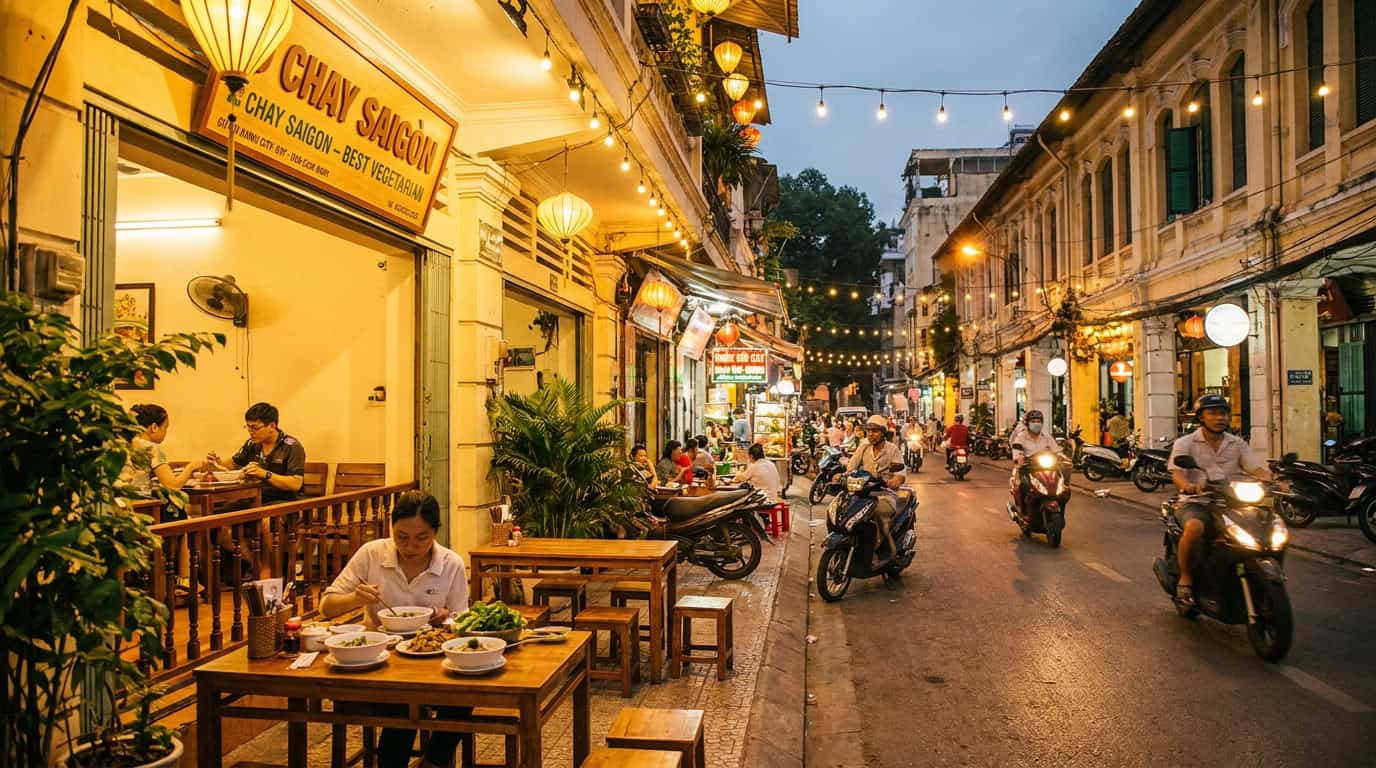
The French Quarter and the lakeside Tay Ho neighborhood lean more cosmopolitan and cater heavily to expats:
- Veggie Saigon Hanoi (84 Hang Trong) — Despite the name, a Hanoi institution since 2014. Strong fusion menu with vegan banh xeo (Vietnamese crispy pancakes) at 65,000 VND.
- Tamarind Cafe (80 Ma May) — Pan-Asian vegetarian with a relaxed traveler vibe; mango salad and green curry are highlights.
- Hum Vegetarian Garden (32 To Ngoc Van, Tay Ho) — Garden seating, beautiful presentation, full vegan menu. Average meal: 120,000 VND.
- Plant Garden (39 Yen Phu, Tay Ho) — 100% vegan with a Mediterranean-Vietnamese fusion menu. Their tofu burger (95,000 VND) is one of the best in the city.
Tay Ho is also where many long-term expats live, so vegan products like oat milk, tempeh, and tofu cream cheese are easy to find at L’s Place and Annam Gourmet. According to a 2024 BBC Travel feature on Vietnamese food, Hanoi’s plant-based scene has grown by an estimated 40% since 2020 — much of it concentrated in Tay Ho.
Hanoi Vegetarian Street Food: Where to Find Plant-Based Bites
Street food is the heart of Vietnamese eating culture, and Hanoi vegetarian food on the street follows a few reliable patterns.
Bun rieu chay at Ngo Hue Street — A tomato-and-tofu noodle soup, usually served from 06:00–10:00. Around 40,000 VND.
Banh cuon chay at Hang Ga Street — Steamed rice rolls filled with wood-ear mushroom. Look for stalls displaying the word “chay” on signage. 35,000–50,000 VND.
Xoi chay (vegetarian sticky rice) — Sold from carts near Dong Xuan Market in the early morning. Topped with mung bean, peanut, and crispy shallots. 25,000 VND.
Che stalls around Hang Bac Street serve more than a dozen varieties of sweet vegan dessert soup, mostly under 30,000 VND. Try che thai (mixed fruit) or che dau xanh (mung bean).
For visitors unfamiliar with street stall etiquette, our Vietnam travel tips covers everything from how to point at unfamiliar dishes to handling small-bill payments.
Buddhist Temple Meals (Cơm Chay) Worth Trying
Several Hanoi pagodas run modest public kitchens, especially on the 1st and 15th lunar days. These are some of the most authentic Hanoi vegetarian food experiences in the city:
- Quan Su Pagoda canteen (73 Quan Su) — Buffet-style lunch, donation-based (suggested 30,000–50,000 VND). Arrive before 11:30 to avoid queues.
- Tran Quoc Pagoda (Thanh Nien Road) — Vietnam’s oldest pagoda, with adjacent vegan stalls operating during festival days.
- Phuc Khanh Pagoda (Tay Son) — Known for hearty stewed dishes and free tea.
Temple meals are about simplicity, not spectacle. Expect plain rice, two or three vegetable dishes, a soup, and a small dessert. Dress modestly (shoulders and knees covered) and observe local diners for cues on serving etiquette.
Hanoi Vegetarian Food Etiquette and Useful Phrases
A handful of phrases will dramatically expand what you can order:
- “Tôi ăn chay” — “I eat vegetarian.” Universal opener.
- “Không thịt, không cá, không trứng” — “No meat, no fish, no egg.” Useful for vegans.
- “Không nước mắm” — “No fish sauce.” Critical, since fish sauce sneaks into dipping bowls.
- “Có món chay không?” — “Do you have vegetarian dishes?”
- “Cay không?” — “Is it spicy?”
Tipping is not expected in Vietnam, but rounding up to the nearest 10,000 VND at sit-down restaurants is appreciated. Most Hanoi vegetarian food vendors accept cash only; carry small bills (20,000 and 50,000 VND notes work best).
Budget Guide: What Hanoi Vegetarian Food Actually Costs
Hanoi is markedly cheaper than Ho Chi Minh City for plant-based eating. A realistic 2026 daily budget:
- Backpacker (street stalls + one café meal): 150,000–200,000 VND ($6–8 USD)
- Mid-range (sit-down lunch + dinner + smoothies): 300,000–500,000 VND ($12–20 USD)
- Upscale (tasting menus + cocktails): 700,000–1,200,000 VND ($28–48 USD)
Compared to a similar day in Saigon (which our Ho Chi Minh City things to do guide breaks down in detail), expect to spend roughly 20–30% less in Hanoi. Cooking schools that focus on chay cooking — including Hanoi Cooking Centre — typically charge 700,000–900,000 VND for half-day classes.
Day Trip Vegetarian Options Near Hanoi
If you’re venturing beyond the city, vegetarian food remains accessible:
- Ninh Binh (2 hours south): Bai Dinh Pagoda, the largest Buddhist complex in Vietnam, runs a vast vegan canteen serving up to 3,000 people during festivals.
- Sapa (5 hours northwest): Hmong and Dao ethnic minority villages serve simple vegan meals featuring foraged greens, bamboo shoots, and tofu.
- Halong Bay: Most cruise operators now offer vegetarian menus on request — confirm 48 hours in advance.
Many travelers combine Hanoi with southern Vietnam; if that’s your plan, our Saigon itinerary hub will help you scope the second leg. For the journey itself, see our Vietnam train travel guide for sleeper carriage options that include vegetarian boxed meals.
Common Mistakes Foreign Visitors Make
After years of helping guests plan Vietnam trips, we see the same five missteps over and over:
- Assuming “vegetable soup” is vegetarian. Most are made with bone or shrimp stock unless labeled “chay.”
- Skipping the dipping sauce check. Even at chay restaurants, peanut sauce occasionally contains fish sauce.
- Eating only at Western-branded cafés. Cheaper, more authentic options sit 200 meters away on side streets.
- Missing the lunar calendar. Visit on the 1st or 15th and dozens of additional restaurants and stalls open chay menus.
- Ignoring breakfast. The best xoi chay and chao chay (vegetarian porridge) are sold before 09:00 and gone by 10:30.
Frequently Asked Questions
Is it easy to find vegetarian food in Hanoi?
Yes. Hanoi has 80+ dedicated vegetarian restaurants and hundreds of regular eateries that prepare chay versions on request. Use the phrase “ăn chay” and most kitchens can accommodate. The 1st and 15th of each lunar month are particularly easy days — many additional pop-up stalls and pagoda kitchens open specifically for chay diners.
What is the difference between “chay” and “thuần chay”?
“Chay” generally means vegetarian and may include eggs and dairy, while “thuần chay” means fully vegan with no animal products. When in doubt, specify: “không trứng, không sữa” (no egg, no milk). Most Buddhist temple meals are thuần chay by default, but commercial restaurants vary, so always confirm.
Are vegan options easy to find in Hanoi street food?
Easier than most Asian capitals. Look specifically for xoi chay (sticky rice), banh mi chay carts, che dessert stalls, and bun rieu chay vendors. Avoid generic pho stalls unless they advertise pho chay, since standard broth uses beef bones. Tay Ho and the Old Quarter have the highest density of vegan-friendly street vendors.
How much does a vegetarian meal cost in Hanoi in 2026?
A street stall meal runs 25,000–50,000 VND ($1–$2 USD). A casual sit-down restaurant meal costs 60,000–120,000 VND ($2.40–$4.80 USD). Upscale chay tasting menus reach 250,000–500,000 VND ($10–$20 USD). Hanoi prices are roughly 20–30% lower than Ho Chi Minh City for equivalent quality.
Do Hanoi restaurants understand vegan vs vegetarian?
Younger staff in Tay Ho, the French Quarter, and dedicated chay restaurants typically understand both concepts in English. At older or smaller establishments, use Vietnamese phrases: “thuần chay” (vegan) or list excluded items (“không thịt, không cá, không trứng, không sữa”). Showing a written card on your phone removes ambiguity.
When are the best lunar days to eat vegetarian in Hanoi?
The 1st and 15th of every Vietnamese lunar month are peak chay days, when an estimated 10% of the population observes vegetarianism. Pagoda canteens open to the public, regular restaurants add chay menus, and street vendors expand their offerings. Check a Vietnamese lunar calendar before your trip and plan major meals around these dates for the widest variety.
Plan Your Hanoi (and Saigon) Stay
Hanoi rewards travelers who take their time — and a comfortable home base makes the difference between rushing meals and savoring them. If your itinerary continues south, book a central District 1 homestay with Saigon Homestay for walkable access to Ben Thanh Market, the best chay restaurants in HCMC, and the same warm hospitality that defines northern Vietnam. Our hosts can recommend vegetarian-friendly spots, arrange cooking classes, and help you cross the country eating well from start to finish.
Browse our District 1 homestays →
Unsure what to tip here? Our tipping in Vietnam guide gives amounts for restaurants, drivers, spas and tour guides.