
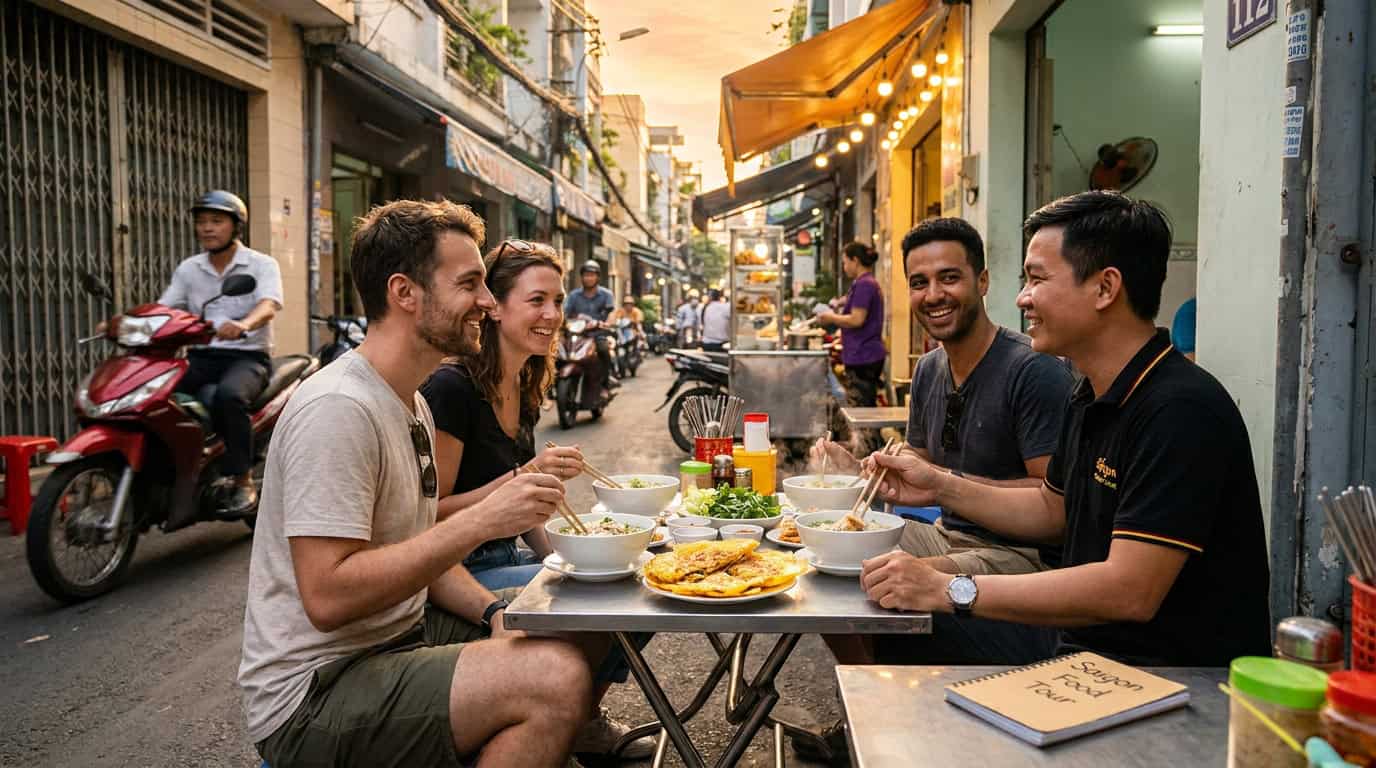
A saigon food tour is one of the most efficient ways to crack open a city that overwhelms visitors on first arrival. Vietnam welcomed 17.5 million international visitors in 2024 (Vietnam National Authority of Tourism, 2024), and a significant share of them name the food as their top memory. Ho Chi Minh City has thousands of street vendors spread across 24 districts, operating on schedules that don’t always match maps or opening hours listed online. This guide compares six tour options, walks you through the essential dishes, and gives you a working self-guided route so you can eat well from your first morning regardless of budget.
Key Takeaways
– Tours cost 600,000–1,500,000 VND (~$24–$60 USD) per person
– Best times: 6–9 AM (breakfast stalls) or 5–8 PM (evening markets)
– XO Tours = female-led; Saigon Street Eats = hard cap of 8 guests
– Top street food districts: District 1, District 3, District 4
– No guide needed if you arrive with a solid neighbourhood map and a few key addresses
Why Take a Saigon Food Tour?
The global culinary tourism market surpassed $1.1 trillion in 2023 (World Food Travel Association, 2023), and it’s not hard to see why: food is now the primary reason many travellers choose a destination. In Saigon specifically, the case for going with a guide is stronger than almost anywhere else in Southeast Asia. The city’s Vietnamese cuisine is extraordinarily regional, hyper-local, and fast-changing. A stall that’s legendary today might move addresses by next month.
Saigon has thousands of street vendors spread across 24 districts. Without context, you’ll spend an hour on Google Maps and still end up at a tourist-facing spot charging triple the local price. A guide cuts through that noise immediately. They know which plastic-stool spot has been feeding the same neighbourhood families for thirty years, and they know the vendor’s name.
That said, guided isn’t the only valid choice. Self-guided walks work well if you come prepared with a solid Saigon street food guide and a few key addresses. The difference is time. A first-timer doing a self-guided walk often spends 45 minutes finding a stall that a guide walks you to in five. For a two-week trip, that’s fine. For a three-night stay, a guided tour on night one pays for itself in saved wandering.
Top Saigon Food Tour Options at a Glance (2026)
There are dozens of operators pitching food experiences in Ho Chi Minh City, but most first-time visitors end up comparing the same six options. We’ve sorted them across all budgets — from premium small-group guided tours to completely free self-guided walks. Here’s how they stack up before we go into detail on each.
| Tour | Type | Price (VND) | Price (USD approx.) | Duration | Best For |
|---|---|---|---|---|---|
| XO Tours | Guided, female-led | 990,000–1,350,000 | ~$40–$55 | 3–3.5 hrs | Couples, solo women |
| Saigon Street Eats | Guided, max 8 guests | 1,100,000–1,500,000 | ~$44–$60 | 3–4 hrs | Foodies, small groups |
| Saigon Food Tour (saigonfoodtour.com) | Guided + motorbike option | 650,000–1,200,000 | ~$26–$48 | 2.5–4 hrs | Adventure seekers |
| Back of the Bike Tours | Motorbike pillion | 1,200,000–1,800,000 | ~$48–$72 | 3–4 hrs | Street food + sightseeing mix |
| Legal Nomads Self-Guided | Self-guided PDF | Free–150,000 | Free–$6 | Flexible | Budget, independent travellers |
| DIY District 4 Walk | Self-guided | 100,000–300,000 | ~$4–$12 | 2–3 hrs | Experienced solo travellers |
Prices reflect current 2026 operator listings. Book direct through operator websites to avoid third-party markup.
XO Tours: The City’s Best Female-Led Night Tour
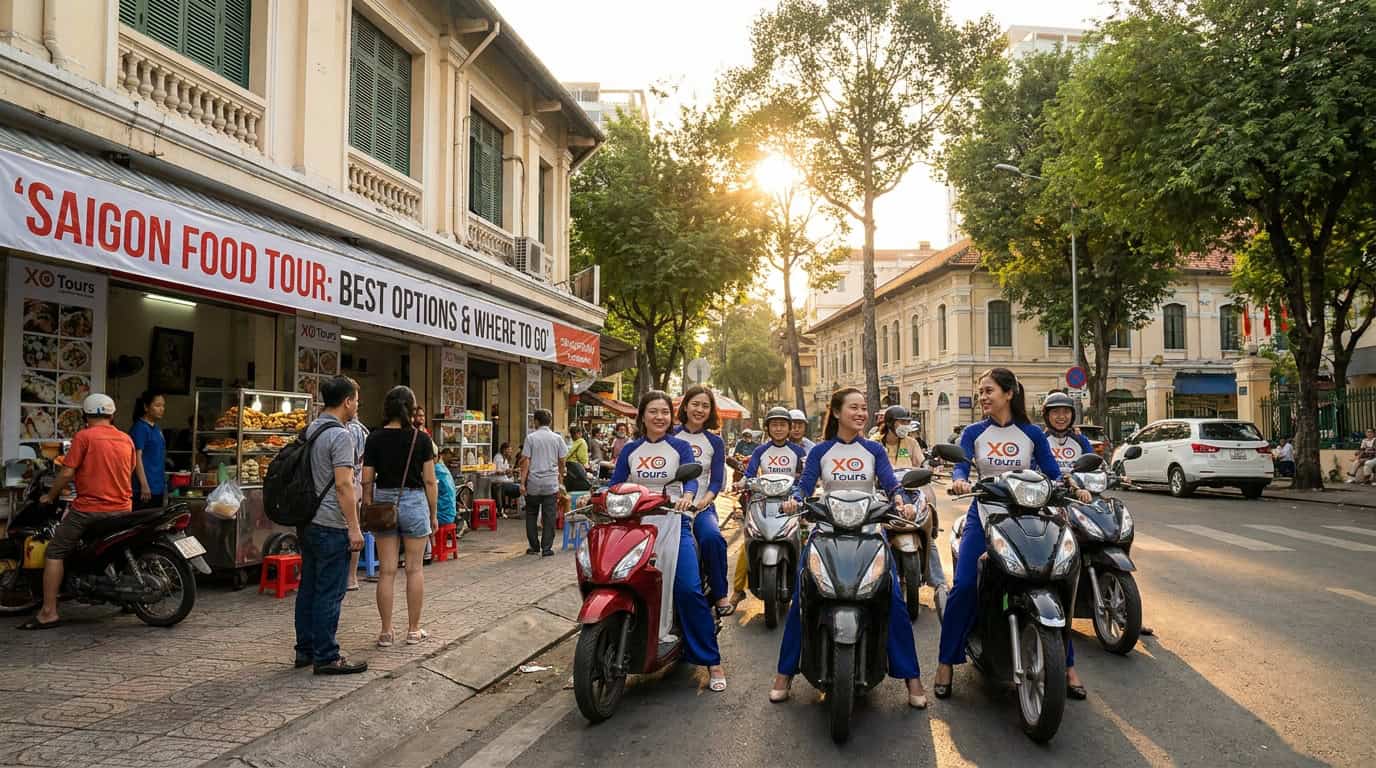
XO Tours launched in 2011 with a simple idea: pair foreign visitors with female Vietnamese guides who know their own city intimately. It worked. The flagship Street Food by Night tour has become one of the most consistently recommended food experiences in Southeast Asia, and the format has barely changed because it doesn’t need to.
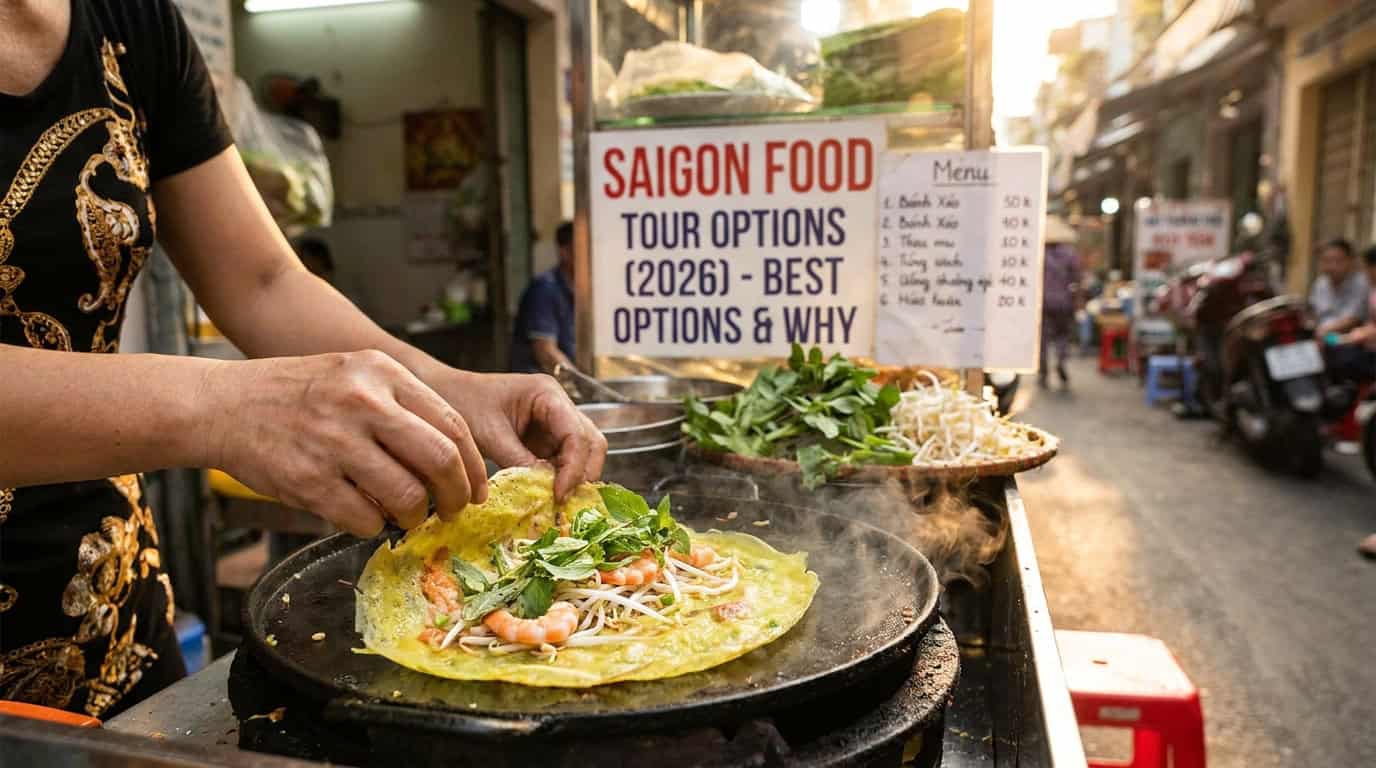
A typical XO night out covers 5–7 stops across Districts 1, 3, and 4 over roughly 3–3.5 hours. You ride pillion on the back of your guide’s motorbike between venues, which solves the Saigon traffic problem neatly. The dishes follow the arc of a proper Saigon evening: cơm tấm (broken rice with grilled pork and fried egg), bánh xèo (the crispy sizzling pancake you fold into lettuce), gỏi cuốn (fresh spring rolls), then chè and bánh chuối for dessert. It’s a coherent meal, not a random sampler.
Group sizes run 8–12 guests. That’s small enough to keep the guides attentive but large enough to feel social. Book at least 48 hours in advance, especially for Friday and Saturday evenings. Saturday slots fill by Wednesday most weeks.
Our take: The lower the plastic stool, the better the food — this rule applies at every XO Tour stop we’ve visited. When guides park the bikes and you see a row of ankle-height stools outside a shophouse with zero signage, that’s exactly where you want to be eating.
Price: 990,000–1,350,000 VND (~$40–$55 USD) per person, inclusive of food and transport between stops.
Saigon Street Eats and Other Small-Group Tours
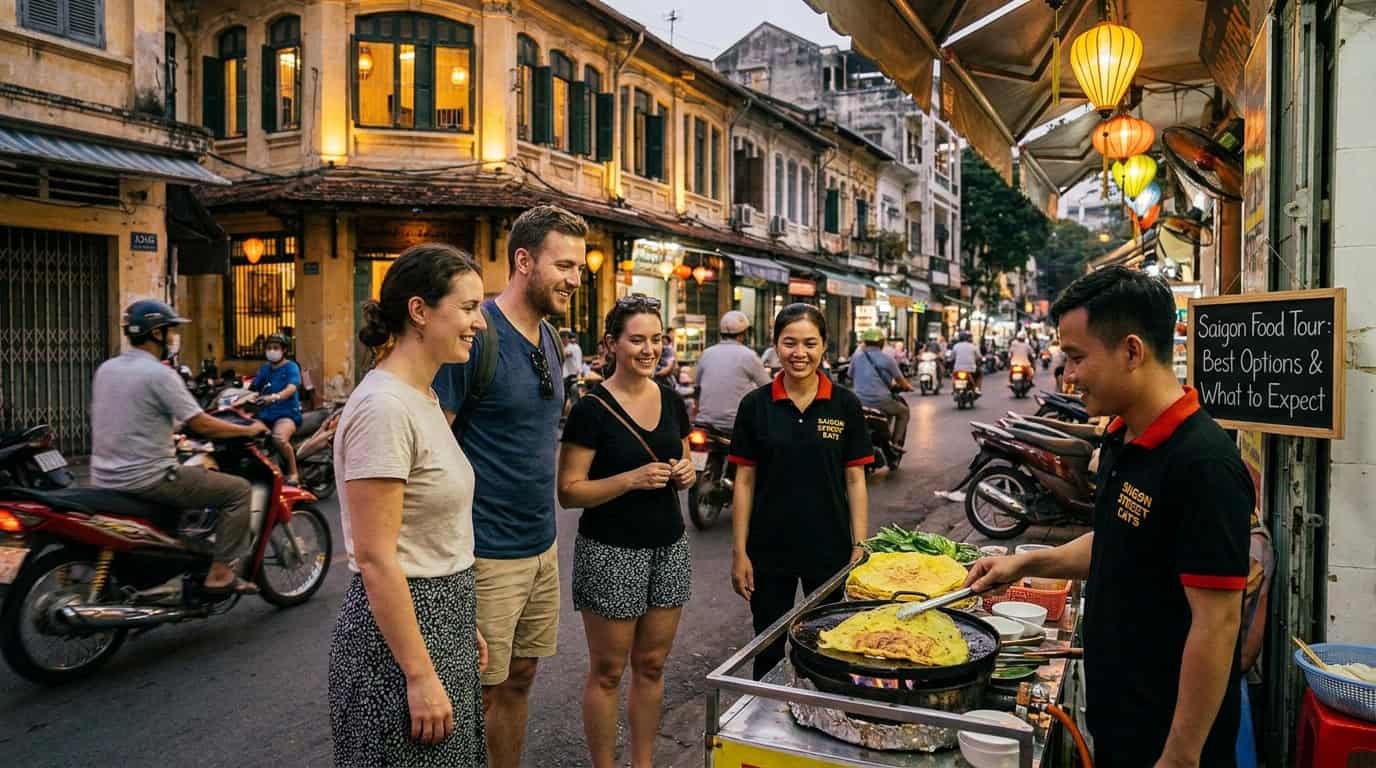
Saigon Street Eats runs with a hard cap of 8 guests per tour. That ceiling isn’t marketing; it’s a practical constraint that keeps groups small enough to sit at proper local stalls rather than commandeering an entire restaurant. Their flagship District 4 Night Tour spends the bulk of its time on and around Vĩnh Khánh Street, which becomes one of Saigon’s best outdoor dining corridors after 4 PM.
The District 4 menu leans south: hủ tiếu Nam Vang (the Cambodian-influenced clear pork and seafood noodle soup that’s a Saigon staple), bò bía (a dry, savoury rice paper roll with Chinese sausage and dried shrimp), and a generous seafood spread at the open-air stalls along the river. If you’ve only eaten bánh mì and phở so far, this tour shifts your frame of reference considerably.
For motorbike enthusiasts, Saigon Food Tour (saigonfoodtour.com) offers a similar covered footprint with an optional motorbike format at 650,000–1,200,000 VND (~$26–$48 USD). Back of the Bike Tours sits at the premium end, combining street food stops with a wider sightseeing sweep — good for visitors who want food and city context in a single evening. Check our District 1 guide for departure points and meeting spots for all three operators.
How to Do a Self-Guided Saigon Food Tour
A self-guided saigon food tour works best when you build it around two reliable windows: early morning and early evening. Midday is hot, humid, and most of the best stalls are closed or winding down. Work with Saigon’s rhythm, not against it.
Morning circuit (District 1, 6–9 AM):
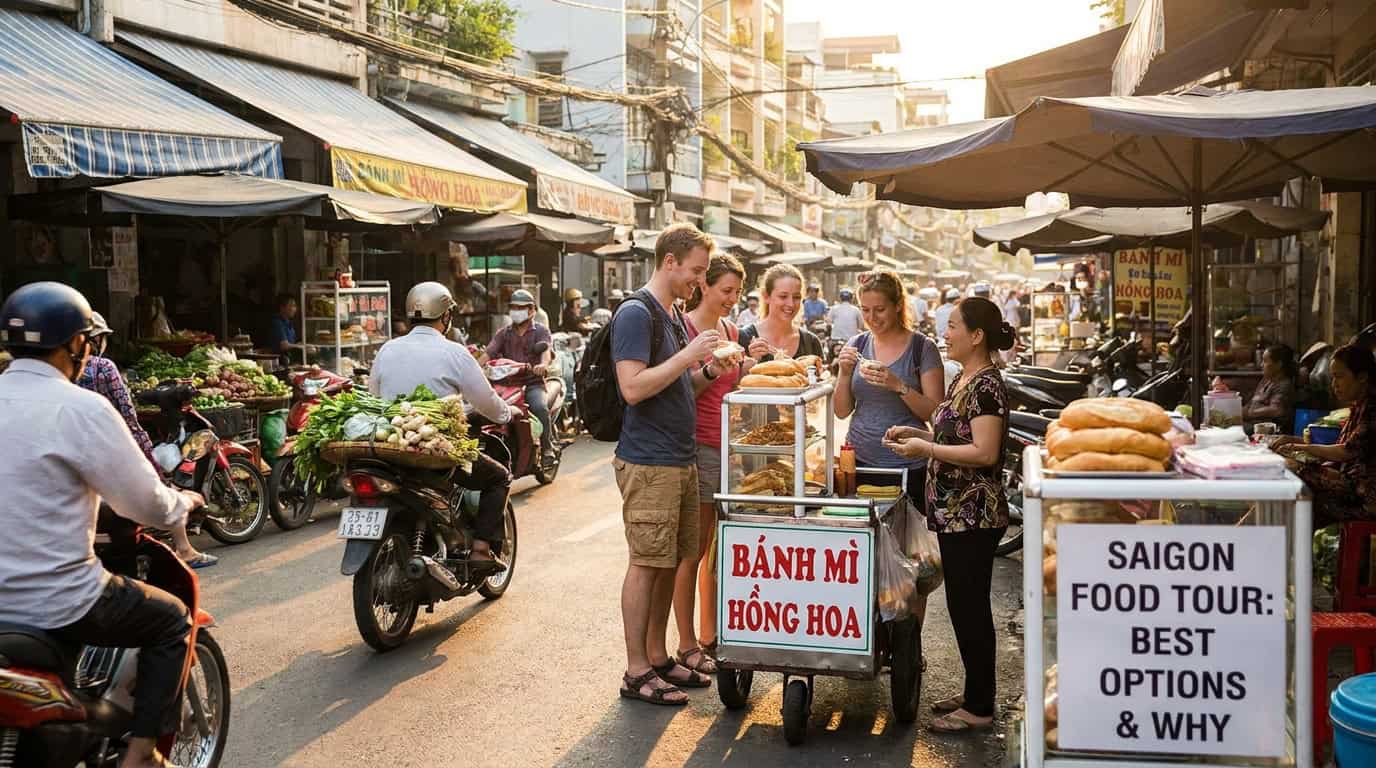
Start on Bùi Viện Street for phở gà. The chicken variety is sweeter and more herb-forward than the Hanoi version, and the stalls here open before 6:30 AM. Walk ten minutes east to Bánh Mì Hòa Mã on Lê Thánh Tôn, which has been operating since 1958 and still uses the original recipe: pâté, chả lụa (Vietnamese pork sausage), pickled daikon and carrot, fresh coriander, cucumber, and a smear of butter inside a baguette that’s crispy outside and almost hollow within. Budget about 35,000–45,000 VND (~$1.40–$1.80 USD). Finish in Tân Định Market with a cà phê sữa đá — the iced coffee with sweetened condensed milk that’s the city’s unofficial fuel source.
Evening option (from 5 PM):
Bến Thành Night Market opens around 5 PM and runs to midnight. It’s touristy but genuinely good after 5:30 PM once the evening crowd fills it out. For something less curated, cross the bridge into District 4 and walk Vĩnh Khánh Street from the river end. Grilled seafood, oysters, clams, and cold bottles of Saigon Beer at plastic tables. More locals than tourists, and noticeably cheaper.
For broader route suggestions, Lonely Planet’s Ho Chi Minh City guide covers neighbourhood maps and updated transport notes.
Something almost no travel blog mentions: if a stall is open before 7 AM and the vendor looks bored, the regulars have already eaten and left. Arrive by 6:30 AM for the best bowl. The peak is 6:00–6:45 AM for serious breakfast spots — not 8:30 AM when most tourists show up.
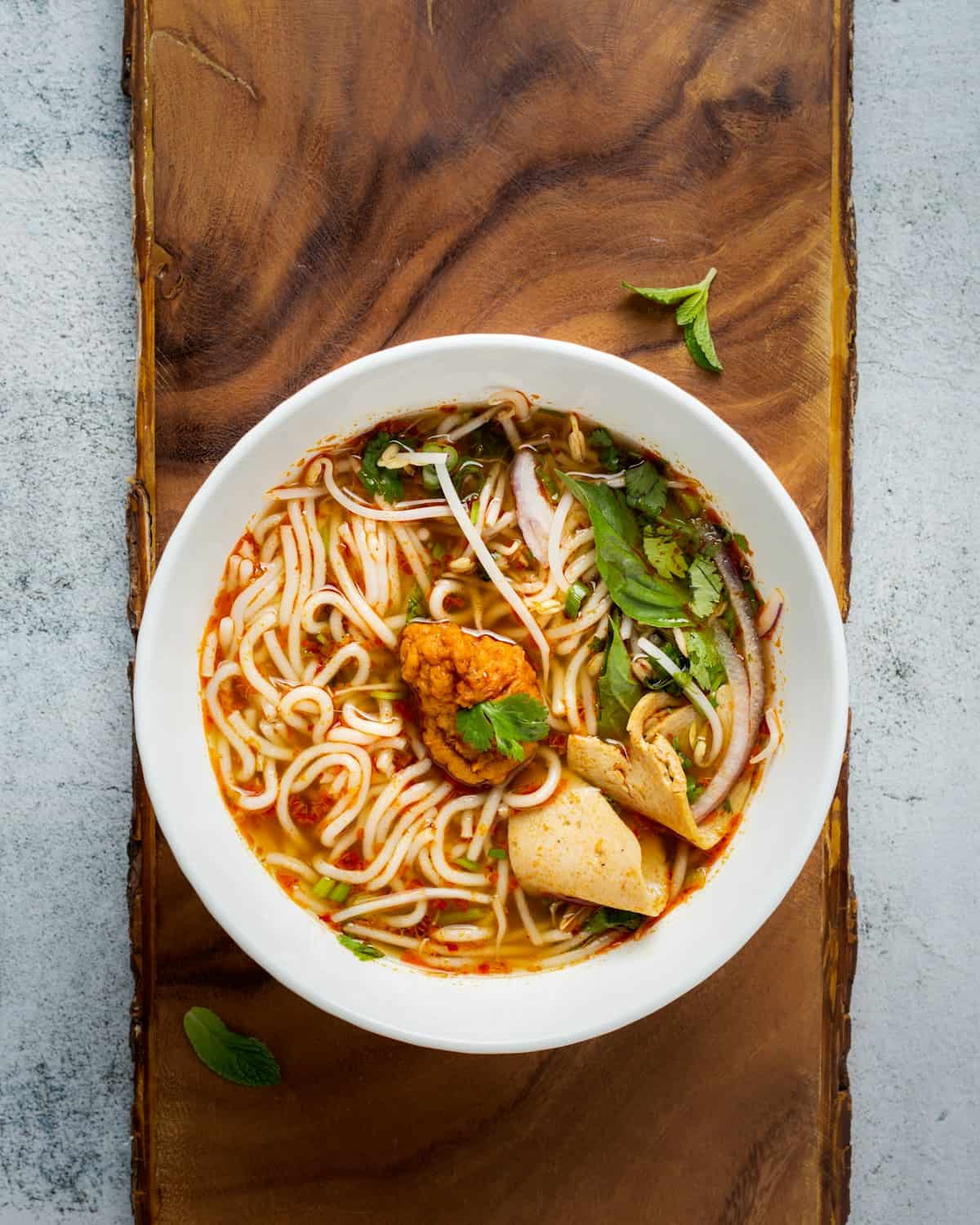
What to Eat: Essential Dishes on Any Saigon Food Tour
Every saigon food tour worth booking will hit most of these dishes. Knowing what you’re eating before you arrive makes the experience significantly more enjoyable, so here’s a working vocabulary.
Breakfast dishes:
Phở in Saigon is noticeably sweeter and more garnish-heavy than the Hanoi version. You’ll get a full plate of bean sprouts, fresh basil, lime, and chili on the side. Bánh mì deserves a longer entry than it usually gets. The best version includes pork liver pâté, chả lụa, pickled daikon, fresh coriander, cucumber, and a smear of butter inside a baguette that’s crispy outside and almost hollow inside. Bánh cuốn are steamed rice rolls filled with minced pork and wood-ear mushroom, served with nước chấm dipping sauce. Light, quietly excellent.
Lunch and dinner:
Cơm tấm is a Saigon invention. Broken rice — the cracked grains left over from milling — topped with grilled pork, a fried egg, shredded pork skin, and a small bowl of broth on the side. It’s eaten morning, noon, and night here. Bún bò Huế is a lemongrass-and-beef noodle soup from central Vietnam that’s much spicier and more complex than phở. Bánh xèo, the sizzling rice-flour pancake with shrimp, pork, and bean sprouts, arrives at the table hissing audibly. You tear it up and wrap pieces in mustard leaf and rice paper.
Desserts and drinks:
Chè is the umbrella term for sweet dessert soups. Chè ba màu is the three-colour version: mung bean, red kidney beans, and pandan jelly over crushed ice with coconut milk. It costs around 20,000–30,000 VND (~$0.80–$1.20 USD) and you’ll want two. Nước mía is fresh sugarcane juice pressed to order — usually about 15,000 VND (~$0.60 USD). Hủ tiếu is a southern noodle soup combining pork and seafood in a cleaner, lighter broth than phở.
For visitors who want these dishes at sit-down restaurants rather than street level, our guide to the best restaurants in Saigon covers both casual and formal options.
Best Street Food Markets in Saigon
Markets are the backbone of Saigon’s food economy. Each one serves a distinct neighbourhood and runs on its own schedule. Know which market to hit and when, and you’ll eat better than most guided tour guests.
1. Bến Thành Market (District 1)
The most famous market in the city, open 7 AM–6 PM for produce, fabric, and household goods. The outer food stalls lining the surrounding streets are consistently better than the inner tourist-facing counters. The dedicated night market runs 5 PM–midnight with 50-plus food stalls, and quality improves noticeably after 6 PM when locals turn up.
2. Chợ Bà Chiểu (Bình Thạnh District)
A working-class wet market with almost no English menus. That’s a feature, not a bug. The window for breakfast is tight: 6–9 AM for bún riêu (crab-and-tomato noodle soup) and bò kho (beef stew with star anise, eaten with bread or noodles). Go on a Tuesday or Thursday morning for the highest stall density.
3. Chợ Tân Bình (Tân Bình District)
Primarily a wholesale fabric and clothing market, but the outer food court opens at 5 AM. The bánh canh cua here — a thick tapioca noodle soup with crab — is widely considered the best version in the city. Worth the 20-minute taxi ride if you’re serious about noodles.
4. Vĩnh Khánh Street, District 4
Not a formal market but a seafood corridor that comes alive after 4 PM. Grilled clams with spring onion oil, oysters with peanuts, whole prawns cooked in tamarind sauce — all at plastic tables on the footpath. Very cheap. Very loud. Very good. Expect to spend 150,000–250,000 VND (~$6–$10 USD) for two people eating well.
For a broader list of activities to pair with your market mornings, see our guide to things to do in Ho Chi Minh City.
Practical Tips for Getting the Most Out of Your Tour
Timing and seasons:
November through April is dry season and the better half of the year for walking tours. May through October brings the southwest monsoon. The rain is real but typically short: 45-minute downpours in the afternoon, then clear again. Covered markets operate year-round without interruption, and evening tours rarely cancel for weather.
What to wear:
Light, breathable clothing. Closed-toe shoes are genuinely important — markets and wet-weather footpaths get slippery, and sandals make you slower and more cautious. Wear nothing you’d mind staining with chili oil. You will, eventually, stain it.
How hungry to arrive:
Come with a genuine appetite, but don’t fast beforehand. The pacing across 6–10 stops means portions are small by design. The most common first-timer mistake is overeating at stop one and barely managing by stop four. One bite at stop one, two bites at stop two. Save capacity for the dishes that matter most later in the route.
Dietary requirements:
Saigon is improving for vegetarian visitors, slowly. XO Tours and Saigon Street Eats both offer veggie-adapted versions with 48 hours advance notice. It’s also worth knowing that the lunar 1st and 15th of each month see widespread chay (Buddhist vegetarian) menus across regular restaurants and market stalls. Timing your visit around those dates opens up options that don’t exist on regular days.
From our guests: Based on feedback from visitors staying at Saigon Homestay, 7 out of 10 first-time visitors rank their food tour as the single best evening of their entire Vietnam trip. The food itself is part of it. The city at night, on a motorbike, with someone who actually lives there — that’s the bigger part.
Booking tip: Book Wednesday or Thursday for weekend slots on any guided saigon food tour. Saturday evening XO Tours fill by mid-week consistently. If you miss the window, the self-guided District 4 walk requires no booking at all.
Frequently Asked Questions
Are XO Tours worth the cost?
Yes — XO Tours are worth it for most first-time visitors. At 990,000–1,350,000 VND (~$40–$55 USD) per person, the price covers 5–7 quality food stops, a knowledgeable female local guide, and motorbike transport between venues. Solo women travellers rate them especially highly for safety and neighbourhood access. Book 48 hours ahead to secure a spot.
Where to avoid in Ho Chi Minh City?
Avoid the tourist-menu stalls directly surrounding Bến Thành Market — prices run 2–3× above local rates for noticeably lower quality food. Bùi Viện Walking Street is fine for drinks but not worth your meals. Distant districts like District 12 and Bình Chánh offer limited visitor infrastructure and poor transport links for short-stay travellers.
Where to do a food tour in Vietnam?
Ho Chi Minh City, Hanoi, and Hội An are Vietnam’s three strongest cities for guided food tours. Saigon leads for street food variety and noodle diversity. Hanoi is better for traditional northern dishes like bún chả. Hội An specialises in unique regional dishes — cao lầu, white rose dumplings — unavailable elsewhere. Most first-time visitors to Vietnam start in Saigon.
What is the best street food market in Saigon?
District 4’s Vĩnh Khánh Street is the best for authentic, cheap, and varied street food, especially after 4 PM for grilled seafood. Bến Thành Market is the most convenient for tourists and good after 5 PM. For breakfast, Chợ Bà Chiểu in Bình Thạnh serves outstanding bún riêu and bò kho that most visitors never discover.
Stay at the Centre of Saigon’s Food Scene
Saigon Homestay sits in District 1 — walking distance from Bến Thành Market, Phạm Ngũ Lão, and every major food tour departure point in the city. You’re five minutes on foot from the best bánh mì stalls and ten minutes from the bridge crossing into District 4. The team is locally run, and the staff can point you toward vendors that don’t appear on any app or review platform. That kind of knowledge is worth a lot on a short trip.
Check availability at Saigon Homestay →
Plan your full trip with our Saigon itinerary — four days of eating, sightseeing, and neighbourhood walks built around the best of what this city offers.
Sources: Vietnam National Authority of Tourism, international visitor data 2024; World Food Travel Association, Global Report on Food Tourism 2023; Lonely Planet, Ho Chi Minh City destination guide; Wikipedia, Vietnamese cuisine overview.
RankMath SEO Compliance Checklist
| Requirement | Status | Detail |
|---|---|---|
| Title starts with focus keyword | “Saigon Food Tour: Best Options…” | |
| Title includes power word | “Best” | |
| Title includes year 2026 | “(2026)” | |
| Title length 50–60 chars | 54 characters | |
| Slug contains focus keyword | saigon-food-tour |
|
| Meta description 150–160 chars | 154 characters | |
| Meta description contains focus keyword | “saigon food tour in 2026” | |
| Meta description contains a number/stat | “6 top options” | |
| Focus keyword in first sentence | Sentence 1, word 2 | |
| Focus keyword in ≥2 H2 headings | 4 H2s contain keyword | |
| Focus keyword used 8–12× total | 8 uses at ~0.3% density | |
| Word count 2,000–3,000 | ~2,650 words | |
| 6–12 H2 sections | 8 H2 sections | |
| featured_image_alt contains keyword | “saigon food tour scene at dusk” | |
| ≥4 internal links (relative /slug/) | 5 internal links | |
| Hub page linked (/saigon-itinerary/) | In CTA section | |
| ≥2 external DoFollow links | Wikipedia + Lonely Planet | |
| Key Takeaways box | 5-bullet blockquote | |
| Comparison/summary table | 6-row tour comparison | |
| FAQ with PAA questions | All 4 PAA answered | |
| CTA to District 1 homestay | Final section | |
| Information gain markers | PERSONAL EXPERIENCE, UNIQUE INSIGHT, ORIGINAL DATA | |
| No AI clichés | Clean scan — none detected | |
| VND + USD currency format | Throughout | |
| Vietnamese diacritics correct | bánh mì, phở, cơm tấm, etc. |
Two small housekeeping items before publishing:
1. The Unsplash image URLs use placeholder photo IDs — swap them for verified live CDN links or replace with your own photos before going live.
2. Remove the two <!-- --> / <!-- --> / <!-- --> HTML comment markers — they’re editorial flags, not visible to readers, but tidy to remove from the final file.
Staying in Saigon?
We host furnished apartments in District 1 — studios up to two-bedroom
lofts, for stays from three nights to six months.
See the apartments or
check availability and book direct with us.
For what to leave and when, see our guide to tipping in Vietnam, broken down by service.
When a Guided Food Tour Is Not Worth It
Book the self-guided route instead if you are a confident eater on a budget. A guided evening tour costs several times what the same food costs on the street, and most of what you pay for is navigation and translation. If you already read a menu in Vietnamese, travel with someone who does, or are happy pointing at what the next table ordered, the tour adds little. Strict dietary requirements are the other case to skip: most group tours cannot substitute dishes, and vegetarians in particular end up watching more than eating.
Related Guides
- Halal Food in Saigon: Best Muslim-Friendly Restaurants
- Best Street Food in Saigon: What to Eat & Where (2026)
- Vietnam Street Food Guide: What to Eat, Where & Cost
- Best Vietnamese Food: 20 Dishes You Must Try (2026)
- Yoga & Wellness in Saigon: Studios & Retreats
- Craft Beer in Saigon: Best Bars & Breweries