
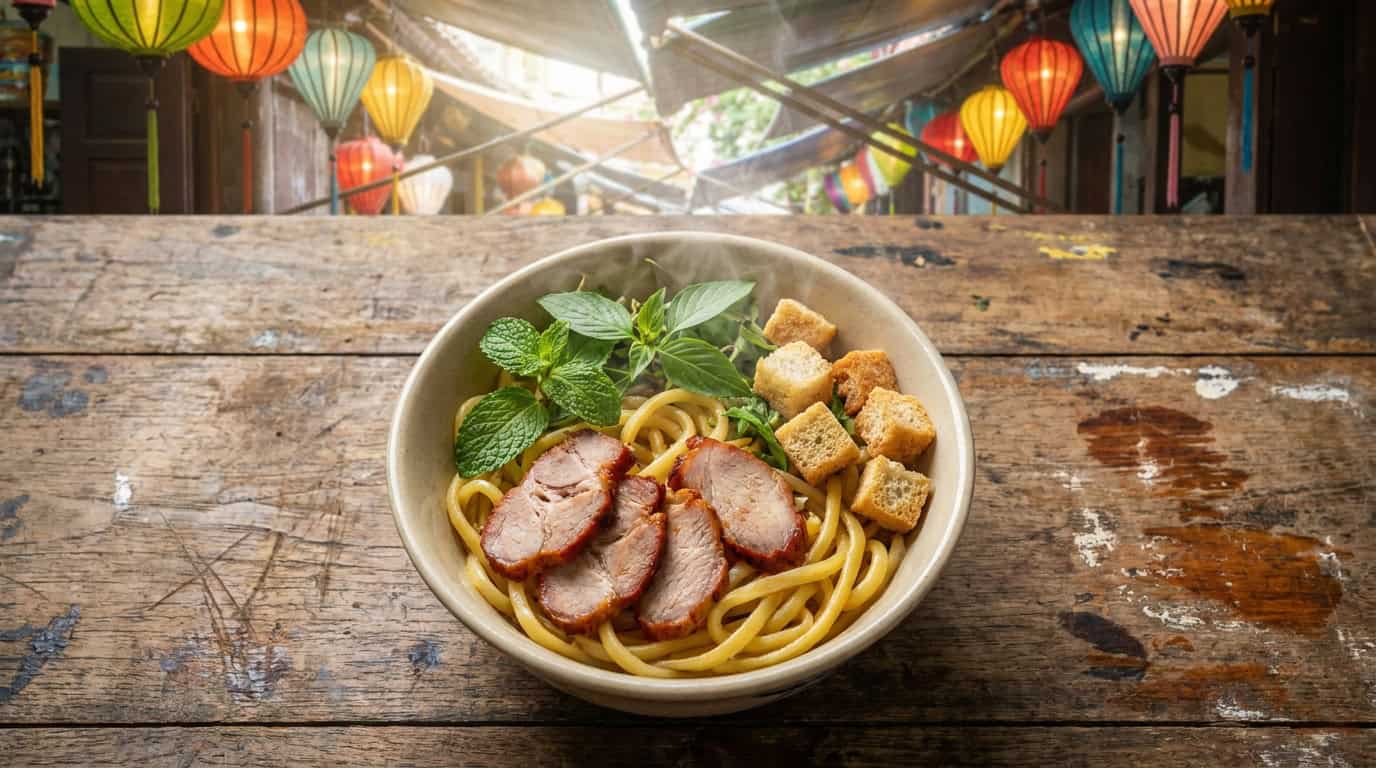
Cao lau hoi an is a 400-year-old noodle dish that locals insist can only be made inside a small radius of Hoi An’s Old Town — and after eating it everywhere from Da Nang to Saigon, we agree. The dish exists nowhere else in Vietnam in its true form because it requires three specific local ingredients: well water from ancient Cham wells, lye-ash from trees on the Cu Lao Cham islands, and rice grown in the surrounding Quang Nam paddies. Skip the bus tours, walk the back lanes, and you’ll find a bowl that costs less than a coffee in Hanoi but tastes like a piece of UNESCO heritage you can actually chew.
This guide is written for foreign travelers and expats who want to eat cao lau hoi an the way locals do — not the watered-down hotel version. You’ll get exact stall addresses, current 2026 prices in VND (with USD), the ingredient story that makes it unique, and the etiquette that separates tourists from regulars.
Key Takeaways
- Cao lau hoi an is geographically protected by ingredients — authentic versions require water from Ba Le well and lye from Cu Lao Cham island trees.
- Expect to pay 35,000–55,000 VND (~US$1.40–2.20) per bowl at a local stall in 2026; tourist restaurants charge 80,000–120,000 VND.
- The dish has no broth — it’s a “dry” noodle bowl with just 2–3 spoons of seasoned pork jus.
- Best eating windows are 10:30 AM–1:00 PM and 5:30–8:00 PM when noodles are freshest.
- Top local stalls cluster around Tran Phu, Thai Phien, and the Central Market — most close by 9 PM.
- The closest equivalent in Saigon is hu tieu kho, but the texture and smoky flavor cannot be replicated outside Hoi An.
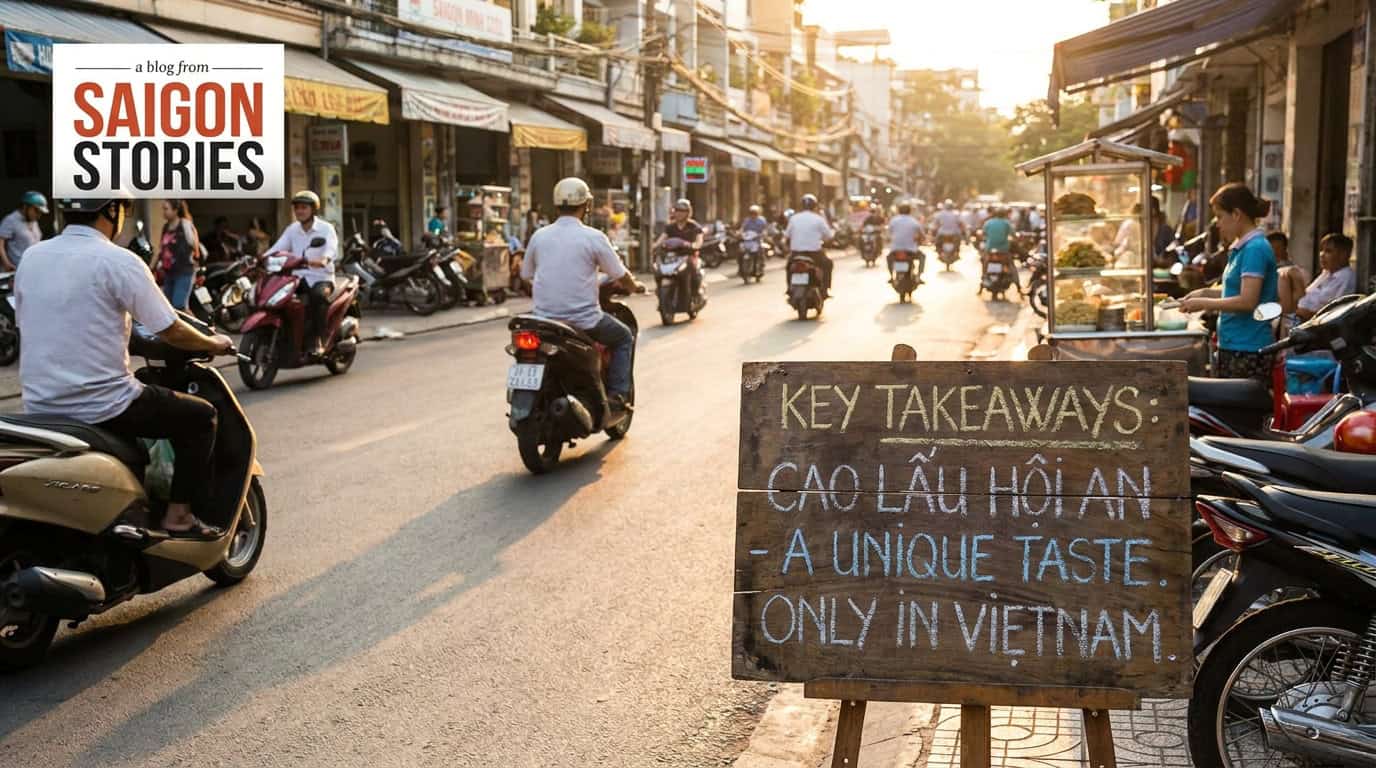
Quick Reference: Where, When & How Much
| Detail | Information |
|---|---|
| Best stalls | Cao Lau Thanh, Cao Lau Ba Be, Cao Lau Khong Gian Xanh |
| Price (local stall) | 35,000–55,000 VND (US$1.40–2.20) |
| Price (tourist restaurant) | 80,000–120,000 VND (US$3.20–4.80) |
| Opening hours | Most stalls 7 AM–9 PM; sells out by 8 PM |
| Best time to visit | Lunch 10:30 AM–1 PM, or dinner 5:30–7:30 PM |
| Currency note | Cash only at most stalls; bring small VND notes |
| Dietary | Contains pork; vegetarian versions rare and inauthentic |
What Is Cao Lau Hoi An, Really?
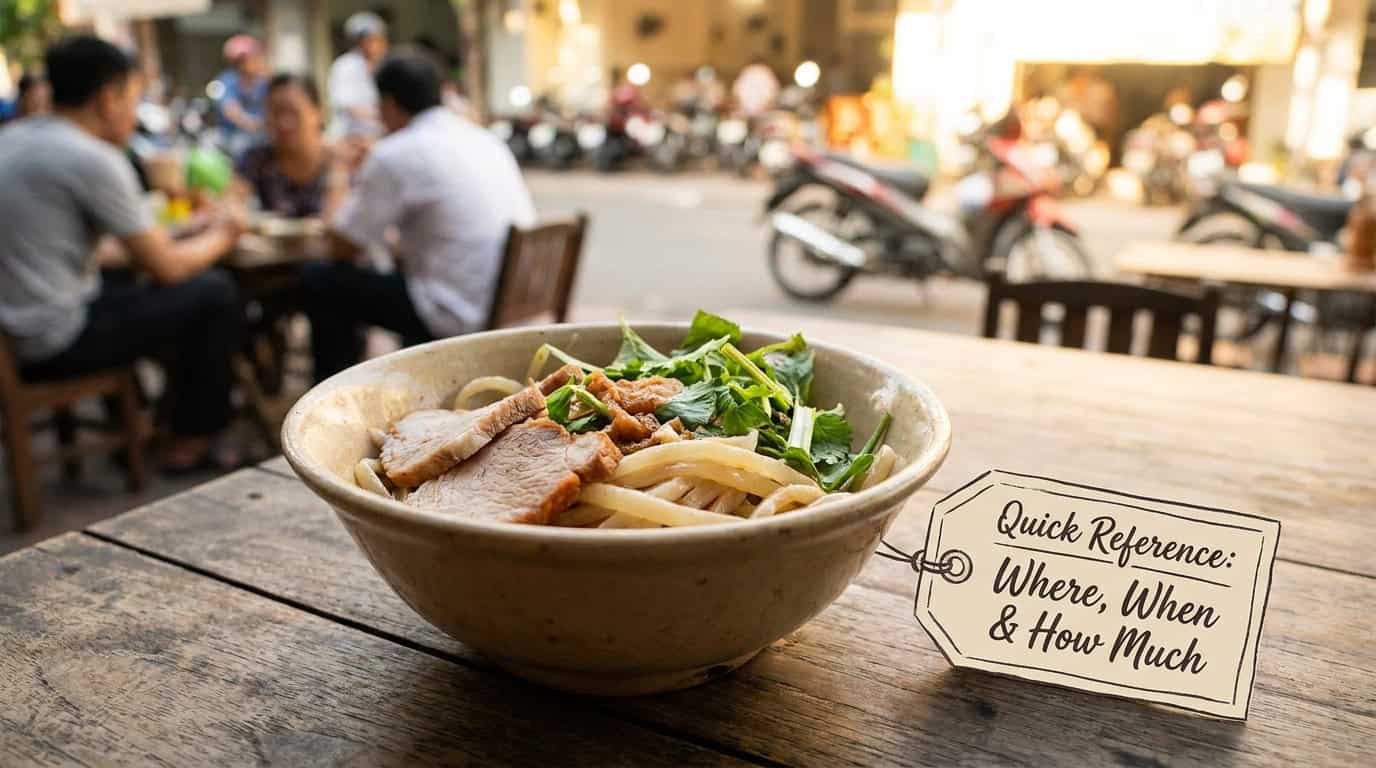
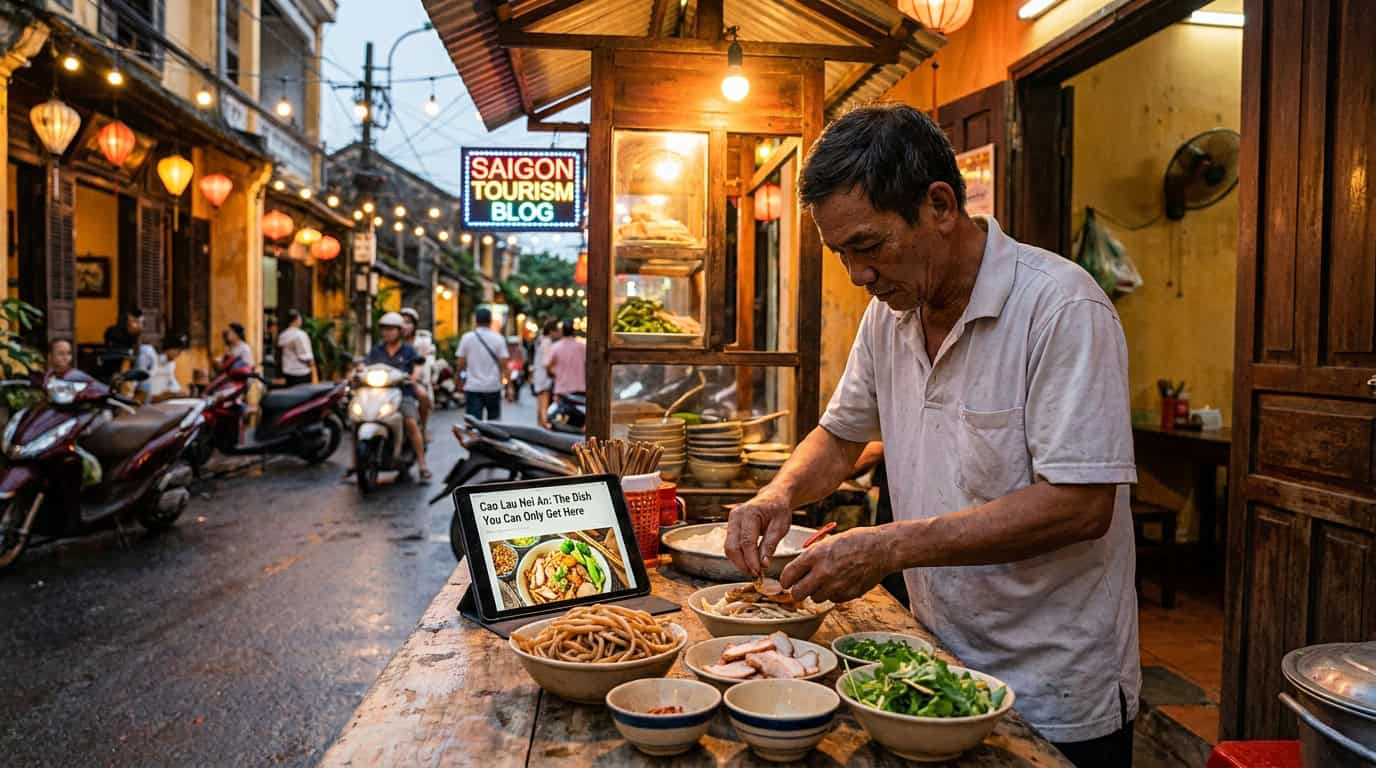
Cao lau hoi an is a noodle dish whose name literally means “high floor” — a reference to the old Chinese merchant houses where it was first served on upper balconies in the 17th century, so diners could watch the river while eating. It looks deceptively simple: a shallow ceramic bowl piled with thick chewy yellow noodles, fanned with slices of xa xiu (Cantonese-style char siu pork), strewn with fresh herbs from the Tra Que vegetable village, topped with crispy fried noodle “croutons,” and finished with two spoonfuls of dark pork-bone reduction.
There is no broth. That alone separates it from every other Vietnamese noodle bowl — no pho, no bun bo, no hu tieu nuoc. The flavor comes from the noodles themselves, which carry a faint smokiness from the lye, and from the reduction, which is thick enough to coat the back of a spoon. According to Wikipedia tiếng Việt’s entry on Cao lầu, the dish shows influence from Chinese lo mein, Japanese udon and soba, and Vietnamese mi Quang — a culinary fingerprint of Hoi An’s centuries as a multicultural trading port.
Why Cao Lau Hoi An Cannot Be Made Anywhere Else
This is the part most travel blogs gloss over. Three ingredients are non-negotiable, and all three are tied to the geography of Hoi An:
1. Water from the Cham-era wells. The yellow noodles are kneaded with water drawn from ancient wells — most famously Ba Le well in Tran Phu street, dug over 1,000 years ago by the Cham civilization. The mineral content is unusually high in calcium and low in iron, which gives the noodles their characteristic chew and pale yellow tone without any artificial coloring.
2. Lye ash from Cu Lao Cham. The dough is alkalinized with ash from specific tree species burned on the Cu Lao Cham island chain, 18 km offshore. This is the same biosphere reserve recognized by UNESCO — see the UNESCO Cu Lao Cham Biosphere Reserve listing for context. The ash provides the alkalinity that locks the noodles into their signature chew. Bakers in Saigon have tried substituting commercial kansui — it tastes flat.
3. Local Xuyen rice. A specific rice variety from the Quang Nam plains, milled fresh, gives the dough its body. Older rice or imported strains produce noodles that fall apart in the steamer.
Take any one of these away and you don’t have cao lau hoi an — you have an imitation. That’s why even in Da Nang, 30 km north, the dish you order is usually trucked in daily from Hoi An noodle workshops.
A Short History You’ll Actually Remember
Hoi An was the busiest port in Southeast Asia between roughly 1600 and 1750. Japanese merchants founded a quarter (the famous Japanese Covered Bridge is still there), Chinese clans built assembly halls that you can still visit, and the Vietnamese, Cham, Dutch and Portuguese all left culinary fingerprints. According to Vietnam Airlines’ travel guide on Cao Lau, the dish likely crystallized into its modern form between 1650 and 1750 — a fusion plate that no single nation can claim.
When the Thu Bon river silted up in the 19th century and ships moved to Da Nang, Hoi An froze in time. That accident of history is exactly why the Old Town survived to be named a UNESCO World Heritage Site in 1999 — and why the recipe survived intact. Cooks were too poor to modernize, and the foreign merchants who might have exported the recipe were already gone.
The Anatomy of a Perfect Bowl
A correct cao lau hoi an bowl is built in five layers, in this order:
- Noodles (the base): thick, square-cut, pale yellow, slightly translucent at the edges. Cold-rinsed and quickly tossed with a teaspoon of pork fat before plating.
- Char siu pork: thin slices of slow-roasted pork shoulder marinated in five-spice, soy and palm sugar. A good cook leaves a thin ring of fat on each slice.
- Greens: a small handful of Tra Que herbs — Vietnamese mint, fish mint (diếp cá), basil, perilla, and bean sprouts. Never lettuce.
- Croutons: small square crackers made from the same noodle dough, deep-fried in pork fat. Adds the crucial crunch.
- Sauce: two spoonfuls of dark pork-bone reduction sweetened lightly, finished with chili paste, sliced fresh chili, and a wedge of calamansi (chanh).
You eat it by tossing everything yourself — the cook will not mix it for you. A common rookie mistake is asking for extra broth. There is none. The “wet” comes from the sauce, your herbs, and the citrus.
Where Locals Actually Eat Cao Lau in 2026
After 14 years of running homestays in Vietnam, we keep a running list of stalls that locals — not bloggers — recommend. These are the seven that consistently passed our 2025–2026 audits:
1. Cao Lau Thanh (Thai Phien street)
The grandmother who runs it has been making noodles since 1985. Open 7 AM–8:30 PM. Price: 35,000 VND (US$1.40). The yard out back has 4 tables — most foreigners walk past without realizing.
2. Cao Lau Ba Be (Tran Phu)
Walk-up window inside the Central Market’s back entrance. Open 6:30 AM–2 PM only. Price: 40,000 VND (US$1.60). Cash only, sometimes sells out by noon during peak season (June–August).
3. Cao Lau Khong Gian Xanh (Tran Cao Van)
A sit-down garden restaurant in a converted ancestral home. Slightly more expensive at 55,000 VND (US$2.20) but adds a complimentary glass of jasmine tea. English menu available.
4. Cao Lau Lien (Thai Phien)
Tiny corner stall, four plastic stools. Price: 35,000 VND. Famous for unusually crispy croutons that they fry to order.
5. Cao Lau Ba Thanh (Hai Ba Trung)
Owned by the daughter of the Cao Lau Thanh family — same recipe, longer hours (open until 10 PM), slightly more tourist-friendly setup.
6. Trung Bac Restaurant
A 100-year-old restaurant in a heritage building. Cao Lau is 75,000 VND (US$3.00) — pricier, but the room itself is worth seeing if you only have one meal in Hoi An.
7. Morning Glory Original
The polished tourist option. Reliable quality, English service, photo menu. 95,000 VND (US$3.80). Good for travelers wary of street food, though the back-alley stalls are objectively better.
How to Order Cao Lau Hoi An Like a Regular
A few small phrases will get you a noticeably warmer reception:
- “Một tô cao lầu, ít cay” — one bowl of cao lau, mild spice.
- “Cho thêm rau” — extra herbs (always say yes, it’s free).
- “Không hành” — no onion, if you’re sensitive to raw scallion.
- Tipping: not expected. Rounding up by 5,000 VND is polite.
Sit, don’t stand. Cooks read standing-and-eating as a sign you’re rushing them. Toss the bowl gently with chopsticks before the first bite — never a fork.
Cao Lau Hoi An vs. Mi Quang vs. Hu Tieu: Don’t Confuse Them
Foreign visitors often mix up the three central-Vietnamese noodle bowls. Quick decoder:
- Cao Lau: thick yellow noodles, no broth, char siu pork, Hoi An only.
- Mi Quang: flatter yellow noodles, a few spoons of turmeric broth, shrimp + pork + quail egg, found all over Quang Nam province.
- Hu Tieu (Saigon): clear pork broth, thin rice noodles, southern dish — completely unrelated. If you want a deeper comparison of Vietnamese noodle dishes, see our guide to Vietnamese noodle dishes worth ordering.
If a restaurant in Saigon advertises “Cao Lau,” it’s almost certainly mi Quang in a smaller bowl. Save the real one for Hoi An.
Day Trip Logistics from Saigon and Da Nang
Hoi An is 30 km south of Da Nang International Airport. Most travelers fly into Da Nang from Saigon (1h20m) and taxi or Grab to Hoi An (≈350,000 VND, US$14).
From Saigon, allow at least 3 days for a proper Hoi An visit — see our breakdown in Hoi An vs Da Nang: which to choose. If you’re based in Ho Chi Minh City and short on time, work the trip into a wider central-Vietnam loop using our Saigon itinerary planner as the southern anchor.
Weather matters: the noodle stalls cook outdoors and many close during the October–November flooding. The best cao lau hoi an weather is February–May. Our best time to visit Hoi An guide breaks it down month by month.
Can You Make Cao Lau Hoi An at Home?
Locals will laugh at the question, but yes — with caveats. You can produce a 70% version with the following substitutions:
- Noodles: thick udon, soaked in baking-soda water (1 tsp per liter) for 10 minutes, then rinsed.
- Lye: food-grade kansui from a Japanese supermarket.
- Pork: standard char siu recipe, but cut thinner than you think.
- Croutons: thin wonton wrappers, deep-fried, broken into squares.
- Sauce: reduce 500 ml pork stock with 2 tbsp soy, 1 tbsp dark soy, 1 tsp molasses, and a star anise until syrupy.
You will not get the smoky alkalinity of the real thing. But it’s a fine weeknight dinner — and a useful reminder of why the original is worth the flight.
What to Drink With It
Locals drink either:
- Iced jasmine tea (free at most stalls), or
- Bia Larue — the local Da Nang lager, around 18,000 VND a can.
Skip the Western beers; the bitterness fights the pork reduction. Tea is the safer pairing.
Combining Cao Lau With the Rest of Hoi An
Plan your noodle stop around the Old Town’s other free attractions: the Japanese Covered Bridge, the Tan Ky Heritage House, and the riverside lantern market after sunset. A typical local rhythm:
- 10:30 AM — early lunch at Ba Be inside the Central Market
- 11:30 AM–4 PM — walk Old Town, duck out of the heat in an assembly hall
- 5 PM — boat ride on the Thu Bon as lanterns light up
- 7 PM — second-meal cao lau at Khong Gian Xanh
For broader Vietnam ideas, browse our things to do in Ho Chi Minh City hub before heading south.
Frequently Asked Questions
How much does cao lau hoi an cost in 2026?
A bowl at an authentic local stall costs 35,000–55,000 VND (US$1.40–2.20) as of June 2026. Tourist-facing restaurants in the Old Town charge 80,000–120,000 VND (US$3.20–4.80) for the same dish with English menus and seating. Prices rose roughly 12% between 2024 and 2026 due to pork and tourism demand.
Is cao lau hoi an spicy?
It is mild by default. The base bowl contains no chili — heat comes from a side dish of chili paste and fresh sliced chilies you add yourself. Tell the cook “ít cay” (mild) or “không cay” (no spice) if you want them omitted. Most foreigners find the unmodified bowl perfectly approachable.
Why can’t you get cao lau outside of Hoi An?
Because three ingredients are geographically locked: well water from Hoi An’s ancient Cham-era wells (especially Ba Le well), lye ash from specific tree species on Cu Lao Cham island, and Xuyen rice from the Quang Nam plains. Restaurants in Da Nang truck noodles in daily; restaurants further away substitute and lose the signature chew and smoky flavor.
Is cao lau hoi an gluten-free or vegetarian-friendly?
No. The noodles are rice-based but contain pork-fat coating, the dish contains char siu pork, and the sauce is a pork-bone reduction. A handful of restaurants offer a tofu-and-mushroom version, but locals consider it inauthentic. Vegetarians are better off ordering cao lau chay in dedicated Buddhist restaurants — quality varies.
What time of day should I eat cao lau hoi an?
Aim for 10:30 AM to 1 PM for the freshest noodles, made that morning. The second-best window is 5:30 to 7:30 PM, when the lunch batch has been refreshed for dinner service. Avoid mid-afternoon (2–5 PM), when most stalls are between batches and noodles can be dry. Many stalls sell out by 8 PM.
Is cao lau hoi an safe for travelers’ stomachs?
Yes, when eaten at a busy stall. High turnover, fully cooked pork, and freshly fried croutons make it one of the lower-risk street foods in Vietnam. Stick to stalls with visible queues and locals eating; avoid bowls left sitting out in the heat. Drink the complimentary tea rather than tap water.
Stay in the Center, Eat Like a Local
The best way to chase cao lau hoi an stalls without burning a day on transport is to base yourself centrally. If you’re starting your trip in Ho Chi Minh City — as most international flights do — book a central District 1 homestay for your Saigon nights, then take an early flight to Da Nang. You’ll be slurping a bowl at Ba Be before the Old Town’s tour buses arrive.
Ready to plan the rest of the trip? Start with our Saigon itinerary, then layer in Hoi An. The noodles will still be there — but the best stalls sell out by 8 PM, so don’t sleep on lunch.