

The best time to visit Hoi An is from February to May, when daytime temperatures sit around 24-32°C (75-90°F), humidity drops below 80%, and monthly rainfall stays under 60mm — perfect for walking the UNESCO-listed ancient town, cycling to An Bang Beach, and joining lantern festivals on the Thu Bon River. If you want a quieter, drier town with reliable sunshine and no flood risk, lock in March or April.
This 2026 guide breaks down every month, names the weeks to avoid (yes, the October–November floods are real), and gives Vietnam-based homestay hosts’ insider advice so foreign travellers and expats can plan smart.
Key Takeaways
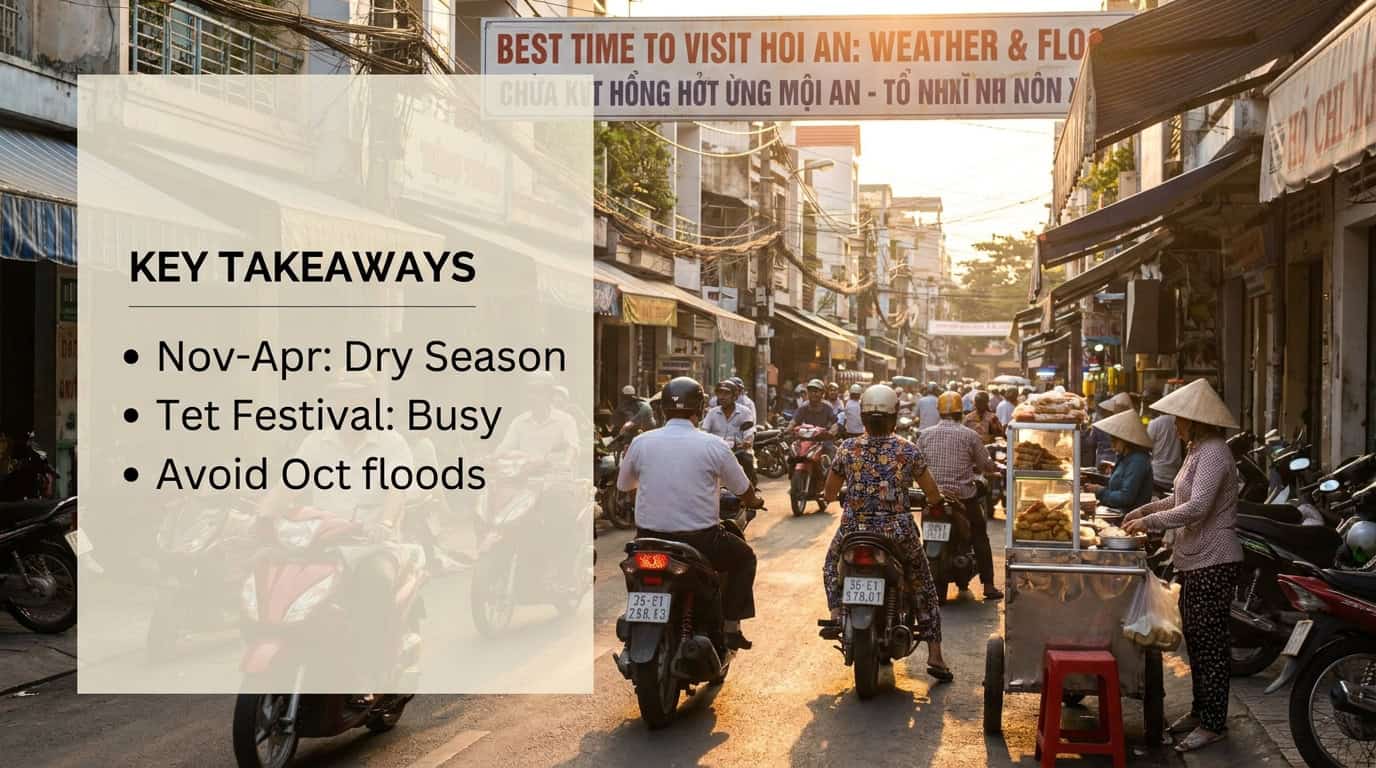
- Best months overall: February–May (warm, dry, low humidity, full moon lantern nights at their most magical).
- Peak flood season: Mid-September to mid-November — the Thu Bon River can submerge ancient town streets up to waist-deep.
- Cheapest months: June–August (hot but dry; great hotel deals, ideal for beach combos).
- Avoid: Late October to mid-November (typhoons + flooding) and Tết week (late Jan/early Feb 2026 — many shops shut).
- Sweet spot for festivals: Hoi An Lantern Festival happens on the 14th day of every lunar month; the most atmospheric falls in March 2026 (Mar 3) and April 2026 (Apr 1).
- Beach bonus: An Bang and Cua Dai beaches are at their best from April to August.
Hoi An at a Glance: Quick Planning Table
| Factor | Detail |
|---|---|
| Location | Quang Nam Province, Central Vietnam (30 km south of Da Nang) |
| Ancient Town entrance ticket | 120,000 VND (~$4.80 USD) for 5 attractions |
| Opening hours (Ancient Town) | 24/7 (ticketed sites 8:00-21:30) |
| Best time to visit Hoi An | February–May (dry, 24-32°C) |
| Worst time | Mid-October to mid-November (floods, typhoons) |
| Average annual rainfall | 2,066 mm (1 of the wettest cities in Vietnam) |
| Currency | Vietnamese Dong (VND); USD widely accepted |
| Nearest airport | Da Nang International (DAD), 45 min by taxi |
Why the Best Time to Visit Hoi An Is February–May

Central Vietnam has only two real seasons — dry (February-August) and wet (September-January) — but the comfortable dry window is much narrower than guidebooks suggest. From late May, temperatures spike above 35°C and humidity becomes oppressive. By December, the cold drizzle from the northeast monsoon (“crachin”) sets in.
That leaves February to May as the genuinely pleasant window. According to historical data from Vietnam’s National Center for Hydro-Meteorological Forecasting, Hoi An records its lowest rainfall and most stable temperatures during these months, averaging:
- February: 21-26°C, 40mm rain, 7 hrs sunshine/day
- March: 22-28°C, 25mm rain, 7 hrs sunshine/day
- April: 24-30°C, 30mm rain, 8 hrs sunshine/day
- May: 26-32°C, 55mm rain, 8 hrs sunshine/day
For travellers continuing south, see our Saigon itinerary for ideas on pairing Hoi An with 2–3 days in Ho Chi Minh City.
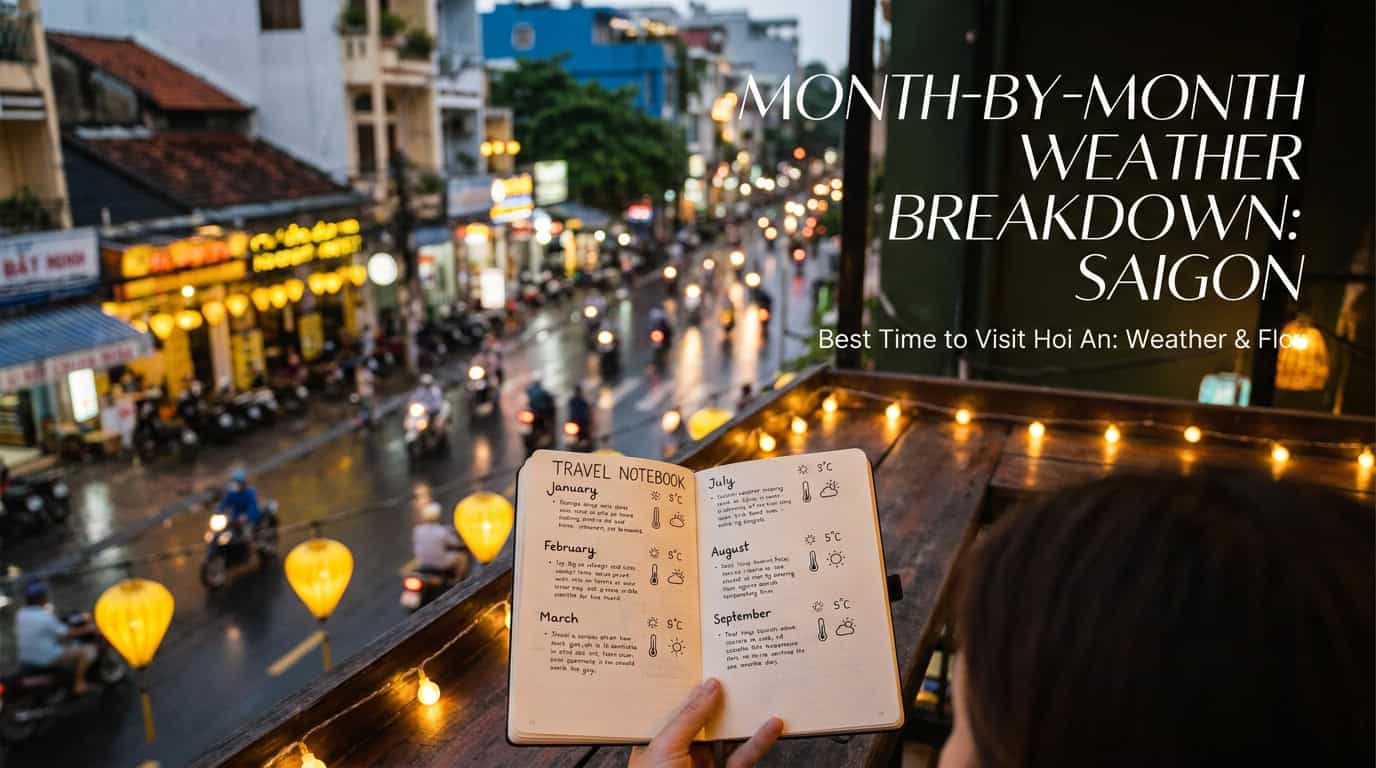
Month-by-Month Weather Breakdown

January — Cool & Damp (Skip if You Hate Drizzle)
Lingering northeast monsoon brings 18-23°C and persistent grey skies. Rain totals drop to ~115mm but the crachin drizzle can last for days. Tết (Lunar New Year) falls on Feb 17, 2026, so the last 10 days of January will see businesses preparing to close. Hotel rates are low. Pack a light jacket.
February — The Sweet Spot Begins
Skies clear, temperatures climb to a comfortable 22-26°C, rainfall halves. This is when the second best time to visit Hoi An truly opens. Avoid Tết week (Feb 14-21, 2026) when family-run restaurants and tailor shops close for 3-7 days.
March — The Best Month, Period
Our top pick. Average 25°C, 25mm rain, 70% humidity. The Thu Bon River is glassy, jasmine perfumes the alleys, and the March 3, 2026 full moon Lantern Festival falls on a clear, mild night. Tour crowds haven’t peaked yet.
April — Equally Excellent
Warm sunshine, perfect beach weather, peak season for cycling tours to Tra Que vegetable village. Note: April 30–May 1 is Reunification Day + Labour Day, when domestic Vietnamese tourism floods Hoi An. Book accommodation 4-6 weeks ahead.
May — Warm but Still Great
Daytime highs climb to 32°C, humidity rises but the sea is now bath-warm. International tourist numbers dip, so it’s a quieter window. Late afternoon thunderstorms appear but rarely last more than an hour.
June, July, August — Hot, Sunny, Cheap
Hoi An hits its annual heat peak (highs of 33-35°C, lows around 26°C). Rainfall stays low (90-130mm/month). UV is intense — bring SPF 50+. This is peak European summer holiday season, so the ancient town is busiest from 17:00-21:00. Beach hotels at An Bang offer their best room rates in this stretch.
September — The Transition
First half is still hot and dry. Second half can flip — the first heavy rains arrive, occasionally with a typhoon scare. Risk is manageable but check Vietnam Disaster Management Authority bulletins before booking.
October — Avoid the Second Half
Rainfall jumps to 530-600mm/month — the wettest month of the year. Typhoons forming in the South China Sea regularly track over Quang Nam. In October 2023, floodwaters submerged Bach Dang Street up to 1.5m. The first week is usually fine; from Oct 15 onward, plan to be elsewhere.
November — Peak Flood Risk
Still 450-500mm of rain. Floods happen on average 2-3 times per November in the ancient town. Streets re-open quickly once water recedes, but boats become the main transport on Nguyen Thai Hoc Street. Romantic for some, ruined-itinerary for most.
December — The Wet Season Tail
Rain eases to ~210mm, but temperatures drop to 19-24°C with the crachin drizzle returning. Christmas and New Year see another mini-spike in European visitors. Pleasant for some, miserable for sun-seekers.
What Is the Rainy Season in Hoi An?
The rainy season in Hoi An runs from mid-September to late January, with the heaviest concentration in October and November. Hoi An sits in a low-lying river delta, so even moderate rain upstream in the Truong Son mountains can overflow the Thu Bon River within 6–12 hours. The Vietnam Meteorological & Hydrological Administration logs an average 2,066mm of annual rainfall, with 70% falling in those four months. Always check forecasts the morning of any river or beach activity from late September onward.
When to Avoid Hoi An?
Avoid Hoi An from October 15 to November 20, the peak typhoon and flood window. During this period, the ancient town can experience knee-to-waist-high flooding that closes restaurants, shuts museums, and forces hotels onto upper floors. A second window to avoid is Tết Lunar New Year (Feb 14-21, 2026) — not for weather, but because tailors, restaurants, and many homestays close for family gatherings, gutting the experience.
Which Month Is Best to Visit Hoi An?
March is the single best month to visit Hoi An. You’ll get 25°C days, 70% humidity, only ~25mm of rain across the entire month, and a full moon Lantern Festival on March 3, 2026. International crowds haven’t peaked, hotel prices sit 20-30% below April-May, and tailors have full silk stock after restocking post-Tết. April is a very close second, but Reunification Day crowds and rising humidity nudge it into runner-up position.
Which Month to Avoid Da Nang?
Avoid Da Nang in October and November for the same monsoon and typhoon reasons as Hoi An — the two cities sit just 30km apart and share the same weather system. Da Nang’s beachfront promenade and My Khe Beach become unusable when storms drive 2-3 metre swells onshore. If you’re flying into Da Nang International Airport during this window, expect occasional delays. February through May, plus the dry summer months of June-August, are the best times to visit both cities together.
Hoi An Festival Calendar 2026
Time your trip around these events for the best atmosphere:
| Event | 2026 Date | Why Go |
|---|---|---|
| Hoi An Lantern Festival | 14th of every lunar month | Electric lights shut off; town lit only by silk lanterns |
| Tết Lunar New Year | Feb 17, 2026 | Cultural, but most shops closed |
| Hoi An Memories Show | Year-round (Wed-Mon) | Open-air spectacle, 500,000 VND (~$20 USD) |
| Reunification Day | Apr 30 | Domestic crowds; book early |
| Mid-Autumn Festival | Sep 25, 2026 | Children’s lantern parades |
For travellers building a broader Vietnam plan, our guide to things to do in Ho Chi Minh City helps you balance the Hoi An visit with southern Vietnam.
Best Time to Visit Hoi An for Specific Activities
For Beach Days (An Bang & Cua Dai)
April to August. Sea temperatures 26-29°C, calm swell, daily sunshine. Cua Dai has suffered erosion since 2018, but An Bang remains pristine.
For Tailoring
February to May. Silk and wool inventories are freshly restocked post-Tết, and tailors have time for 2-3 fittings before peak summer rush.
For Photography
March mornings and post-flood November (controversial). The light in March is golden and soft. Post-flood November offers unique reflective imagery — but only attempt with a local guide.
For Cycling to Tra Que
February, March, April. Cool enough for the 4 km ride, dry trails, vegetable village in full bloom.
Where to Stay & How to Get to Hoi An from Saigon
Most foreign visitors land in Ho Chi Minh City (Saigon) before flying north to Da Nang. Spend 2-3 nights in Saigon first — the airport connections are better and you’ll dodge any Hoi An weather surprises. Check our District 1 homestay guide for central Saigon basecamp options, then read up on how to get from Saigon to Hoi An (1h 20m flight to Da Nang, then 45-minute taxi).
From Da Nang Airport, a private taxi to Hoi An costs around 400,000 VND (~$16 USD). Grab and Bolt apps work in Da Nang but not always for Hoi An runs — pre-book through your accommodation.
Practical Tips for the Best Time to Visit Hoi An
- Buy your Ancient Town ticket once — 120,000 VND covers 5 historical sites and is valid 24 hours.
- Book lantern boat rides at dusk, not full-dark — better photos, half the crowd.
- Avoid Sunday evenings in March-May when Vietnamese weekend visitors peak.
- Carry small VND notes — most market vendors don’t take cards.
- Pack quick-dry shoes even in dry season; sudden afternoon storms happen May-September.
- Download Grab + Be apps before arrival for transport.
For more long-stay tips, see our piece on living in Vietnam as a foreigner.
FAQ
When to avoid Hoi An?
Avoid Hoi An from mid-October to mid-November, when the Thu Bon River regularly floods and typhoons strike Central Vietnam. Streets in the ancient town can be submerged knee-to-waist deep, and most outdoor activities are cancelled. Also skip Tết Lunar New Year week (Feb 14-21, 2026) when tailors, restaurants, and shops close 3-7 days for family celebrations.
Which month is best to visit Hoi An?
March is the best month to visit Hoi An. You get 22-28°C temperatures, only ~25mm of rainfall, low humidity, and 7 hours of sunshine daily. The March 3, 2026 full moon Lantern Festival lights the entire ancient town. Crowds and prices are 20-30% lower than April-May, and tailors have freshly stocked silk inventories from post-Tết restocking.
What is the rainy season in Hoi An?
The rainy season in Hoi An runs from mid-September to late January, peaking in October and November when monthly rainfall can exceed 500mm. Around 70% of Hoi An’s annual 2,066mm of rain falls in these four months. Typhoons forming in the South China Sea regularly cross Quang Nam Province, triggering river floods within 6-12 hours of upstream rainfall.
Which month to avoid Da Nang?
Avoid Da Nang in October and November, the peak typhoon and monsoon months. Beaches become unsafe with 2-3 metre swells, the riverside promenade closes during storms, and flights into Da Nang International Airport occasionally delay. The same weather system affects both Da Nang and Hoi An since they sit only 30km apart, so any window that’s bad for one is bad for the other.
How many days do you need in Hoi An?
Plan 3 full days in Hoi An: one for the ancient town and lantern night, one for An Bang Beach and Tra Que village, and one for the My Son Sanctuary day trip or a tailoring session with multiple fittings. Add a 4th day if travelling during a Lantern Festival or if combining with Marble Mountains in Da Nang.
Is Hoi An worth visiting in the rainy season?
Hoi An can still be worth visiting in early September or late January, when rain is intermittent rather than constant. The ancient town gains an atmospheric, moody beauty, hotel rates drop 40%, and crowds disappear. But from October 15 to November 20, the flood risk is too high to recommend — postpone unless you have flexible plans and rebookable flights.
Plan Your Vietnam Trip from a Central Saigon Basecamp
Most foreign travellers fly into Ho Chi Minh City first — and a central District 1 homestay is the smartest way to start your Vietnam adventure. From Saigon, domestic flights to Da Nang (the gateway to Hoi An) run hourly and cost from 900,000 VND (~$36 USD).
Stay with us at Saigon Homestay for personal route advice, free airport pickup arrangements, and insider tips on timing your Hoi An visit around the lantern calendar. Check availability and book direct → and let our hosts tailor a Saigon + Hoi An itinerary that dodges every flood, crowd, and closed shop.
Sources: Vietnam National Center for Hydro-Meteorological Forecasting, UNESCO World Heritage — Hoi An Ancient Town, Vietnam General Statistics Office. Article updated June 2026.