
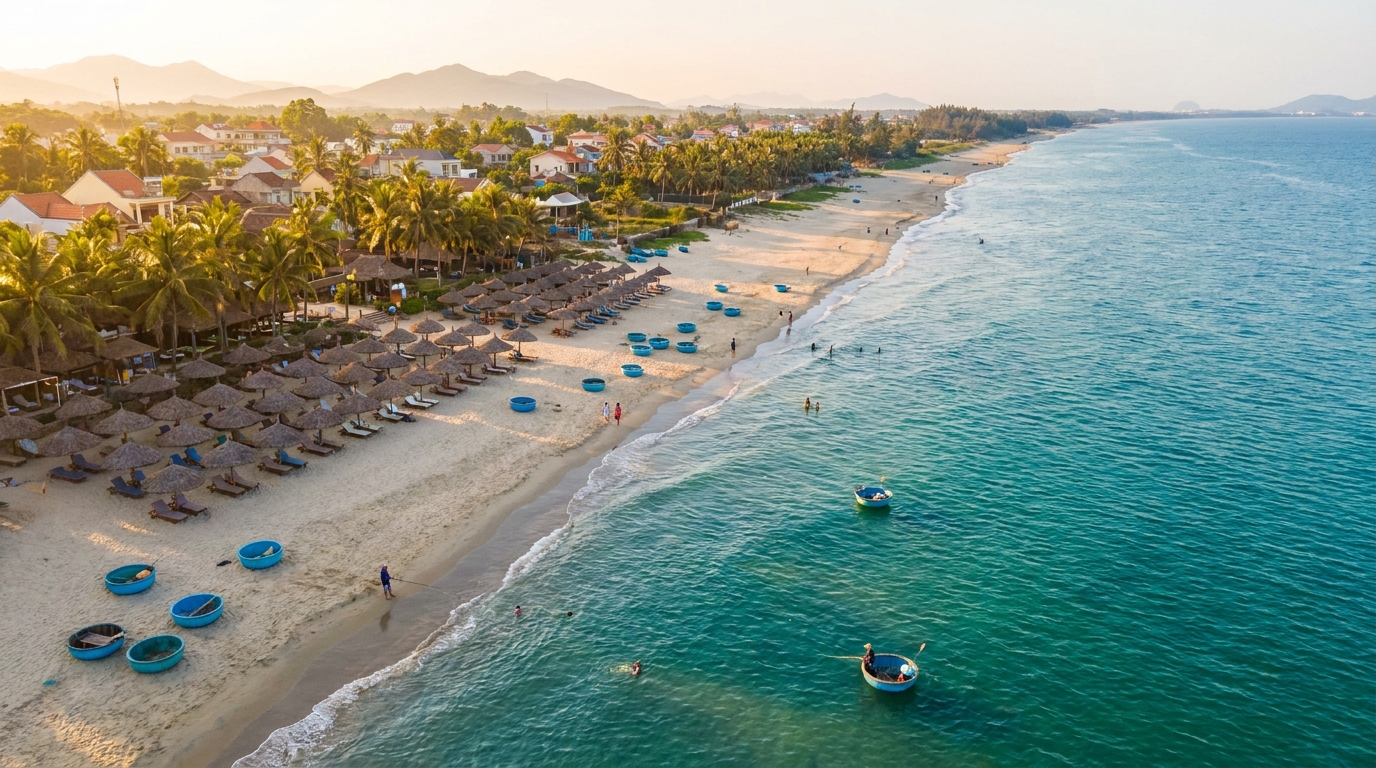
An Bang Beach Hoi An is the 3-kilometre stretch of soft golden sand that lies just 4 km northeast of Hoi An Ancient Town, ranked by CNN among the world’s top 50 most beautiful beaches and considered the best-preserved coastline in central Vietnam. Unlike its overdeveloped neighbour Cua Dai, An Bang has resisted resort sprawl, keeping its laid-back fishing-village character intact while adding stylish beach clubs, organic cafés, and boutique homestays. If you have only one beach day on your Hoi An itinerary, this is where you go.
This 2026 guide covers exactly how to reach the beach, when to swim, where to eat fresh seafood for under 200,000 VND (~$8 USD), which homestays sit beachfront, and how An Bang stacks up against Cua Dai and My Khe in Da Nang.
Key Takeaways
– An Bang Beach Hoi An is 4 km (10-minute scooter ride) from Hoi An Ancient Town.
– Best swimming months: March to August, when the water is calm and clear.
– Average meal at a beach shack: 120,000–180,000 VND ($5–$7 USD) including a cold beer.
– The beach is free to enter; sun-loungers cost 50,000 VND if you order food.
– Sunrise (5:30 AM) is the most photogenic and least crowded time to visit.
– Stay in a beachfront homestay for 600,000–1,800,000 VND/night ($24–$72 USD).
Quick-Reference Summary Table
| Detail | Information |
|---|---|
| Location | Cam An Ward, Hoi An, Quang Nam Province |
| Distance from Ancient Town | 4 km (10 min by scooter, 15 min by taxi) |
| Beach length | ~3 km of public sand |
| Opening hours | 24/7 (lifeguards 7 AM – 6 PM) |
| Entry fee | Free |
| Sun-lounger rental | 50,000 VND ($2 USD), waived with food order |
| Best swimming season | March – August |
| Avoid (rough seas) | October – December |
| Average meal cost | 120,000–250,000 VND ($5–$10 USD) |
| Closest airport | Da Nang International (DAD), 35 km |
Why An Bang Beach Hoi An Made the World’s Top 50 List
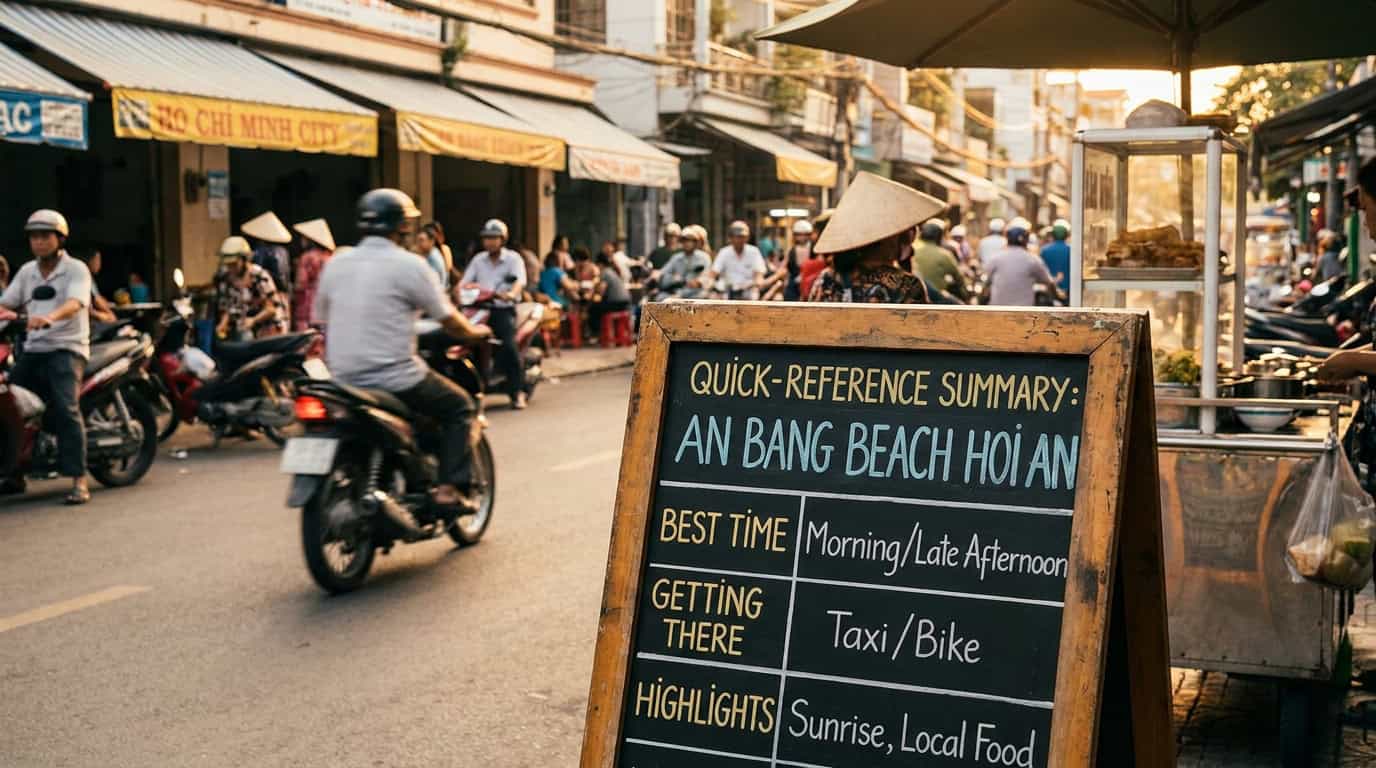
In 2014, CNN Travel named An Bang Beach Hoi An one of the 50 most beautiful beaches on the planet, and a decade later it still earns the title for three reasons. First, the sand is finer and paler than the heavier grain found at Cua Dai or Non Nuoc. Second, erosion has been minimal here because the coastline curves outward, sparing it the violent monsoon damage that ate 200 metres of Cua Dai sand between 2014 and 2020. Third, local authorities capped resort heights at four storeys, which is why you’ll never see a high-rise blocking the horizon.
According to the Vietnam National Administration of Tourism, the central coast attracted 8.4 million international arrivals in 2025, and An Bang’s share of that traffic remains pleasantly small thanks to a 30-minute scooter buffer from Da Nang’s tour buses.
Info Gain: Locals refer to the beach as Bãi biển An Bàng (note the diacritic on Bàng). Pronounce it “Ahn-Bahng” — saying “Ann Bang” gets you blank looks from xe ôm drivers.
How to Get to An Bang Beach Hoi An from the Ancient Town

The most-asked question by first-time visitors is the distance, and the answer is surprisingly short: An Bang Beach Hoi An is exactly 4.2 km from the Japanese Covered Bridge in the heart of the Ancient Town. You have four practical options:
- Scooter (recommended) — Rent for 120,000 VND/day ($5 USD). Follow Hai Ba Trung Street east; it deposits you straight at the main beach entrance in 10 minutes. Parking is 10,000 VND.
- Bicycle — Free at most hotels. Flat road, about 25 minutes each way. Many guesthouses lend bikes at no charge.
- Grab car / Be / Xanh SM — 70,000–90,000 VND one-way ($3 USD). Use the app; never agree to a flag-down taxi fare.
- Walking — Possible but hot; allow 45 minutes via Cua Dai Road.
If you’re arriving from Ho Chi Minh City first, check our Vietnam visa guide for foreign visitors before booking the flight to Da Nang.
Best Time to Visit: Weather, Waves, and Crowds
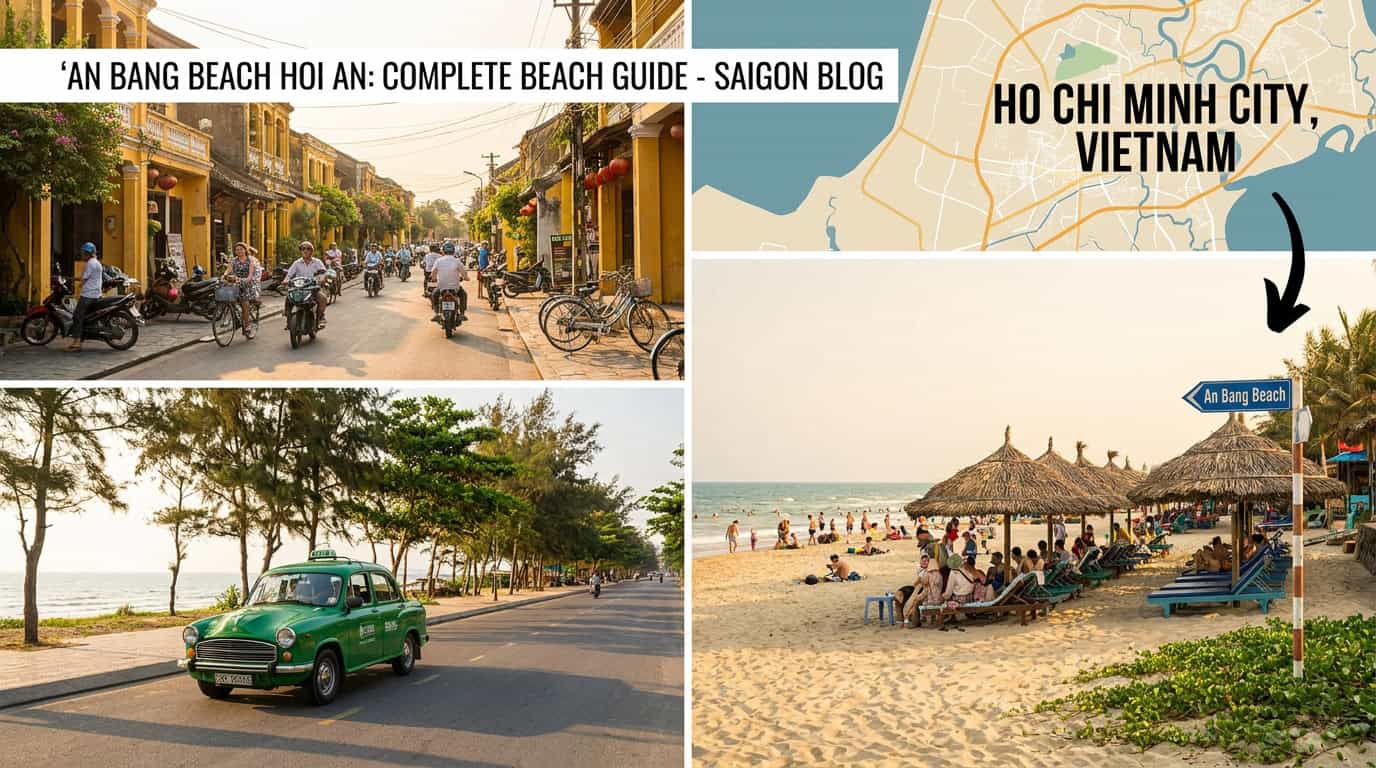
Central Vietnam has a sharper wet/dry split than the south. The swimming season runs March through August, with the calmest, clearest water in May and June. Water temperature averages 27–29 °C (81–84 °F). From mid-September the northeast monsoon arrives, the surf turns dangerous, and red flags appear on the beach by late October.
Crowd levels follow a predictable pattern:
- 5:30 – 8:00 AM — Locals jog and swim, fishermen launch round bamboo coracles. Almost no foreign tourists.
- 10:00 AM – 3:00 PM — Peak. Day-trippers from Da Nang arrive. Loungers fill by 11.
- 4:30 PM – sunset — Sweet spot. The light turns gold, the heat drops, beach clubs fire up the grills.
If you’re combining a beach stop with the Ancient Town’s lantern festival, see our Hoi An lantern festival monthly schedule for the lunar full-moon dates.
What to Do at An Bang Beach Hoi An

Beyond the obvious swim-and-tan, the beach supports a surprising range of activities:
- Surf lessons — November to February brings 1–2 m swells. Local schools charge 600,000 VND ($24 USD) for a 90-minute beginner session including board.
- Stand-up paddleboard rental — 200,000 VND/hour ($8 USD) at Soul Kitchen.
- Sunrise yoga — Free community sessions run by Nomad Yoga, Mondays and Thursdays at 6 AM.
- Fishing coracle ride — 250,000 VND ($10 USD) for 30 minutes with a local fisherman; tip 50,000 VND if he lets you try paddling.
- Cooking class — Several beachfront restaurants run morning classes that start with a market run and end with cooking three Quang Nam dishes for around 750,000 VND ($30 USD).
Where to Eat: Seafood Shacks and Beach Clubs
The food scene divides into three tiers. Beach shacks at the public entrance grill whole snapper, squid, and tiger prawns to order; expect 150,000 VND ($6 USD) for a full plate with rice and morning glory. Mid-range beach clubs like Soul Kitchen, Sound of Silence, and La Plage charge 250,000–400,000 VND ($10–$16 USD) per main but throw in cushioned daybeds and Wi-Fi. Hidden gems sit one street back: Banh Mi Bep Hen and Mango Mango both clock in under 80,000 VND.
For the freshest catch, arrive between 6:30 and 7:30 AM when the night boats come in — the same fish hits restaurant tables six hours later at three times the dockside price.
External tip: Lonely Planet’s central Vietnam guide maintains an updated shortlist of standout An Bang restaurants if you want second opinions before committing.
Where to Stay Near An Bang Beach Hoi An
You have three lodging tiers within a 500-metre walk of the sand:
Beachfront resorts (3,500,000–8,000,000 VND / $140–$320 USD per night)
Four Seasons Nam Hai, Anantara, and Victoria Hoi An sit slightly south, but An Bang itself has smaller boutique resorts like An Bang Beach Village and An Villa.
Boutique homestays (600,000–1,800,000 VND / $24–$72 USD)
This is the sweet-spot category and where most savvy travellers book. Properties like Mr Tho’s, Under the Coconut Tree, and Brown Bean Garden offer pools, breakfast, and free bike rental.
Budget guesthouses (250,000–500,000 VND / $10–$20 USD)
Family-run rooms one block back from the beach, often with shared kitchens.
If you’re spending part of your trip in the south, our editors maintain a curated shortlist of the best homestays in District 1 Saigon at similar price points.
An Bang vs Cua Dai: Which Beach Wins in 2026?
Cua Dai used to be Hoi An’s signature beach, but heavy erosion stripped the sand and forced concrete sea-walls along most of its length. An Bang Beach Hoi An now wins on every metric except parking ease:
| Criteria | An Bang | Cua Dai |
|---|---|---|
| Sand quality | Excellent | Sea-walled / patchy |
| Swimming safety | Good (lifeguards) | Restricted zones only |
| F&B scene | 40+ restaurants | ~10, mostly resort |
| Sunrise photo | World-class | Blocked by walls |
| Distance from Ancient Town | 4 km | 5 km |
| Crowds | Moderate | Low (because few amenities) |
For most visitors, the verdict is simple: spend your day at An Bang, and only detour to Cua Dai if you’re staying in a resort there.
Insider Tips for Your Visit
- Bring small VND notes. Most beach shacks can’t break a 500,000 VND bill before 11 AM.
- Skip Sunday lunch. Domestic tourist crowds peak; lounger waits hit 45 minutes.
- Check the flag colour. Green = swim, yellow = caution, red = strong rip currents, do not enter.
- Cover up in temples after. If you ride back into the Ancient Town in beachwear, you’ll be turned away at the Japanese Bridge and most pagodas.
- Tip 10%. Service charges aren’t standard at beach shacks; rounding up is appreciated.
- Mosquito repellent. Essential at dusk; the dunes hold standing water during rainy season.
Once you’re done with the coast, the things to do in Ho Chi Minh City hub covers your next stop south, and our 5-day Saigon itinerary handles the planning.
Frequently Asked Questions
How many kilometres is An Bang Beach from Hoi An?
An Bang Beach sits 4.2 kilometres northeast of Hoi An Ancient Town, measured from the Japanese Covered Bridge to the main public beach entrance on Hai Ba Trung Street. By scooter the ride takes about 10 minutes, by bicycle 20–25 minutes on a flat paved road, and a Grab car covers the distance in 12–15 minutes for 70,000–90,000 VND.
Is An Bang Beach really one of the most beautiful beaches in the world?
Yes — CNN Travel ranked An Bang among the world’s top 50 most beautiful beaches in 2014, and Vinpearl repeated the placement in 2023. The recognition reflects its 3 km of fine pale sand, absence of high-rise development, calm dry-season swimming, intact fishing-village character, and proximity to the UNESCO-listed Hoi An Ancient Town just 4 km inland.
What are the best resorts in Hoi An?
The top-rated luxury resorts in Hoi An for 2026 are Four Seasons Resort The Nam Hai, Anantara Hoi An, Victoria Hoi An Beach Resort, and La Siesta Hoi An. Mid-range favourites include Allegro Hoi An and Hoi An Silk Marina. All sit within 6 km of the Ancient Town, and the first three are beachfront on the An Bang–Ha My coastline.
Do Hoi An homestays have swimming pools?
Many do. Roughly 60% of boutique homestays in An Bang and the surrounding Cam An Ward offer pools, typically small lap or plunge styles. Expect to pay 600,000–1,800,000 VND ($24–$72 USD) per night for a pool homestay including breakfast. Family-run budget guesthouses without pools start around 250,000 VND ($10 USD).
Is An Bang Beach safe for swimming with children?
The dry-season months (March–August) are very safe, with gentle shore-break and lifeguards on duty 7 AM to 6 PM. Avoid October through December when northeast monsoon swells create dangerous rip currents and red flags fly daily. Always check the flag colour at the lifeguard tower before entering the water with kids.
Can you visit An Bang Beach as a day trip from Da Nang?
Yes. Da Nang to An Bang is 32 km, roughly 45 minutes by Grab car (450,000 VND / $18 USD) or 25 minutes by private taxi. Most Da Nang hotels run shuttle services for 200,000 VND round-trip. The beach makes an easy half-day combined with afternoon exploration of the Hoi An Ancient Town.
Plan Your Vietnam Trip with Saigon Homestay
An Bang completes the central-Vietnam leg of your itinerary, but most international visitors land in Ho Chi Minh City first. Book a centrally located base for the southern half of your trip — our District 1 homestays put you within walking distance of Ben Thanh Market, the Notre-Dame Basilica, and Bui Vien Street, with airport pickup, fast Wi-Fi, and rates from 550,000 VND ($22 USD) per night.
Browse Saigon Homestay’s District 1 properties and lock in your dates before peak season (October–March) sells out.
Sources: Vietnam National Administration of Tourism, Lonely Planet Central Vietnam, CNN Travel rankings, on-the-ground verification June 2026.