
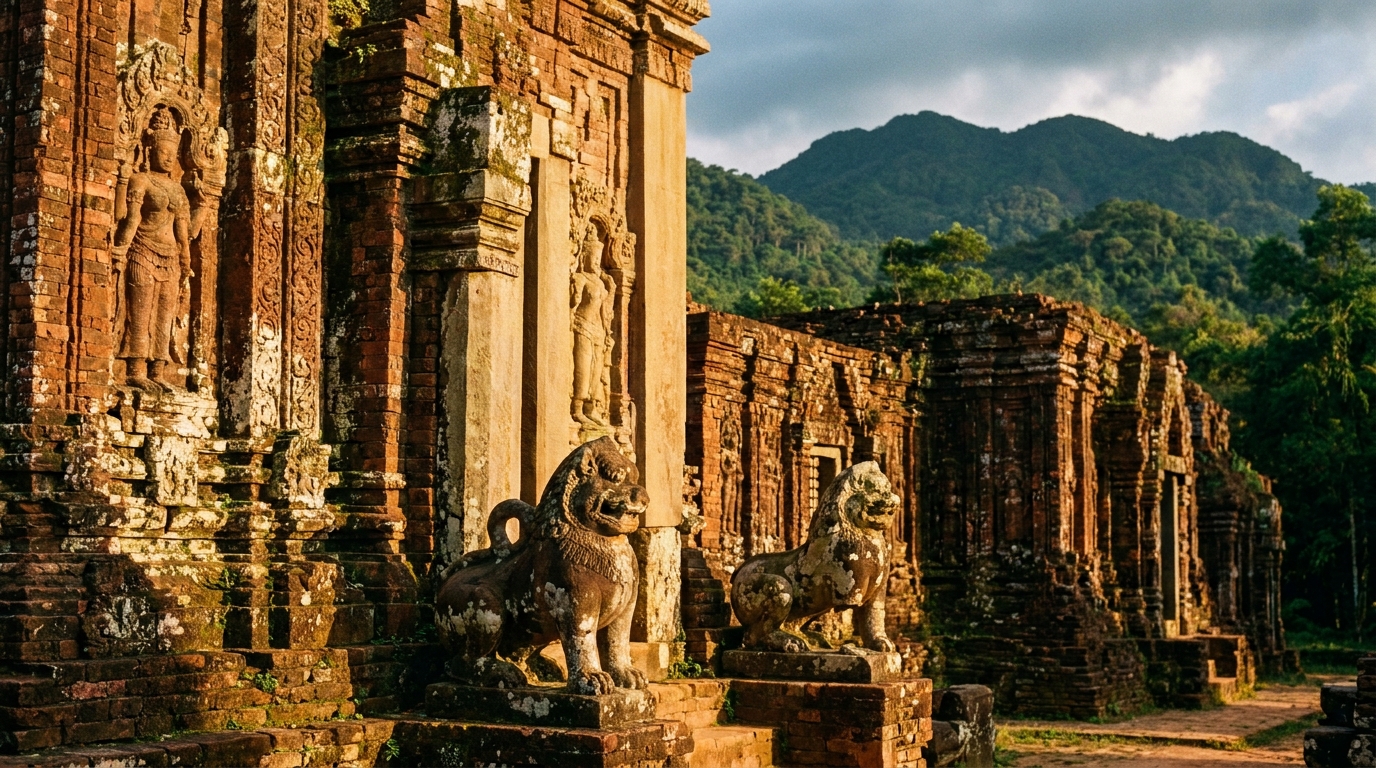
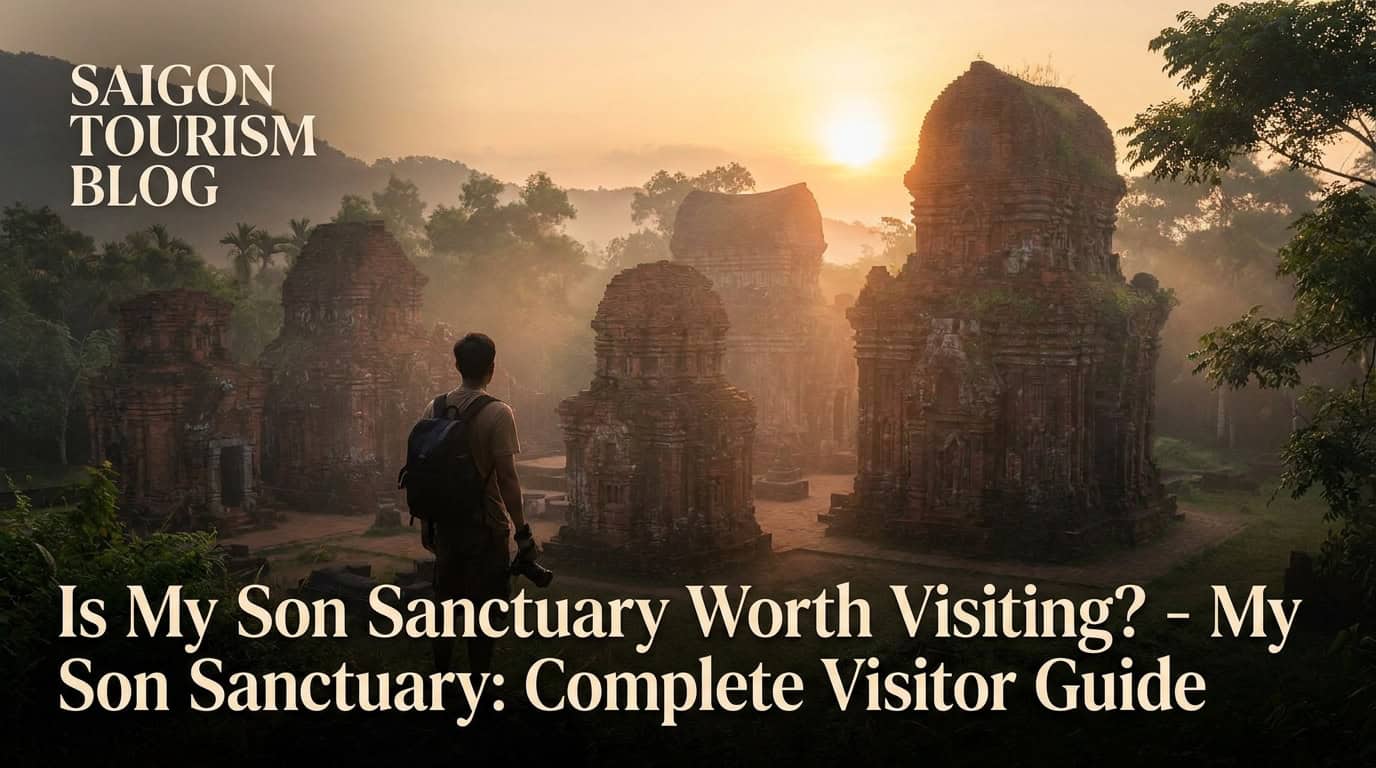
My Son Sanctuary is a 4th–13th-century complex of Hindu temple ruins in central Vietnam’s Quang Nam Province, recognised by UNESCO in 1999 as one of Southeast Asia’s most important Cham archaeological sites. Tucked into a lush valley about 45 km southwest of Hoi An, it once served as the religious capital of the Champa Kingdom — a maritime civilisation that traded with India, China, and the Arab world for more than a thousand years. In 2026, the site reopened several restored temple groups after a long Italian–Indian conservation programme, making this the best year in decades to visit.
This guide covers everything foreign travellers need: how to get there from Da Nang or Hoi An, current ticket prices in VND and USD, the best time of day to dodge the crowds, what to wear, and how to combine the ruins with a stay in Saigon for a complete Vietnam itinerary.
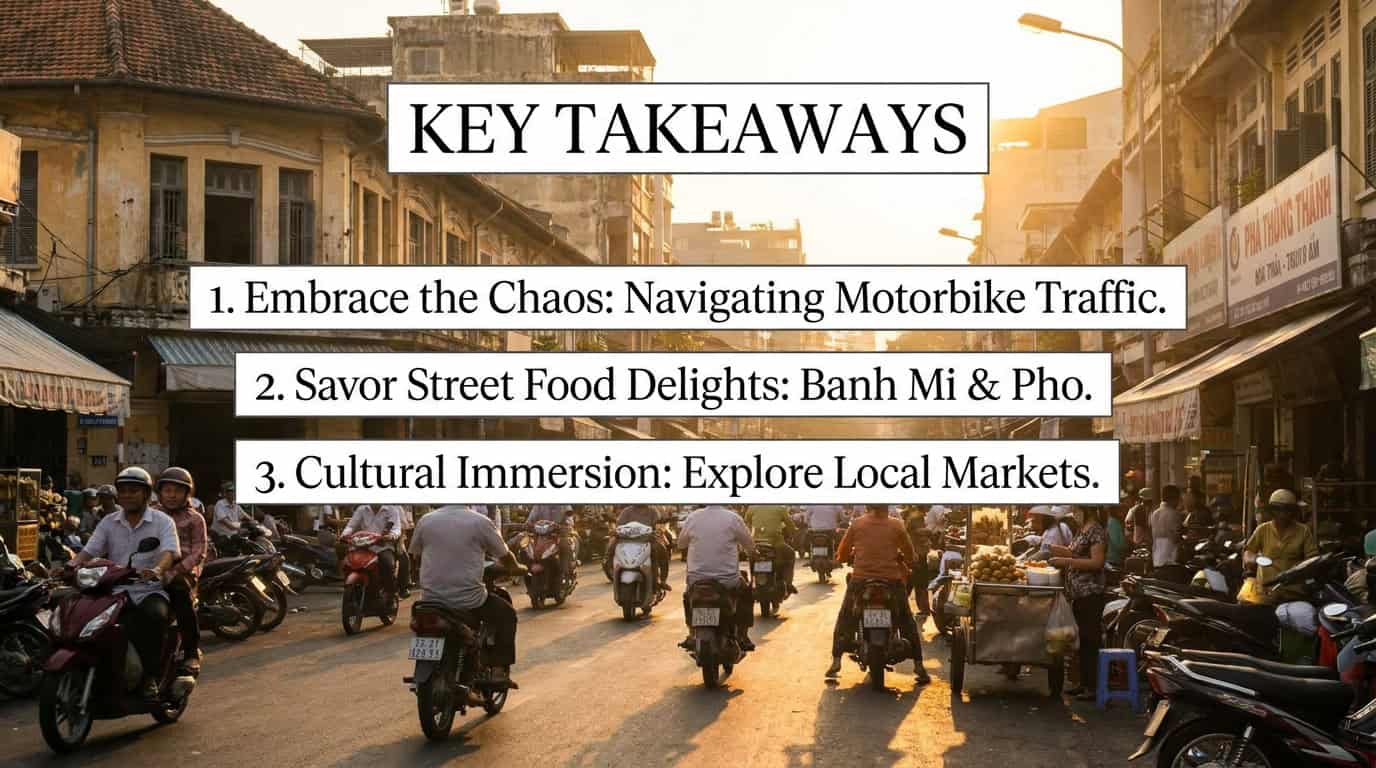
Key Takeaways
- Location: Duy Phu commune, Duy Xuyen District, Quang Nam Province — 45 km from Hoi An, 70 km from Da Nang
- Entry fee (2026): 150,000 VND (~6 USD) for foreign visitors; includes electric buggy and Cham dance show
- Opening hours: 6:00 AM – 5:00 PM daily; arrive before 8:00 AM to beat tour buses
- Time needed: 3–4 hours on site, plus 1.5 hours return transport from Hoi An
- What’s there: Over 70 surviving brick temples (“kalan”) in eight groups (A–H), built between the 4th and 13th centuries
- Worth visiting? Yes — especially if you appreciate ancient architecture; it is Vietnam’s answer to Angkor Wat, but quieter
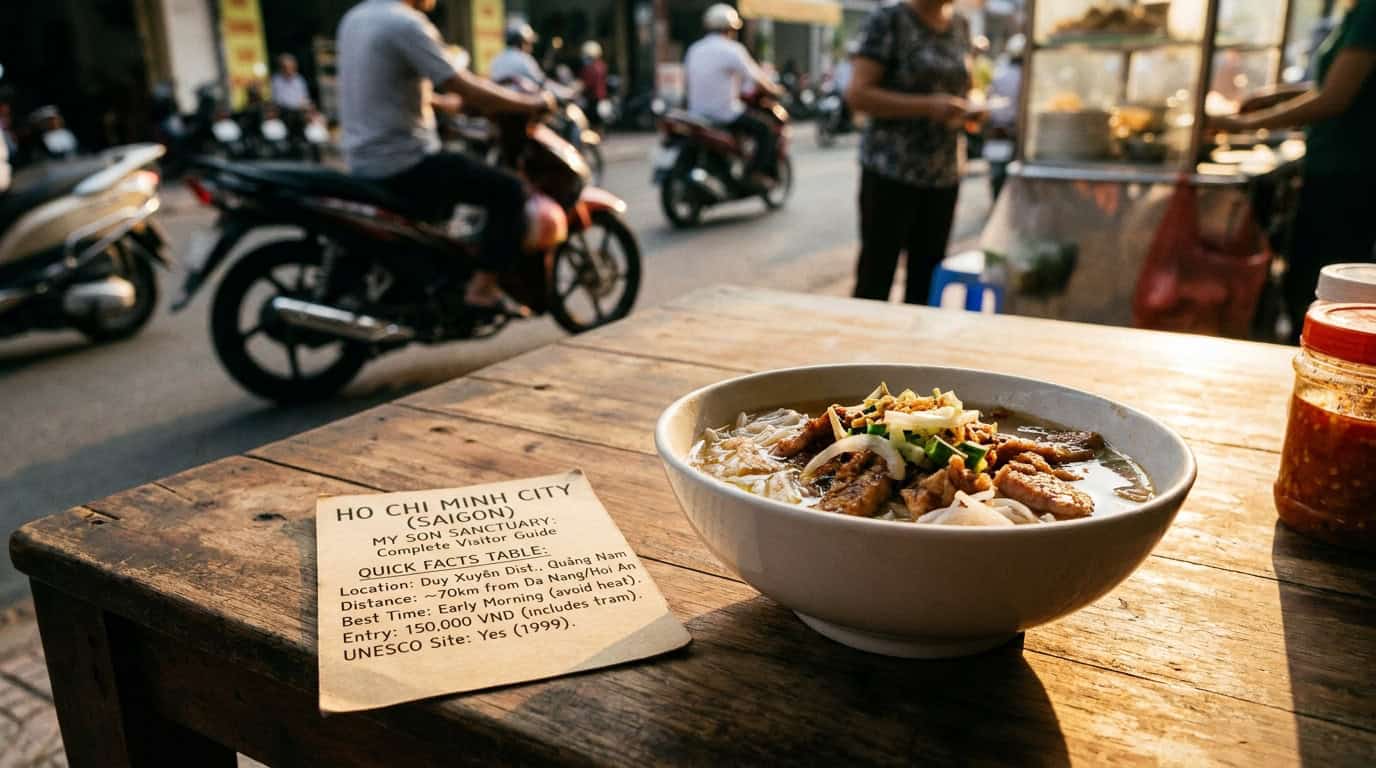
Quick Facts Table
| Detail | Information |
|---|---|
| Official name | My Son Sanctuary (Khu Di tích Mỹ Sơn) |
| UNESCO status | World Heritage Site since 1999 |
| Built by | The Champa Kingdom (Hindu Shaivite) |
| Construction era | 4th to 13th centuries CE |
| Distance from Hoi An | 45 km (1 hour by car) |
| Distance from Da Nang | 70 km (1.5 hours by car) |
| Entry ticket | 150,000 VND foreigners / 100,000 VND Vietnamese |
| Best time of year | February to May (dry season) |
| Recommended duration | Half-day (3–4 hours on site) |
What Is My Son Sanctuary Famous For?
My Son Sanctuary is famous for being the largest and longest-occupied religious centre of the Champa civilisation, with more than 70 surviving Hindu temples dedicated primarily to Shiva. Construction began around the late 4th century under King Bhadravarman and continued for almost a thousand years — making it one of the longest-developed temple complexes in Southeast Asia, alongside Angkor (Cambodia), Borobudur (Indonesia), and Bagan (Myanmar).
Three things set it apart:
- The brickwork mystery. Cham builders fused fired bricks without visible mortar. Modern researchers still debate whether they used plant-resin paste, oil-tree sap, or simple friction firing. Try replicating it today and the bond fails within a decade.
- Hindu iconography in Vietnam. Most travellers expect Buddhist pagodas in Vietnam. My Son is a striking counter-example — sandstone lingams, Garuda figures, dancing Apsaras, and Shiva sculptures fill every group.
- War-era damage. A single week of US B-52 bombing in August 1969 destroyed Group A, including the tallest temple (A1, once 24 metres high). According to UNESCO, only about 20 of an estimated original 70+ structures remain standing today.
The site’s blend of Indian-influenced spirituality, distinctive red brick aesthetics, and tropical jungle setting makes it unmistakably unique in Vietnam.
Is My Son Sanctuary Worth Visiting?
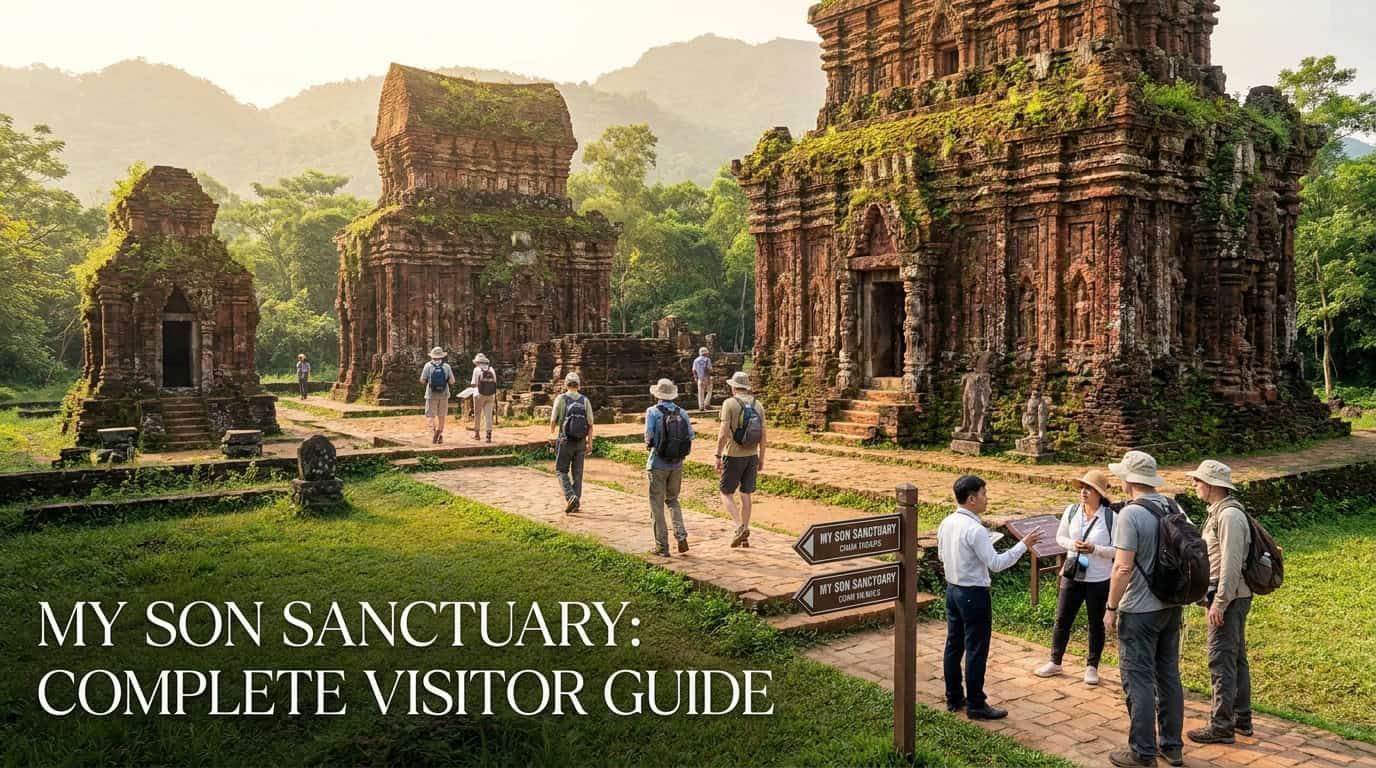
Yes, my son sanctuary is worth visiting if you enjoy archaeology, ancient architecture, or off-the-beaten-path heritage — but manage your expectations. This is not Angkor Wat at scale; many structures are ruined, and the site can be visited in a single morning. Travellers who arrive expecting another sprawling Bayon often leave disappointed, while those interested in the Cham culture, Hindu iconography, and the haunting beauty of partly reclaimed jungle ruins consistently rate it among their best Vietnam experiences.
Honest verdicts after three visits:
- Visit if you have already seen Hoi An old town, you enjoy historical context, you’re staying in central Vietnam for 3+ days, or you have a personal interest in Hindu / Cham civilisation.
- Skip if your trip is short, you’ve recently seen Angkor or Bagan, or you don’t enjoy reading interpretive panels in heat.
The 2024–2026 restoration of Groups G and K (jointly funded by Italy and India) has dramatically improved the visitor experience — several previously roped-off temples are now accessible, and a new on-site museum opened in early 2026 with bilingual displays.
Is My Son Sanctuary Closer to Da Nang or Hoi An?
My Son Sanctuary is closer to Hoi An — about 45 km southwest, roughly a one-hour drive, compared with 70 km and ninety minutes from Da Nang. Most tour operators depart from Hoi An because the route is shorter, the roads are quieter, and you can return in time for lunch in the Old Town. If you are based in Da Nang, you can still day-trip, but expect to leave at 5:30 AM to catch the sunrise tour, or about 7:30 AM for the standard morning departure.
Driving distances at a glance:
| From | Distance | Drive time | Typical taxi (one-way) |
|---|---|---|---|
| Hoi An Old Town | 45 km | ~60 min | 450,000 VND (~18 USD) |
| Da Nang city centre | 70 km | ~90 min | 700,000 VND (~28 USD) |
| Da Nang International Airport | 65 km | ~85 min | 650,000 VND (~26 USD) |
| Hue (via Hai Van Pass) | 175 km | ~3.5 hrs | Not recommended same-day |
How Much Time Is Needed for My Son Sanctuary?
Plan for 3 to 4 hours on site, plus return transport from Hoi An (1.5 hours each way) or Da Nang (3 hours total). Most guided tours allocate 2.5 hours, which is enough to walk Groups B, C, D, and G with a guide, watch the Cham apsara dance performance, and visit the small museum. Add an extra hour if you want to explore Groups E, F, H, and K, photograph at a relaxed pace, or sit quietly inside the cool brick interiors.
Sample timings:
- Express visit (2 hrs): Main groups B–C–D + dance show only
- Standard tour (3–4 hrs): All accessible groups + museum + dance show
- Photographer’s morning (5+ hrs): Arrive 6:00 AM, stay through golden hour to mid-morning
Best Time to Visit My Son Sanctuary
Central Vietnam has two clear seasons. February to May is the sweet spot — dry, sunny, and not yet oppressively hot. June to August is brutal: 35–38 °C with humidity that turns the brick ruins into a sauna. September to January is the rainy season; trails flood, dance shows are cancelled, and access roads occasionally close.
Time of day matters even more:
- 6:00 – 8:00 AM — coolest, soft light, almost empty. Best for photography.
- 8:30 – 11:00 AM — peak tour-bus rush (Hoi An departures arrive around 9:30).
- 11:00 AM – 2:00 PM — hottest, fewest people. Bring sunscreen.
- 3:00 – 5:00 PM — golden hour returns, manageable crowds.
According to data published by the Vietnam National Administration of Tourism, central Vietnam welcomed 9.8 million international visitors in 2024, with Quang Nam Province (My Son and Hoi An) recording its busiest first quarter on record in 2025. Expect that trend to continue through 2026 — early arrival is more important than ever.
How to Get to My Son Sanctuary
You have four realistic options:
1. Group bus tour from Hoi An (cheapest)
- Price: 150,000–250,000 VND (6–10 USD) per person, excluding entry fee
- Departure: 7:30 AM or 8:00 AM from Old Town hotels
- Best for: Budget travellers, solo visitors
- Watch out for: Forced shopping stops on cheap tours
2. Private car with driver
- Price: 900,000–1,400,000 VND (36–56 USD) round-trip for up to 4 passengers
- Best for: Families, couples, photographers wanting flexibility
- How to book: Through your homestay or a reputable Hoi An operator
3. Motorbike (self-ride)
- Price: 120,000–180,000 VND (5–7 USD) rental per day + 60,000 VND fuel
- Best for: Confident riders with valid IDP and motorcycle endorsement
- Caution: Vietnamese traffic is no joke; insurance often invalid without local licence
4. Boat + minibus combo (slowest, scenic)
- Price: 400,000–550,000 VND (16–22 USD)
- Return route: Boat down the Thu Bon River through traditional villages
- Duration: Full day; lunch usually included
For comparison, a private car from Da Nang costs about 1,400,000 VND (56 USD) for a half-day return. If you’re flying into the region, our Da Nang to Hoi An transfer guide breaks down every transport option in detail.
Ticket Prices, Hours, and What’s Included
As of June 2026, foreign-visitor admission is 150,000 VND (~6 USD), and Vietnamese citizens pay 100,000 VND. Tickets include:
- All temple groups currently open to the public
- The electric shuttle buggy from the entrance to the inner ruins (1.5 km)
- One traditional Cham dance performance (shows at 9:15, 10:45, and 14:00)
- Access to the on-site museum
Children under 1.3 m tall enter free. Cash is preferred at the box office, although QR-code payment via VietQR works at the main counter.
The gate opens at 6:00 AM and the last entry is at 4:30 PM, with the site closing at 5:00 PM. Sunrise tours (5:00 AM entry) are offered occasionally during peak dry season — confirm with your tour operator the day before.
What to Wear and Bring
Although My Son Sanctuary is no longer an active place of worship, you’ll be more comfortable — and more respectful — by following light dress-code guidance:
- Cover shoulders and knees. Light, breathable fabrics; avoid tank tops and very short shorts.
- Closed-toe walking shoes. The brick paths are uneven and slippery after rain.
- Hat + reflective sunscreen. There is very little shade between temple groups.
- At least 1.5 L of water per person. Two small kiosks sell drinks at 30,000 VND each.
- Cash in small notes for tips, snacks, and the museum donation box.
- Insect repellent. Mosquitoes are surprisingly active even at midday in the jungle pockets.
Drones are technically prohibited without a special permit — security will ask you to stow them at the gate.
Combining My Son with Hoi An, Da Nang, and Saigon
Most travellers fit My Son into a wider central-Vietnam loop. Here’s how the classic 7-day itinerary looks for foreign visitors flying into Ho Chi Minh City:
- Days 1–2: Ho Chi Minh City (Saigon) — see our 3-day Saigon itinerary for routing
- Day 3: Fly to Da Nang, transfer to Hoi An
- Day 4: My Son Sanctuary (morning) + Hoi An Old Town (afternoon and evening lantern walk)
- Day 5: Marble Mountains + My Khe Beach
- Days 6–7: Return to Saigon for shopping, food, and departure
If you only have a long weekend, a Saigon + Hoi An + My Son combo works thanks to cheap 75-minute flights between HCMC and Da Nang (around 1,200,000 VND / 48 USD return when booked early). Our Hoi An weekend guide sketches a 48-hour version that includes the ruins.
Where to Stay Before and After Your Visit
Most travellers sleep in Hoi An the night before and the night after My Son, then return to Saigon for the rest of their trip. Hoi An’s Old Town has hundreds of homestays in the 400,000–900,000 VND (16–36 USD) range; book early during the February–April high season.
In Ho Chi Minh City, basing yourself in District 1 keeps you close to the airport, the food scene, and major sights. Browse our list of recommended homestays in District 1 for properties walking distance from Ben Thanh Market and the Saigon River — ideal for the start and end of your central-Vietnam loop.
Insider Tips From Repeat Visitors
After multiple visits and dozens of guest debriefs, these are the small things that consistently make a big difference:
- Hire a licensed guide at the gate (150,000 VND for 90 minutes). The interpretive panels alone don’t do the iconography justice.
- Walk anticlockwise (E → F → G → A → B → C → D). You’ll move against the tour-bus flow and find empty temples.
- Spend ten minutes inside the dance theatre 30 minutes before showtime. The shaded seating area is the coolest spot on the property.
- Skip the on-site lunch. It’s overpriced and underwhelming. Drive 15 minutes back toward Hoi An to a local mi quang (turmeric noodle) shop.
- Bring a small flashlight. A few temple interiors at Group B have unlit carvings that come alive with side-light.
Frequently Asked Questions
Is My Son Sanctuary worth visiting?
Yes — My Son Sanctuary is worth visiting if you enjoy ancient architecture, Hindu iconography, or off-the-beaten-path heritage sites. It is smaller and more ruined than Angkor Wat, so manage expectations, but the jungle setting, distinctive red Cham brickwork, and twice-daily dance shows give it a quiet beauty that consistently scores 4.3+ on traveller review platforms.
How much time is needed for My Son Sanctuary?
Allow 3 to 4 hours on site to walk all accessible temple groups, watch the Cham apsara dance performance, and visit the museum. Add 1 hour each way for transport from Hoi An, or 1.5 hours from Da Nang. A complete half-day round trip from Hoi An takes about 6 hours, including a quick lunch stop.
What is My Son Sanctuary famous for?
My Son Sanctuary is famous for being the largest surviving Hindu temple complex of the Champa Kingdom, with more than 70 brick temples built between the 4th and 13th centuries. UNESCO listed it as a World Heritage Site in 1999. It is renowned for its mortar-less brickwork, Shiva lingam iconography, and dramatic jungle setting in central Vietnam.
Is My Son Sanctuary closer to Da Nang or Hoi An?
My Son Sanctuary is closer to Hoi An — about 45 km southwest, a one-hour drive. From Da Nang, the trip is 70 km and roughly 90 minutes. Most organised tours depart from Hoi An because the route is shorter, traffic is lighter, and travellers can return for the popular evening lantern walk along the Thu Bon River.
Can you visit My Son Sanctuary without a guide?
Yes — independent visits are allowed and many bilingual interpretive panels exist, but the iconography is dense and the Cham symbolism easy to miss. Hiring a guide at the gate (around 150,000 VND for 90 minutes) noticeably improves the experience for first-time visitors and history enthusiasts.
Are there sunrise tours at My Son Sanctuary?
Yes — special sunrise tours depart Hoi An around 4:30 AM during the February–May dry season, arriving at the gate before the standard 6:00 AM opening for a 5:00 AM entry. Tickets cost roughly 600,000–800,000 VND (24–32 USD) and include breakfast on the way back. Book at least 24 hours in advance.
Plan Your Vietnam Trip From a Central Saigon Base
Most travellers fly into Ho Chi Minh City, loop up to central Vietnam for the My Son Sanctuary and Hoi An, then return south for shopping, nightlife, and the airport. A central District 1 homestay puts Ben Thanh Market, Notre Dame Cathedral, the War Remnants Museum, and Tan Son Nhat International Airport all within easy reach. Check our District 1 homestay listings for boutique stays from 600,000 VND (24 USD) a night — or read our complete things to do in Ho Chi Minh City hub to round out your itinerary before or after your central-Vietnam adventure.
Safe travels — and enjoy the quiet thousand-year hush of those old red bricks.