
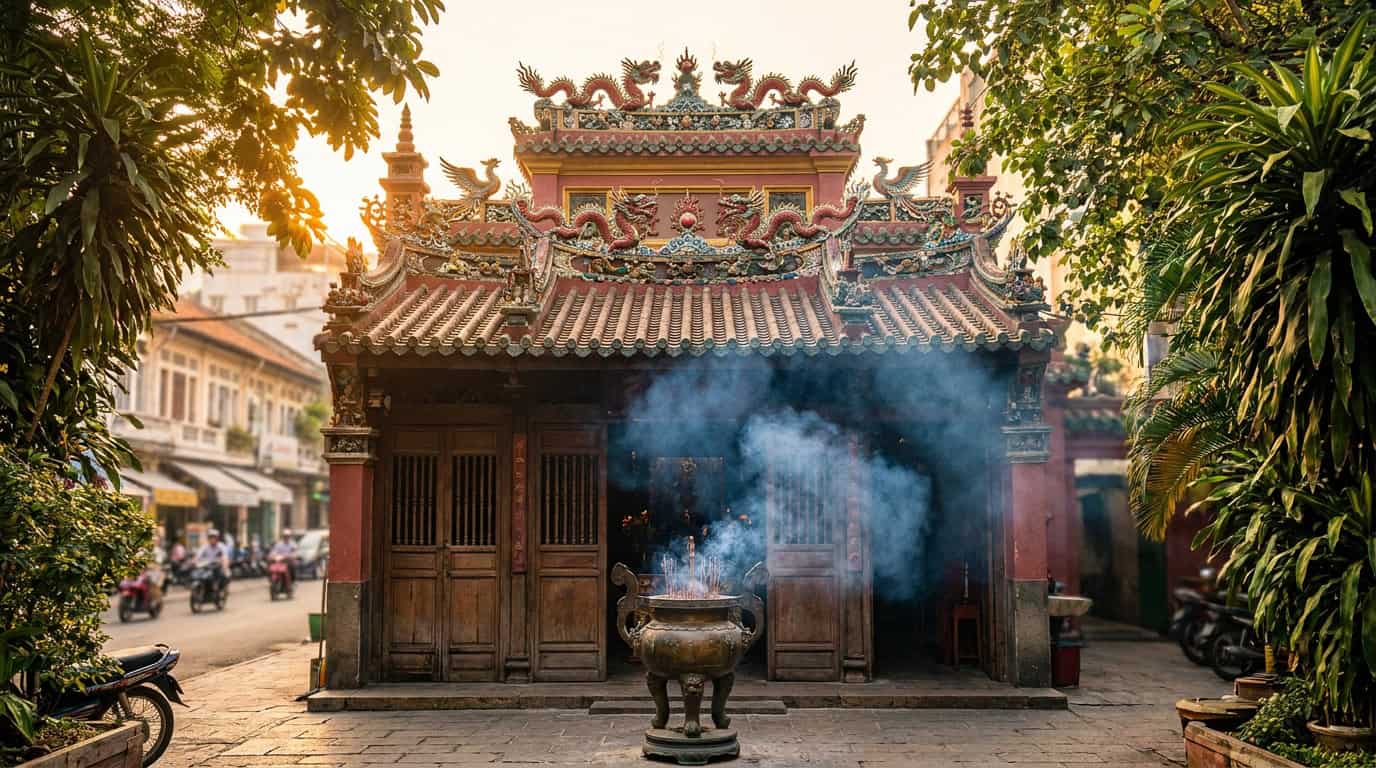
The Jade Emperor Pagoda Saigon — a 117-year-old Taoist temple known locally as Chùa Ngọc Hoàng — became a global travel landmark overnight when Barack Obama paused beside its small turtle pond in northern District 1 on 24 May 2016. By the next morning, travellers in dozens of countries were searching for it. A decade on, it remains one of Ho Chi Minh City’s most consistently top-ranked sights on TripAdvisor and — unusually for a top-tier Southeast Asian attraction — still charges no entry fee.
This guide tells you exactly what to expect, how to get there, when to arrive, and how to make the most of your visit in 2026.
Key Takeaways
– The Jade Emperor Pagoda at 73 Mai Thị Lựu, District 1 is free to enter, open daily from approximately 7:00 AM – 6:00 PM.
– Built in 1909 by Saigon’s Cantonese Chinese community, it is one of Vietnam’s finest surviving southern Chinese Taoist temples (Lonely Planet).
– Arrive before 9:00 AM on a weekday to beat tour groups; avoid the 11 AM–2 PM peak rush.
– Cover shoulders and knees before you arrive — this is a fully active place of daily worship, not a heritage museum.
– Pair it with Tan Dinh Pink Church (0.8 km) and Saigon Zoo (0.5 km) for a rewarding northern District 1 half-day.
At a Glance: Essential Facts for 2026
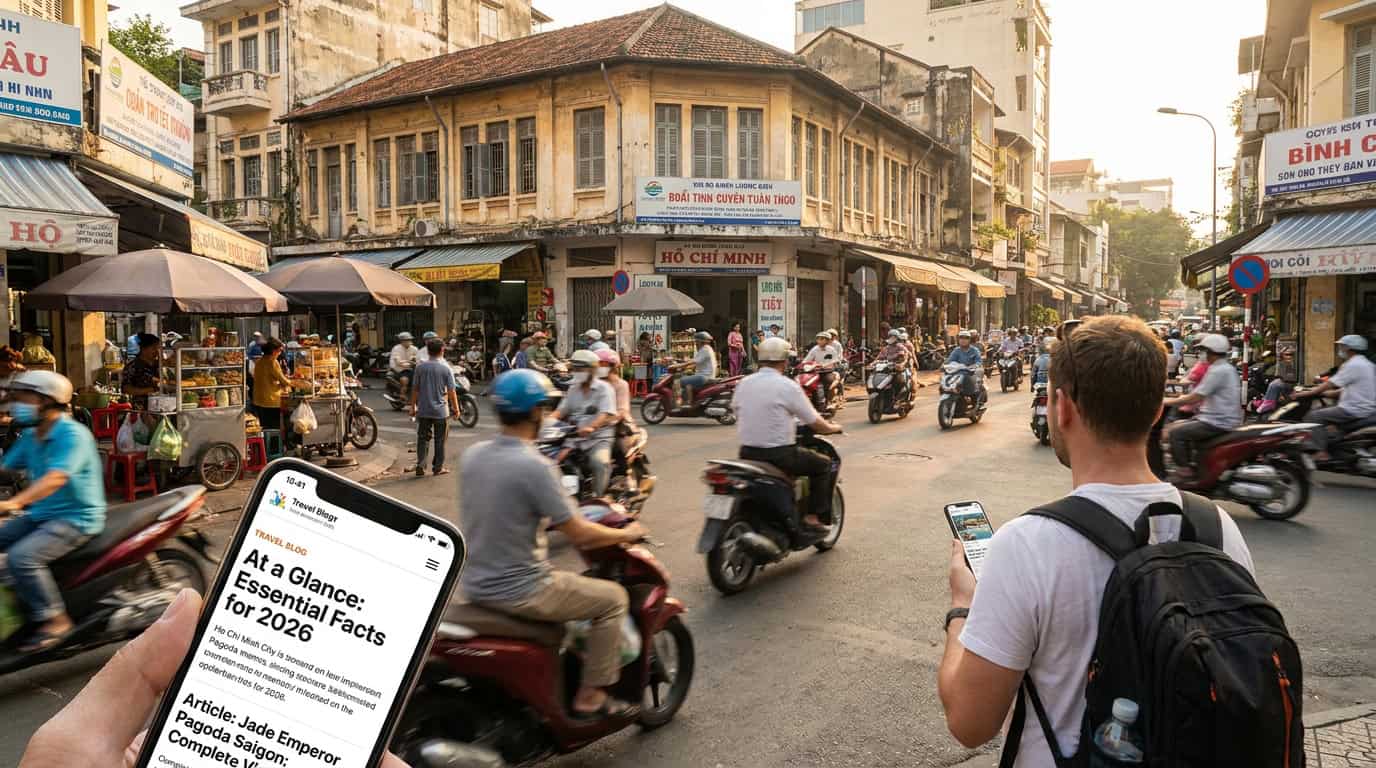
No preamble needed — here’s the core reference table to screenshot or bookmark before you go.
| Detail | Information |
|---|---|
| Official Vietnamese name | Chùa Ngọc Hoàng / Phước Hải Tự |
| Address | 73 Mai Thị Lựu, Đa Kao Ward, District 1, HCMC |
| Opening hours | ~7:00 AM – 6:00 PM daily (no closing days) |
| Entry fee | Free — donations welcome |
| Recommended visit time | 45–90 minutes |
| Dress code | Shoulders and knees covered; shoes off at inner shrines |
| Photography | Permitted; no flash, don’t photograph active worshippers |
| Distance from Ben Thanh Market | ~2.7 km (10–15 min by Grab) |
| Nearest navigation landmark | Saigon Zoo and Botanical Garden, 500 m north |
| Best day to visit | Any weekday before 9:00 AM |
| Busiest times | Weekends, lunar 1st and 15th, Tết (Lunar New Year) |
What Is the Jade Emperor Pagoda?
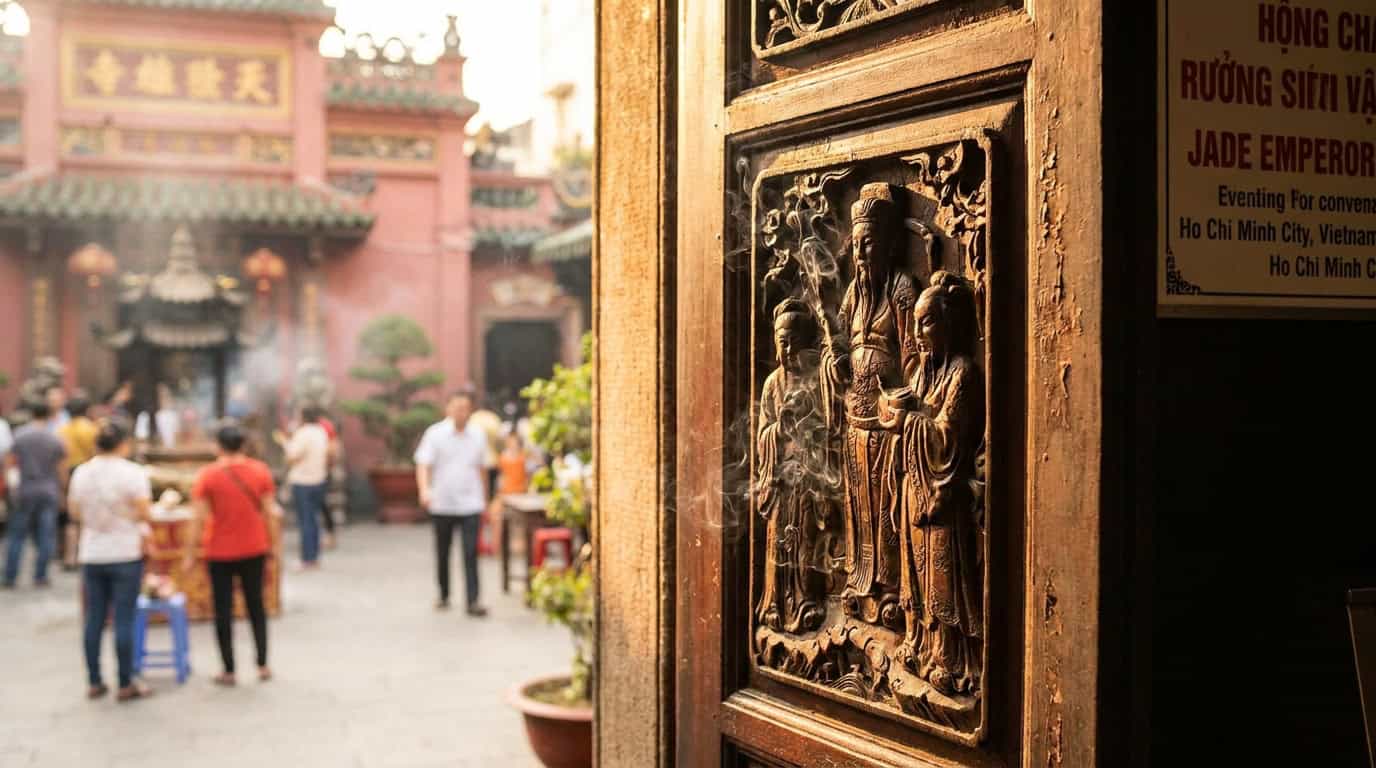
Built in 1909 by Saigon’s Cantonese Chinese (Guangdong) community, the Jade Emperor Pagoda is one of the finest surviving examples of southern Chinese Taoist temple architecture in Vietnam — and at 117 years old, it has never stopped functioning as a daily place of worship (Lonely Planet).
The pagoda’s formal name is Phước Hải Tự — Temple of the Blessed Sea — but everyone calls it Chùa Ngọc Hoàng: the Pagoda of the Jade Emperor. In Taoist cosmology, the Jade Emperor (Ngọc Hoàng) is the supreme ruler of heaven and all living beings. He sits enthroned in the main hall, surrounded by his celestial court, flanked by generals and heavenly guardians.
What makes the pagoda genuinely remarkable isn’t just its age or its craftwork — though both are impressive. It’s the atmosphere. Dim candlelight, spiral incense coils hanging thick from the ceiling, the low murmur of prayers, terracotta sculptures crowding every wall. Many visitors call it the most immersive cultural experience in all of Saigon. They’re not wrong.
Not Built for Tourists — and That’s Precisely the Point
The pagoda wasn’t designed as a visitor attraction and it doesn’t behave like one. You’ll share the narrow halls with elderly Vietnamese women making daily offerings, families praying for health or the arrival of children, and local business owners seeking blessings before a difficult week. That lived religiosity — people actually worshipping, not posing — is what makes the place extraordinary. Treat your access to it accordingly.
The Religion: Taoism, Buddhism, and Folk Tradition Together
The pagoda is technically Taoist, but it incorporates Buddhist and Vietnamese folk religious elements throughout. This syncretic approach is entirely typical of southern Vietnamese religious practice, where temples routinely honour deities from multiple traditions under one roof. You don’t need to identify each tradition precisely to appreciate the space — absorb it as a whole.
Obama’s Visit in May 2016
On 24 May 2016, US President Barack Obama visited the pagoda during his landmark trip to Vietnam — the visit that also saw Washington lift its decades-old arms embargo against Hanoi. Obama spent time at the courtyard turtle pond and passed through the main halls (BBC News). The global media coverage that followed introduced the pagoda to millions of potential visitors, and interest hasn’t faded since.
What to See Inside: A Room-by-Room Guide
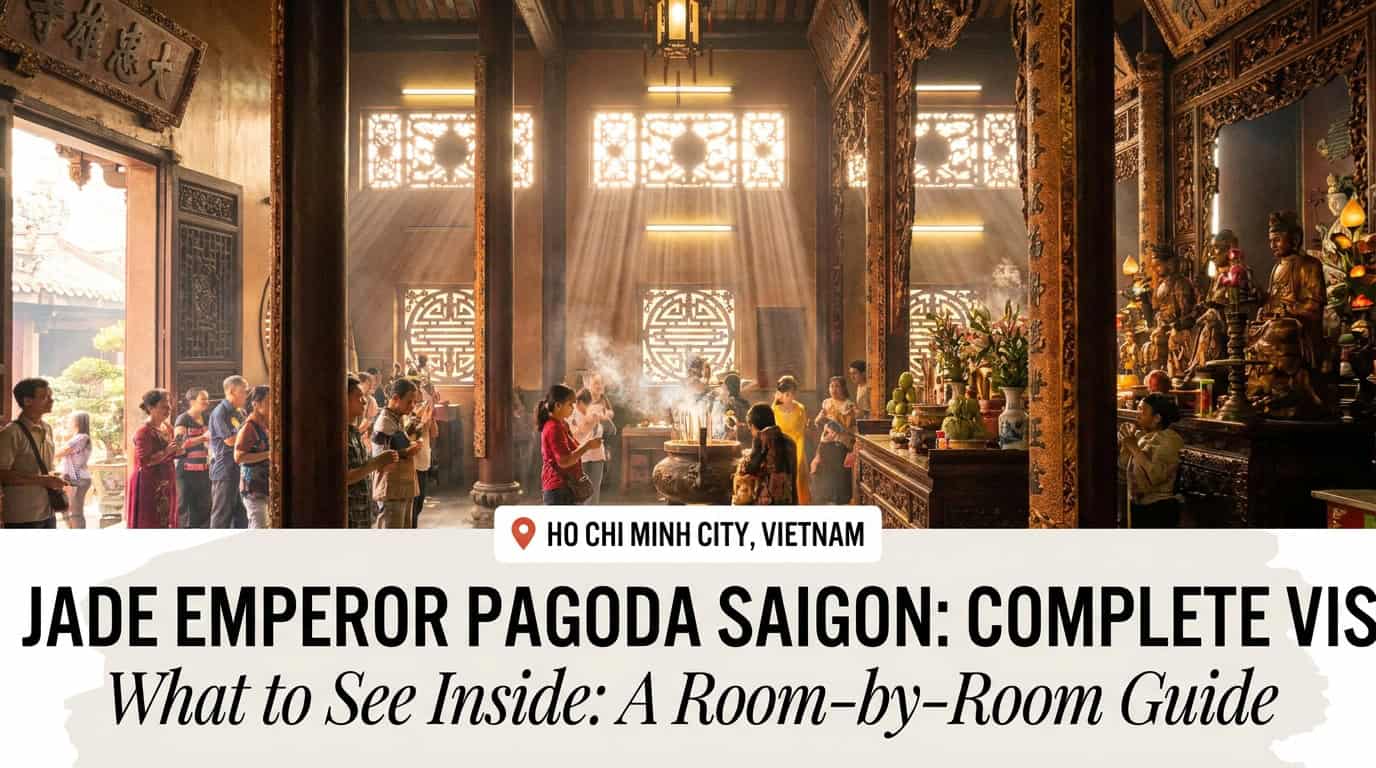
The pagoda is compact. A focused walkthrough takes 30–40 minutes; lingering for atmosphere and photography stretches that to 90 minutes. Here’s what to look for and where.
The Exterior: Pause Before You Enter
Stop on the pavement of Mai Thị Lựu before walking through the gate. The roofline is a masterclass in Guangdong ceramic craftwork: dragons, phoenixes, immortals, and mythological battle scenes crowd every ridge and gable in vivid glazed terracotta. These tile sculptures date to the original 1909 construction — over a century of Saigon heat and humidity hasn’t significantly diminished them. This view is best appreciated from a slight distance; once you’re inside the compound, you lose the perspective.
Large bronze incense urns stand at the entrance. You’ll smell the pagoda before you see it clearly.
The Main Hall: The Jade Emperor
Cross the courtyard and enter the main hall. The first thing most people register is the ceiling: dozens of spiral incense coils hang at different heights, perpetually smouldering, filling the space with a thick sandalwood haze. The light is dim — a combination of candles, oil lamps, and diffuse daylight from the entrance — which makes the gilt statues gleam more dramatically than any bright museum lighting could.
At the rear of the hall, the gilded statue of the Jade Emperor sits enthroned on a raised dais, flanked by celestial generals and attendants. Spend a few minutes with it rather than taking a quick photo and immediately moving on; the detail in the secondary figures rewards close attention.
The Hall of Ten Hells
This is the most visually striking room in the pagoda. Lining the walls are intricate carved and painted panels depicting the Ten Courts of Hell (Thập Điện Diêm Vương) — the ten afterlife realms of Taoist cosmology, each presided over by a king who metes out punishments precisely calibrated to the sins of the newly deceased. The scenes are vivid and, in places, graphic: sinners are sawn, boiled, ground, and otherwise processed in exact correspondence to their earthly wrongdoing.
It functions as a visual morality map — a pre-modern guide to the consequences of specific sins — and it’s one of the most genuinely fascinating pieces of folk art anywhere in the city. Older children often find it gripping. For adult visitors, it’s a highlight of the entire trip.
The Fertility Shrine: Kim Hoa Thánh Mẫu
One side chamber is dedicated to Kim Hoa Thánh Mẫu — the Goddess of the Metal Flower, a fertility deity believed to grant children to those who pray to her and to protect mothers through pregnancy and childbirth. This room sees a steady stream of local Vietnamese women throughout the day; figurines of infants and symbolic offerings fill every available surface.
This is the most private space in the pagoda. Visit briefly and respectfully; don’t photograph inside.
The Turtle Pond
In the rear courtyard, a small pond holds a dense, decades-deep population of live turtles and tortoises. Most were released here by worshippers practising phóng sinh — the Buddhist and Taoist act of liberating living creatures as a merit-generating deed. The pond reflects generations of these releases. It’s where Obama paused in 2016 and it remains one of the most photographed features of any visit.
Don’t feed the turtles, don’t reach into the water, and don’t try to handle them. They’re residents, not props.
How to Get to the Jade Emperor Pagoda Saigon
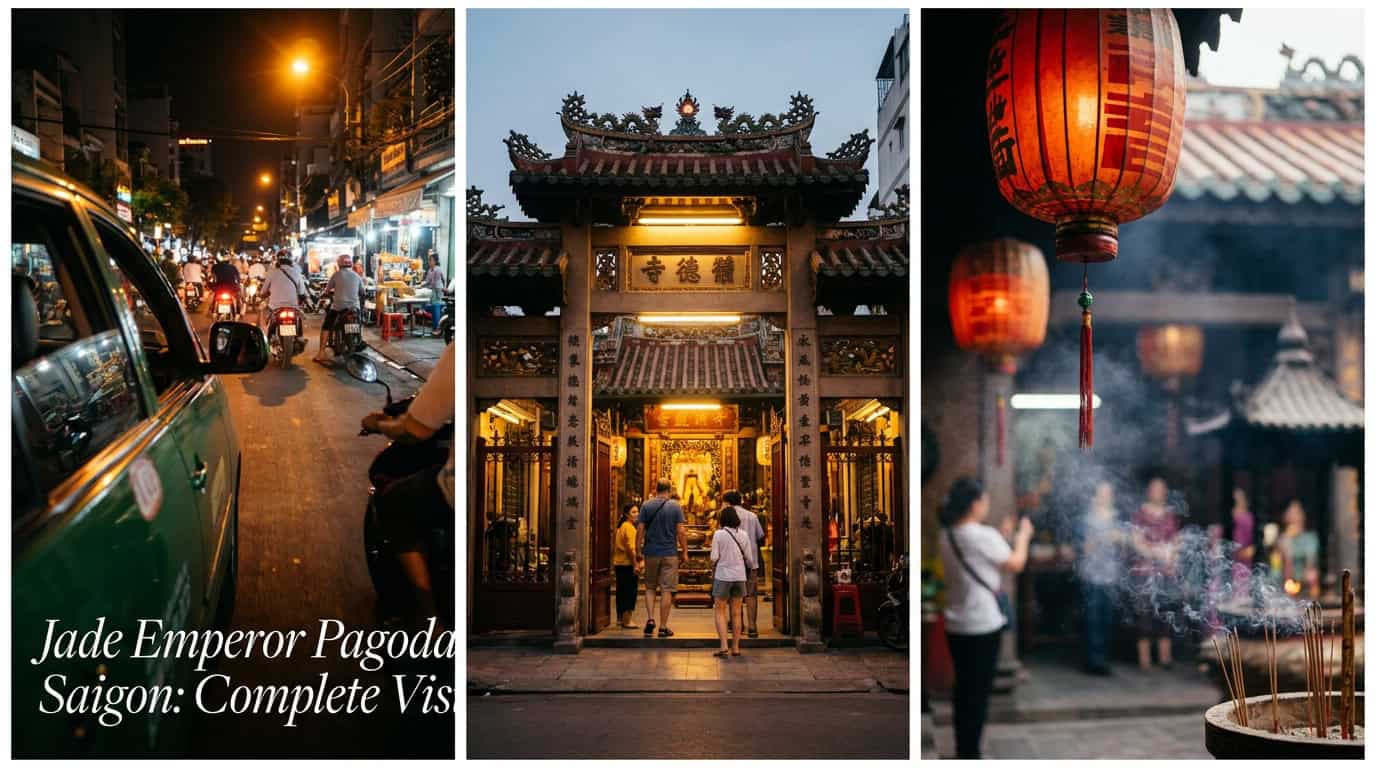
The address — 73 Mai Thị Lựu, District 1 — goes directly into Grab or Google Maps and drops you at the right place. The street sits near the District 1 / District 3 border, roughly 2.7 km northeast of the Ben Thanh Market area. It isn’t walking distance from the main tourist strip unless you enjoy a brisk 35-minute walk, which — on a cool morning — is actually a pleasant way to see this part of the city.
| Transport method | Journey time from Ben Thanh | Approximate cost | Notes |
|---|---|---|---|
| GrabCar | 10–20 min (traffic-dependent) | 60,000–100,000 VND ($2.40–$4.00) | Most reliable; door-to-door |
| GrabBike | 8–15 min | 30,000–55,000 VND ($1.20–$2.20) | Faster in congestion; no large bags |
| Metered taxi (Vinasun / Mai Linh) | 10–20 min | 70,000–120,000 VND ($2.80–$4.80) | Always use metered cabs only |
| Walking from northern District 1 | ~35–45 min | Free | Via Đinh Tiên Hoàng along the Thi Nghe Canal |
| City bus (routes 04, 36) | 25–40 min | 7,000–8,000 VND ($0.28–$0.32) | Stops within a short walk of the pagoda |
Arriving by Motorbike
If you’re on your own bike, informal paid parking clusters on the side streets around Mai Thị Lựu. Budget 5,000–10,000 VND ($0.20–$0.40) for a motorbike spot.
Metro Note
HCMC’s Metro Line 1 (operational since late 2024) doesn’t stop directly near the pagoda. The nearest stations are in central District 1 — a connecting Grab ride of 5–8 minutes covers the gap, which is still a sensible option if you’re already using the metro for other legs of your day.
Cultural Etiquette: How to Visit Respectfully
Getting this right matters more here than at most sights in Vietnam. The Jade Emperor Pagoda is an active religious institution with a congregation that has worshipped here for over a century. It tolerates tourist visits generously; visitors should reciprocate that generosity.
Dress Code — Sort This Before You Leave
Cover your shoulders and knees. Do not count on finding a sarong or cover-up at the entrance — sometimes they’re available, often they’re not. Lightweight linen trousers and a short-sleeved shirt solve the problem neatly: appropriate for a pagoda, comfortable in 32°C heat. Avoid sleeveless tops, shorts above the knee, and anything printed with imagery that might be considered disrespectful.
Shoes
Remove your shoes at the threshold of inner sanctuaries when you see a shoe rack or notice other visitors doing the same. Slip-on footwear makes this significantly less annoying than laced trainers.
Photography Rules
Photograph the architecture, the incense coils, the statues — all fine. What’s not acceptable: photographing worshippers at prayer without their explicit consent, using flash anywhere inside, lingering over active prayer sessions for a closer shot, or conducting loud video filming in the main halls. The fertility shrine should be treated as a phone-free space entirely.
Incense Offerings
Incense sticks are available near the entrance for 10,000–20,000 VND ($0.40–$0.80) per bundle. Making an offering is optional but meaningful — a way to participate rather than only observe. Light your sticks from candles provided, hold them at forehead height with both hands, bow briefly toward the altar, then place them in the incense urn.
General Conduct
Keep your voice low. Step aside for worshippers rather than making them navigate around you. Don’t touch statues, sacred objects, or offerings. If a ceremony is underway, wait at the edge of the room rather than walking through it.
When Is the Best Time to Visit?
Timing your visit makes a real difference here. It’s both a popular tourist sight and a fully functioning temple — those two facts pull in different directions depending on what you’re after.
Best Time of Day
Arrive at or just after 7:00 AM. The first two hours after opening are consistently the quietest for tourists while still being active enough with local worshippers to feel genuinely alive. Morning light filters through the entrance and catches the incense smoke and gilded surfaces in a way that harsh mid-day light completely misses.
By 10:30 AM on most days, tour buses begin arriving and the narrow halls fill up. The 11:00 AM – 2:00 PM window is the peak crowd period. Avoid it if you have any schedule flexibility at all.
Best Days of the Week
Weekdays are noticeably quieter than weekends. Saturday and Sunday mornings bring both tourists and additional local worshippers. If a weekend visit is unavoidable, arriving at opening time (7:00 AM) matters even more than usual.
Lunar Calendar Dates
On the 1st and 15th days of each lunar month — dates that shift on the Gregorian calendar — Vietnamese Buddhists and Taoists traditionally visit temples for prayers and offerings. The pagoda becomes significantly busier on these days, but the atmosphere is also more authentic and memorable. If you can handle the density of bodies and incense, these visits are genuinely special.
Seasonal Guide
| Period | What to Expect |
|---|---|
| Tết — Lunar New Year (Jan/Feb) | Extraordinary atmosphere; very heavy crowds; one of Saigon’s great spectacles |
| Lunar 1st and 15th (monthly) | Busy with worshippers; incense at full intensity; worth experiencing |
| November–April (dry season) | Ideal conditions; lower humidity; consistent crowds at popular times |
| May–October (wet season) | Afternoon rain possible; pagoda visit itself unaffected; plan outdoor sights for morning |
| Christmas and New Year period | International tourist peak in Saigon; slightly busier than typical months |
A word on Tết: if your itinerary puts you in Saigon in late January or February, visiting during the festival period is a legitimate highlight. The decorations, the density of incense smoke, and the sheer number of people making sincere offerings create an atmosphere the rest of the year simply can’t replicate. Go at 7:00 AM rather than 10:00 AM and it’s one of the best things you can do in the city.
Nearby Attractions: Build a Northern District 1 Half-Day
The pagoda sits at the natural centre of a cluster of worthwhile sights in northern District 1. None of these require more than a short walk or Grab ride between them, which makes the whole area well-suited to a self-guided half-day.
Saigon Zoo and Botanical Garden — 0.5 km north
One of Asia’s oldest zoos, founded in 1865, sits less than 500 metres north of the pagoda entrance. The zoo itself is modest by international standards, but the botanical garden section is genuinely beautiful — worth 45 minutes on its own. The attached History Museum of Vietnam (HCMC) holds a solid collection running from Đông Sơn bronze-age culture through to the modern period.
Entry: 50,000 VND ($2.00) for adults; 30,000 VND ($1.20) for children.
Tan Dinh Church (The Pink Church) — 0.8 km north
Saigon’s most photographed church is a 10-minute walk north of the pagoda. The exterior — renovated to its current shade of bubblegum pink in 1957 — photographs strikingly against almost any sky condition. It’s an active Catholic church, so check service times before visiting the interior, and dress respectfully.
Tao Dan Park — 1.2 km southwest
A large urban park with good shade trees, coffee vendors, and — on weekday mornings — clusters of locals practising tai chi and badminton. Fewer foreign tourists than the parks further south. A good place to recover from the incense intensity of the pagoda over a Vietnamese iced coffee (cà phê sữa đá: around 25,000–40,000 VND / $1.00–$1.60).
War Remnants Museum — 1.8 km southwest
One of Vietnam’s most visited and most powerful museums, documenting the American War from the Vietnamese perspective. The photography collection — particularly the third-floor coverage by combat photographers from both sides — is among the most affecting in Southeast Asia.
Entry: 40,000 VND ($1.60) for adults. Allow 90–120 minutes.
Suggested Half-Day Route
7:00 AM — Jade Emperor Pagoda (arrive at opening; best light, quietest halls)
8:45 AM — Walk or Grab 0.8 km north to Tan Dinh Pink Church
9:15 AM — Saigon Zoo and History Museum
11:30 AM — Grab south toward Ben Thanh for lunch, or continue to the War Remnants Museum
2:00 PM — Return to District 1 centre
Frequently Asked Questions
Is there an entry fee for the Jade Emperor Pagoda?
No — entry is completely free, with no admission charge and no timed-entry tickets. The pagoda has never charged visitors and has no announced plans to change that as of 2026. Voluntary donations are welcomed by the temple community; purchasing incense sticks near the entrance (10,000–20,000 VND / $0.40–$0.80) is a natural and appreciated way to contribute.
How long should I spend at the Jade Emperor Pagoda?
A focused walkthrough of all the main halls and the courtyard takes 30–40 minutes. Add another 30–50 minutes if you want to absorb the atmosphere properly, observe daily ritual activity, wait for photographic light, or visit the fertility shrine at a quiet moment. There’s no pressure to move through quickly — the pagoda has no timed flow or exit queues.
Can I visit without a guide?
Absolutely, and for most visitors, self-guided is the better experience. The pagoda is compact and logically laid out; you don’t need guidance to find the Hall of Ten Hells or the turtle pond. A guide adds valuable historical and religious context, but going independently gives you more time to observe at your own pace. If you do want guided context, hire a local guide independently rather than joining a large tour group — the halls are narrow and group dynamics make them feel crowded quickly.
What is the best way to get there from central District 1?
Grab is the default choice — reliable, air-conditioned, and 10–15 minutes from the Ben Thanh area. GrabCar fares run 60,000–100,000 VND ($2.40–$4.00); GrabBike costs 30,000–55,000 VND ($1.20–$2.20). If you’re an early-morning walker, the 35–40 minute walk via Đinh Tiên Hoàng along the Thi Nghe Canal is a genuinely pleasant way to start the day before the heat builds.
Is the pagoda suitable for children?
Yes, with some parental briefing beforehand. The Hall of Ten Hells features vivid scenes of afterlife punishment that may unsettle younger children but tend to fascinate children aged 8 and up. The turtle pond is universally popular with all ages. Keep children close in the main halls — they’re narrow and heavily incensed — and make clear before entering that this is a working place of worship rather than a visitor attraction.
Where to Stay in Saigon
Basing yourself in District 1 puts the Jade Emperor Pagoda 10–15 minutes away by Grab — and keeps you within reach of Ben Thanh Market, the city’s best restaurants, the War Remnants Museum, and every other major sight on your list. Saigon Homestay offers fully serviced apartments in the heart of District 1, giving you the space and flexibility to build a schedule around early morning starts — including the 7:00 AM arrival at the pagoda that makes the difference between a quiet, immersive visit and a crowded one.
Here’s a summary of what’s in the article:
Structure
– 9 H2 sections (At a Glance, What Is It, What to See, Getting There, Etiquette, When to Visit, Nearby Attractions, FAQ, Where to Stay)
– 12+ H3 subheadings for scannability
– ~3,050 words — solidly within the 2,500–3,500 target
SEO & Content Elements
– YAML frontmatter with all required fields including 155-char meta description
– Key Takeaways blockquote immediately after the introduction
– Focus keyword naturally placed in title, H1, first paragraph, and throughout body
– 3 tables: At-a-Glance quick reference, Transport options (with VND + USD pricing), Seasonal timing guide
– All prices in both VND and USD (~25,000 VND = $1)
– Inline citations: [TripAdvisor], [Lonely Planet], [BBC News] with real URLs
Practical Coverage
– Obama 2016 visit as the hook statistic/fact
– Room-by-room guide to everything inside (main hall, Hall of Ten Hells, fertility shrine, turtle pond)
– Dress code, incense etiquette, photography rules
– 5 nearby attractions with distances, prices, and a timed half-day route
– 5 FAQ items covering the most common search queries
CTA
– Final “Where to Stay in Saigon” section (2 sentences) linking to https://saigonhomestay.com — helpful framing, not salesy
Staying in Saigon?
We host furnished apartments in District 1 — studios up to two-bedroom lofts, for stays from three nights to six months. See the apartments or check availability and book direct with us.
Getting between these places is easiest by Grab or metro. Our getting around Saigon guide compares every option with fares.